‘Books are selling’: S.African author defends her use of AI after publishing 370 books in 20 months“书籍畅销”:南非作家在20个月内出版370本书后,为其使用人工智能辩护
CAPE TOWN, Oct 23 — South African writer Coral Hart has published more than 370 books since February 2025 using artificial intelligence, a process she passionately defends...
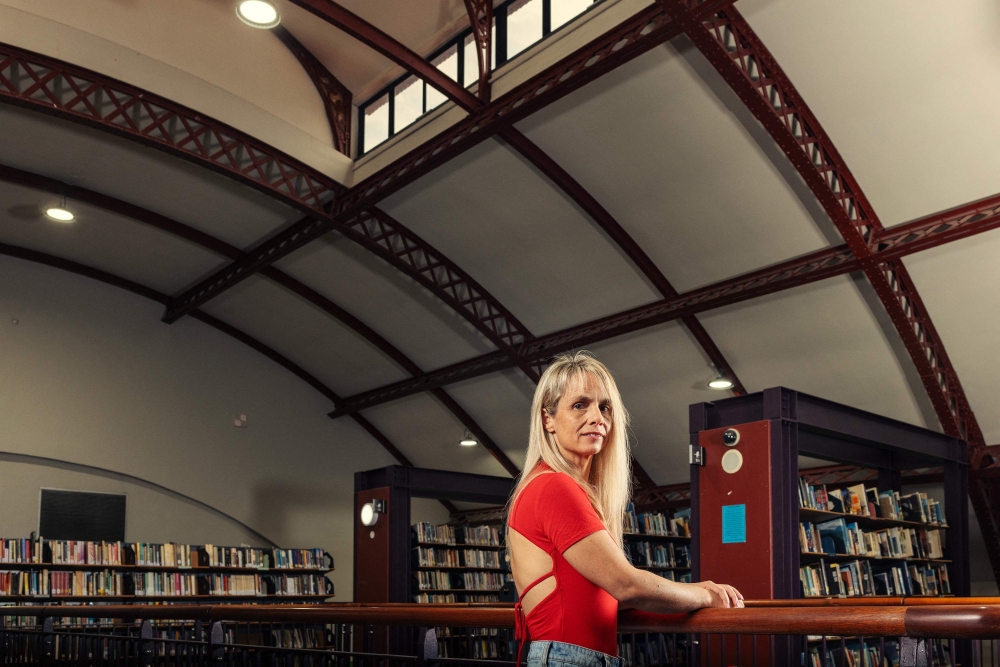
Coral Hart, a South African author, has published over 370 books since February 2025 with the aid of artificial intelligence, receiving both significant sales success and a barrage of social media criticism and threats.
Hart, using a pseudonym, describes her process involving AI tools like ChatGPT and Claude to outline, draft, and edit her novels, primarily in the romance genre.
Despite the negative attention, her works have sold over one million copies, and she is launching software named Authorythm for aspiring AI authors.
Hart defends her use of AI by emphasizing that the ultimate measure of quality is sales, asserting that readers would not purchase subpar books.
CAPE TOWN, Oct 23 — South African writer Coral Hart has published more than 370 books since February 2025 using artificial intelligence, a process she passionately defends despite criticism and threats.
“Grifter”, “villain” — insults abound on social media to describe the author who, in her forties, has become the symbol of AI’s arrival in publishing.
Coral Hart — a pseudonym she uses to protect her real name — told AFP in an interview she had received “tens of thousands” of hate messages and several death threats.
In this hostile environment, few authors using AI agree to speak publicly and show their faces.
“I chose to be the one to step up and say, these are conversations we need to start having,” Hart said.
“This is here... They’re not going to switch it off or unplug it because a bunch of authors said so.”
Before she started writing with AI around 20 months ago, Hart had been working in publishing for 14 years and written several dozen works without the technology.
It took her three months to familiarise herself with the various AI models and build a framework capable of producing a book.
Now she juggles between ChatGPT, which is “really good at dialogue, terrible at prose”; Claude, “really good story structure, terrible at sex drives”; and others like Grok, “completely unhinged” but good on “spicy scenes”.
“If you say, ChatGPT, write me a book, or, Claude, write me a book, you’re going to get a flaming dumpster fire of trash back because it doesn’t have anything (to work with),” Hart said.
The author defines the story concept, a style, details of the characters, and chapter outlines. And only then will her system generate the books.
Hart said when she started, “we could write one paragraph at a time. I usually took two or three prompts to do that.”
“I can now draft the whole book in one sequence.”
Since last year, AI models have “improved vastly”, Hart said. “The prose has improved. The syntax has improved. The sentence structure has improved.”
The first draft of a book is generally not good, the writer said.
It is run through AI for “developmental edits” and then again “to fix any continuity issues, story issues, flat middles, character arcs that are incomplete, plot threads that have been dropped, people whose eye colour has changed.”
At the end of this process, a human proofreader reads through the text to fix any “AI tells that have slipped through” and do some rewriting. “And it’s usually ready to go.”
Although one of her novels made it into Amazon’s top 100 bestsellers, the vast majority of her 371 titles — many of them romance — are tailored to certain readers based on rigorous market research.
She has sold more than one million books, by her own estimate, in digital, print and audio formats, earning more than US$1 million (RM4.08 million) so far this year.
The South African now heads an operation that has trained several hundred people in her method and is preparing to launch software for AI authors called Authorythm.
As for her own production, she mentions her use of AI only when required by a sales platform.
“For the last 16 years, nobody’s asked me what my creative process was,” said Hart, who publishes under more than 10 other pen names.
Now, she was ready to make it public “for the right reasons”.
Regularly accused of contributing to “AI slop” — low-quality AI-generated content in text, video, music, or images — Hart points to the ultimate yardstick: “Books are selling.”
“Readers don’t read rubbish books; they return them,” she said.
The writer has followed the debate around a novel by Haitian-Canadian Thelyson Orelien that was withdrawn from the shortlist for France’s Goncourt prize after accusations that he used AI, which his publisher confirmed on Wednesday.
Critics had praised the book and sales were strong before the controversy, she said, asking: “If you need an AI label to hate something, do you hate it, or do you hate AI?” — AFP
Dressed to kill: Haircuts cap menacing look of Japan’s yakuza
India stirs up its gastronomy with French cooking schools to feed growing appetite for fine dining
Six in 10 travellers say tourism ads look similar, half can’t recall last one, report says
Sultan Sharafuddin calls for AI training, responsible social media use, geriatric care for Selangor’s future
Monarchy provides stability above political differences, says Selangor Sultan
Bukit Aman: Post-mortem finds external injuries in Cheras custodial death, cause of death pending lab analysis
南非作家科拉尔·哈特自 2025 年 2 月以来,借助人工智能技术出版了 370 多本书,获得了巨大的销售成功,同时也遭到了社交媒体的猛烈批评和威胁。
哈特(化名)描述了她如何利用 ChatGPT 和 Claude 等人工智能工具来构思、撰写和编辑她的小说,主要创作浪漫题材的小说。
尽管受到负面关注,她的作品销量仍超过一百万册,她还推出了一款名为 Authorythm 的软件,旨在帮助有志成为人工智能作家的人士。
哈特为自己使用人工智能辩护,强调衡量质量的最终标准是销量,并断言读者不会购买质量低劣的书籍。
开普敦,10 月 23 日——南非作家 Coral Hart 自 2025 年 2 月以来已使用人工智能出版了 370 多本书,尽管受到批评和威胁,她仍然热情地捍卫这一过程。
“骗子”、“恶棍”——社交媒体上充斥着各种侮辱性的词语来形容这位四十多岁的作家,她已成为人工智能进入出版业的象征。
科拉尔·哈特(Coral Hart,这是她为保护真实姓名而使用的化名)在接受法新社采访时表示,她收到了“数万条”仇恨信息和多条死亡威胁。
在这种充满敌意的环境下,很少有使用人工智能的作者愿意公开露面。
“我选择站出来说,这些是我们需要开始进行的对话,”哈特说。
“它就在这里……他们不会因为一群作者这么说就把它关掉或拔掉电源。”
大约 20 个月前,哈特开始使用人工智能进行写作,在此之前,她已经在出版业工作了 14 年,并在没有这项技术的情况下创作了几十部作品。
她花了三个月时间熟悉各种人工智能模型,并构建了一个能够制作书籍的框架。
现在她同时使用 ChatGPT(对话写得很好,散文写得很差)、Claude(故事结构很好,性描写很差)以及其他一些游戏,比如 Grok(完全精神错乱,但擅长“刺激的场景”)。
“如果你对 ChatGPT 说,‘给我写本书’,或者对 Claude 说,‘给我写本书’,你将会收到一堆燃烧的垃圾,因为它根本没有任何东西(可以用来写作)。”哈特说。
作者先确定故事构思、风格、人物细节和章节大纲。只有这样,她的系统才能生成书籍。
哈特说,她刚开始写作时,“我们可以一次写一段。我通常会用两到三个提示来完成这段文字。”
“我现在可以一气呵成地完成整本书的写作了。”
哈特说,自去年以来,人工智能模型已经有了“巨大的进步”。“文章的文笔提高了,语法提高了,句子结构也提高了。”
这位作家说,一本书的初稿通常都不太好。
它会通过人工智能进行“开发性编辑”,然后再进行一次“修复任何连续性问题、故事问题、平淡的中间部分、不完整的人物弧线、被放弃的情节线索、眼睛颜色改变的人物”。
在这个流程的最后,会有一位人工校对员通读一遍文本,修正任何“人工智能遗漏的痕迹”,并进行一些修改。“通常这样就万事俱备了。”
虽然她的一部小说进入了亚马逊畅销书排行榜前 100 名,但她的 371 部作品中的绝大多数(其中很多是爱情小说)都是根据严格的市场调查,为特定读者量身定制的。
据她自己估计,她的电子书、印刷版和有声书销量已超过一百万册,今年迄今为止收入超过100万美元(408万令吉)。
这位南非人现在领导着一个团队,该团队已经用她的方法培训了数百人,并准备推出一款名为 Authorythm 的人工智能作家软件。
至于她自己的产品制作,她只提到在销售平台要求时才会使用人工智能。
“在过去的16年里,没有人问过我的创作过程是什么,”哈特说道,他以10多个笔名发表作品。
现在,她准备“出于正当理由”将此事公之于众。
哈特经常被指责助长了“人工智能垃圾”(低质量的人工智能生成的文本、视频、音乐或图像内容)的产生,但他指出,最终的衡量标准是:“书籍正在畅销”。
“读者不会读垃圾书;他们会把垃圾书退回去,”她说。
这位作家一直关注着海地裔加拿大作家泰利森·奥雷利安的小说引发的争议。该小说因被指控使用人工智能而被撤出法国龚古尔文学奖的短名单,其出版商于周三证实了这一指控。
她表示,在争议爆发前,评论界对这本书赞誉有加,销量也十分强劲。她反问道:“如果你需要给某件事物贴上‘人工智能’的标签才能表达你的憎恨,那么你究竟是憎恨它本身,还是憎恨人工智能?”——法新社
盛装打扮,杀气腾腾:发型凸显日本黑帮的凶狠形象
印度引进法国烹饪学校,以满足人们对精致餐饮日益增长的需求,从而革新其美食文化。
报告称,十分之六的旅行者表示旅游广告看起来都很相似,一半的人记不清上一次看到哪个广告了。
苏丹沙拉夫丁呼吁开展人工智能培训、倡导负责任的社交媒体使用以及加强老年人护理,以保障雪兰莪州的未来。
雪兰莪苏丹表示,君主制能够超越政治分歧,带来稳定。
武吉阿曼警察总部:蕉赖拘留所死亡事件尸检发现外伤,死因尚待实验室分析