The new matcha? Ube takes root in Singapore抹茶新宠?紫薯茶在新加坡扎根
Cafes and restaurants like Neon Pigeon and Cafe Mary Grace now serve drinks and dishes made with the purple yam native to the Philippines. Read more at straitstimes.com.
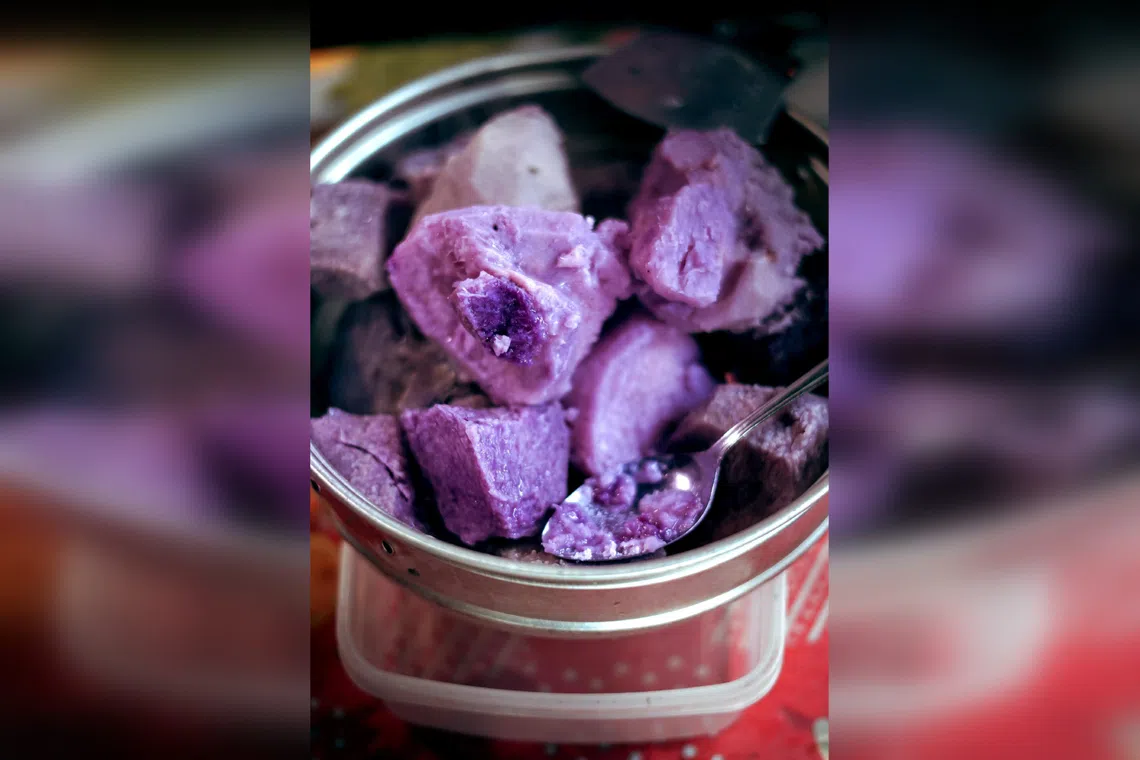
More restaurants and cafes in Singapore are working ube into their menus.
Published Oct 24, 2026, 07:55 AM
Updated Oct 24, 2026, 07:55 AM
Ube, a purple yam from the Philippines, is rising fast in Singapore cafes, bars and desserts. Google searches have increased and sales are growing.
Local businesses say Singaporeans like ube because it is familiar, colourful and versatile. Some see it as a possible rival to matcha, but it still trails far behind.
Supply is tight because the Philippines suspended fresh ube exports in August. Singapore mostly uses paste or powder, while some chefs worry about authenticity and taste.
SINGAPORE – A purple wave is sweeping cafes and bars around the world. It started in the Philippines, then inundated the United States, Britain and, later, South Korea . Now, it seems like the craze has finally seeped into Singapore too.
Ube, a violet yam native to the Philippines, is the food world’s latest obsession, attracting a growing pool of devotees.
There are cafes ( Halo Ube & Matcha in Tanjong Pagar), home-based businesses (Ubae, selling purple lattes out of a flat in Telok Blangah) and limited-edition runs (local bubble tea brand PlayMade’s ube series, previously available in May and June) dedicated to this humble crop.
You will find it on a growing number of cafe menus too, wedged between the five obligatory matcha options and more exotic creations flavoured with tumeric or rose.
The data also reports a similar upswing. Google searches for ube in Singapore spiked sharply in June 2025 and have generally trended upwards ever since, with interest in this term 30% higher from 2022 to 2026 than in the preceding five years.
Few businesses are more pleased with this development than alcohol distributor JD Sip.
It used to sell around 500 bottles of Ube Cream Liqueur a quarter when it brought the product to Singapore in 2024, but sales can now “easily” top 900 or 1,000 bottles a quarter.
Initially, apart from the Filipino community, which made up most of the company’s early clientele, no one knew what ube was or why it looked so suspiciously saturated, says co-founder Dylan Yap, 38.
JD Sips distributes Ube Cream Liqueur in Singapore. PHOTO: JD SIPS
JD Sips distributes Ube Cream Liqueur in Singapore.
It was only in late 2025 that the general public started warming to ube.
Then in 2026, especially from the second half of the year, it was as if a switch had been flipped and, suddenly, ube was everywhere.
“Now, we even have Chinese restaurants asking for Ube Cream Liqueur,” he adds.
He cannot identify a single catalyst for ube’s rise. A common observation among industry players is that when it comes to global trends, Singapore tends to lag a few steps behind. Now, it seems like the local market has at last hopped aboard this bandwagon too.
“It’s probably a combination of marketing efforts and articles that say farmers are finding it hard to cope with the demand for the ube crop. So I think generally, consumers in Singapore have the mindset that if something is going to run out soon, we want to try it,” Yap says.
Because it is similar to taro, a type of yam with which Singaporeans are already familiar , customers have been open to trying ube-flavoured products, says Chiara Dimacali-Hugo, 46, who helms Filipino restaurant Cafe Mary Grace in Tras Street.
Queic by Olivia launched two ube-flavoured cheesecakes in July. PHOTO: QUEIC BY OLIVIA
Queic by Olivia launched two ube-flavoured cheesecakes in July.
PHOTO: QUEIC BY OLIVIA
“We find that Singapore consumers are generally very curious and receptive to new flavours and food trends, so there was a lot of interest when the collection launched,” adds Emy Tan, 31, Olivia Group’s head of marketing.
The company’s dessert brand Queic by Olivia launched two ube-flavoured cheesecakes in July. One of them, the Ube Cloud ($13 per slice), is still on the menu, owing to popular demand.
So, is ube the new matcha? Dimacali-Hugo certainly hopes so.
“I just wish it would find its place on every table,” she says. “It’s so good and versatile. You can eat ube halaya (a paste-like dessert made from mashed ube) by the spoonful.”
Chef Sujatha Asokan, 35, who heads the kitchen at Kee’s Restaurant & Bar in Carpenter Street, thinks it has the potential to appeal to a broad spectrum of Singaporeans – trend-conscious digital natives, yes, but their orh nee-loving parents and grandparents too.
Ube ice cream from Burnt Cones. PHOTO: BURNT CONES
Ube ice cream from Burnt Cones.
On the other hand, Miles Thng, 35, co-founder of ice cream brand Burnt Cones and one of the first people to churn ube-flavoured gelato in Singapore, views its similarity to other types of yam as a mixed blessing.
Categorised as a premium flavour – the cheapest of the brand’s three categories – a scoop of ube retails for $5 at Burnt Cones’ outlets.
“Ube is actually around the middle tier in terms of production costs, but we started at the lowest tier because based on perception, people feel like it’s a cheaper flavour,” he says.
When most Singaporeans think of yam, they think of the old-school $1.20 ice cream sandwiches sold at roadside carts, so even a $5 scoop might prove a hard sell.
Others might be turned off by its earthy taste.
“For some people, if you tell them it’s a yam, they just get turned off.”
Nonetheless, ube has earned its place on Burnt Cones’ permanent roster. Initially introduced as a limited-edition experiment in 2021, it now ranks among the top five flavours in terms of sales.
Ube has done well at Oh Wunder Cafe in Bain Street too, where it is served as a latte ($7.50) or mixed with matcha ($8) and cream cheese foam ($9). But it is nowhere near as popular as its green predecessor.
The cafe sells twice as many strawberry matcha lattes as ube lattes, so co-founder Dale Thia, 36, does not think the latter will be taking the place of matcha anytime soon.
“A lot of people might feel like ube is more starchy than matcha. And youngsters think that matcha sounds healthier, even though that might not be necessarily true,” he says.
It should also be noted that ube in Singapore has not yet achieved the kind of ubiquity it has enjoyed in, say, the US, where it can be found in grocery stores like Trader Joe’s and at major cafe chains.
While Paris Baguette’s US customers could buy ube cruffins and ube lattes in July, the brand’s Singapore outlets have remained focused on other flavours in the meantime.
“While there are currently no plans to introduce the Ube series in Singapore, Paris Baguette is always exploring new flavours and product innovations that resonate with local consumers. We continue to keep an eye on emerging food trends and would certainly be open to exploring ube-inspired creations in the future,” senior marketing manager Charlene Chen tells The Straits Times.
Olivia Group’s Tan cannot yet say for sure if ube will ascend to the leagues of matcha or pistachio, but believes in its potential to become much more established locally.
“Ube has a strong visual identity, but I think what gives it more staying power is that it’s also very versatile,” she says.
“Ultimately, I think the real test is whether people continue choosing ube because they genuinely like the flavour, rather than just because it looks good or feels new. From what we’ve seen so far, there seems to be enough interest beyond the novelty for it to keep growing.”
Farmers in The Philippines have found it difficult to meet international demand for ube. PHOTO: JD SIPS
Farmers in The Philippines have found it difficult to meet international demand for ube.
Ube, like matcha, is a victim of its own success. Worldwide demand reached such a fever pitch t hat the Philippines indefinitely suspended exports of fresh ube in August.
The ube that trickles down to Singapore, therefore, exists mainly in processed form.
“The only pain point in working with ube for me is that I can’t find fresh ones to introduce other textures,” says chef Asokan.
“I can use it only in a sauce , a drink or, in our case, ice cream, but to showcase ube the way we showcase sweet potato, I think we can’t do it yet.”
Likewise, the other cafes and brands to whom ST spoke have to make do with ube paste or powder, which they say has not yet risen in price despite the export ban.
The one exception is Playmade, which says its ube series is built on purple yam, which it “steams whole and hand-processes into a fresh paste in small batches”, according to a spokesperson.
Whether the “purple yam” in question is ube or another root vegetable, however, the brand did not specify.
Fresh ube is not available in Singapore. PHOTO: JD SIPS
Fresh ube is not available in Singapore.
Pampanga native Adrian Besa, 40, who works in Singapore as a beverage manager at Mondrian Singapore Duxton, has had his fair share of disappointments.
“Some ube bread, treats and candies tasted more like vanilla or just sweet with purple colour; no real earthy, nutty ube flavour at all. They looked pretty, but just didn’t feel like real ube,” he says.
While he is thrilled that ube is getting more popular in Singapore – he can now obtain previously elusive favourites like ube pandesal, ube cheese tarts, ube milk tea, ube soft-serve and ube cakes here – nothing beats the taste of home.
He says of the Singaporean takes on ube: “They’re lovely and capture that sweet, nutty, creamy vibe, but the ones back home feel deeper, richer and so much more authentic.”
Ube tastes nutty and earthy, with a soft hint of vanilla. PHOTO: ARO
Ube tastes nutty and earthy, with a soft hint of vanilla.
How should aspiring ube aficionados distinguish the real deal from imitators?
Real ube, Besa says, should contain a gentle earthy note, and is nutty and soft with a hint of vanilla.
You should be able to tell at a glance, adds Dimacali-Hugo. If the substance in your dessert or drink appears whitish-grey, it is probably taro. If it is bright purple, however, that is more like it.
Where to taste ube in Singapore
Ube ice cream ensaymada from Cafe Mary Grace Singapore. PHOTO: CAFE MARY GRACE SINGAPORE
Ube ice cream ensaymada from Cafe Mary Grace Singapore.
PHOTO: CAFE MARY GRACE SINGAPORE
Craving ube or curious to see what all the fuss is about? The paste itself can be found at Filipino grocers like online supermarket Pinoy SG.
But if you like your ube dressed up as a drink or dessert, here are four places to check out.
Kee’s Restaurant & Bar
Bubur Cha Cha French Toast from Kee’s Restaurant & Bar. PHOTO: KEE’S RESTAURANT & BAR
Bubur Cha Cha French Toast from Kee’s Restaurant & Bar.
PHOTO: KEE’S RESTAURANT & BAR
Where: 21 Carpenter Street Open: 8am to 10pm, daily Info: www.kees.com.sg/
At Kee’s Restaurant & Bar, ube goes local. It plays a supporting role in the restaurant’s Bubur Cha Cha French Toast ($18++), served with caramelised sweet potato, kaya-stuffed brioche and a lavender-coloured scoop of ube ice cream.
“I wanted to feature a local dessert that I liked, so I thought of bubur cha cha, and then I figured, why not use ube? It’s Asian also and very underutilised,” says executive chef Sujatha Asokan.
To get that distinctive nutty flavour, she mixes ube paste into house-made ice cream – but just a touch. “We don’t want the ube taste to overpower the rest of the ingredients,” she says. “We feature quite a lot of things in this dish, so we’ve got to balance all the components.”
Ube Cloud cheesecake from Queic by Olivia. PHOTO: QUEIC BY OLIVIA
Ube Cloud cheesecake from Queic by Olivia.
Where: 41 Kreta Ayer Road and other outlets Open: Various times Info: queic.com.sg/
In Filipino cooking, ube and cheese are a match made in culinary heaven – see ube pandesal, ube halaya with shredded cheddar and the like – so the team behind dessert brand Queic by Olivia felt fairly certain that this classic sweet-savoury pairing would work well in cheesecake form too.
Experimentation yielded two options: the Ube Queso, a dense, creamy, Basque burnt cheesecake; and the Ube Cloud – lighter, as its name implies.
The latter received the stronger response and so it has remained on the menu (starting at $13 a slice), accompanied by special beverages like the ube cheese cloud ($7.50), a deep purple concoction topped with salted cheese foam.
“The challenge was finding the right balance so the ube flavour remained recognisable without overpowering the cheesecake itself,” says head chef Pablo Ruggero, 36. “We still wanted the final product to taste unmistakably like a Queic cheesecake rather than simply using ube for its colour.”
Purple Haze cocktail from Neon Pigeon. PHOTO: NEON PIGEON
Purple Haze cocktail from Neon Pigeon.
Where: 36 Carpenter Street Open: 5.30pm to midnight, daily Info: www.neonpigeonsg.com/
You can drink your ube at Neon Pigeon. The Japanese restaurant and izakaya rolled out its Purple Haze ($23++) cocktail in end-September, combining Ube Cream Liqueur with shisho and Toki whisky.
“We’re always interested in ingredients that give us room to play and ube felt particularly interesting because it brings both a distinctive flavour and visual character to a drink,” says Joshua Wilson, 34, group bar manager of The Dandy Collection, which manages the restaurant.
Because Ube Cream Liqueur has such a distinctive profile, the main challenge for him and his team was finding the right balance to ensure the drink did not end up being too cloying.
“We wanted the ube to remain recognisable without overpowering the other elements of the drink. To achieve this, we use lemon acid and shiso to bring acidity and a touch of bitterness, helping to balance the richness and sweetness of the ube,” he says.
Cafe Mary Grace Singapore launched its ube series in July. PHOTO: CAFE MARY GRACE SINGAPORE
Cafe Mary Grace Singapore launched its ube series in July.
Where: 52 Tras Street Open: 9am to 9.30pm, Tuesdays to Sundays, closed on Mondays Info: marygracecafe.sg
In May, Chiara Dimacali-Hugo, 46, executive director of Filipino restaurant Cafe Mary Grace Singapore, opened Instagram and realised that her feed was flooded with ube products.
“I wondered if there was an awakening of sorts and said to my team, ‘Guys, we need our own version of ube’,” she says.
Growing up in the Philippines, it was a ubiquity she had largely taken for granted, but now, she felt a unique responsibility to show Singaporeans “what good ube tasted like”.
So the cafe launched an ube series in July, complete with drinks like ube coconut cloud ($10++) and pastries such as ube cheese roll ($5.30++) and ube ice cream ensaymada ($12.50++).
“The global love for ube is so strong, which makes me feel really proud as an Asian, because it means that Asian flavours can really travel,” she says. “There are no boundaries.”
Food and beverage sector
新加坡越来越多的餐馆和咖啡馆将紫薯加入到菜单中。
发布于 2026 年 10 月 24 日上午 7:55
更新于2026年10月24日上午7:55
紫薯(Ube),一种来自菲律宾的紫色山药,在新加坡的咖啡馆、酒吧和甜品店迅速走红。谷歌搜索量增加,销量也在增长。
本地商家表示,新加坡人喜欢紫薯是因为它熟悉、色彩鲜艳且用途广泛。有人认为紫薯有可能成为抹茶的竞争对手,但它目前仍远不及抹茶受欢迎。
由于菲律宾8月份暂停了新鲜紫薯的出口,供应紧张。新加坡主要使用紫薯酱或紫薯粉,而一些厨师则担心其味道和正宗性。
新加坡——一股紫色风潮正席卷全球各地的咖啡馆和酒吧。这股风潮始于菲律宾,随后蔓延至美国、英国,之后又席卷韩国。如今,这股热潮似乎终于也渗透到了新加坡。
紫薯(Ube)是一种原产于菲律宾的紫色山药,是美食界最新的热门食材,吸引了越来越多的拥趸。
有专门的咖啡馆(丹戎巴葛的 Halo Ube & Matcha)、家庭作坊(在直落布兰雅的一间公寓里售卖紫色拿铁的 Ubae)以及限量版产品(本地奶茶品牌 PlayMade 的紫薯系列,此前在五月和六月推出),专门生产这种不起眼的作物。
你也会在越来越多的咖啡馆菜单上发现它,它夹在五种必备的抹茶饮品和用姜黄或玫瑰调味的更具异国情调的饮品之间。
数据显示,搜索量也呈现类似的上升趋势。2025年6月,新加坡用户对“ube”(紫薯)的谷歌搜索量急剧上升,此后总体呈上升趋势,2022年至2026年间,该词条的搜索量比前五年增长了30%。
很少有企业比酒类经销商 JD Sip 更乐见这一发展。
该公司在 2024 年将 Ube Cream Liqueur 引入新加坡时,每季度大约能卖出 500 瓶,但现在每季度的销量“很容易”超过 900 或 1000 瓶。
联合创始人 Dylan Yap(38 岁)表示,最初,除了菲律宾社区(该公司早期客户群的主要组成部分)之外,没有人知道 ube 是什么,或者为什么它看起来饱和得如此可疑。
JD Sips在新加坡经销紫薯奶油利口酒。图片:JD SIPS
JD Sips在新加坡经销紫薯奶油利口酒。
直到 2025 年末,大众才开始逐渐接受紫薯。
到了 2026 年,尤其是从下半年开始,仿佛拨动了开关,突然间,紫薯就无处不在了。
“现在甚至有中国餐馆要求提供紫薯奶油利口酒,”他补充道。
他无法指出紫薯走红的单一催化剂。业内人士普遍认为,在追赶全球趋势方面,新加坡往往落后几步。如今,本地市场似乎终于也搭上了这趟顺风车。
“这可能是市场营销活动和一些文章共同作用的结果,这些文章说农民很难满足市场对紫薯的需求。所以我认为,新加坡消费者普遍有一种心态,如果某种东西很快就会断货,我们就想尝试一下,”叶先生说。
46岁的Chiara Dimacali-Hugo在Tras街经营着一家菲律宾餐厅Cafe Mary Grace,她说,由于紫薯与新加坡人已经熟悉的芋头相似,顾客们乐于尝试紫薯口味的产品。
Queic by Olivia 于七月推出了两款紫薯口味的芝士蛋糕。图片:QUEIC BY OLIVIA
Queic by Olivia 在 7 月份推出了两款紫薯口味的芝士蛋糕。
照片:QUEIC BY OLIVIA
“我们发现新加坡消费者普遍对新口味和食品潮流充满好奇心和接受度,因此该系列产品推出时引起了广泛关注,”Olivia Group 市场营销主管 Emy Tan(31 岁)补充道。
该公司旗下的甜点品牌 Queic by Olivia 在 7 月份推出了两款紫薯口味的芝士蛋糕。其中一款名为“紫薯云”(每片 13 美元)的芝士蛋糕,由于广受欢迎,目前仍在菜单上。
那么,紫薯会成为新的抹茶吗?迪马卡利-雨果当然希望如此。
“我真希望它能成为每家每户餐桌上的常客,”她说。“它味道好极了,而且用途广泛。你可以用勺子直接舀着吃紫薯酱(一种用紫薯泥制成的糊状甜点)。”
35 岁的厨师 Sujatha Asokan 是卡彭特街 Kee's 餐厅和酒吧的厨房负责人,她认为这道菜有潜力吸引广泛的新加坡人——既包括注重潮流的数字原住民,也包括他们喜爱 orh nee 的父母和祖父母。
来自 Burnt Cones 的紫薯冰淇淋。图片:BURNT CONES
来自 Burnt Cones 的紫薯冰淇淋。
另一方面,35 岁的 Miles Thng 是冰淇淋品牌 Burnt Cones 的联合创始人,也是新加坡最早制作紫薯口味冰淇淋的人之一。他认为紫薯与其他种类的山药相似,既是好事也是坏事。
紫薯口味被归类为高级口味,是该品牌三个类别中最便宜的,在 Burnt Cones 的门店,一勺紫薯口味的零售价为 5 美元。
“从生产成本来看,Ube口味实际上属于中等水平,但我们从最低档开始,因为人们普遍认为它是一种比较便宜的口味,”他说。
当大多数新加坡人想到芋头时,他们会想到路边摊卖的老式 1.20 新元冰淇淋三明治,所以即使是 5 新元的冰淇淋球也可能很难卖出去。
有些人可能会不喜欢它那种泥土味。
“有些人,如果你告诉他们这是山药,他们就会失去兴趣。”
尽管如此,紫薯口味已经稳居 Burnt Cones 的常驻口味之列。该口味最初于 2021 年作为限量版实验产品推出,如今销量已跻身前五。
紫薯在贝恩街的Oh Wunder咖啡馆也卖得不错,可以做成紫薯拿铁(7.50新元),也可以和抹茶(8新元)或奶油芝士泡沫(9新元)混合。但它远不如它的绿色前辈那么受欢迎。
这家咖啡馆草莓抹茶拿铁的销量是紫薯拿铁的两倍,因此联合创始人、36 岁的 Dale Thia 认为紫薯拿铁不会很快取代抹茶拿铁。
“很多人可能觉得紫薯比抹茶淀粉含量更高。年轻人则认为抹茶听起来更健康,尽管这可能并非事实,”他说道。
还应该指出的是,新加坡的紫薯还没有像在美国那样普及,在美国,紫薯可以在 Trader Joe's 等杂货店和大型连锁咖啡店找到。
虽然巴黎贝甜的美国顾客在 7 月份就能买到紫薯可颂和紫薯拿铁,但该品牌的新加坡门店在此期间仍然专注于其他口味。
“虽然目前没有在新加坡推出紫薯系列产品的计划,但巴黎贝甜一直在探索能够引起本地消费者共鸣的新口味和产品创新。我们会持续关注新兴的食品趋势,未来也一定会乐于尝试以紫薯为灵感的新产品,”高级市场经理陈嘉琳告诉《海峡时报》。
Olivia Group 的 Tan 还不能确定紫薯是否会像抹茶或开心果一样受欢迎,但他相信紫薯有潜力在本地市场获得更大的成功。
“紫薯拥有鲜明的视觉形象,但我认为它更持久的魅力在于它的多功能性,”她说。
“归根结底,我认为真正的考验在于人们是否真的喜欢紫薯的味道,而不仅仅是因为它看起来好看或感觉很新奇。从我们目前观察到的情况来看,除了新鲜感之外,人们对紫薯的兴趣似乎还足够浓厚,足以让它继续增长。”
菲律宾农民发现很难满足国际市场对紫薯的需求。图片:JD SIPS
菲律宾农民发现很难满足国际市场对紫薯的需求。
和抹茶一样,紫薯也成了自身成功的受害者。全球需求达到如此狂热的程度,以至于菲律宾在8月份无限期暂停了新鲜紫薯的出口。
因此,流入新加坡的紫薯主要以加工形式存在。
“对我来说,使用紫薯唯一的痛点就是找不到新鲜的紫薯来引入其他口感,”厨师阿索坎说道。
“我只能把它用在酱汁、饮料里,或者像我们这样用在冰淇淋里,但要像展示红薯那样展示紫薯,我认为我们还做不到。”
同样,ST采访的其他咖啡馆和品牌也只能使用紫薯酱或紫薯粉,他们表示,尽管出口禁令生效,但紫薯酱或紫薯粉的价格尚未上涨。
唯一的例外是 Playmade,据一位发言人称,该公司表示其 ube 系列产品采用紫薯制成,紫薯“整颗蒸熟,然后手工小批量加工成新鲜的酱料”。
然而,该品牌并未具体说明所指的“紫色山药”是紫薯还是其他根茎类蔬菜。
新加坡买不到新鲜紫薯。图片:JD SIPS
新加坡买不到新鲜的紫薯。
40岁的阿德里安·贝萨(Adrian Besa)是邦板牙省人,目前在新加坡蒙德里安新加坡杜克斯顿酒店担任饮料经理,他经历过不少失望。
“有些紫薯面包、点心和糖果尝起来更像是香草味,或者只是颜色发紫的甜味;完全没有紫薯特有的泥土味和坚果味。它们看起来很漂亮,但吃起来却不像真正的紫薯,”他说。
虽然他很高兴紫薯在新加坡越来越受欢迎——他现在可以在这里买到以前很难买到的紫薯面包、紫薯芝士挞、紫薯奶茶、紫薯冰淇淋和紫薯蛋糕——但没有什么能比得上家乡的味道。
他谈到新加坡的紫薯甜点时说:“它们很美味,抓住了那种甜美、坚果味和奶油味,但家乡的紫薯甜点感觉更浓郁、更丰富,也更地道。”
紫薯尝起来有坚果和泥土的香味,并带有淡淡的香草味。图片:ARO
紫薯尝起来有坚果和泥土的味道,并带有一丝淡淡的香草味。
有志成为芋头爱好者的人应该如何区分真正的芋头和仿制品?
Besa 说,真正的紫薯应该带有淡淡的泥土气息,口感柔和,略带坚果香和香草味。
迪马卡利-雨果补充说,你应该一眼就能分辨出来。如果你甜点或饮料中的物质呈灰白色,那很可能是芋头。但如果是鲜亮的紫色,那就更像芋头了。
在新加坡哪里可以品尝到紫薯?
来自新加坡玛丽格蕾丝咖啡馆的紫薯冰淇淋恩萨伊马达面包。图片:新加坡玛丽格蕾丝咖啡馆
来自新加坡 Cafe Mary Grace 的紫薯冰淇淋甜面包。
照片:新加坡玛丽格蕾丝咖啡馆
想吃紫薯酱吗?或者好奇它到底有什么特别之处?紫薯酱本身可以在菲律宾杂货店找到,例如在线超市 Pinoy SG。
但如果你喜欢把紫薯做成饮料或甜点,这里有四个地方值得一去。
Kee's 餐厅酒吧
来自 Kee's Restaurant & Bar 的 Bubur Cha Cha 法式吐司。图片:KEE'S RESTAURANT & BAR
Kee's Restaurant & Bar 的 Bubur Cha Cha 法式吐司。
照片:KEE'S 餐厅和酒吧
地点:卡彭特街21号 营业时间:每日上午8点至晚上10点 详情:www.kees.com.sg/
在 Kee's Restaurant & Bar,紫薯融入了当地风味。它在餐厅的 Bubur Cha Cha 法式吐司(18++ 新元)中扮演着配角,搭配焦糖红薯、咖椰酱奶油蛋卷和一勺淡紫色紫薯冰淇淋。
“我想推出一款我喜欢的当地甜点,所以我想到了摩摩喳喳,然后我想,为什么不用紫薯呢?它也是亚洲的,而且非常少见,”行政总厨苏贾塔·阿索坎说道。
为了获得那种独特的坚果风味,她会在自制冰淇淋中加入少许紫薯酱。“我们不想让紫薯的味道盖过其他食材,”她说。“这道甜点用了不少食材,所以我们必须把所有成分的味道平衡好。”
来自 Queic by Olivia 的紫薯云芝士蛋糕。图片:QUEIC BY OLIVIA
来自 Queic by Olivia 的紫薯云芝士蛋糕。
地点:克雷塔亚路41号及其他分店 营业时间:各分店 详情:queic.com.sg/
在菲律宾烹饪中,紫薯和奶酪是天作之合——例如紫薯面包、紫薯哈拉亚配切达奶酪丝等等——因此,甜点品牌 Queic by Olivia 背后的团队相当肯定,这种经典的甜咸搭配在芝士蛋糕中也会很受欢迎。
实验得出了两种选择:一种是浓郁、奶油味的巴斯克焦香芝士蛋糕——紫薯奶酪蛋糕;另一种是紫薯云朵蛋糕——顾名思义,口感更轻盈。
后者获得了更强烈的反响,因此一直保留在菜单上(每片 13 美元起),并搭配特色饮品,如紫薯芝士云(7.50 美元),这是一种深紫色的混合饮品,上面覆盖着咸芝士泡沫。
“挑战在于找到合适的平衡点,既要保留紫薯的味道,又不能掩盖芝士蛋糕本身的味道,”36岁的主厨Pablo Ruggero说道。“我们仍然希望最终产品的味道能让人一眼就认出是Queic芝士蛋糕的味道,而不仅仅是用紫薯来增添颜色。”
Neon Pigeon 酒吧的 Purple Haze 鸡尾酒。图片:NEON PIGEON
来自 Neon Pigeon 的 Purple Haze 鸡尾酒。
地点:卡彭特街36号 营业时间:每日下午5:30至午夜 详情:www.neonpigeonsg.com/
你可以在 Neon Pigeon 喝到紫薯鸡尾酒。这家日式餐厅兼居酒屋在九月底推出了 Purple Haze(23++ 新元)鸡尾酒,将紫薯奶油利口酒与紫苏和 Toki 威士忌混合在一起。
“我们一直对能给我们发挥空间的食材感兴趣,而紫薯让我们觉得特别有趣,因为它能为饮品带来独特的风味和视觉效果,”34岁的Joshua Wilson说道,他是管理这家餐厅的The Dandy Collection集团的酒吧经理。
由于紫薯奶油利口酒具有如此独特的风味,他和他的团队面临的主要挑战是找到合适的平衡点,以确保这款酒不会过于甜腻。
“我们希望紫薯的味道能够被辨认出来,但又不会掩盖饮品中的其他成分。为了达到这个目的,我们使用了柠檬酸和紫苏,来增加酸度和一丝苦味,从而平衡紫薯的浓郁和甜味,”他说道。
新加坡玛丽格蕾丝咖啡馆 (Cafe Mary Grace Singapore) 于七月推出了紫薯系列饮品。图片:新加坡玛丽格蕾丝咖啡馆
新加坡的Cafe Mary Grace于7月推出了紫薯系列饮品。
地点:特拉斯街52号 营业时间:周二至周日,上午9点至晚上9点30分,周一休息 详情请访问:marygracecafe.sg
5 月,46 岁的 Chiara Dimacali-Hugo 是新加坡菲律宾餐厅 Cafe Mary Grace 的执行董事,她打开 Instagram 后发现,她的信息流里全是紫薯产品。
“我当时就在想,是不是某种觉醒正在发生,于是就对我的团队说,‘伙计们,我们需要我们自己的 ube 版本’,”她说。
在菲律宾长大的她,早已将紫薯视为理所当然,但现在,她感到自己肩负着独特的责任,要向新加坡人展示“紫薯的美味”。
因此,这家咖啡馆在 7 月份推出了紫薯系列,包括紫薯椰子云(10++ 美元)等饮品,以及紫薯芝士卷(5.30++ 美元)和紫薯冰淇淋恩萨伊马达(12.50++ 美元)等糕点。
“全世界对紫薯的喜爱如此强烈,这让我作为一名亚洲人感到非常自豪,因为这意味着亚洲风味真的可以传播到世界各地,”她说。“没有国界。”
食品饮料行业