Dressed to kill: Haircuts cap menacing look of Japan’s yakuza盛装打扮,杀气腾腾:发型凸显日本黑帮的凶狠形象
TOKYO, Oct 24 — At a barbershop in Tokyo, yakuza gangster Tekisasu glances in the mirror at his meticulous new cut and thanks the hairdresser for the weekly trim crucial to his...
The article explores the role of barbers in maintaining the image of Japan's yakuza, emphasizing the importance of meticulous grooming to project menace and wealth.
Tekisasu, an active yakuza member, highlights the necessity of sharp appearances for credibility in their criminal trade.
However, Japan's anti-yakuza laws limit their access to basic services, complicating their operations.
Despite the challenges, barbers continue to serve yakuza clients, navigating the legal boundaries while ensuring appointments don't become sites of gang conflict.
TOKYO, Oct 24 — At a barbershop in Tokyo, yakuza gangster Tekisasu glances in the mirror at his meticulous new cut and thanks the hairdresser for the weekly trim crucial to his mobster trade.
Japan’s yakuza operate an organised crime empire worth billions of dollars and have long dominated the country’s drug rings, gambling dens and sex trade.
From precise haircuts to sharp suits, many mobsters try to project an image of menace and wealth, and barbers play a key role in crafting it.
“The yakuza are all about vanity,” said Tekisasu, whose moniker means “Enemy Stabber”, in an exclusive interview that took months to set up.
“The neater someone’s appearance, the better his reputation becomes,” the 44-year-old active gangster allied to a major clan told AFP.
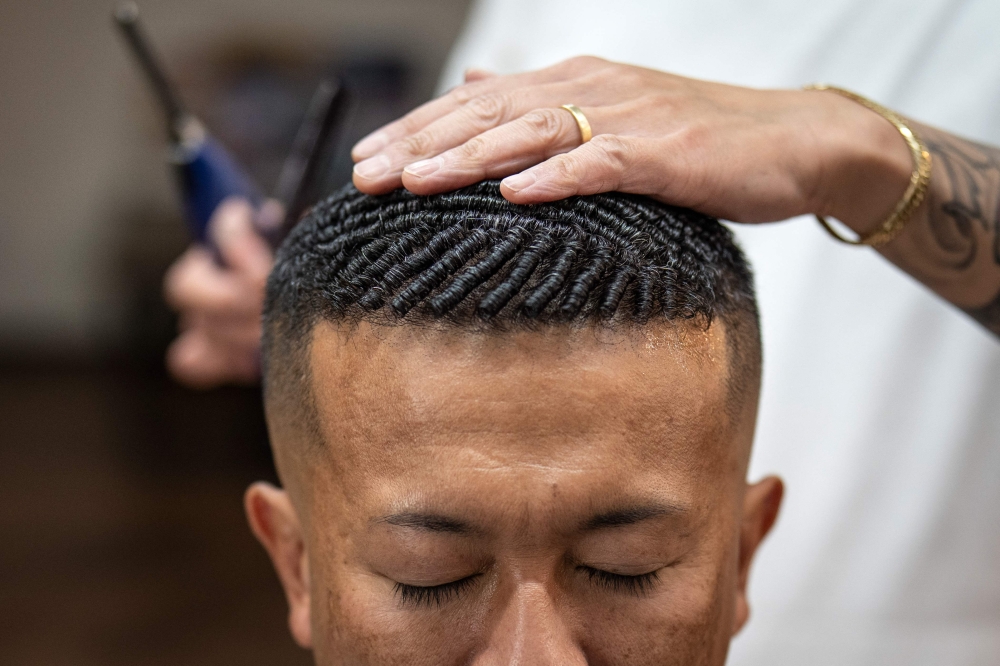
“Say you want to sell someone on a deal... they won’t take you seriously if your punch perm is all in shambles,” he said, referencing his ultra-short, tightly curled style.
For Tekisasu and his fellow mobsters, barbershops also represent a break from the violent lifestyle they have chosen and an intensifying crackdown by authorities.
During his monthly, two-hour perming ritual — plus a weekly haircut that keeps the back and sides of his head shaven in a high “skin fade” — the tattooed gangster can stop watching his back.
There are fewer and fewer mobsters like him, with police saying yakuza numbers dipped last year to a record low of 17,600 nationwide.
But even as their forces shrink, the gangsters represent a potent threat, with younger groups of thugs brought in to diversify their business, police warned in a recent report.
Still, Tekisasu’s barber — who counts around 10 active yakuza among his repeat clientele — says he has no qualms about serving them, even though his craftsmanship amplifies their “don’t-mess-with-me aura”.
“All I do is make them look cooler,” said the 32-year-old, denying there was anything wrong in making dangerous gangsters appear more aggressive.
The barber requested anonymity because any association with the mafia could threaten the reputation of his business.
Grinding out a living
Despite their criminal activities, many people — including some of the gangsters themselves — hold romantic views of the yakuza’s traditions, lifestyles and codes of honour.
The reality is often more mundane, with more and more rank-and-file mobsters said to grind out a living by targeting vulnerable people through crimes such as organised fraud.
Originally a gangsta rapper, Tekisasu delved into the yakuza world in his mid-20s, but was arrested in 2021, then jailed, before being released last year.
Now, he is at the barbershop for a hot-towel shave and respite from a life where he says, “total darkness can be just an inch ahead”.
“When there is fighting among syndicates, we have no choice but to go through it,” he said. “It’s a matter of pride.”
“I wish I could just live smiling, without hurting anyone or getting hurt. But that’s not how things work in this world.”
Yakuza face pressure to remain in the violent underworld, but they can and do choose to leave. An estimated 320 gangsters quit in 2024 thanks in part to efforts by authorities.
Under Tokyo’s anti-yakuza laws, businesses are prohibited from knowingly “providing benefits” to mobsters to aid their activities.
Barbers who intentionally help yakuza clients maintain their looks are unlikely to violate the rules, provided the transactions are fair, according to retired anti-mafia detective Yuichi Sakurai.
But any preferential treatment, like “setting the haircut price excessively low”, may constitute an illegal favour, he told AFP.
In his decades-long career, the ex-detective himself noticed many mobsters “value frequent haircuts to retain their intimidating exteriors”.
Ideally, the laws should be tightened to bar the yakuza from any place of relaxation — including barbershops — “if we really want to eradicate them”, he said.
Years of strict anti-mafia laws have excluded the yakuza from basic infrastructure in Japan, including opening bank accounts, renting housing and obtaining credit cards.
“We can only pay in cash most of the time. It would be very tough for us if Japan ever fully goes cashless,” Tekisasu said.
Far from being dismayed that gangsters frequent his parlour, Tekisasu’s barber is proud that they trust his “uncompromising standards”.
Following in the footsteps of his barber father, adept at a range of “bad-boy” haircuts, he has made punch perms his forte.
The tiny, rigid curls emerged in Japan in the 1960s and ‘70s as a backlash against longer, Beatles-inspired male hairdos.
They have since found a devoted fanbase in manual labourers, teen delinquents and the yakuza.
“Punch perms are what I live for as a barber,” said the gregarious shopkeeper, whose full-arm tattoos include depictions of scissors, a comb and a dryer.
When a client who was “obviously yakuza, with his fingertip missing and eyes dead serious”, first sought his service, he resolved to “blow him away with my skills” and make him a regular.
While lore has it that yakuza gangsters found the punch perm’s ultra-short length useful during brawls, Tekisasu says that in his world, “fights don’t usually involve hair-pulling”.
“When we ‘fight,’ it’s ultimately about shooting or trying to take each other’s lives,” he said.
“I simply like the punch perm because it’s manly and cool.”
Yakuza patronage involves risks, however.
“The last thing I want is for rival gangsters to run into each other here,” Tekisasu’s barber said. The onus is thus on him to space their appointments apart.
But “once they leave the shop, whatever happens out there is going to happen. When they walk out the door, I don’t talk to them anymore.” — AFP
Prince William becomes first working royal on UK chat show, tells Graham Norton he once wanted to be a DJ
India stirs up its gastronomy with French cooking schools to feed growing appetite for fine dining
‘Books are selling’: S.African author defends her use of AI after publishing 370 books in 20 months
Drunk driver crashes into DBKL road crew, killing supervisor on Lebuhraya Sultan Iskandar
End of the road: Sabah police nab Beverly Hills murder suspect wanted for over 17 years
Missing man found dead in locked car at Kajang supermarket car park
文章探讨了理发师在维护日本黑帮形象中的作用,强调了精心打理仪容对于展现威胁性和财富的重要性。
活跃的黑道成员栞佐津强调,在犯罪活动中,光鲜亮丽的外表对于获得信誉至关重要。
然而,日本的反黑帮法律限制了他们获得基本服务的机会,使他们的行动变得复杂。
尽管面临诸多挑战,理发师们仍然继续为黑帮客户提供服务,在法律的框架内谨慎行事,同时确保理发不会成为帮派冲突的场所。
东京,10 月 24 日——在东京的一家理发店里,黑帮成员铁須对着镜子看了看自己精心剪好的新发型,并感谢理发师每周为他修剪头发,这对他的黑帮生意至关重要。
日本黑帮经营着一个价值数十亿美元的有组织犯罪帝国,长期以来一直控制着该国的毒品集团、赌场和性交易。
从一丝不苟的发型到剪裁合身的西装,许多黑帮分子都试图展现出一种既危险又富有的形象,而理发师在塑造这种形象的过程中扮演着关键角色。
“黑道成员都非常注重虚荣心,”绰号“刺杀敌人者”的栉佐在一次筹备了数月的独家采访中说道。
“一个人的外表越整洁,他的名声就越好,”这位44岁、与一个大帮派结盟的活跃黑帮成员告诉法新社。
“假设你想向某人推销某项交易……如果你的烫发乱糟糟的,他们就不会认真对待你,”他说道,指的是他那超短、紧密卷曲的发型。
对于栞佐津和他的同伙来说,理发店也代表着他们摆脱暴力生活方式的一种方式,以及对当局日益严厉的打击。
在他每月一次、每次两小时的烫发仪式中——再加上每周一次的理发,将后脑勺和两侧的头发剃成高高的“渐变式”发型——这位纹身黑帮分子可以不用再提心吊胆了。
像他这样的黑帮分子越来越少,警方表示,去年全国黑帮成员人数降至历史新低,仅为 17600 人。
但警方在最近的一份报告中警告说,即使他们的势力有所减弱,这些黑帮分子仍然构成强大的威胁,他们还招募了更年轻的暴徒团伙来拓展业务。
不过,Tekisasu 的理发师——他的回头客中大约有 10 名活跃的黑帮成员——表示,他并不介意为他们服务,尽管他的手艺会放大他们“别惹我”的气场。
“我所做的只是让他们看起来更酷,”这位32岁的男子说道,否认让危险的黑帮分子看起来更具攻击性有什么错。
理发师要求匿名,因为任何与黑手党的牵连都可能损害他的生意声誉。
努力谋生
尽管他们从事犯罪活动,但许多人——包括一些黑帮成员——对黑帮的传统、生活方式和荣誉准则抱有浪漫的看法。
现实往往更加平淡无奇,越来越多的普通黑帮成员据说通过有组织诈骗等犯罪活动,以弱势群体为目标,以此谋生。
Tekisasu 最初是一名匪帮说唱歌手,20 多岁时涉足黑帮世界,但在 2021 年被捕入狱,去年获释。
现在,他来到理发店享受热毛巾刮胡子,暂时逃离他所说的“前方一寸之内就是彻底的黑暗”的生活。
他说:“当帮派之间发生争斗时,我们别无选择,只能挺身而出。这是关乎尊严的问题。”
“我希望自己能一直微笑地生活,既不伤害任何人,也不让自己受到伤害。但这个世界并非如此。”
黑帮成员面临着留在暴力地下世界的压力,但他们可以也确实选择离开。据估计,2024年约有320名黑帮成员退出黑道,这在一定程度上要归功于当局的努力。
根据东京的反黑帮法,企业不得明知故犯地向黑帮分子“提供利益”以协助其活动。
退休反黑手党侦探樱井雄一表示,只要交易公平,故意帮助黑帮客户保持形象的理发师不太可能违反规定。
但他告诉法新社,任何优惠待遇,例如“将理发价格定得过低”,都可能构成非法徇私舞弊。
这位前侦探在其数十年的职业生涯中注意到,许多黑帮分子“重视经常理发,以保持他们令人畏惧的外表”。
他说,理想情况下,应该加强法律,禁止黑帮进入任何休闲场所——包括理发店——“如果我们真的想根除他们的话”。
多年来严格的反黑手党法律将黑帮排除在日本的基本基础设施之外,包括开设银行账户、租房和获得信用卡。
“我们大部分时间只能用现金支付。如果日本全面实行无现金社会,对我们来说将会非常困难,”栞佐津说道。
铁木佐的理发师非但没有因为流氓经常光顾他的理发店而感到沮丧,反而为他们信任他“毫不妥协的标准”而感到自豪。
他继承了身为理发师的父亲的衣钵,擅长各种“坏男孩”发型,并将烫发作为自己的强项。
这种细小而硬挺的卷发在 20 世纪 60 年代和 70 年代的日本出现,是对披头士乐队风格的较长男性发型的一种反叛。
此后,他们在体力劳动者、青少年罪犯和黑帮分子中找到了一批忠实的粉丝。
“作为一名理发师,我最热爱的就是烫发,”这位性格开朗的店主说道,他的手臂上纹满了剪刀、梳子和吹风机的图案。
当一位“一看就是黑道成员,缺了一根手指,眼神极其严肃”的客户第一次来找他服务时,他决心“用我的技术让他刮目相看”,并让他成为他的常客。
虽然传说黑帮分子发现拳击烫发的超短长度在打架斗殴中很有用,但 Tekisasu 说,在他的世界里,“打架通常不会涉及扯头发”。
他说:“当我们‘打架’时,最终目的就是开枪或试图夺走对方的生命。”
“我喜欢这种蓬松的烫发,因为它既有男子气概又很酷。”
然而,与黑帮勾结也存在风险。
“我最不想看到的就是敌对帮派在这里碰面,”栞佐的理发师说道。因此,他有责任安排好他们的理发时间。
但“一旦他们离开商店,外面发生什么就顺其自然吧。他们走出店门后,我就不会再跟他们说话了。”——法新社
威廉王子成为首位亮相英国脱口秀节目的王室成员,他告诉格雷厄姆·诺顿,他曾经想成为一名DJ。
印度引进法国烹饪学校,以满足人们对精致餐饮日益增长的需求,从而革新其美食文化。
“书籍畅销”:南非作家在20个月内出版370本书后,为其使用人工智能辩护
醉酒司机撞上吉隆坡市政局道路工作人员,苏丹依斯干达大道主管身亡
末路已到:沙巴警方抓获比佛利山庄谋杀案嫌犯,该嫌犯已被通缉17年以上
失踪男子被发现死于加影超市停车场一辆锁着的汽车内