S’pore to expand scope of Rail Academy to better train workers amid MRT network expansion, upgrades新加坡将扩大铁路学院的培训范围,以便在地铁网络扩建和升级过程中更好地培训工人。
Singapore Rail Academy to expand training with LTA and rail operators to standardise skills and support MRT workers. Read more at straitstimes.com.
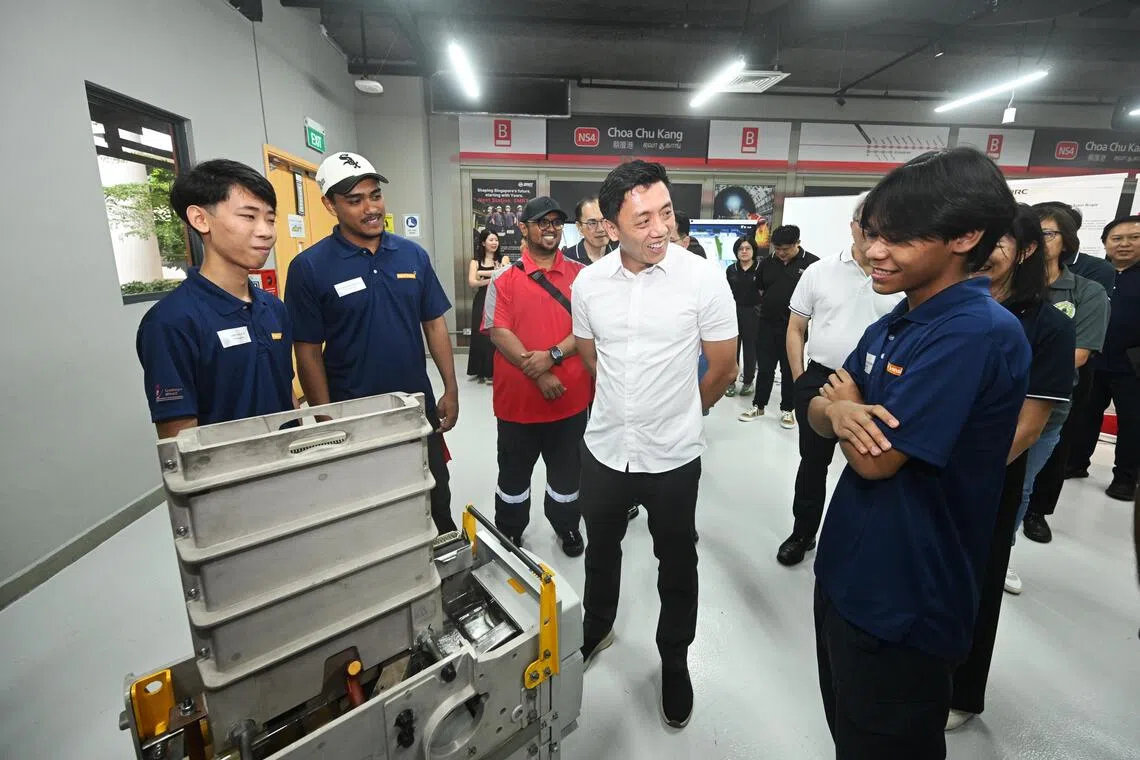
Transport Minister Jeffrey Siow (centre) at the Singapore BusTech and RailTech Grand Challenge at ITE College West on Oct 24.
ST PHOTO: AZMI ATHNI
Published Oct 24, 2026, 07:00 PM
Updated Oct 24, 2026, 07:00 PM
SINGAPORE – Singapore will be investing more resources into training workers responsible for the upkeep of its MRT system, by ensuring its engineers, technicians and operations staff have the right skills to make sound decisions and carry out works safely.
Transport Minister Jeffrey Siow on Oct 24 said that to achieve this, his ministry will be making changes to the Singapore Rail Academy.
The changes include standardising training programmes, expanding the list of workers eligible to join the courses, and introducing new industry certification pathways.
Launched in 2017, the academy currently conducts more than 20 training sessions each year for about 500 rail engineers who have just joined the industry .
These engineers also undergo separate training at their rail operators’ own training institutes. These facilities also offer training to their respective operations and maintenance staff.
Singapore has two rail operators - SBS Transit and SMRT Trains. Together, they manage six MRT lines and two LRT lines.
Siow said that from November, th e Singapore Rail Academy will introduce a consolidated training curriculum that involves input from the Land Transport Authority (LTA) and both operators.
T he training programme will be “standardised and true to the ground”, Siow said, with skills being transferable across either operator.
He added: “The academy will not just focus on the training standards for engineers, but going forward, we will also include technicians and operations staff, who play an equally vital role in keeping our trains running.”
He was speaking at LTA’s Singapore BusTech and RailTech Grand Challenge held at ITE College West. The event takes place every two years and sees public transport workers and students coming together to brainstorm solutions to engineering challenges, like troubleshooting electric bus batteries.
On the introduction of new industry certification pathways. Siow said the academy will also begin a formal partnership with the Institute of Technical Education, Nanyang Polytechnic, Republic Polytechnic, Singapore Polytechnic and the Singapore Institute of Technology.
This partnership would mean that on-the-job training and certification will count towards the pursuit of a diploma or degree, so rail workers will not need to start from scratch when pursuing educational certification .
He said: “At the heart of our transport system are people... You are the ones who keep Singapore moving every day.
“I want to make sure that we continue giving you the skills, support and opportunities to do your best work, and to build good, rewarding careers.”
The changes to the Singapore Rail Academy were first surfaced by a task force looking into solutions to improve the reliability of Singapore’s rail network.
In its report submitted to Siow in December 2025, it recommended that LTA and the rail operators work together to strengthen the role of the academy, so as to raise standards and prepare those in the industry for future challenges.
LTA said in a separate statement on Oct 24 that the changes will give the academy an expanded mandate, allowing it take on a more coordinated approach in developing those working in the rail industry.
Beyond helping develop a highly skilled and future-ready workforce in the sector, the authority said the changes will help make the industry be more attractive to future generations.
Transport Minister Jeffrey Siow (centre) with technicians at the Singapore BusTech and RailTech Grand Challenge on Oct 24. ST PHOTO: AZMI ATHNI
Transport Minister Jeffrey Siow (centre) with technicians at the Singapore BusTech and RailTech Grand Challenge on Oct 24.
“This will be increasingly important as our rail network continues to expand and adopt more advanced technologies and systems, even as our existing lines undergo major renewals.”
For instance, the upcoming Jurong Region Line is slated to begin its first stage of operations in mid-2028, while the first phase of the Cross Island Line is scheduled to begin in 2030.
Lew Yii Der, the executive dean of the Singapore Rail Academy, said that as the rail network grows and technology advances, it is necessary to equip rail professionals with the skills to meet new challenges.
SBS Transit group chief executive Jeffrey Sim said the expansion of the academy will provide more opportunities for workers to deepen expertise, gain recognised qualifications and progress in their careers.
Aqil Hamzah is a transport journalist at The Straits Times. He is also interested in issues related to crime and technology.
10月24日,交通部长萧敬腾(中)出席在新加坡工艺教育学院西校区举行的“新加坡巴士科技与铁路科技大挑战赛”。
ST 摄影:AZMI ATHNI
发布于2026年10月24日晚上7点
更新于2026年10月24日晚上7点
新加坡——新加坡将投入更多资源培训负责地铁系统维护的工人,确保其工程师、技术人员和运营人员具备做出合理决策和安全开展工作的技能。
交通部长萧敬腾于10月24日表示,为了实现这一目标,他的部门将对新加坡铁路学院进行改革。
这些变革包括规范培训计划、扩大有资格参加课程的工人名单,以及引入新的行业认证途径。
该学院于 2017 年成立,目前每年为约 500 名刚刚加入该行业的铁路工程师举办 20 多场培训课程。
这些工程师还会在各自铁路运营商的培训机构接受单独的培训。这些机构也为各自的运营和维护人员提供培训。
新加坡有两家铁路运营商——SBS Transit 和 SMRT Trains。它们共同运营六条地铁线路和两条轻轨线路。
Siow表示,从11月起,新加坡铁路学院将推出一项综合培训课程,该课程将吸纳陆路交通管理局(LTA)和两家运营商的意见。
Siow表示,培训计划将“标准化且贴近实际情况”,技能可以在两个运营商之间通用。
他补充道:“该学院不仅会关注工程师的培训标准,而且展望未来,我们还将包括技术人员和运营人员,他们在保持列车运行方面发挥着同样至关重要的作用。”
他是在新加坡陆路交通管理局(LTA)于新加坡工艺教育学院西校区举办的“新加坡巴士科技与铁路科技挑战赛”上发表讲话的。该赛事每两年举办一次,汇聚公共交通从业人员和学生,共同集思广益,探讨解决工程难题的方案,例如电动巴士电池的故障排除。
关于引入新的行业认证途径,萧先生表示,该学院还将与新加坡工艺教育学院、南洋理工学院、共和理工学院、新加坡理工学院和新加坡科技学院建立正式合作关系。
这项合作意味着在职培训和认证将计入文凭或学位的获取,因此铁路工人无需从零开始获得教育认证。
他说:“我们交通系统的核心是人……正是你们让新加坡每天都在运转。”
“我希望确保我们继续为你们提供技能、支持和机会,让你们能够做到最好,并建立良好、有意义的职业生涯。”
新加坡铁路学院的改革方案最初是由一个研究如何提高新加坡铁路网络可靠性的特别工作组提出的。
该机构在2025年12月提交给萧的报告中建议,陆路交通管理局和铁路运营商应共同努力,加强学院的作用,以提高标准,并为业内人士应对未来的挑战做好准备。
陆路交通管理局在 10 月 24 日的另一份声明中表示,这些变化将赋予该学院更大的职权范围,使其能够采取更加协调的方式来培养铁路行业的从业人员。
除了帮助该行业培养一支高技能、面向未来的劳动力队伍外,该机构表示,这些变革还将有助于使该行业对后代更具吸引力。
10月24日,交通部长萧敬腾(中)与技术人员在新加坡巴士科技和铁路科技挑战赛现场合影。(海峡时报摄影:AZMI ATHNI)
10月24日,交通部长萧正树(中)与技术人员在新加坡巴士科技和铁路科技大挑战赛上合影。
“随着我们的铁路网络不断扩展并采用更先进的技术和系统,即使我们现有的线路也在进行重大更新,这一点也将变得越来越重要。”
例如,即将开通的裕廊区域线计划于 2028 年年中开始第一阶段的运营,而跨岛线的第一阶段计划于 2030 年开始运营。
新加坡铁路学院执行院长刘义德表示,随着铁路网络的发展和技术的进步,有必要让铁路专业人员具备应对新挑战的技能。
新捷运集团首席执行官沈志伟表示,学院的扩建将为员工提供更多机会,以加深专业技能,获得认可的资格证书,并在职业生涯中取得进步。
阿基尔·哈姆扎是《海峡时报》的交通记者。他也对犯罪和科技相关议题感兴趣。