Gas supply cut from Indonesia accounts for less than 2% of S’pore’s daily gas demand: EMA印尼天然气供应削减仅占新加坡每日天然气需求的不到2%:EMA
Singapore has also been moving to further diversify its energy sources. Read more at straitstimes.com.
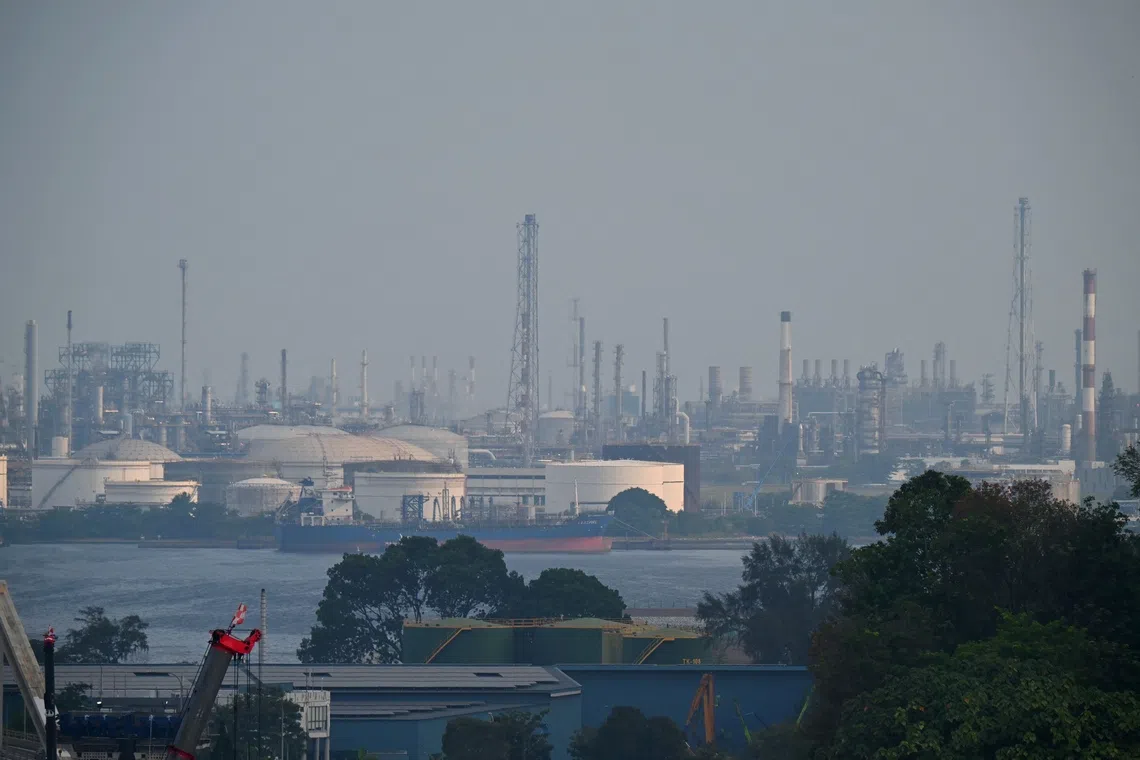
Natural gas currently accounts for about 95% of Singapore’s electricity generation mix.
ST PHOTO: KUA CHEE SIONG
Published Oct 24, 2026, 06:13 PM
Updated Oct 24, 2026, 08:05 PM
SINGAPORE – The reduction in the gas supply from Indonesia will make up less than 2% of Singapore’s total daily gas demand, said the Energy Market Authority (EMA) in the evening of Oct 24.
EMA was responding to queries from The Straits Times following announcements from an Indonesian official that it will be cutting gas exports to Singapore via two pipelines directly linked to the city-state.
The chief of Indonesia’s upstream oil and gas regulator SKK Migas Djoko Siswanto had been quoted in Indonesian media outlets on Oct 23 saying that the country will be cutting natural gas exports to Singapore by 31 billion British thermal units per day (BBTUD) from Oct 24.
The EMA spokesperson said that based on the information from Singapore’s natural gas importers, the total reduction amounts to 17BBTUD over a period of 18 days.
Singapore’s total daily gas demand amounts to more than 1,000 BBTUD, he added.
“EMA understands that our importers will pursue all relevant recourse in their contracts for the gas supply disruption,” the spokesman added.
He said the authority has contingency plans in place to deal with such reductions.
The EMA spokesman cited how Singapore had experienced reductions in its gas supply ranging from 20 BBTUD to 100 BBTUD in recent months, due to planned or urgent maintenance. That shortfall had been replaced with other gas sources without incident, he said.
EMA said Singapore has sufficient energy supplies to meet national demands.
Singapore relies on natural gas for 95% of its electricity needs. This gas can come in piped form from Malaysia and Indonesia, or in liquefied form (LNG) from all over the world.
The Republic has also been stepping up efforts to diversify its energy sources further, by investing in solar panel deployment domestically, and doing research on emerging technologies such as nuclear and geothermal energy.
The EMA spokesman said the Singapore GasCo – the Republic’s central procurer and supplier of natural gas – is operationally ready to import more at any time.
Said EMA: “Besides Indonesia, Singapore imports natural gas from other sources around the world.”
“Power generation companies are further required to maintain sufficient fuel reserves for power generation, including diesel reserves.”
Meanwhile, one of Singapore’s largest gas suppliers said that its delivery of gas to customers here has been affected by “temporary reductions” in supply from its supplier in Indonesia.
The firm Gas Supply said it has been in direct communication with customers who are impacted and appreciate their patience and understanding during this period.
“(The company) continues to engage closely with our upstream supplier to manage the situation,” said the importer wholly owned by Temasek.
The gas cuts come after remarks made on Oct 22 by the country’s Energy and Mineral Resources Minister Bahlil Lahadalia.
Bahlil, who is also Coordinating Minister for Downstreaming and Energy Transition, said that Indonesia could stop exporting energy to countries that failed to show it mutual respec t.
According to media reports, the cuts affected only Singapore because the pipelines from Natuna and Sumatra were connected directly to the city-state.
Exports from Natuna would be reduced by 15 BBTUD, while another 16 BBTUD would be cut from the Jambi Merang gas in Sumatra.
This had been framed in Indonesian media reports as part of the President Prabowo Subianto’s government’s moves to prioritise domestic energy needs amid growing concerns over energy security.
Checks by ST found that natural gas from Sumatra is exported to Gas Supply.
Meanwhile, gas from Indonesia’s Natuna Sea is transported through a direct subsea pipeline to a receiving facility operated by Sembcorp Gas.
According to Sembcorp Industries’ 2023 annual report, the company entered into a sales agreement valued at about $1.9 billion to import piped natural gas from the West Natuna gas fields.
Both agreements were expected to last until 2028.
ST has contacted Sembcorp with queries.
Indonesia has been planning to reduce gas exports to Singapore for several years to meet growing domestic demand. In 2022, Jakarta agreed to extend gas supplies to Singapore until 2028, but at lower volumes than under the previous contract.
David Broadstock, an economist who monitors the energy sector, called the abrupt cut a “surprising event” for Singapore’s energy supply chain.
But he noted the Republic is well-prepared to handle it, with potential alternatives from countries like the US.
He pointed out the timing of the cuts, just before the Singapore International Energy Week commencing on Oct 26, and during a period of increased complexity between the two nations over transboundary haze enforcement.
Said Broadstock: “There is a question mark over whether there is a political element tied to this action, potentially making it a reaction to the haze issue.
“I wouldn’t say for sure that it is a definitive driving factor, but it certainly cannot be ruled out.”
Broadstock expects that buyers of natural gas will immediately look to secure alternative contracts, potentially drawing from the US or the Middle East to fill the gap.
Despite the need to source presumably more expensive alternatives for the shortfall, he does not foresee a major price surge for consumers.
He said: “We shouldn’t expect massive market disruptions.
“It isn’t the global market taking a shock, but rather a preferred supplier taking a step back.”
Ang Qing is a journalist covering local and international breaking news at The Straits Times, with a focus on the environment, crime, technology and social issues.
Singapore-Indonesia ties
目前,天然气约占新加坡发电结构的95%。
《海峡时报》摄影:郭志雄
发布于 2026 年 10 月 24 日下午 6:13
更新于2026年10月24日晚上8:05
新加坡——新加坡能源市场管理局(EMA)于10月24日晚间表示,印尼天然气供应减少将占新加坡每日天然气总需求的不到2%。
在印尼官员宣布将通过两条直接连接新加坡的管道削减对新加坡的天然气出口后,EMA 回应了《海峡时报》的询问。
10 月 23 日,印尼媒体援引印尼上游油气监管机构 SKK Migas 负责人 Djoko Siswanto 的话说,该国将从 10 月 24 日起每天削减对新加坡 310 亿英热单位 (BBTUD) 的天然气出口。
EMA发言人表示,根据新加坡天然气进口商提供的信息,18天内总减量为170亿英热单位/日。
他还补充说,新加坡每日天然气总需求量超过1000亿BTUD。
发言人补充说:“EMA 理解,我们的进口商将根据合同寻求所有相关的补救措施,以应对天然气供应中断问题。”
他说,有关部门已制定应急计划来应对此类削减。
EMA发言人指出,由于计划内或紧急维护,新加坡近几个月的天然气供应量减少了200亿至1亿吨/日不等。他表示,这一缺口已由其他天然气来源弥补,未发生任何意外。
EMA表示,新加坡拥有充足的能源供应,足以满足国内需求。
新加坡95%的电力需求依赖天然气。这些天然气可以通过管道从马来西亚和印度尼西亚输送,也可以以液化天然气(LNG)的形式从世界各地输送。
共和国也一直在加大力度,进一步实现能源来源多元化,投资在国内部署太阳能电池板,并研究核能和地热能等新兴技术。
EMA发言人表示,新加坡天然气公司(新加坡共和国的中央天然气采购商和供应商)已做好随时进口更多天然气的准备。
EMA表示:“除了印度尼西亚,新加坡还从世界各地其他来源进口天然气。”
“发电公司还必须保持充足的发电燃料储备,包括柴油储备。”
与此同时,新加坡最大的天然气供应商之一表示,由于其印尼供应商的供应“暂时减少”,该公司向新加坡客户输送天然气受到了影响。
天然气供应公司表示,他们已与受影响的客户直接沟通,并感谢他们在此期间的耐心和理解。
“(公司)将继续与上游供应商密切合作,以应对这种情况,”淡马锡全资拥有的这家进口商表示。
此次天然气减产是在该国能源和矿产资源部长巴赫利尔·拉哈达利亚于 10 月 22 日发表讲话之后进行的。
巴赫利尔同时也是下游能源转型协调部长,他表示,如果印尼国家不尊重印尼,印尼可能会停止向其出口能源。
据媒体报道,此次输油管道切断仅影响新加坡,因为来自纳土纳和苏门答腊的输油管道直接与新加坡相连。
纳土纳天然气田的出口量将减少 150 亿吨/日,而苏门答腊占碑梅朗天然气田的出口量也将减少 160 亿吨/日。
印尼媒体报道称,这是普拉博沃·苏比安托总统领导的政府在日益增长的能源安全担忧下,优先考虑国内能源需求的举措之一。
ST 的调查发现,苏门答腊的天然气出口到 Gas Supply 公司。
与此同时,来自印度尼西亚纳土纳海的天然气通过海底管道直接输送到胜科天然气公司运营的接收设施。
根据胜科工业2023年年度报告,该公司签订了一项价值约19亿美元的销售协议,从西纳土纳气田进口管道天然气。
这两项协议预计都将持续到2028年。
ST已就相关问题联系胜科集团。
印尼多年来一直计划减少对新加坡的天然气出口,以满足不断增长的国内需求。2022年,雅加达同意将对新加坡的天然气供应延长至2028年,但供应量低于之前的合同规定。
关注能源行业的经济学家大卫·布罗德斯托克称,此次突然减产对新加坡的能源供应链来说是一个“令人惊讶的事件”。
但他指出,共和国已做好充分准备应对此事,并且美国等国家也可能提供替代方案。
他指出,此次减排的时机颇为蹊跷,正值新加坡国际能源周(10 月 26 日)开幕前夕,也是两国在跨境雾霾执法问题上关系日益复杂的时期。
布罗德斯托克说:“这一行动是否带有政治因素尚存疑问,这可能是对雾霾问题的一种反应。”
“我不能肯定地说这是决定性因素,但也不能排除这种可能性。”
Broadstock 预计天然气买家将立即寻求获得替代合同,可能会从美国或中东寻求填补缺口。
尽管需要寻找价格可能更高的替代品来弥补缺口,但他预计消费者不会面临价格大幅上涨的情况。
他说:“我们不应该预期会出现大规模的市场动荡。”
“这不是全球市场遭受冲击,而是某个首选供应商退缩了。”
Ang Qing是《海峡时报》的一名记者,负责报道本地和国际突发新闻,重点关注环境、犯罪、科技和社会问题。
新加坡与印度尼西亚的关系