Singapore retail sales growth slows to 1.5% in July as food, department store sales fall新加坡7月份零售销售增速放缓至1.5%,食品和百货商店销售额下降
Singapore retail sales growth slowed to 1.5% in July with gains in recreational goods and jewellery offset by declines in food and department store sales. Read more at straitstimes.com.
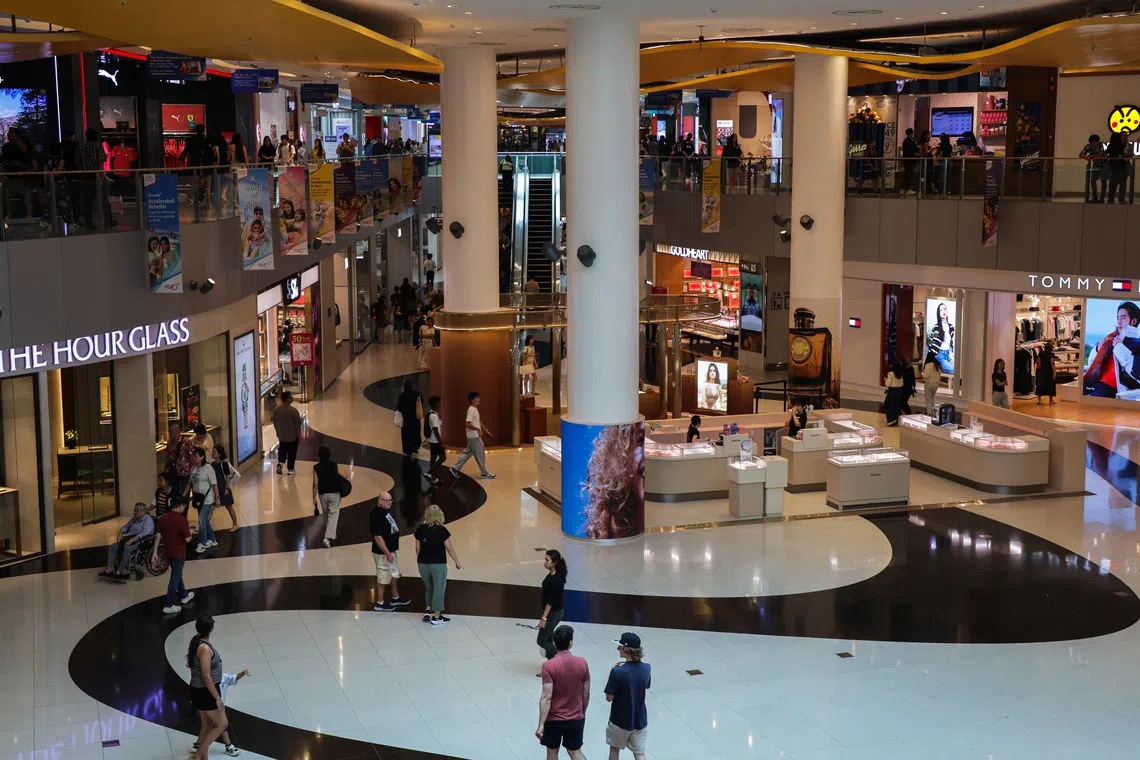
Total retail sales were estimated at $4.4 billion in July, with online transactions accounting for 15.4 per cent of the total, down from 16.4 per cent in June.
Published Sep 07, 2026, 01:00 PM
Updated Sep 07, 2026, 02:18 PM
Singapore's retail sales growth slowed to 1.5% year on year in July, down from 4% in June, with total sales at $4.4 billion and online transactions making up 15.4%.
Strong gains were seen in recreational goods (+13.9%), watches and jewellery (+11.1%), and computer equipment (+5.1%), while food, alcohol, and department store sales declined.
Food and beverage sales fell 1.9% year on year, with declines in food courts and cafes, though fast-food outlets saw a 4.6% increase in sales.
SINGAPORE – Singapore’s retail sales growth slowed in July, even as sales of recreational goods and watches and jewellery posted double-digit gains.
Takings at the till rose 1.5 per cent year on year in July, moderating from June’s 4 per cent expansion , according to data from the Singapore Department of Statistics (SingStat).
In a release on Sept 7, SingStat said retail sales excluding motor vehicles, parts and accessories also rose 1.5 per cent year on year, compared with 4.1 per cent growth in June.
On a month-on-month and seasonally adjusted basis, retail sales rose 0.9 per cent in July. Excluding motor vehicles, parts and accessories, sales increased 0.7 per cent.
Within the retail trade sector, recreational goods recorded the strongest year-on-year growth, with sales rising 13.9 per cent, driven mainly by higher sales of sporting goods.
Sales of watches and jewellery rose 11.1 per cent, mainly due to higher jewellery sales, while sales of computer and telecommunications equipment increased 5.1 per cent.
Other industries that recorded year-on-year increases included cosmetics, toiletries and medical goods, where sales rose 4.5 per cent; wearing apparel and footwear, up 2.3 per cent; and furniture and household equipment, up 1.3 per cent.
Sales of motor vehicles, parts and accessories increased 1.4 per cent.
In contrast, sales of food and alcohol fell 5.1 per cent year on year, while sales at department stores declined 3.5 per cent.
Sales in the “others” category fell 4 per cent, while optical goods and books declined 2.2 per cent. Supermarkets and hypermarkets recorded a 2.1 per cent decline, while sales at mini-marts and convenience stores fell 1.5 per cent.
Sales at petrol service stations declined 1.1 per cent year on year.
On a month-on-month and seasonally adjusted basis, the majority of retail industries recorded growth in July.
Sales of recreational goods rose 7.5 per cent from June. Department stores recorded an increase of 4.6 per cent, while supermarkets and hypermarkets recorded an increase of 4.3 per cent.
In contrast, sales at petrol service stations fell 7.2 per cent month on month, while computer and telecommunications equipment sales declined 4.7 per cent.
The SingStat data also showed that food and beverage (F&B) services sales fell 1.9 per cent year on year in July, following a 2.3 per cent decline in June.
Total F&B sales were estimated at $1.6 billion, with online transactions accounting for 20.9 per cent of the total, up from 20.4 per cent in June.
Within the F&B sector, foodcourts and other eating places recorded the steepest year-on-year decline, with sales falling 6.6 per cent. Cafe sales edged down 6.4 per cent, while restaurant sales dipped 0.3 per cent.
In contrast, sales at fast-food outlets rose 4.6 per cent year on year, while food caterers recorded a 0.3 per cent increase.
On a month-on-month and seasonally adjusted basis, overall F&B sales rose 0.6 per cent in July.
Sales at fast-food outlets increased 5.8 per cent from June, while food caterers and restaurants recorded increases of 1.4 per cent and 0.4 per cent respectively.
Sales at foodcourts and other eating places slipped 1.3 per cent, while cafe sales dipped 0.1 per cent.
Singapore Statistics
7 月份零售总额估计为 44 亿美元,其中在线交易占总额的 15.4%,低于 6 月份的 16.4%。
发布于 2026 年 9 月 7 日下午 1:00
更新于2026年9月7日下午2:18
新加坡7月份零售销售同比增长放缓至1.5%,低于6月份的4%,总销售额为44亿美元,其中在线交易占15.4%。
休闲用品(+13.9%)、手表和珠宝(+11.1%)以及计算机设备(+5.1%)的销售额均出现强劲增长,而食品、酒类和百货商店的销售额则有所下降。
食品和饮料销售额同比下降 1.9%,其中美食广场和咖啡馆的销售额有所下降,但快餐店的销售额增长了 4.6%。
新加坡——尽管休闲用品、手表和珠宝的销售额实现了两位数的增长,但新加坡7月份零售销售增长放缓。
根据新加坡统计局(SingStat)的数据,7 月份收银机收入同比增长 1.5%,较 6 月份 4% 的增幅有所放缓。
新加坡统计局9月7日发布的数据显示,不包括汽车、零部件和配件的零售额同比增长1.5%,而6月份的增幅为4.1%。
经季节性调整后,7月份零售额环比增长0.9%。若不计汽车、零部件及配件,销售额增长0.7%。
在零售贸易领域,休闲用品的同比增长最为强劲,销售额增长了 13.9%,这主要得益于体育用品销售额的增长。
手表和珠宝的销售额增长了 11.1%,主要原因是珠宝销售额增长;而计算机和电信设备的销售额增长了 5.1%。
其他实现同比增长的行业包括化妆品、洗漱用品和医疗用品(销售额增长 4.5%);服装和鞋类(增长 2.3%);以及家具和家用设备(增长 1.3%)。
汽车、零部件及配件的销售额增长了1.4%。
相比之下,食品和酒类销售额同比下降 5.1%,百货商店销售额下降 3.5%。
“其他”类商品销售额下降了4%,光学产品和书籍销售额下降了2.2%。超市和大型超市的销售额下降了2.1%,而便利店和小型超市的销售额下降了1.5%。
加油站销售额同比下降1.1%。
经季节性调整后,7 月份大多数零售行业环比增长。
休闲用品销售额较6月份增长7.5%。百货商店销售额增长4.6%,而超市和大型超市销售额增长4.3%。
相比之下,加油站的销售额环比下降了 7.2%,而计算机和电信设备的销售额下降了 4.7%。
新加坡统计局的数据还显示,7 月份餐饮服务销售额同比下降 1.9%,此前 6 月份下降了 2.3%。
食品饮料总销售额估计为 16 亿美元,其中在线交易占总额的 20.9%,高于 6 月份的 20.4%。
在餐饮业中,美食广场和其他餐饮场所的销售额同比下降幅度最大,下降了6.6%。咖啡馆的销售额小幅下降了6.4%,而餐厅的销售额下降了0.3%。
相比之下,快餐店的销售额同比增长了 4.6%,而餐饮服务商的销售额增长了 0.3%。
经季节性调整后,7 月份食品饮料总销售额环比增长 0.6%。
快餐店的销售额比 6 月份增长了 5.8%,而食品承办商和餐馆的销售额分别增长了 1.4% 和 0.4%。
美食广场和其他餐饮场所的销售额下降了 1.3%,而咖啡馆的销售额下降了 0.1%。
新加坡统计局