Skyhawks Over Cuba: VC-10 “Challengers” And Their TA-4J’s Unique Cold War Mission天鹰战机飞越古巴:VC-10“挑战者”及其TA-4J独特的冷战任务
The squadron's primary mission may have been fleet training, but they could also respond to war arriving on their doorstep at a moment's notice.
新闻视频
Updated Jul 5, 2020 7:17 PM EDT
America’s seemingly indefinite lease on Guantanamo Bay remains controversial, and the Castro family that continues to rule over Cuba is no fan of its existence. When most people hear the words Guantanamo Bay they probably think of America’s detention center there and the Global War on Terror, but during the Cold War the facility sat at what could have been the edge of World War III. Today the base is still quite active, although no tactical aircraft squadron calls Leeward Point Field at Naval Station Guantanamo Bay home, like VC-10 “Challengers” did up until 1993.
The Challengers trace their roots back to World War II, and during the dawn of the Cold War the squadron operated a slew of different aircraft—from flying boat patrol aircraft to jet fighters. Officially, the unit’s permanent tenure at Guantanamo Bay began in 1945 under the designation Utility Squadron 10, or VU-10. Their mission began to morph drastically following the overthrow of the Cuban government by Castro’s communist forces in 1959. Suddenly the unit was on the front lines of the Cold War, and its menagerie of target towing, cargo hauling and sea patrol aircraft was consolidated into a more potent force of F-8 Crusaders and S-2 Trackers. During the Cuban Missile Crisis, VU-10 was the closest American air combat force to what could have been the spark that set off a nuclear inferno. Luckily that spark never flew.
VC-10 Challenger F-8K Crusaders high over Guantanamo Bay in the 1960s., DoD
By 1965 the squadron was re-designated Composite Squadron Ten, or VC-10, and its roles were multi-fold. They were based in Guantanamo to support nearly constant fleet training exercises in the Caribbean, launching drones, towing targets, acting as targets themselves and as dynamic aggressors for ships’ combat systems operators and other naval aviators to train against. Secondly, they were tasked with the job of keeping an eye on nearby Cuban forces, and if need be, to keep them at bay until aerial reinforcements could arrive—a dubious task at best, a futile one at worst.
This mission was executed via regular reconnaissance flights, combat air patrols and air-to-ground training sorties. Close air support and interdiction training often saw VC-10 jets working in conjunction with special operations forces on the ground. At least two aircraft were armed and ready to fly in a matter of minutes at all times should the klaxon sound. During tenser times, many more of the squadrons jets would be on high alert or be in the air patrolling the tight airspace over and around the bay. It was intense stuff to say the least due to the incredibly close proximity to unfriendly forces.
VC-10 TA-4J seen in its hi-viz paint scheme. By the mid 1980s this look gave way to an overall light blue-teal aggressor scheme. , USN
Eventually the squadron’s F-8 Crusaders and S-2 Trackers gave way to A-4 Skyhawks, namely the TA-4J. This aircraft was the Navy’s advanced jet trainer through the last three decades of Cold War and was not known for its combat prowess, although it was popular with the Navy’s aggressor squadrons. A few other types of A-4s were also mixed into VC-10’s inventory sporadically, including TA-4Fs, and later on, EA-4Fs, the former of which was modified for electronic warfare aggressor duties.
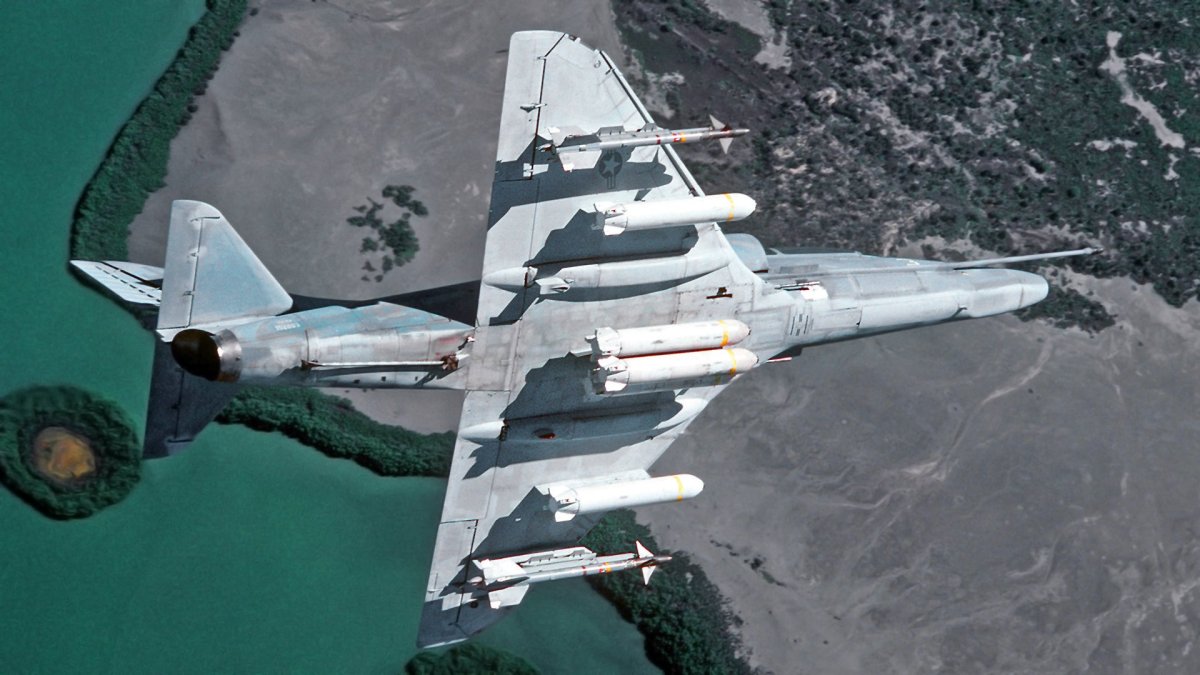
VC-10 TA-4J fully armed with Mk20 Rockeye cluster bombs and AIM-9L/M Sidewinders. If a robust incursion into US territory in Cuba were to have occurred, the jets would have flown missions last mere minutes before being quickly rearmed and sent up again. , DoD
Even though tensions on the island between the US and the Castro government had subsided a bit by the mid 1970s, VC-10’s secondary defensive mission was still needed. As such, the Challengers’ TA-4Js were somewhat special as they were outfitted for rudimentary combat—able to employ live munitions in combat should they be called upon to do so against marauding Cuban troops who had “jumped the fence.”
The Skyhawk flying Challengers executed this mission with 20mm cannon shells, cluster munitions, dumb iron bombs and AIM-9 Sidewinders being their primary arsenal. During the 1980s, under President Reagan’s expansion of the US Navy, VC-10 was in more demand than ever for adversary support duties. The unit’s Skyhawks were constant players during carrier battle group workups and large exercises in the region, alongside their aggressor counterparts VC-8 based at NAS Roosevelt Roads on the island of Puerto Rico.
A VC-10 TA-4J gets towed out of the big hangar at Leeward Point Field., DoD
Following the collapse of the Soviet Union and as part of the drawdown of US forces across the globe, VC-10 was formally disestablished in 1993. The Challengers’ exit from Guantanamo Bay marked the last time a permanent fixed-wing tactical aircraft unit was based there. It also marked the beginning of the last decade of Skyhawk service within the Pentagon’s inventory.
There were certainly no shortage of stunning backdrops around southeastern Cuba for VC-10’s Skyhawks to pose in front of. , DoD
The flightline at Leeward Point Field was an active place, with Skyhawks towing target, flying aggressor missions, and keeping an eye on nearby Cuban forces at request of the commanding officer of US forces in Cuba., DoD
VC-10’s hi-viz color scheme included a white and light gray overall tones with bright red, white and blue langley bands and tail flashes. Here a TA-4J is seen towing a target. , DoD
Caribbean waters were busy with military exercises during the Cold War, many of which VC-10 played a part in. , Dod
The Skyhawk wasn’t a powerful beast of an aircraft by any means but it was nimble and could lift a lot of weight. , DoD
Contact the author: Tyler@thedrive.com
Comments couldn’t be loaded. Please refresh the page.
更新于美国东部时间2020年7月5日晚上7:17
美国对关塔那摩湾看似无限期的租约一直备受争议,而继续统治古巴的卡斯特罗家族也对其存在深恶痛绝。大多数人听到“关塔那摩湾”这个词,可能会想到美国的拘留中心和全球反恐战争,但在冷战时期,该设施曾处于第三次世界大战的边缘。如今,该基地仍然相当活跃,尽管像VC-10“挑战者”中队那样驻扎在关塔那摩湾海军基地利沃德角机场的战术飞机中队已不复存在,VC-10“挑战者”中队一直驻扎到1993年。
“挑战者”中队的历史可以追溯到二战时期。冷战初期,该中队曾使用过多种不同的飞机,从水上巡逻机到喷气式战斗机,不一而足。官方记录显示,该部队于1945年正式驻扎在关塔那摩湾,当时的番号是第10通用中队(Utility Squadron 10,简称VU-10)。1959年卡斯特罗领导的共产党军队推翻古巴政权后,他们的任务发生了巨大变化。该部队突然被推到了冷战的前线,其原本种类繁多的靶机拖曳机、货运机和海上巡逻机被整合为一支更强大的F-8“十字军战士”战斗机和S-2“追踪者”反潜巡逻机部队。在古巴导弹危机期间,VU-10是距离可能引发核战争的导火索最近的美国空中作战部队。幸运的是,那颗导火索最终没有引爆。
20世纪60年代,VC-10挑战者战斗机和F-8K十字军战斗机在关塔那摩湾上空高空飞行。(美国国防部)
到1965年,该中队被重新命名为第十混合中队(VC-10),其任务也更加复杂。他们驻扎在关塔那摩,为加勒比海地区几乎不间断的舰队训练演习提供支持,包括放飞无人机、拖曳靶标、自身充当靶标以及作为动态假想敌,供舰艇作战系统操作员和其他海军飞行员进行训练。其次,他们的任务是监视附近的古巴部队,并在必要时阻止其靠近,直到空中增援部队抵达——这项任务往好了说是徒劳无功,往坏了说则是毫无希望。
这项任务通过常规侦察飞行、战斗空中巡逻和空对地训练飞行来执行。近距离空中支援和拦截训练中,VC-10喷气式飞机经常与地面特种作战部队协同作战。至少有两架飞机随时待命,一旦警报响起,几分钟内即可起飞。在局势更加紧张的时候,该中队的更多飞机将保持高度戒备状态,或在海湾上空及周边狭窄空域巡逻。由于与敌对势力距离极近,情况可谓极其危险。
图中所示为采用高可视度涂装的VC-10 TA-4J。到了20世纪80年代中期,这种涂装被整体浅蓝绿色的假想敌涂装所取代。(美国海军)
最终,该中队的F-8十字军战士和S-2追踪者战斗机被A-4天鹰攻击机,特别是TA-4J型所取代。在冷战的最后三十年里,这款飞机一直是海军的高级喷气式教练机,虽然战斗力并不强,但却深受海军假想敌中队的青睐。VC-10中队也零星地装备过其他几种A-4飞机,包括TA-4F型,以及后来的EA-4F型,其中TA-4F型经过改装,专门用于电子战假想敌任务。
VC-10 TA-4J 战机满载 Mk20“石眼”集束炸弹和 AIM-9L/M“响尾蛇”导弹。如果古巴发生大规模入侵美国领土的行动,这些战机执行的任务持续时间仅为几分钟,之后便会迅速重新装弹并再次升空。——美国国防部
尽管到了20世纪70年代中期,美国与卡斯特罗政府在岛上的紧张局势有所缓和,但VC-10的辅助防御任务仍然必不可少。因此,挑战者中队的TA-4J型飞机显得有些特殊,因为它们配备了基本的作战装备——如果需要对抗“翻越围栏”的古巴军队,它们可以使用实弹进行战斗。
执行此次任务的“天鹰”攻击机搭载“挑战者”战斗机,主要武器包括20毫米机炮炮弹、集束炸弹、普通炸弹和AIM-9“响尾蛇”导弹。20世纪80年代,在里根总统扩充美国海军的背景下,VC-10中队在假想敌支援任务中的需求空前高涨。该中队的“天鹰”攻击机经常参与航母战斗群的训练和该地区的大型演习,与驻扎在波多黎各罗斯福路海军航空站的假想敌部队VC-8中队并肩作战。
一架VC-10 TA-4J被拖出利沃德角机场的大型机库。(美国国防部)
随着苏联解体以及美军在全球范围内的撤军,VC-10中队于1993年正式解散。“挑战者”攻击机撤离关塔那摩湾,标志着最后一支常驻固定翼战术飞机部队的结束。这也标志着“天鹰”攻击机在五角大楼服役的最后一个十年的开始。
古巴东南部地区风景优美,VC-10“天鹰”战机有很多绝佳的背景可供拍摄。
利沃德角机场的飞行跑道十分繁忙,A-4“天鹰”攻击机拖曳靶标、执行假想敌任务,并应驻古巴美军指挥官的要求监视附近的古巴部队。(美国国防部)
VC-10 的高可视度涂装方案以白色和浅灰色为主色调,配以鲜艳的红、白、蓝三色兰利条纹和尾翼闪光。图中可见一架 TA-4J 正在拖曳靶标。(美国国防部)
冷战期间,加勒比海海域军事演习频繁,VC-10参与了其中许多演习。
天鹰战机绝非动力强劲的飞机,但它机动灵活,而且能运载很大重量。——美国国防部
联系作者:Tyler@thedrive.com
评论加载失败,请刷新页面。