Blue oasis in a shipping lane航道上的蓝色绿洲
The designation recognises the marine park as a sanctuary for biodiversity. Read more at straitstimes.com.
新闻视频
Published: Oct 26, 2026, 05:00 AM
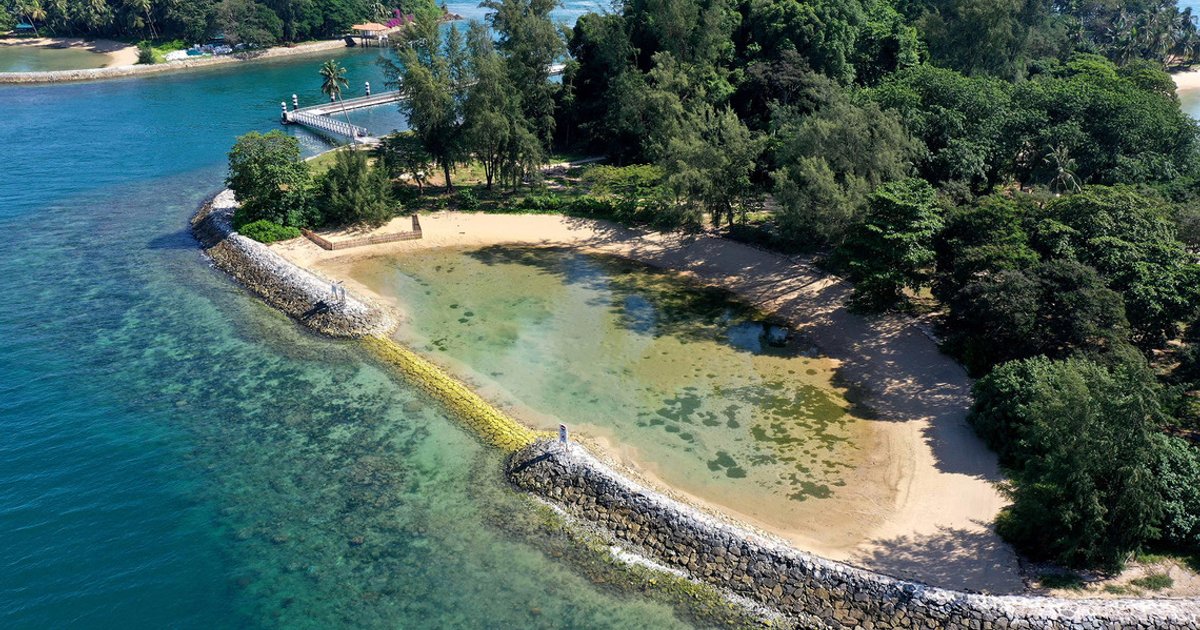
The twin isles of Sisters’ Islands Marine Park stood out clearly from a distance, even as haze shrouded Singapore on Sept 30.
With the grey pollution washing out our view of the concrete skyline, it was difficult to see the silhouettes of the skyscrapers beyond Marina South Pier.
Yet, as we approached the islands, their lush greenery provided a sharper – and more welcome – contrast against the pall of haze.
The islands provide more than just visual respite from the pollution. They have also been a refuge for wildlife in the Singapore Strait – one of the world’s busiest shipping routes – since the marine park was announced in 2014.
On Oct 26, California-headquartered marine conservation organisation Mission Blue will designate the marine park a Hope Spot – Singapore’s first – to recognise it as an area that serves as a sanctuary for marine biodiversity and an important contributor to the health of the seas.
It joins 171 other Hope Spots globally, including sites renowned for their marine life, such as the Bunaken National Park in Indonesia and Australia’s Great Barrier Reef. Since Mission Blue started the initiative in 2009, 10 Hope Spots have been designated in South-east Asia.
An oasis for marine life
The marine park, located among the southern islands off mainland Singapore, is a testament to how life can cling on and even thrive in a heavily urbanised island-state.
While many may associate Singapore’s waters with murky seas, the waters around the southern islands are home to colourful coral reefs.
The Neptune’s Cup sponge, once thought to be globally extinct, can also be found in the waters there.
Other critically endangered creatures, such as hawksbill turtles, also call Singapore’s southern waters home.
ST PHOTO: LIM YAOHUI
Research has shown that the coral reefs within the marine park act like mother reefs , releasing free-floating coral larvae that settle in neighbouring sites and create new habitats there.
We saw a sign of this while glancing into one of the moon pools along the Sisters’ Islands boardwalk – openings that allow visitors a glimpse of the sea beneath their feet.
Jani Tanzil, a coral reef biologist, pointed out some corals growing along the edges of the pool. “Those corals grew here naturally,” she said. “They were not planted by us.”
Naturally grown corals thriving beneath the Sisters’ Islands Marine Park floating boardwalk.
Corals – both naturally grown and planted – on an artificial reef structure beneath the floating boardwalk.
Tanzil is one of two co-chairs of the Friends of Marine Park – a network that works closely with the National Parks Board (NParks), the government agency that manages the marine park, on conservation programmes, activities and outreach efforts related to the marine park.
Its members include conservationists, marine scientists, heritage experts, as well as representatives of sea sports organisations and educational groups.
Tanzil and marine scientist Sam Shu Qin, the other co-chair, led efforts to nominate the marine park as a Hope Spot. “The conversation among the community started about two years ago, and we submitted the nomination papers in July 2026,” Sam said.
Jani Tanzil (left) and Sam Shu Qin, marine biologists and co-chairs of the Friends of Marine Park community, at Sisters’ Islands Marine Park. ST PHOTO: GAVIN FOO
Jani Tanzil (left) and Sam Shu Qin, marine biologists and co-chairs of the Friends of Marine Park community, at Sisters’ Islands Marine Park.
The duo were guiding a team from The Straits Times around the marine park, ahead of its official designation as a Hope Spot.
In 2024, the marine park was reopened to the public after some enhancement works.
Features visitors can view include the floating boardwalk, a coastal forest trail with a hilltop viewing deck, and a lagoon tidal pool that supports mangrove and seagrass restoration, as well as educational and monitoring programmes.
An aerial view of the floating boardwalk at Sisters’ Islands Marine Park.
The Ocean Network Express Coastal Forest Trail on Big Sister's Island.
Mangrove saplings in a lagoon at Sisters’ Islands Marine Park.
Small Sister’s Island, the smaller of the two islands, is not open to the public as it is zoned for research and conservation, including the nation’s first turtle hatchery.
Mission Blue evaluates Hope Spot nominations based on various factors, including an area’s ecological and scientific importance, presence of threatened species, existing or potential protection, and the strength of local leadership and community support, a spokesperson said.
She noted that the Sisters’ Islands Marine Park protects a variety of habitat types, including coral reefs and mangroves, alongside one of the world’s busiest shipping corridors. The reefs also help supply coral larvae to connected habitats in the Singapore Strait, she said.
“Combined with decades of community-led conservation, Singapore offers an important model for protecting marine biodiversity in rapidly developing urban coastal environments,” the spokesperson added.
Rich marine biodiversity
The 40ha Sisters’ Islands Marine Park is the size of 50 football fields and comprises the two islands, the surrounding reefs and the western reefs of nearby St John’s Island and Pulau Tekukor.
The Southern Islands Hope Spot now mainly spans the boundaries of the marine park.
But Sam said that the Friends of Marine Park community opted to name the Hope Spot after the Southern Islands so its boundaries could potentially be expanded. This could include Singapore’s second marine park when it is officially gazetted.
Sam Shu Qin (left) and Jani Tanzil pointing out marine life from the boardwalk at Sisters’ Islands Marine Park. ST PHOTO: GAVIN FOO
Sam Shu Qin (left) and Jani Tanzil pointing out marine life from the boardwalk at Sisters’ Islands Marine Park.
The Government announced in May 2024 that the southern part of Lazarus Island and the reef off Kusu Island would be designated as the Republic’s second marine park .
Both these islands are in the vicinity of Sisters’ Islands. There have been no updates on the second marine park since the initial announcement.
Karenne Tun, the group director of NParks’ National Biodiversity Centre, said large marine areas can have regional and global significance. But the importance of small marine areas, like Sisters’ Islands Marine Park, cannot be underestimated or overlooked.
“Being located in close proximity to one of the world’s busiest waterways, the marine park protects coral reefs, seagrass beds, sandy and rocky shores, and coastal habitats that provide safe harbour for a wide range of marine life,” she said.
For instance, the marine park is one of the few places in the world where living Neptune’s Cup sponges can be seen, Tun said. These marine sponges, which can grow large enough for a child to sit in, were reportedly last sighted in Singapore in 1908.
Tun had rediscovered them in 2011, in Singapore’s waters.
NParks subsequently discovered a few more living individuals in the waters around Singapore, and they were all moved into the marine park for their protection.
A Neptune’s Cup sponge that was relocated from Pulau Semakau to the marine park in February 2022. PHOTO: JEFFREY LOW
A Neptune’s Cup sponge that was relocated from Pulau Semakau to the marine park in February 2022.
Tun pointed to other signs of life flourishing because of the protection given to the marine park.
Schools of fishes are often seen swimming around the marine park’s floating boardwalk, she said, while sea turtles have been sighted surfacing in the area, suggesting that at least a few of them may be feeding and nesting within the marine park.
Corals beneath the Sisters’ Islands Marine Park floating boardwalk.
A blacktip reef shark in a lagoon on Big Sister’s Island.
While on Big Sister’s Island that day, we saw a turtle’s nest. Its eggs had been eaten by a monitor lizard – an unfortunate yet unavoidable part of the circle of life.
A sandy area where turtles laid their eggs near a lagoon at Sisters’ Islands Marine Park. ST PHOTO: GAVIN FOO
A sandy area where turtles laid their eggs near a lagoon at Sisters’ Islands Marine Park.
“The presence of apex predators, such as blacktip reef sharks, hound needlefish, and P acific reef heron, is indicative of the marine park’s excellent ecosystem health,” Tun said.
The benefits of a marine park
A Hope Spot designation is largely symbolic – it does not automatically grant legal protection or guarantee funding for these areas.
But the Mission Blue spokesperson said the designation can provide international visibility, scientific and strategic support, communications amplification, connections, and funding opportunities.
She cited how the Pangatalan Island Hope Spot in the Philippines, designated in 2019, has expanded into a network of community-supported marine protected areas across Shark Fin Bay.
In Cambodia’s Kep Archipelago Hope Spot, also designated in 2019, partners have supported seagrass restoration, anti-trawling structures, research and monitoring, the spokesperson added.
Singapore’s marine park already has some legal protection under Singapore’s Parks and Trees Act, which prohibits activities such as fishing, collecting corals or mooring boats.
But the Friends of Marine Park co-chairs hope that the designation of the marine park as a Hope Spot will help build support for stronger and expanded marine protection in Singapore.
Tanzil and Sam said the community has developed a three-year plan with activities and festivals in the pipeline to support research and reef restoration, develop youth leaders, and expand education efforts.
Corals planted at Sisters’ Islands Marine Park under NParks’ 100K Corals Initiative, Singapore’s most extensive coral restoration effort, which aims to plant 100,000 corals in Singapore’s waters. ST PHOTO: GAVIN FOO
Corals planted at Sisters’ Islands Marine Park under NParks’ 100K Corals Initiative, Singapore’s most extensive coral restoration effort, which aims to plant 100,000 corals in Singapore’s waters.
Tanzil noted that there are people who may not know that Singapore has coral reefs.
“We should not forget the rich marine habitats we still have,” she said. “We should cherish and continually celebrate these places, and champion their protection for future generations who will also benefit from them.”
In the face of the authorities’ plans to reclaim several of Singapore’s southern islands, which could affect the marine biodiversity of the area, Tun said that Sisters’ Islands Marine Park is legally protected and will continue to serve as a refuge for marine biodiversity and a vital hub for conservation, research, outreach and education.
The plan to form a new industrial island, dubbed the western island, for future energy, industry and defence needs was first mooted by Prime Minister Lawrence Wong during the National Day Rally on Aug 23.
Tun said: “NParks will continue to work with the wider research community to ensure that any restoration or habitat enhancement interventions are grounded in science and evidence, to ensure the long-term ecological viability of the marine park.”
Sisters’ Islands Marine Park also offers many opportunities for visitors to get close to marine biodiversity, such as at the lagoon. ST PHOTO: GAVIN FOO
Sisters’ Islands Marine Park also offers many opportunities for visitors to get close to marine biodiversity, such as at the lagoon.
Sam pointed to the resilience of the life in the marine park, which is thriving despite environmental stress from warmer oceans, shipping activity and coastal development.
She quoted her mentor, coral reef biologist Chou Loke Ming – one of the first champions of marine biodiversity in Singapore :“If our reefs are not giving up, why should we?”
Alvin Tan, Minister of State for National Development, told The Straits Times that the Hope Spot designation reaffirms the Southern Islands’ rich natural heritage, importance to marine health, biodiversity and ecological connectivity, and the conservation efforts led by its local communities.
He added: “I would like to thank our Friends of Marine Park members, the marine community, as well as colleagues from NParks for their strong conservation and outreach efforts, which made this designation possible.”
ST Photos and Videos: Gavin Foo
Produced by: Audrey Tan, Andy Chen, Nicole Ng, Neo Xiaobin, Stephanie Yeow
发布时间:2026年10月26日 上午5:00
9月30日,尽管新加坡笼罩在薄雾之中,但从远处看,姐妹岛海洋公园的双子岛依然清晰可见。
由于灰色的污染遮蔽了我们对混凝土天际线的视线,很难看清滨海南码头以外摩天大楼的轮廓。
然而,当我们靠近岛屿时,岛上郁郁葱葱的绿色植物与笼罩着薄雾的景象形成了更加鲜明——也更加令人欣喜——的对比。
这些岛屿不仅为人们提供了远离污染的视觉慰藉,自2014年海洋公园成立以来,它们也成为了新加坡海峡——世界上最繁忙的航道之一——野生动物的避难所。
10 月 26 日,总部位于加州的海洋保护组织 Mission Blue 将把该海洋公园指定为“希望之点”(新加坡首个“希望之点”),以表彰其作为海洋生物多样性保护区和对海洋健康做出重要贡献的区域。
它与全球其他171个“希望之点”一起,成为全球第171个“希望之点”,其中包括以海洋生物闻名的印尼布纳肯国家公园和澳大利亚大堡礁。自“蓝色使命”于2009年启动这项计划以来,东南亚地区已指定了10个“希望之点”。
海洋生物的绿洲
这座位于新加坡本岛南部岛屿之间的海洋公园,证明了生命如何在高度城市化的岛国中生存甚至繁荣发展。
虽然许多人可能会将新加坡的水域与浑浊的海水联系起来,但南部岛屿周围的水域却是色彩斑斓的珊瑚礁的家园。
曾被认为已在全球范围内灭绝的海王星杯海绵,也可以在那里的水域中找到。
其他极度濒危的动物,如玳瑁,也以新加坡南部海域为家。
ST 照片:林耀辉
研究表明,海洋公园内的珊瑚礁就像母礁一样,释放出自由漂浮的珊瑚幼虫,这些幼虫会在邻近的地点定居并创造新的栖息地。
我们在姐妹岛木板路旁的一个月亮池里看到了这种迹象——这些开口可以让游客看到脚下的大海。
珊瑚礁生物学家贾尼·坦齐尔指着泳池边缘生长的一些珊瑚说:“这些珊瑚是自然生长在这里的,不是我们种植的。”
姐妹岛海洋公园浮动木栈道下自然生长的珊瑚茁壮成长。
在浮桥下方的人工礁结构上,生长着天然珊瑚和人工种植的珊瑚。
坦齐尔是海洋公园之友的两位联合主席之一,该组织与管理海洋公园的政府机构国家公园局 (NParks) 密切合作,开展与海洋公园相关的保护计划、活动和宣传工作。
其成员包括自然保护主义者、海洋科学家、遗产专家,以及海上运动组织和教育团体的代表。
坦齐尔和另一位联合主席、海洋科学家山姆·舒·秦共同牵头,推动将该海洋公园提名为“希望之点”。山姆说:“社区内部的讨论大约两年前就开始了,我们在2026年7月提交了提名文件。”
贾尼·坦齐尔(左)和山姆·舒·秦,海洋生物学家,也是海洋公园之友社区的联合主席,在姐妹岛海洋公园。(海峡时报摄影:加文·福)
贾尼·坦齐尔(左)和山姆·舒·秦,海洋生物学家,同时也是海洋公园之友社区的联合主席,在姐妹岛海洋公园。
在海洋公园正式被指定为“希望之地”之前,这对搭档带领《海峡时报》的一个团队参观了该公园。
2024年,经过一些改造升级后,海洋公园重新向公众开放。
游客可以参观的景点包括:浮桥、设有山顶观景台的沿海森林步道、支持红树林和海草恢复的泻湖潮汐池,以及教育和监测项目。
从空中俯瞰姐妹岛海洋公园的浮动木栈道。
大姐姐岛上的海洋网络快线海岸森林步道。
姐妹岛海洋公园泻湖中的红树林幼苗。
小姐妹岛是两座岛屿中较小的一座,不对公众开放,因为它被划为研究和保护区,其中包括美国第一个海龟孵化场。
发言人表示,Mission Blue 会根据各种因素评估希望之地提名,包括该地区的生态和科学重要性、是否存在受威胁物种、现有或潜在的保护措施,以及当地领导层和社区支持的力度。
她指出,姐妹岛海洋公园保护着多种栖息地类型,包括珊瑚礁和红树林,毗邻世界上最繁忙的航运通道之一。她还表示,这些珊瑚礁也为新加坡海峡的邻近栖息地提供珊瑚幼虫。
发言人补充说:“新加坡数十年来一直致力于社区主导的保护工作,为在快速发展的城市沿海环境中保护海洋生物多样性提供了一个重要的模式。”
丰富的海洋生物多样性
40 公顷的姐妹岛海洋公园相当于 50 个足球场的大小,包括两个岛屿、周围的珊瑚礁以及附近圣约翰岛和普劳特库科岛的西部珊瑚礁。
南部群岛希望点现在主要位于海洋公园的边界内。
但萨姆表示,海洋公园之友社群选择将希望点命名为南部群岛,是为了使其边界未来有可能扩大。这可能包括新加坡的第二个海洋公园,待其正式设立后即可纳入其中。
山姆舒琴(左)和贾尼·坦齐尔在姐妹岛海洋公园的木栈道上指着海洋生物。(海峡时报摄影:加文·福)
Sam Shu Qin(左)和 Jani Tanzil 在姐妹岛海洋公园的木板路上指着海洋生物。
政府于 2024 年 5 月宣布,拉扎勒斯岛南部和龟屿岛附近的珊瑚礁将被指定为共和国的第二个海洋公园。
这两个岛屿都位于姐妹岛附近。自最初宣布以来,第二个海洋公园项目一直没有更新消息。
国家公园局国家生物多样性中心主任卡伦·敦表示,大型海洋区域具有区域乃至全球意义。但像姐妹岛海洋公园这样的小型海洋区域的重要性也不容低估或忽视。
“由于毗邻世界上最繁忙的水道之一,海洋公园保护了珊瑚礁、海草床、沙质和岩石海岸以及沿海栖息地,为各种海洋生物提供了安全的港湾,”她说。
例如,敦先生说,海洋公园是世界上少数几个可以看到活体海王星杯海绵的地方之一。这种海绵可以长到足够大,让一个孩子坐在里面,据报道,上一次在新加坡被发现是在1908年。
敦于 2011 年在新加坡水域重新发现了它们。
随后,国家公园局在新加坡附近水域又发现了几只活着的个体,为了保护它们,将它们全部转移到了海洋公园。
2022年2月,一块从实马高岛(Pulau Semakau)移植到海洋公园的海王星杯海绵。照片:杰弗里·洛
2022 年 2 月,一块从实马高岛移植到海洋公园的海王星杯海绵。
Tun 指出,由于海洋公园得到了保护,其他生物也出现了繁荣发展的迹象。
她说,经常可以看到成群的鱼在海洋公园的浮动木栈道周围游来游去,而且有人目击到海龟在该地区浮出水面,这表明至少有一些海龟可能正在海洋公园内觅食和筑巢。
姐妹岛海洋公园浮动木栈道下的珊瑚。
在大姐姐岛的泻湖里,有一条黑鳍礁鲨。
那天我们在大姐姐岛上时,看到了一个海龟巢。它的蛋被一只巨蜥吃掉了——这是生命循环中不幸但又无法避免的一部分。
在姐妹岛海洋公园泻湖附近的一片沙地上,海龟曾在这里产卵。(海峡时报摄影:Gavin Foo)
在姐妹岛海洋公园泻湖附近的一片沙地上,海龟曾在这里产卵。
“黑鳍礁鲨、猎犬针鱼和太平洋礁鹭等顶级掠食者的存在,表明该海洋公园的生态系统健康状况良好,”Tun说道。
海洋公园的益处
“希望之地”的称号在很大程度上是象征性的——它不会自动赋予这些地区法律保护或保证资金。
但“蓝色使命”发言人表示,这一称号可以提供国际知名度、科学和战略支持、传播扩大、联系和资金机会。
她举例说,菲律宾的 Pangatalan 岛希望点于 2019 年被指定,如今已发展成为鲨鱼鳍湾内由社区支持的海洋保护区网络。
发言人补充说,在柬埔寨的白马群岛希望之地(也是在 2019 年被指定的),合作伙伴们支持了海草恢复、反拖网设施、研究和监测工作。
新加坡的海洋公园已经受到新加坡《公园和树木法》的一些法律保护,该法禁止捕鱼、采集珊瑚或停泊船只等活动。
但海洋公园之友的联合主席们希望,将该海洋公园指定为希望之地将有助于在新加坡建立更强大、更广泛的海洋保护的支持。
坦齐尔和萨姆表示,该社区已制定了一项为期三年的计划,计划开展各种活动和节日,以支持研究和珊瑚礁修复,培养青年领袖,并扩大教育工作。
在新加坡国家公园局(NParks)的“十万株珊瑚计划”下,姐妹岛海洋公园种植了珊瑚。该计划是新加坡规模最大的珊瑚修复项目,旨在新加坡水域种植十万株珊瑚。(海峡时报摄影:Gavin Foo)
在新加坡国家公园局的“十万珊瑚计划”下,姐妹岛海洋公园种植了珊瑚。该计划是新加坡规模最大的珊瑚修复项目,旨在新加坡水域种植十万株珊瑚。
坦齐尔指出,有些人可能不知道新加坡有珊瑚礁。
“我们不应忘记我们仍然拥有的丰富的海洋栖息地,”她说。“我们应该珍惜并不断赞美这些地方,并倡导保护它们,使子孙后代也能从中受益。”
面对当局计划填海造陆,以保护新加坡南部几个岛屿,这可能会影响该地区的海洋生物多样性,敦表示,姐妹岛海洋公园受到法律保护,并将继续作为海洋生物多样性的避难所,以及保护、研究、宣传和教育的重要中心。
为满足未来能源、工业和国防需求,总理黄循财在8月23日的国庆群众大会上首次提出了建立一座名为“西部岛屿”的新工业岛的计划。
敦表示:“国家公园局将继续与更广泛的研究界合作,以确保任何修复或栖息地改善措施都以科学和证据为基础,从而确保海洋公园的长期生态可行性。”
姐妹岛海洋公园也为游客提供了许多近距离接触海洋生物多样性的机会,例如在泻湖中。ST PHOTO:GAVIN FOO
姐妹岛海洋公园也为游客提供了许多近距离接触海洋生物多样性的机会,例如在泻湖。
萨姆指出,海洋公园里的生物具有很强的适应能力,尽管面临海洋变暖、航运活动和沿海开发带来的环境压力,它们依然繁荣发展。
她引用了她的导师、珊瑚礁生物学家周乐明(新加坡最早的海洋生物多样性倡导者之一)的话:“如果我们的珊瑚礁都没有放弃,我们为什么要放弃呢?”
国家发展部政务部长陈志远告诉《海峡时报》,“希望之地”的称号重申了南部岛屿丰富的自然遗产、对海洋健康、生物多样性和生态连通性的重要性,以及当地社区领导的保护工作。
他补充道:“我要感谢海洋公园之友的成员、海洋界人士以及国家公园局的同事们,感谢他们为保护和宣传所做的努力,正是他们的努力才使得这一称号成为可能。”
ST 图片和视频:Gavin Foo
制作人:陈慧琳、陈志远、吴妮可、梁晓斌、杨慧玲