Training public officers at global firms part of new initiatives to grow S’pore nuclear talent在国际公司培训公务员是新加坡核能人才培养新举措的一部分。
Four initiatives for nuclear energy manpower were announced. Read more at straitstimes.com.
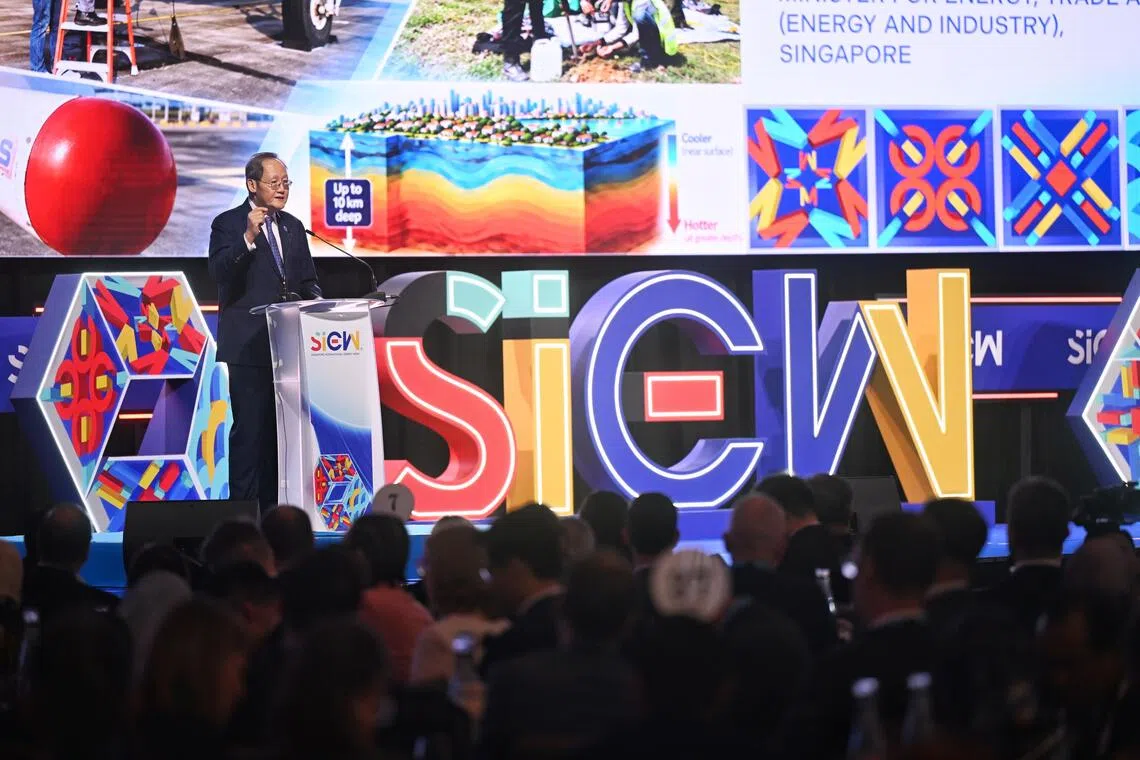
Tan See Leng, Minister for Energy, Trade, and Industry (Energy and Industry), announcing the nuclear energy manpower schemes on Oct 26, 2026.
ST PHOTO: AZMI ATHNI
Published Oct 26, 2026, 12:08 PM
Updated Oct 26, 2026, 12:08 PM
Singapore is building nuclear energy talent, with new training, fellowships and a university course. The Republic is “doubling down” on expertise, even if it decides not to use nuclear power.
Public officers involved in energy development will get on-the-job experience at global nuclear firms, while selected Singapore-based companies can send workers for attachments.
NUS and NTU plan a joint nuclear engineering Master’s in 2027.
SINGAPORE - From 2027, public officers involved in Singapore’s energy development will be able to experience what it is like to work inside some of the world’s leading nuclear energy organisations.
This is one of four initiatives to build a strong pipeline of nuclear energy manpower in Singapore, that was announced on Oct 26 at the opening of the f ive-day Singapore International Energy Week conference.
The government will launch another two programmes for the private sector and international energy leaders. The fourth initiative is Singapore’s first master’s in nuclear engineering.
The slew of initiatives to build Singapore’s pipeline of nuclear talent comes after the Republic announced in May that it will undertake a review by the UN’s atomic watchdog in 2027. The review will help determine Singapore’s readiness to make an informed decision on the deployment of nuclear energy.
In a speech at the conference’s launch, Minister for Energy, Trade and Industry (Energy and Industry) Tan See Leng said: “Even as we prepare for the Review Mission, we are doubling down on building a pool of nuclear experts and professionals within Singapore.”
Singapore has not made a decision on the deployment of nuclear energy. But it is studying this option closely.
The minister added: “Even if Singapore eventually decides not to deploy nuclear energy, the capabilities and expertise we are developing today will continue to serve us well, particularly as interest in nuclear energy grows across South-east Asia and the world.”
The first scheme for public officers is called the Singapore Nuclear Manpower Development Programme.
It will expose public officers involved in the nation’s energy development to jobs in leading global nuclear organisations. These range from nuclear technology developers to engineering, procurement, and construction firms.
During the week, EMA will be signing agreements with its first batch of partners.
They are Canadian engineering services and nuclear organisation AtkinsRealis, China National Nuclear Corporation Overseas, which exports the state’s nuclear power plant technology, as well as American nuclear reactor and fuel firm X-energy.
Through these partnerships, participants are expected to gain experience in areas such as technology assessment, project development, licensing and regulatory frameworks, said the Energy Market Authority (EMA) and the Ministry of Energy, Trade and Industry (METI) in a separate statement.
The second scheme for the private sector is known as the Nuclear Manpower Development Programme (Industry).
This will fund workers from invited Singapore-based companies to join training programmes and industry attachments with trusted international partners.
“With growing interest in nuclear energy globally, the nuclear industry could bring significant opportunities and new career pathways both domestically and internationally,” said Tan.
Responding to queries from The Straits Times, an EMA spokesman said the scheme is intended for firms with “significant local presence”, which could include foreign-owned companies operating in Singapore.
The Government will assess suitable firms based on several criteria, including their strategy and plans to participate in the nuclear sector.
The government will also launch the Singapore Future Energy Fellowship from 2026 to draw international energy leaders to the Republic.
Appointed on a rolling basis without a fixed quota, these fellows will provide independent, strategic advice on Singapore’s long-term energy strategy.
The first batch of fellows will comprise experts in nuclear energy, to support Singapore’s efforts to prepare for the 2027 assessment, EMA said.
Beyond advising policymakers, the fellows will be tasked with spurring the development of future energy leaders and sharing their views through structured engagements with the government, industry, academia, and the media.
Future cohorts could include experts in grid infrastructure and planning, more low-carbon energy pathways and other key areas of energy planning.
Tan also announced that the National University of Singapore and Nanyang Technological University are working towards launching a joint Master’s programme in nuclear engineering in 2027.
According to NUS’ website, a one to two week immersion in a “nuclear-mature” country has been recommended for students. The programme is open to g raduates of any quantitative discipline with no prior expertise in nuclear engineering.
T he schemes announced by the Government on Oct 26 marks the latest in a flurry of nuclear energy-related moves by the Republic.
This comes amid a heightened urgency to safeguard energy security in a more sustainable way. Nuclear energy is considered a low-carbon energy source as the reactions that generate electricity do not release planet-warming emissions.
Singapore will also host a forum with the International Atomic Energy Agency on Oct 27 during the energy conference to examine how ASEAN and the wider region can safely and responsibly harness the potential of nuclear energy.
METI and EMA said in the statement that the schemes will be important for Singapore to build up domestic capabilities and familiarity with all aspects of civilian nuclear power development.
This includes deepening Singapore’s understanding of the governance, management, licensing and regulatory requirements of nuclear energy to support informed decision-making
METI and the EMA noted that such training would equip these personnel to support their firms in advancing nuclear strategies and capability-building efforts.
2026年10月26日,能源、贸易及工业部长(能源及工业)陈世龙宣布核能人力资源计划。
ST 摄影:AZMI ATHNI
发布于 2026 年 10 月 26 日下午 12:08
更新于2026年10月26日下午12:08
新加坡正通过新的培训、奖学金和大学课程,大力培养核能人才。即使最终决定不采用核能,新加坡也在加倍投入核能专业技术。
参与能源开发的公务员将有机会在全球核能公司获得在职经验,而选定的新加坡公司也可以派遣员工到新加坡公司实习。
新加坡国立大学和南洋理工大学计划于 2027 年联合开设核工程硕士项目。
新加坡——从 2027 年起,参与新加坡能源发展的公务员将有机会体验在世界领先的核能机构内部工作的感受。
这是新加坡为建立强大的核能人才储备而推出的四项举措之一,这些举措于 10 月 26 日在为期五天的新加坡国际能源周会议开幕式上宣布。
政府将面向私营部门和国际能源领军企业推出另外两项计划。第四项举措是新加坡首个核工程硕士项目。
在新加坡于5月宣布将于2027年接受联合国原子能机构审查之后,该国推出了一系列旨在培养核能人才的举措。此次审查将有助于确定新加坡是否已做好准备,以便在部署核能方面做出明智的决定。
在会议开幕式上,能源、贸易和工业部长(能源和工业)陈思龙在讲话中表示:“即便我们正在为审查团做准备,我们也在加倍努力在新加坡培养一批核能专家和专业人员。”
新加坡尚未就核能部署做出决定,但正在密切研究这一选项。
部长补充道:“即使新加坡最终决定不发展核能,我们今天正在培养的能力和专业知识也将继续对我们大有裨益,尤其是在东南亚乃至全世界对核能的兴趣日益增长的情况下。”
第一个针对公务员的计划叫做新加坡核能人才发展计划。
这将使参与国家能源开发的公职人员有机会进入全球领先的核能机构工作。这些机构涵盖核技术开发商、工程、采购和施工公司等各个领域。
本周,EMA将与首批合作伙伴签署协议。
它们分别是加拿大工程服务和核能组织 AtkinsRealis、出口国家核电站技术的中国核工业集团海外有限公司,以及美国核反应堆和燃料公司 X-energy。
能源市场管理局 (EMA) 和能源产业省 (METI) 在另一份声明中表示,通过这些合作关系,参与者有望在技术评估、项目开发、许可和监管框架等领域获得经验。
第二个面向私营部门的计划被称为核能人力资源开发计划(工业)。
这将资助受邀新加坡公司的员工参加与值得信赖的国际合作伙伴开展的培训计划和行业实习。
“随着全球对核能的兴趣日益浓厚,核工业可以在国内和国际上带来巨大的机遇和新的职业发展道路,”谭说道。
针对《海峡时报》的询问,EMA发言人表示,该计划旨在帮助“在当地拥有重要业务”的公司,其中可能包括在新加坡运营的外资企业。
政府将根据若干标准评估合适的公司,包括其参与核能领域的战略和计划。
政府还将从 2026 年起启动新加坡未来能源奖学金计划,以吸引国际能源领域的领军人物来到新加坡。
这些研究员将以滚动方式任命,没有固定名额限制,他们将为新加坡的长期能源战略提供独立的战略建议。
EMA表示,首批研究员将由核能领域的专家组成,以支持新加坡为2027年评估所做的准备工作。
除了为政策制定者提供建议外,这些研究员还将肩负起培养未来能源领导者的重任,并通过与政府、行业、学术界和媒体的结构化互动来分享他们的观点。
未来的学员群体可能包括电网基础设施和规划、更多低碳能源路径以及其他能源规划关键领域的专家。
谭教授还宣布,新加坡国立大学和南洋理工大学正在努力于 2027 年推出核工程联合硕士课程。
根据新加坡国立大学网站的信息,该校建议学生在“核能成熟”国家进行为期一至两周的沉浸式学习。该项目面向所有定量学科的毕业生开放,无需具备核工程方面的专业知识。
政府于 10 月 26 日宣布的这些计划,标志着共和国在核能领域采取的一系列举措中的最新举措。
在人们日益迫切地需要以更可持续的方式保障能源安全的背景下,核能应运而生。核能被认为是一种低碳能源,因为其发电反应不会释放导致全球变暖的温室气体。
新加坡还将于10月27日能源大会期间与国际原子能机构共同举办论坛,探讨东盟及更广泛的地区如何安全、负责任地利用核能潜力。
经济产业省和能源市场管理局在声明中表示,这些计划对于新加坡建立国内能力和熟悉民用核电发展的各个方面至关重要。
这包括加深新加坡对核能治理、管理、许可和监管要求的理解,以支持知情决策。
经济产业省和EMA指出,此类培训将使这些人员能够支持其所在公司推进核战略和能力建设工作。