Tapping more fossil fuels, solar power, among Singapore’s strategies to boost energy security新加坡提升能源安全的战略包括更多地利用化石燃料和太阳能。
The Republic is also exploring new technologies like nuclear and geothermal energy. Read more at straitstimes.com.
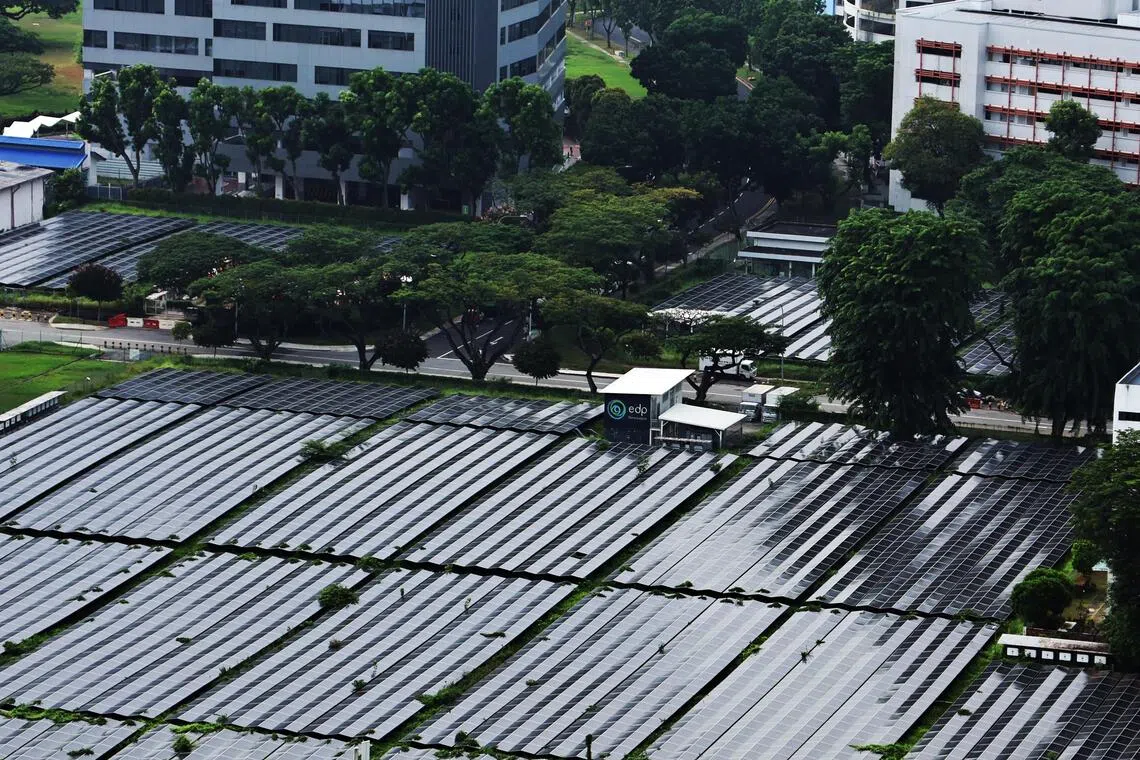
Singapore announced a new target to harness 4 GWp of solar energy by 2035.
Published Oct 26, 2026, 06:15 PM
Updated Oct 26, 2026, 06:15 PM
SINGAPORE - The Republic plans to diversify its sources of energy to tide it through global supply crunches and growing resource nationalism.
To ensure Singapore has adequate infrastructure to support this, a five-year plan detailing the expansion of the Republic’s power system from 2026 was rolled out on Oct 26, the first day of the Singapore International Energy Week conference.
The plan features five new power plants and an expansion of Singapore’s underground transmission cables, among other things.
ST looks at the sources of energy that the Republic is exploring.
Natural gas now generates about 95% of Singapore’s electricity needs. SPH Media Limited
Natural gas now generates about 95% of Singapore’s electricity needs.
Imported natural gas is now used to generate about 95% of Singapore’s electricity needs.
These power plants have the capacity to generate 12 gigawatts (GW) of energy in all.
By 2031, Singapore will have five new natural gas power plants, adding to the more than 20 today. This will grow the country’s electricity generation capacity by 26 per cent.
Singapore’s power plants are also required to run on diesel, allowing them to tap the Republic’s reserves when there is a severe disruption to gas supplies.
Saudi Arabia and Singapore inked an agreement to enable the storage of Saudi crude oil in the Jurong Rock Caverns from the second half of 2027. Crude oil can be refined into diesel for power generation.
Solar energy and storage
Sembcorp piloted a vertical battery-stacking solution at its existing Jurong Island energy-storage system. Sembcorp Industries
Sembcorp piloted a vertical battery-stacking solution at its existing Jurong Island energy-storage system.
This is the most viable form of renewable energy now available to Singapore. But solar can meet no more than 10% of the country’s projected electricity demand in 2050.
The country now generates about 2.3 gigawatt-peak (GWp) of solar energy. In the first half of 2026, solar power made up 4.2% of Singapore’s energy mix.
By 2030, the plan is to increase this to 3 GWp — about 5% of projected energy demand that year.
This will be supported by the tripling of energy storage systems to just over 1GWh by 2030, up from 350MWh today. Such systems are needed to store excess electricity generated during sunny periods, so it can be discharged at night or on cloudy days.
On Oct 26, Singapore announced a new target to harness 4 GWp of solar energy by 2035.
Singapore has 14 electricity import projects in the works, with a combined capacity of more than 10GW.
The projects cover solar, wind and hydropower from Malaysia, Indonesia, Cambodia, Vietnam and Australia. Some of the imports could begin in 2028.
On Oct 26, Sembcorp Utilities was given a conditional nod to import up to 1.3GW of renewable electricity from and through Malaysia to Singapore.
Low-carbon electricity could come from Malaysian solar power and Vietnamese offshore wind.
Emerging energy sources
Advanced nuclear technologies such as small modular reactors are considered more suitable for densely populated places like Singapore.
In 2027, Singapore will undergo an assessment by the International Atomic Energy Agency to determine if the country is ready to make an informed decision on whether to deploy nuclear energy.
Initiatives are in the works to build a pipeline of nuclear energy manpower in Singapore, one of which is the country’s first master’s in nuclear engineering.
The only natural hot spring on mainland Singapore, Sembawang Hot Spring Park was opened on Jan 4, 2020. The Straits Times
The only natural hot spring on mainland Singapore, Sembawang Hot Spring Park was opened on Jan 4, 2020.
An earlier national survey found that underground heat sources in Singapore had the potential to generate more than 60 times the nation’s current annual electricity consumption.
From end-2026, the country will assess the technical, environmental and commercial feasibility of deploying deep geothermal systems in Singapore.
Hydrogen gas is considered a green fuel as burning it does not produce any planet-warming emissions.
In preparing for this future fuel, new gas-fired power plants have to be designed to run on a blend of natural gas and a portion of hydrogen.
A new $75 million initiative will fund research on areas such as developing technologies that efficiently extract hydrogen from ammonia and methanol.
Slower-than-expected global market development has kept costs high for hydrogen, which is not yet commercially viable.
Biomethane – which has similar compositions to natural gas – is a fuel produced from organic materials such as agricultural waste and manure.
Three power generation companies have been appointed to import and supply biomethane under a pilot, which could go live by 2028.
They will import enough biomethane to produce 300MW of electricity, enough to power around 600,000 HDB households.
新加坡宣布了一项新目标,即到 2035 年利用 4 吉瓦峰值功率的太阳能。
发布于 2026 年 10 月 26 日下午 6:15
更新于2026年10月26日下午6:15
新加坡——为了应对全球供应短缺和日益增长的资源民族主义,新加坡计划实现能源来源多元化。
为确保新加坡拥有足够的基础设施来支持这一目标,新加坡于 10 月 26 日,即新加坡国际能源周会议的第一天,推出了一项五年计划,详细说明了从 2026 年开始扩大该国电力系统的计划。
该计划包括新建五座发电厂,以及扩建新加坡的地下输电线路等。
ST 探讨了共和国正在探索的能源来源。
目前,新加坡约95%的电力需求由天然气满足。新加坡报业控股有限公司
目前,新加坡约 95% 的电力需求来自天然气。
目前新加坡约 95% 的电力需求依赖进口天然气。
这些发电厂总共有12吉瓦(GW)的发电能力。
到2031年,新加坡将新增5座天然气发电厂,使该国天然气发电厂总数超过20座。这将使新加坡的发电能力增长26%。
新加坡的发电厂也被要求使用柴油,以便在天然气供应严重中断时利用该国的柴油储备。
沙特阿拉伯和新加坡签署了一项协议,允许从2027年下半年开始在裕廊岩洞储存沙特原油。原油可以提炼成柴油用于发电。
太阳能及储能
胜科工业在其现有的裕廊岛储能系统中试点了一种垂直电池堆叠解决方案。
胜科集团在其现有的裕廊岛储能系统中试行了垂直电池堆叠解决方案。
这是新加坡目前最可行的可再生能源形式。但到2050年,太阳能最多只能满足该国预计电力需求的10%。
该国目前太阳能发电量约为2.3吉瓦峰值(GWp)。2026年上半年,太阳能发电占新加坡能源结构的4.2%。
到 2030 年,计划将这一数字提高到 3 GWp——约占当年预计能源需求的 5%。
这将得益于储能系统容量的增加,到2030年,储能系统容量将比目前的350兆瓦时增加两倍,达到略高于1吉瓦时。这些系统用于储存晴天产生的多余电力,以便在夜间或阴天释放。
10月26日,新加坡宣布了一项新目标,即到2035年利用4吉瓦峰值功率的太阳能。
新加坡目前正在推进 14 个电力进口项目,总装机容量超过 10 吉瓦。
这些项目涵盖来自马来西亚、印度尼西亚、柬埔寨、越南和澳大利亚的太阳能、风能和水力发电。部分进口可能从2028年开始。
10 月 26 日,胜科公用事业公司获得有条件批准,可以从马来西亚进口高达 1.3 吉瓦的可再生电力到新加坡。
低碳电力可以来自马来西亚的太阳能发电和越南的海上风能。
新兴能源
小型模块化反应堆等先进核技术被认为更适合像新加坡这样人口稠密的地区。
2027年,新加坡将接受国际原子能机构的评估,以确定该国是否已做好准备,就部署核能做出明智的决定。
新加坡正在制定计划,以建立核能人才储备,其中一项计划是该国首个核工程硕士学位项目。
新加坡本岛唯一的天然温泉——三巴旺温泉公园于2020年1月4日开放。《海峡时报》
新加坡本岛唯一的天然温泉——三巴旺温泉公园于2020年1月4日开放。
早前的一项全国性调查发现,新加坡的地下热源有潜力产生超过该国目前年用电量 60 倍的电力。
从 2026 年底开始,该国将评估在新加坡部署深层地热系统的技术、环境和商业可行性。
氢气被认为是一种绿色燃料,因为燃烧氢气不会产生任何导致全球变暖的排放物。
为了迎接这种未来的燃料,新建的燃气发电厂必须设计成使用天然气和部分氢气的混合燃料。
一项新的 7500 万美元计划将资助研究,例如开发从氨和甲醇中高效提取氢气的技术。
全球市场发展速度低于预期,导致氢气成本居高不下,目前氢气在商业上尚不可行。
生物甲烷的成分与天然气相似,是一种利用农业废弃物和粪便等有机物生产的燃料。
三家发电公司已被指定在试点项目下进口和供应生物甲烷,该项目有望在 2028 年投入运营。
他们将进口足够的生物甲烷来生产 300 兆瓦的电力,足以满足约 60 万户组屋家庭的用电需求。