This anti-drone tech is used in Ukraine, NATO airspace after flyovers这种反无人机技术在乌克兰和北约空域飞行后使用。
Two Danish companies say they have a surge in new clients seeking to use their tech to protect sites that have been targeted by flyovers in recent weeks.
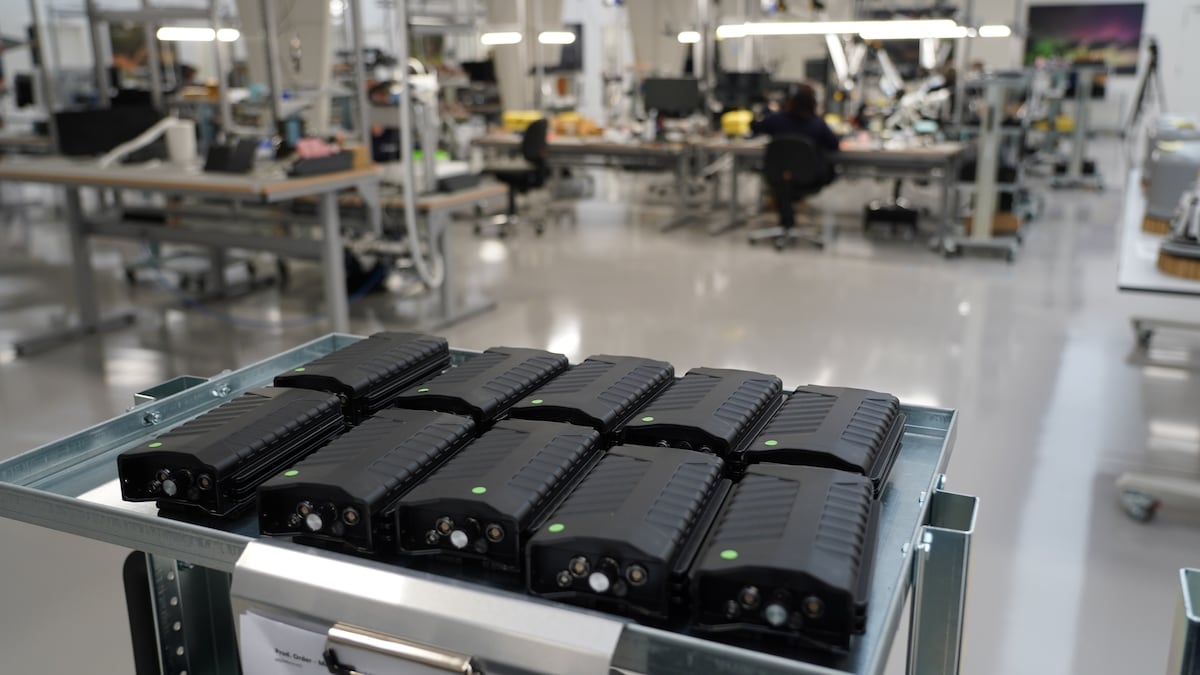
AALBORG, Denmark — In a warehouse more than 1,500 kilometers (900 miles) from Ukraine’s capital, workers in northern Denmark painstakingly piece together anti-drone devices . Some of the devices will be exported to Kyiv in the hopes of jamming Russian technology on the battlefield, while others will be shipped across Europe in efforts to combat mysterious drone intrusions into NATO’s airspace that have the entire continent on edge.
Two Danish companies whose business was predominantly defense-related now say they have a surge in new clients seeking to use their technology to protect sites like airports, military installations and critical infrastructure, all of which have been targeted by drone flyovers in recent weeks.
Weibel Scientific’s radar drone detection technology was deployed ahead of a key EU summit earlier this year to Copenhagen Airport, where unidentified drone sightings closed the airspace for hours in September. Counter-drone firm MyDefence, from its warehouse in northern Denmark, builds handheld, wearable radio frequency devices that sever the connection between a drone and its pilot to neutralize the threat.
So-called “jamming” is restricted and heavily regulated in the European Union, but widespread on the battlefields of Ukraine and has become so extensive there that Russia and Ukraine have started deploying drones tethered by thin fiber-optic cables that don’t rely on radio frequency signals. Russia also is firing attack drones with extra antenna to foil Ukraine’s jamming efforts .
A spike in drone incursions
Drone warfare exploded following Russia’s full-scale invasion of Ukraine in 2022. Russia has bombarded Ukraine with drone and missile attacks, striking railways , power facilities and cities across the country. Ukraine, in response, has launched daring strikes deep inside Russia using domestically produced drones.
But Europe as a whole is now on high alert after the drone flyovers into NATO’s airspace reached an unprecedented scale in September, prompting European leaders to agree to develop a “drone wall” along their borders to better detect, track and intercept drones violating Europe’s airspace. In November, NATO military officials said a new U.S. anti-drone system was deployed to the alliance’s eastern flank.
Some European officials described the incidents as Moscow testing NATO’s response, which raised questions about how prepared the alliance is against Russia . Key challenges include the ability to detect drones — sometimes mistaken for a bird or plane on radar systems — and take them down cheaply.
The Kremlin has brushed off allegations that Russia is behind some of the unidentified drone flights in Europe.
Andreas Graae, assistant professor at the Royal Danish Defense College, said there is a “huge drive” to rapidly deploy counter-drone systems in Europe amid Russia’s aggression.
“All countries in Europe are struggling to find the right solutions to be prepared for these new drone challenges,” he said. “We don’t have all the things that are needed to actually be good enough to detect drones and have early warning systems.”
A worker assembles counter drone devices at MyDefence's headquarters in Alborg, Denmark. (James Brooks/AP)
Putting ‘machines before people’
Founded in 2013, MyDefence makes devices that can be used to protect airports, government buildings and other critical infrastructure, but chief executive Dan Hermansen called the Russia-Ukraine war a “turning point” for his company.
More than 2,000 units of its wearable “Wingman” detector have been delivered to Ukraine since Russia invaded nearly four years ago.
“For the past couple of years, we’ve heard in Ukraine that they want to put machines before people” to save lives, Hermansen said.
MyDefence last year doubled its earnings to roughly $18.7 million compared to 2023.
Then came the drone flyovers earlier this year. Besides Copenhagen Airport, drones flew over four smaller Danish airports, including two that serve as military bases.
Hermansen said they were an “eye-opener” for many European countries and prompted a surge of interest in their technology. MyDefence went from the vast majority of its business being defense-related to inquiries from officials representing police forces and critical infrastructure.
“Seeing suddenly that drone warfare is not just something that happens in Ukraine or on the eastern flank, but basically is something that we need to take care of in a hybrid warfare threat scenario,” he added.
Radar technology used against drones
On NATO’s eastern flank, Denmark, Poland and Romania are deploying a new weapons system to defend against drones. The American Merops system , which is small enough to fit in the back of a midsize pickup truck, can identify drones and close in on them using artificial intelligence to navigate when satellite and electronic communications are jammed.
The aim is to make the border with Russia so well-armed that Moscow’s forces will be deterred from ever contemplating crossing the line from Norway in the north to Turkey in the south, NATO military officials told The Associated Press.
North of Copenhagen, Weibel Scientific has been making Doppler radar technology since the 1970s. Typically used in tracking radar systems for the aerospace industry, it’s now being applied to drone detection like at Copenhagen Airport.
The technology can determine the velocity of an object, such as a drone, based on the change in wavelength of a signal being bounced back. Then it’s possible to predict the direction the object is moving, Weibel Scientific chief executive Peter Røpke said.
“The Ukraine war, and especially how it has evolved over the last couple of years with drone technology, means this type of product is in high demand,” Røpke said.
Earlier this year, Weibel secured a $76 million deal, which the firm called its “largest order ever.”
The drone flyovers boosted the demand even higher as discussion around the proposed “drone wall” continued. Røpke said his technology could become a “key component” of any future drone shield.
Stefanie Dazio in Berlin contributed to this report.
丹麦奥尔堡——在距离乌克兰首都基辅1500多公里(900英里)的一间仓库里,丹麦北部的工人们正在一丝不苟地组装反无人机装置。部分装置将出口到基辅,以期在战场上干扰俄罗斯的技术;而另一些装置将被运往欧洲各地,以应对神秘的无人机入侵北约领空事件,这些事件令整个欧洲大陆都感到不安。
两家主要从事国防相关业务的丹麦公司表示,现在有大量新客户寻求使用他们的技术来保护机场、军事设施和关键基础设施等场所,所有这些场所最近几周都成为了无人机飞越的目标。
今年早些时候,在一次重要的欧盟峰会召开前夕,韦贝尔科学公司(Weibel Scientific)的雷达无人机探测技术被部署到哥本哈根机场。9月份,不明无人机目击事件导致该机场空域关闭数小时。反无人机公司MyDefence在其位于丹麦北部的仓库中生产手持式可穿戴射频设备,该设备能够切断无人机与其操控者之间的连接,从而消除威胁。
所谓“干扰”在欧盟受到严格限制和监管,但在乌克兰战场上却十分普遍,而且规模如此之大,以至于俄罗斯和乌克兰都开始部署由细光纤电缆连接的无人机,这些无人机不依赖无线电频率信号。俄罗斯还发射配备额外天线的攻击无人机,以干扰乌克兰的干扰行动。
无人机入侵事件激增
2022年俄罗斯全面入侵乌克兰后,无人机战争迅速升级。俄罗斯对乌克兰发动了无人机和导弹袭击,目标包括全国各地的铁路、电力设施和城市。作为回应,乌克兰使用国产无人机对俄罗斯境内纵深目标发动了大胆的打击。
但自9月份无人机飞越北约领空的规模空前以来,整个欧洲都处于高度戒备状态。这促使欧洲领导人同意沿边界建立“无人机墙”,以便更好地探测、追踪和拦截侵犯欧洲领空的无人机。11月,北约军方官员表示,一套新的美国反无人机系统已部署到北约东翼。
一些欧洲官员将这些事件描述为莫斯科在试探北约的反应能力,这引发了人们对北约应对俄罗斯准备程度的质疑。关键挑战包括探测无人机(有时雷达系统会将其误认为鸟类或飞机)并以低成本将其击落的能力。
克里姆林宫驳斥了有关俄罗斯是欧洲一些不明无人机飞行事件幕后黑手的指控。
丹麦皇家国防学院助理教授安德烈亚斯·格雷表示,在俄罗斯的侵略行径下,欧洲正在“大力”迅速部署反无人机系统。
他说:“欧洲各国都在努力寻找合适的解决方案,以应对这些新的无人机挑战。我们还没有具备所有必要的条件,无法有效地探测无人机并建立预警系统。”
在丹麦阿尔堡的MyDefence公司总部,一名工人正在组装反无人机设备。(James Brooks/AP)
“机器优先于人”
MyDefence 公司成立于 2013 年,生产可用于保护机场、政府大楼和其他关键基础设施的设备,但首席执行官丹·赫尔曼森称俄乌战争是该公司的一个“转折点”。
自俄罗斯近四年前入侵乌克兰以来,该公司已向乌克兰交付了 2000 多台可穿戴式“僚机”探测器。
赫尔曼森说:“过去几年,我们一直听到乌克兰方面说,他们想用机器代替人来拯救生命。”
MyDefence去年的收入比2023年翻了一番,达到约1870万美元。
今年早些时候,无人机进行了飞越拍摄。除了哥本哈根机场外,无人机还飞越了丹麦的四个小型机场,其中包括两个用作军事基地的机场。
赫尔曼森表示,这些案例令许多欧洲国家“大开眼界”,并引发了人们对这项技术的浓厚兴趣。MyDefence的业务也从最初主要集中在国防领域,转变为开始收到来自警察部队和关键基础设施官员的咨询。
他补充说:“突然间,我们意识到无人机战争不再仅仅发生在乌克兰或东翼,而是在混合战争威胁情境下,我们必须重视并应对它。”
用于对抗无人机的雷达技术
在北约东翼,丹麦、波兰和罗马尼亚正在部署一种新型武器系统来防御无人机。这套名为“美罗普斯”(Merops)的美国系统体积小巧,足以装进一辆中型皮卡的后车厢。它能够识别无人机,并在卫星和电子通信受到干扰的情况下,利用人工智能导航并接近目标。
北约军方官员告诉美联社,其目标是使与俄罗斯的边界武装到牙齿,从而阻止莫斯科军队越过从北部的挪威到南部的土耳其的边界线。
在哥本哈根北部,魏贝尔科学公司自 20 世纪 70 年代以来一直致力于多普勒雷达技术的研发和生产。该技术通常用于航空航天行业的跟踪雷达系统,现在也应用于无人机探测,例如哥本哈根机场。
这项技术可以根据反射信号波长的变化来确定物体(例如无人机)的速度。Weibel Scientific首席执行官Peter Røpke表示,然后就可以预测物体的运动方向。
“乌克兰战争,尤其是过去几年无人机技术的发展,意味着这类产品的需求量很大,”罗普克说。
今年早些时候,Weibel 获得了一笔价值 7600 万美元的交易,该公司称之为“有史以来最大的订单”。
无人机飞行测试进一步推高了市场需求,围绕拟建的“无人机防护墙”的讨论也持续升温。罗普克表示,他的技术可能成为未来任何无人机防护墙的“关键组成部分”。
柏林的 Stefanie Dazio 对本报道亦有贡献。