British Type 31 Frigate Variant Offered To The U.S. Navy英国向美国海军提供31型护卫舰改进型
Babcock is looking to pitch its Arrowhead 140 design for an American frigate requirement, potentially in partnership with a major U.S. shipbuilder. Babcock is looking to pitch its Arrowhead 140 design for an American frigate requirement, potentially in partnership with a major U.S. shipbuilder.
新闻视频
Published Oct 26, 2026 3:53 PM EDT
Babcock International
British defense contractor Babcock has confirmed that it is putting itself forward for the U.S. Navy’s future frigate program , with its Arrowhead 140 general-purpose frigate, the design behind the Royal Navy’s Type 31 class , expected to form the basis of its proposal. The move adds another foreign-designed warship to Washington’s search for a relatively mature frigate that can be built quickly and in significant numbers.
Babcock has held preliminary discussions with Pentagon officials and is expected to submit an expression of interest before the end of October, according to recent reporting by The Telegraph and Navy Lookout . The proposal is understood to potentially involve Huntington Ingalls Industries (HII), America’s largest military shipbuilder, with the two companies exploring an arrangement that could see the Arrowhead 140 built in the United States under license.
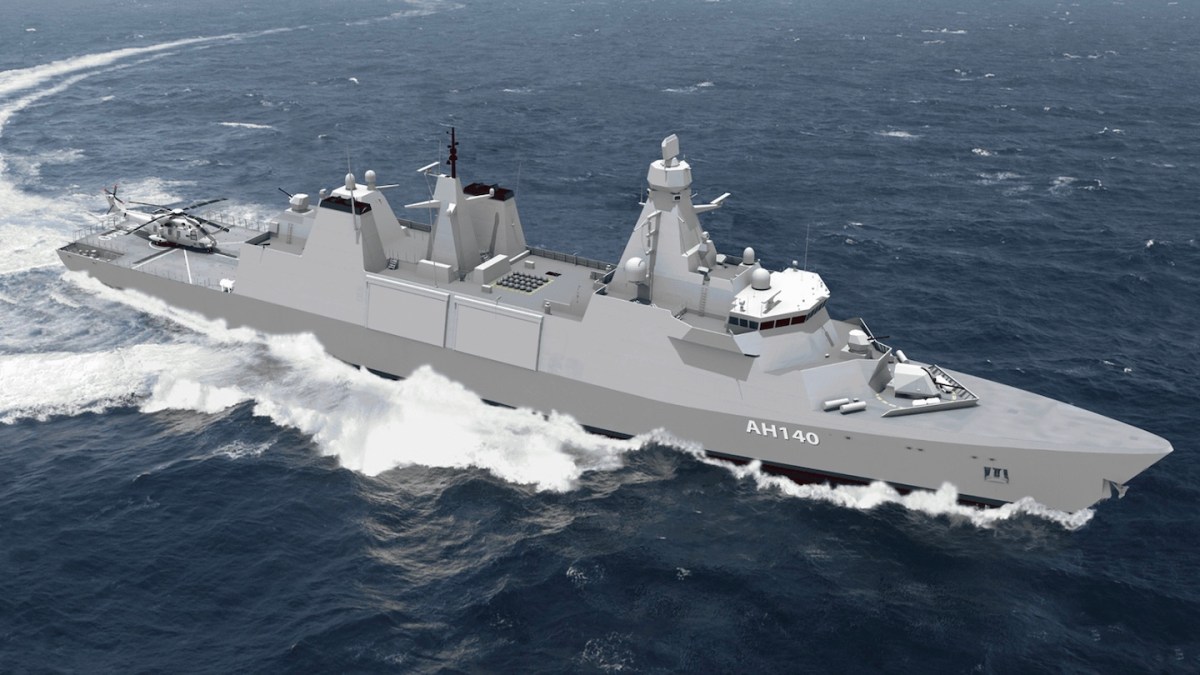
An artist’s impression of the U.K. Royal Navy Type 31 general-purpose frigate. Royal Navy
“Of course we’re interested. We have a world-class frigate, close links to the U.S. and U.S. industry. It would be insane for us not to respond,” Sir Nick Hine, head of Babcock’s marine business and a former Second Sea Lord, told The Telegraph .
The initiative comes as the U.S. Navy seeks to accelerate the acquisition of smaller surface combatants after the troubled Constellation class frigate program was axed . Japan’s upgraded Mogami class, South Korea’s Chungnam class, and Turkey’s Istanbul class have also been reported as candidates for the Navy’s international frigate effort. You can read more about all three designs here .
The Japan Maritime Self-Defense Force’s (JMSDF) first-in-class JS Mogami . JMSDF
The South Korean Navy’s ROKS Chungnam seen during sea trials before its delivery in 2024. HD Hyundai Heavy Industries
The future TCG Izmir from Turkey’s Istanbul class. Anadolu Shipyard
Fincantieri Marine Group, which had developed the cancelled Constellation class frigate for the U.S. Navy, also says it sees a possible new opportunity in the service’s latest frigate plans.
Meanwhile, German defense contractor Rheinmetall, a newcomer to the surface combatant market, recently unveiled its GMF 140 frigate , which it has said it plans to offer “initially as part of a procurement project in North America” before pursuing opportunities with other allied navies.
For Babcock, the opportunity would be a major expansion of its relationship with the U.S. defense industry. If successful, the company would likely provide the design, engineering expertise, and potentially the intellectual property needed for American shipyards to manufacture the frigates.
This would mirror the process for the Polish Navy’s Project 106 Miecznik (Swordfish) class, which is building three new multirole frigates in Poland, rather than using the company’s own facilities in Britain.
The future Polish Navy frigate Wicher under construction in Gdynia, Poland. Photo by Mateusz Wlodarczyk/NurPhoto
The Navy’s assessment of potential options is due by November 12. No contract has been awarded, and the details of any Babcock-HII proposal remain unconfirmed.
The Arrowhead 140 is the foundation of the Royal Navy’s five-ship Type 31 program, which is being built at Babcock’s Rosyth shipyard in Scotland. The design is derived from the Danish Iver Huitfeldt class frigate. As well as Poland , the warship has also been selected for Indonesia.
The Arrowhead 140 has a baseline length of approximately 455 feet, a beam of 65 feet, and a displacement of around 5,700 tonnes, although national variants may be considerably heavier. The vessel uses a conventional combined diesel-and-diesel (CODAD) propulsion system and can achieve speeds exceeding 28 knots. Its design emphasises long endurance, with a baseline endurance of approximately one to two months. The AH140 incorporates a flight deck and hangar for naval helicopter operations, accommodation for embarked personnel, boat-handling facilities, and adaptable mission spaces. Its modular architecture allows customers to integrate different sensors, combat management systems, electronic warfare equipment, and weapons according to national requirements.
Taking the Polish Navy’s Project 106 class as an example of an Arrowhead 140 iteration, this is a notably heavily armed adaptation, featuring a 76mm Leonardo Strales main gun, a 32-cell Mk 41 vertical launch system for surface-to-air missiles, eight Naval Strike Missiles for anti-ship strike, and lightweight torpedo launchers. The Polish variant is reported to have a maximum displacement of approximately 7,700 tonnes.
Wicher , the first of the Polish Navy’s Project 106 Miecznik (Swordfish) class. PGZ SW
The Type 31 is a general-purpose warship capable of undertaking maritime security, escort, and surface warfare missions. Its relatively large hull offers considerable internal volume for weapons, sensors, aviation facilities, and future upgrades.
That could make it attractive to a U.S. Navy looking for a ship able to protect convoys, operate independently, and supplement its larger destroyers. A frigate with a significantly lower operating cost than an Arleigh Burke class destroyer could still take on a range of missions, freeing more capable combatants for broad area air and missile air defense, sustained strike operations, and other more demanding tasks.
The Arleigh Burke class destroyer USS James E. Williams underway. U.S. Navy courtesy photo The USS James E. Williams . USN
The Arrowhead 140’s size could also provide flexibility in accommodating American weapons and combat systems. However, a U.S. version would require a defined configuration, and there is no publicly established weapons fit for a potential American variant.
At the same time, the Royal Navy’s Type 31 frigate has not yet entered operational service, and its baseline configuration is not optimized for every mission the U.S. Navy may require. In particular, the integration of the sonar and other systems needed for sustained anti-submarine warfare would be a significant undertaking.
The Navy will also have to wrestle with how much of the existing design can be retained while meeting its own requirements. One of the major lessons from the Constellation program was that extensive modifications to an existing foreign design can create huge cost and schedule risks. With so little left of the original design after it was adapted to Navy specifications, this eventually doomed the program.
A rendering of a now-cancelled Constellation class frigate. U.S. Navy
For Babcock, it will be essential to keep the Arrowhead 140 as close as possible to its established configuration, while integrating essential American equipment, to keep the proposal competitive.
Babcock does not operate a shipyard in the United States, making an American industrial partner central to its approach.
HII, which operates major shipbuilding facilities at Newport News and Ingalls, would offer substantial experience constructing warships for the U.S. Navy. Babcock and HII already have an established relationship in the submarine sector, including work supporting the Virginia class attack submarine program.
Babcock’s facilities in Rosyth and Bristol manufacture tactical missile-tube assemblies for General Dynamics Electric Boat, supporting the Common Missile Compartment used by the U.S. Navy’s Columbia class and the Royal Navy’s Dreadnought class ballistic missile submarines. HII has also expanded its relationship with Babcock through work involving Virginia class submarine components.
An artist’s conception of one of the Royal Navy’s future Dreadnought class submarines. BAE Systems
Those existing industrial relationships could provide a foundation for a surface-ship partnership. Under a potential arrangement, Babcock could transfer the necessary design rights and provide technical support while an American yard undertakes construction.
Such an arrangement would fit the Trump administration’s stated goal of using allied expertise to accelerate warship production while rebuilding domestic shipbuilding capacity. It would also allow Babcock to pursue a potentially significant U.S. order without requiring Rosyth to absorb a large new construction program alongside its Royal Navy commitments.
The prospect of HII supporting more than one design raises questions about production capacity, program priorities, and how the company would manage competing demands on its shipyards.
More generally, the administration’s interest in foreign frigates reflects growing concern about the time and expense involved in developing new American warships.
The Constellation class program was supposed to provide a modern replacement for the Navy’s retired Oliver Hazard Perry class frigates. Based on the European FREMM design, it underwent extensive modifications for American service before suffering serious schedule and cost problems. The Navy subsequently abandoned the program.
Oliver Hazard Perry class USS Carr is seen in 2006. The last of the type was retired from U.S. service in 2015. U.S. Navy
The service is now pursuing FF(X) , a patrol frigate intended to be easier to build and field. Its initial configuration, however, is not expected to include a vertical launch system, limiting its ability to provide some of the capabilities associated with a more heavily armed multi-mission combatant.
A rendering of the FF(X) frigate. U.S. Navy
HII is building the FF(X) frigate, based on the Coast Guard’s Legend class National Security Cutter . It is somewhat telling that they would partner with Babcock on the foreign frigate offering considering they already have the FF(X) contract.
The Coast Guard’s Legend class cutter USCGC Hamilton . U.S. Coast Guard
The international frigate effort is intended to examine whether a ship based on an existing allied design could provide a different balance of capability, cost, and delivery speed.
An August presidential memorandum opened a route for the Navy to consider allied designs and, under limited circumstances, overseas construction through a national security waiver. The approach has been compared with a model in which an initial small number of ships could be constructed abroad before production moves to U.S. yards.
The reported framework limits overseas construction to no more than two ships and ties it to investment in American shipbuilding. Any eventual Babcock proposal would therefore need to demonstrate how the design could be transferred and produced domestically at the required pace.
That could be a big challenge. Babcock’s own Type 31 production line is already committed to the five ships ordered by the Royal Navy, while setting up an American production line would require workforce training, supply-chain development, and the transfer of manufacturing knowledge.
HMS Bulldog has officially entered build. The ceremonial Steel Cut for our fourth Type 31 frigate marks another major step forward for our programme, joining a production line that is gathering real speed. More to come from Rosyth later this evening. https://t.co/ZoTM5OWNVv pic.twitter.com/35Y3qBpMJg — Babcock International (@Babcockplc) February 24, 2026
HMS Bulldog has officially entered build. The ceremonial Steel Cut for our fourth Type 31 frigate marks another major step forward for our programme, joining a production line that is gathering real speed. More to come from Rosyth later this evening. https://t.co/ZoTM5OWNVv pic.twitter.com/35Y3qBpMJg
The Navy will also need to establish whether a foreign design can meet its minimum operational requirements without undergoing the kind of extensive redesign that dogged the Constellation program.
Babcock enters a field that already includes several established frigate designs from Japan, South Korea, and Turkey — and potentially more.
Each offers a different combination of design maturity, combat systems, production capacity, and potential industrial arrangements. The Mogami and Chungnam programs have operational ships in service, while the Arrowhead 140 has been selected for multiple export programs but is yet to enter operational service.
Babcock’s selling point is likely to be the Arrowhead 140’s size, adaptability, and established design pedigree, combined with the prospect of American production through HII.
With the Arrowhead 140 adopted by multiple navies, this brings potential cost savings through economies of scale, shared design evolution, and collaborative upgrades across the fleet. A wider international user base also brings the possibility of overseas industrial partnerships, including training and logistical support around the globe.
At the same time, U.S. Navy selection would represent a major endorsement of the platform and would further strengthen its position in other export markets.
For now, Babcock’s confirmation that it intends to pursue the opportunity adds another contender to the Navy’s search for a new frigate. Whether the Arrowhead 140 advances beyond the initial expression of interest will depend on how its capabilities and production prospects compare with the other candidates. And critically, Babcock and its U.S. partners will need to convince the Pentagon that they deliver a ship that meets the Navy’s requirements without repeating the delays and redesign challenges of the Constellation program.
Contact the author: thomas@thewarzone.com
Comments couldn’t be loaded. Please refresh the page.
发布于美国东部时间2026年10月26日下午3:53
巴布科克国际
英国国防承包商巴布科克公司已证实,该公司正积极参与美国海军未来的护卫舰项目竞标。预计其方案将以该公司设计的“箭头140”型通用护卫舰为基础,该舰也是英国皇家海军31型护卫舰的设计原型。此举意味着华盛顿在寻求建造速度快、数量可观且技术相对成熟的护卫舰时,又增加了一款外国设计的军舰。
据《每日电讯报》和《海军瞭望》近期报道,巴布科克公司已与五角大楼官员进行了初步磋商,预计将于10月底前提交意向书。据悉,该提案可能涉及美国最大的军用造船商亨廷顿·英格尔斯工业公司(HII),两家公司正在探讨一项合作协议,该协议可能使“箭头140”级护卫舰在美国获得许可建造。
这是艺术家绘制的英国皇家海军31型通用护卫舰的效果图。
“我们当然感兴趣。我们拥有一艘世界级的护卫舰,与美国和美国工业界有着密切的联系。如果我们不回应,那才是疯了。”巴布科克海事业务负责人、前第二海务大臣尼克·海因爵士告诉《每日电讯报》。
这项计划出台之际,正值美国海军在命运多舛的“星座”级护卫舰项目被取消后,寻求加快小型水面作战舰艇的采购。据报道,日本升级后的“最上”级、韩国的“忠南”级以及土耳其的“伊斯坦布尔”级也都是海军国际护卫舰采购计划的候选舰种。您可以在这里阅读更多关于这三种设计方案的信息。
日本海上自卫队首艘舰艇“最上”号。
韩国海军“忠南”号驱逐舰在2024年交付前进行海上试航。图片来源:现代重工
未来土耳其海军“伊兹密尔”号巡洋舰,属于“伊斯坦布尔”级。阿纳多卢造船厂
曾为美国海军开发被取消的星座级护卫舰的芬坎蒂尼海事集团也表示,他们看到了美国海军最新护卫舰计划中可能出现的新机遇。
与此同时,德国国防承包商莱茵金属公司(Rheinmetall)作为水面作战舰艇市场的新兴力量,最近推出了其 GMF 140 护卫舰。该公司表示,计划“首先作为北美采购项目的一部分”提供该舰,然后再寻求与其他盟国海军合作的机会。
对巴布科克公司而言,这将是一次与美国国防工业关系的重大拓展。如果成功,该公司很可能为美国造船厂提供制造护卫舰所需的设计、工程技术以及潜在的知识产权。
这将与波兰海军 106 型“剑鱼”级护卫舰的建造过程相呼应,该舰正在波兰建造三艘新的多用途护卫舰,而不是使用该公司在英国的自有设施。
未来的波兰海军护卫舰威彻号正在波兰格丁尼亚建造。摄影:Mateusz Wlodarczyk/NurPhoto
海军对潜在方案的评估将于11月12日完成。目前尚未授予任何合同,巴布科克-HII公司提出的任何方案的细节仍未得到证实。
“箭头”140型护卫舰是英国皇家海军五艘31型护卫舰项目的基础舰型,目前正在苏格兰巴布科克公司的罗塞斯造船厂建造。该舰的设计源自丹麦的伊弗·休特费尔特级护卫舰。除了波兰,印度尼西亚也选中了这款战舰。
箭头140型直升机的基本长度约为455英尺(149米),船宽65英尺(20米),排水量约为5700吨,但各国的改进型排水量可能更大。该舰采用传统的柴柴联合推进系统(CODAD),最高航速可超过28节。其设计注重长续航能力,基本续航时间约为一至两个月。AH140配备飞行甲板和机库,用于海军直升机作业,并设有舰载人员舱室、艇员操作设施和可灵活调整的任务空间。其模块化设计允许客户根据自身需求集成不同的传感器、作战管理系统、电子战设备和武器。
以波兰海军106型护卫舰为例,该舰采用了“箭头140”导弹系统,是一款火力显著增强的改进型,配备一门76毫米莱昂纳多·斯特拉莱斯主炮、一套32单元的Mk 41型舰空导弹垂直发射系统、8枚海军打击导弹(用于反舰攻击)以及轻型鱼雷发射器。据报道,波兰版的最大排水量约为7700吨。
“维赫尔”号是波兰海军106型“剑鱼”级潜艇的首舰。PGZ SW
31型护卫舰是一种通用型战舰,能够执行海上安全、护航和水面作战任务。其相对较大的船体提供了相当大的内部空间,可用于安装武器、传感器、航空设施以及进行未来的升级改造。
对于寻求能够保护护航船队、独立作战并补充其大型驱逐舰的美国海军而言,这可能极具吸引力。与阿利·伯克级驱逐舰相比,护卫舰的运营成本显著降低,但仍能执行多种任务,从而使更强大的作战舰艇能够腾出手来执行大范围防空和导弹防空、持续打击行动以及其他更具挑战性的任务。
阿利·伯克级驱逐舰“詹姆斯·E·威廉姆斯”号航行中。美国海军供图。
Arrowhead 140 的尺寸也使其在适配美国武器和作战系统方面具有灵活性。然而,美制版本需要明确的配置,目前还没有公开的武器方案适用于潜在的美制版本。
与此同时,英国皇家海军的31型护卫舰尚未正式服役,其基本配置也并非针对美国海军可能执行的所有任务进行优化。特别是,整合声呐和其他持续反潜作战所需的系统将是一项艰巨的任务。
海军还必须权衡如何在满足自身需求的前提下,尽可能保留现有设计。星座计划的一大教训是,对现有外国设计进行大幅修改会造成巨大的成本和进度风险。由于在根据海军规格进行调整后,原设计所保留的部分所剩无几,最终导致了该计划的失败。
这是一艘现已取消的星座级护卫舰的效果图。美国海军
对于巴布科克公司来说,保持 Arrowhead 140 与其既定配置尽可能接近,同时整合必要的美国设备,以保持方案的竞争力至关重要。
巴布科克公司在美国没有经营造船厂,因此与美国工业伙伴合作是其发展战略的核心。
HII在纽波特纽斯和英格尔斯拥有大型造船厂,在为美国海军建造军舰方面拥有丰富的经验。巴布科克公司和HII在潜艇领域已建立了稳固的合作关系,包括共同支持弗吉尼亚级攻击型潜艇项目。
巴布科克公司位于罗塞斯和布里斯托尔的工厂为通用动力电船公司生产战术导弹发射管组件,这些组件用于美国海军哥伦比亚级和英国皇家海军无畏级弹道导弹潜艇的通用导弹舱。HII公司还通过参与弗吉尼亚级潜艇部件的研发工作,扩大了与巴布科克公司的合作关系。
这是艺术家对英国皇家海军未来“无畏”级潜艇之一的构想图。英国航空航天系统公司(BAE Systems)
现有的产业关系可以为水面舰艇合作奠定基础。根据一项潜在的协议,巴布科克公司可以转让必要的设计权并提供技术支持,而由一家美国船厂负责建造。
这样的安排符合特朗普政府提出的目标,即利用盟国的专业技术加快军舰生产,同时重建国内造船能力。此外,它还能让巴布科克公司争取一份潜在的重大美国订单,而无需罗塞斯造船厂在履行其皇家海军任务的同时,承担一项庞大的新造船项目。
HII 支持多种设计的前景引发了人们对生产能力、项目优先级以及公司如何应对其造船厂面临的相互竞争的需求的疑问。
更广泛地说,本届政府对外国护卫舰的兴趣反映出,政府越来越关注开发新型美国军舰所需的时间和费用。
星座级护卫舰项目原本旨在为海军退役的奥利弗·哈泽德·佩里级护卫舰提供现代化替代方案。该项目基于欧洲FREMM护卫舰的设计,并针对美国海军的需求进行了大量改进,但随后遭遇了严重的进度和成本问题。最终,海军放弃了该项目。
2006年拍摄的奥利弗·哈泽德·佩里级驱逐舰“卡尔”号。该型驱逐舰最后一艘于2015年从美国海军退役。美国海军
该军种目前正在研发FF(X)型巡逻护卫舰,旨在简化建造和部署流程。然而,其初始配置预计不会包含垂直发射系统,这将限制其具备一些重型武装多用途作战舰艇所具备的能力。
FF(X)型护卫舰效果图。美国海军
HII公司正在建造FF(X)型护卫舰,该舰以海岸警卫队的“传奇”级国家安全舰为基础。考虑到他们已经拥有FF(X)型护卫舰的合同,他们选择与巴布科克公司合作竞标海外护卫舰项目,这多少有些耐人寻味。
美国海岸警卫队传奇级巡逻舰“汉密尔顿”号。美国海岸警卫队
国际护卫舰项目旨在检验基于现有盟国设计的舰艇是否能在性能、成本和交付速度之间取得不同的平衡。
8 月份的一份总统备忘录为海军开辟了一条途径,使其可以考虑盟国的设计方案,并在特定情况下,通过国家安全豁免在海外建造舰艇。这种做法类似于另一种模式,即先在国外建造少量舰艇,然后再将生产转移到美国船厂。
据报道,该框架将海外建造数量限制在两艘以内,并将其与对美国造船业的投资挂钩。因此,巴布科克公司最终提出的任何方案都需要证明该设计如何能够以所需的速度在国内转移和生产。
这可能是一个巨大的挑战。巴布科克公司自己的31型护卫舰生产线已经全部用于建造英国皇家海军订购的五艘舰艇,而建立一条美国生产线则需要进行员工培训、供应链建设以及制造技术的转移。
“斗牛犬”号护卫舰正式开工建造。作为我们第四艘31型护卫舰,该舰的钢材切割仪式标志着我们的项目又向前迈出了重要一步,加入了一条正在加速推进的生产线。今晚晚些时候,我们将从罗塞斯发布更多消息。https://t.co/ZoTM5OWNVv pic.twitter.com/35Y3qBpMJg — Babcock International (@Babcockplc) February 24, 2026
“斗牛犬”号护卫舰正式开工建造。作为我们第四艘31型护卫舰,该舰的钢材切割仪式标志着我们的项目又向前迈出了重要一步,加入了一条正在加速运转的生产线。今晚晚些时候,我们将从罗塞斯发布更多消息。https://t.co/ZoTM5OWNVv pic.twitter.com/35Y3qBpMJg
海军还需要确定外国设计能否在不进行像星座计划那样的大规模重新设计的情况下满足其最低作战要求。
巴布科克公司进入的领域已经包括了来自日本、韩国和土耳其的几种成熟的护卫舰设计——而且可能还会有更多。
每艘舰艇在设计成熟度、作战系统、生产能力和潜在的工业化安排方面各有不同。最上级和忠南级项目均有现役舰艇,而箭头140型已被多个出口项目选中,但尚未投入使用。
巴布科克的卖点很可能是 Arrowhead 140 的尺寸、适应性和成熟的设计血统,再加上通过 HII 在美国生产的前景。
由于多国海军都采用了 Arrowhead 140 系统,这可以通过规模经济、共享设计演进以及舰队范围内的协同升级带来潜在的成本节约。更广泛的国际用户群体也带来了建立海外工业合作伙伴关系的可能性,包括在全球范围内提供培训和后勤支持。
与此同时,美国海军的选中将代表着对该平台的重大认可,并将进一步巩固其在其他出口市场的地位。
目前,巴布科克公司确认有意竞标该项目,无疑为海军的新型护卫舰采购又增添了一位竞争者。Arrowhead 140能否在初步意向表达之后取得进展,将取决于其性能和生产前景与其他候选舰型相比如何。至关重要的是,巴布科克公司及其美国合作伙伴需要说服五角大楼,他们能够交付一艘满足海军要求的舰艇,并且避免重蹈“星座”级护卫舰项目延误和重新设计带来的重蹈覆辙。
联系作者:thomas@thewarzone.com
评论加载失败,请刷新页面。