Anwar defends bigger development allocations for Sabah, Sarawak, cites infrastructure needs安华力挺沙巴和砂拉越增加发展拨款,并指出基础设施需求是主要原因。
KUALA LUMPUR, Oct 27 — The government has defended its decision to provide larger development allocations for Sabah and Sarawak, citing their geographical challenges and...
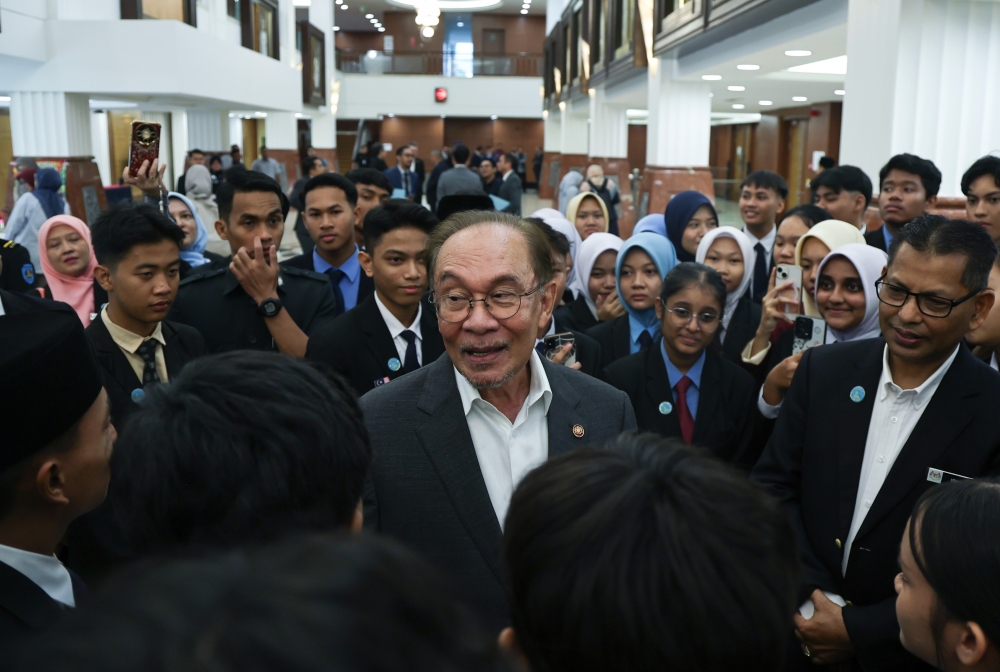
KUALA LUMPUR, Oct 27 — The government has defended its decision to provide larger development allocations for Sabah and Sarawak, citing their geographical challenges and infrastructure needs.
Prime Minister Datuk Seri Anwar Ibrahim said these needs included the poor condition of roads in several areas of Sabah, despite its smaller population compared with other states.
“We should not look at this from the perspective of just one state when it comes to addressing the needs of Sabah and Sarawak.
“No, the Malaysia Agreement 1963 (MA63) must be viewed as a national covenant. It is in our collective interest to safeguard the interests of everyone,” he said in response to a supplementary question from Datuk Seri Dr Ronald Kiandee (PN-Beluran) during the Ministers’ Question Time in the Dewan Rakyat today.
Ronald sought clarification on the decision to reduce or withhold allocations for certain projects in Sabah and Sarawak under the Ministry of Rural and Regional Development (KKDW), despite the two states being entitled to greater allocations under MA63. He also raised the possibility that the decision was influenced by political differences.
In response, Anwar said the development allocations for Sabah and Sarawak announced in Budget 2027 did not include expenditure for the projects under KKDW raised by the MP.
“What we announced were projects approved based on the latest assessments,” he said.
Anwar said the government acknowledged that development allocations would not be sufficient to meet every need, but stressed that good governance must be ensured to prevent leakages.
He said procurement processes and contract awards also needed to be scrutinised to ensure compliance with regulations and take into account the capacity to implement the projects. — Bernama
Anwar plans new law for GLCs and GLICs, cites Battersea losses and eFishery failure
Anwar calls for stricter rules for GLCs, says bosses must not treat them as family property
RM1,000 per attack? Perak police arrest three teens over arson, paint-splashing cases across four states
吉隆坡,10月27日讯——政府为其向沙巴和砂拉越提供更多发展拨款的决定辩护,理由是这两个州面临地理挑战和基础设施需求。
首相拿督斯里安华·易卜拉欣表示,这些需求包括沙巴州一些地区的道路状况不佳,尽管沙巴州的人口与其他州相比较少。
“在解决沙巴和砂拉越的需求时,我们不应该只从一个州的角度来看待这个问题。
“不,《1963年马来西亚协议》(MA63)必须被视为一项国家契约。维护每个人的利益符合我们的共同利益,”他在今天国会下议院部长质询时间回答拿督斯里罗纳德·基安迪博士(国盟-贝鲁兰)的补充提问时说道。
罗纳德要求澄清,尽管沙巴和砂拉越根据1963年马来西亚协议(MA63)有权获得更多拨款,但农村及区域发展部(KKDW)却削减或扣留了对这两个州某些项目的拨款。他还提出,该决定可能受到政治分歧的影响。
对此,安华表示,2027 年财政预算案中宣布的沙巴和砂拉越发展拨款不包括国会议员提出的 KKDW 项目支出。
他说:“我们宣布的项目都是根据最新评估结果获得批准的。”
安华表示,政府承认发展拨款不足以满足所有需求,但他强调必须确保良好的治理,以防止资金流失。
他表示,采购流程和合同授予也需要仔细审查,以确保符合相关法规,并考虑到项目实施能力。——马新社
安华计划针对政府关联公司(GLC)和政府关联投资公司(GLIC)制定新法律,并援引巴特西的损失和电子渔业失败案例。
安华呼吁对官联公司制定更严格的规则,并表示老板不应将官联公司视为家族财产。
每次袭击罚款1000令吉?霹雳州警方逮捕三名青少年,他们涉嫌在四个州犯下纵火和泼油漆案件。