‘What we’re breathing is poison’: Indonesia rolls out oxygen buses as wildfire haze reaches toxic levels“我们呼吸的都是毒气”:印尼推出氧气巴士,应对山火烟雾达到有毒浓度
PALANGKARAYA, Oct 27 — Sudarsono shuddered as he inhaled from an oxygen tank while being evacuated from his small house in Palangkaraya on Indonesian Borneo, yellow, acrid...
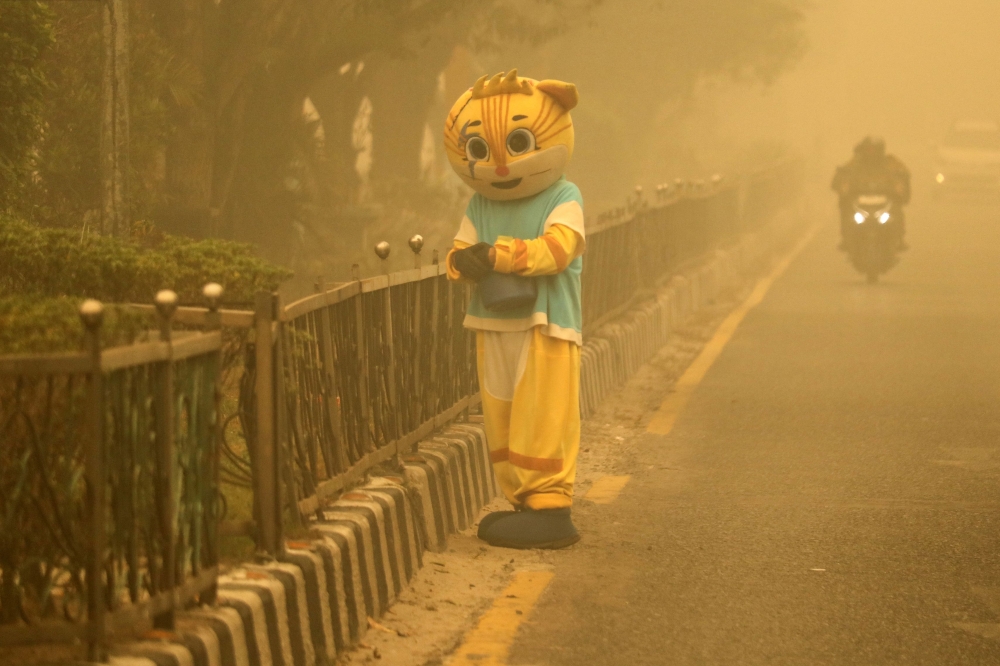
PALANGKARAYA, Oct 27 — Sudarsono shuddered as he inhaled from an oxygen tank while being evacuated from his small house in Palangkaraya on Indonesian Borneo, yellow, acrid wildfire smoke billowing all around.
The 57-year-old fell sick after going out with three friends days earlier to fight fires creeping closer to homes on the outskirts of the city in Central Kalimantan province, one of the regions hit hardest by months of blazes and haze.
“I wore a mask, goggles, everything, but I was surrounded by smoke. I went home since I couldn’t take it anymore,” the construction worker and farmer told AFP as he was being loaded into an ambulance to go to hospital last week.
Sudarsono’s backyard had been blackened by flames, with only a few tree stumps and a cloying smoke left.
“I hope that there will be no more haze, that Central Kalimantan will be free from fires so people can feel safe, work and earn a living,” Sudarsono said before the ambulance doors closed.
He is among more than 11,000 people treated for respiratory infections in Palangkaraya during a months-long wildfire crisis that has also affected Indonesia’s neighbours with toxic haze pollution.
More than 300,000 people in seven provinces were laid low by respiratory tract infections from August to October, according to Indonesia’s health ministry.
At a nearby shelter run by NGOs in Palangkaraya, Alexandra Surya Habsari was treated with a nebuliser and oxygen for breathing difficulties and a headache.
“I’m really fed up, but I don’t even know who I’m supposed to be angry with... this is already way beyond what can be considered normal for a human being to endure,” Alexandra told AFP.
The toxic smog emitted by wildfires contains harmful elements including formaldehyde, hydrogen cyanide and ammonia, as well as PM2.5 particles small enough to penetrate the lungs or bloodstream.
The World Health Organization has linked PM2.5 exposure to increased illness and death.
The Southeast Asian giant has for months struggled to contain fires that deforestation monitor Nusantara Atlas says have consumed more than 1.9 million hectares in the nine months to September.
The government has not confirmed or disputed the figure.
Amid diplomatic objections from neighbouring countries forced to breathe the foul air, patience has also been running thin at home, marked by sporadic anti-government protests.
The health ministry said it has set up nearly 500 facilities countrywide where people can access free oxygen and treatment for haze-related ailments.
Nearly 300 of them are in Central Kalimantan, where the fires and the haze have been particularly bad.
The local government has also deployed buses with oxygen tanks around Palangkaraya.
One beneficiary, Siti Jumiati, said she had long been battling red, burning eyes, a sore throat and a cough.
“Today, on this bus, I can get help breathing for free,” she told AFP on Saturday.
Local health official Riduan, who like many Indonesians has one name, said the people most affected by respiratory ailments were aged between 17 and 59 – those who go out to work even in the toxic air.
Alexandra, 43, said her daily 20-minute commute to the office has become torture.
“We’re supposed to be able to see the blue sky, breathe in oxygen, see the sun and enjoy clean air. But when it’s like this, what we’re breathing is poison,” she said. — AFP
Israel heads to polls amid divisions over Netanyahu and Oct 7 accountability
Flavio Bolsonaro’s party recognises Lula’s victory despite election fraud claims
US Democrats call for special counsel to probe Trump’s ties to Epstein
MMEA officer killed, two injured during operation in Kuala Perlis waters
Sarawak Assembly dissolution notification sent to EC, says Speaker
Anwar defends bigger development allocations for Sabah, Sarawak, cites infrastructure needs
帕朗卡拉亚,10 月 27 日——苏达索诺从他在印度尼西亚婆罗洲帕朗卡拉亚的小房子里撤离时,吸入氧气罐,浑身颤抖,周围弥漫着刺鼻的黄色野火烟雾。
这位 57 岁的男子几天前与三位朋友一起外出,在加里曼丹中部省份的城市郊区扑灭逼近民宅的火灾,之后便生病了。加里曼丹中部省份是受数月火灾和烟霾影响最严重的地区之一。
“我戴了口罩、护目镜,所有防护措施都做了,但周围都是烟雾。我实在受不了了,就回家了。”这位建筑工人兼农民上周在被抬上救护车送往医院时告诉法新社。
苏达索诺的后院被大火烧成了焦黑,只剩下几个树桩和令人作呕的浓烟。
“我希望不再有雾霾,希望中加里曼丹不再有火灾,这样人们就能感到安全,工作谋生,”苏达索诺在救护车门关上前说道。
在长达数月的野火危机中,帕朗卡拉亚有超过 11,000 人因呼吸道感染接受治疗,他也是其中之一。这场危机也给印度尼西亚的邻国带来了有毒的烟霾污染。
据印尼卫生部统计,8月至10月期间,七个省份超过30万人死于呼吸道感染。
在帕朗卡拉亚一家由非政府组织运营的附近收容所,亚历山德拉·苏里亚·哈布萨里因呼吸困难和头痛接受了雾化器和氧气治疗。
“我真的受够了,但我甚至不知道我应该生谁的气……这已经远远超出了人类所能承受的正常范围,”亚历山德拉告诉法新社。
野火产生的有毒烟雾含有甲醛、氰化氢和氨等有害元素,以及小到足以穿透肺部或血液的 PM2.5 颗粒。
世界卫生组织已将PM2.5暴露与疾病和死亡人数增加联系起来。
几个月来,这个东南亚大国一直在努力控制火灾。森林砍伐监测机构 Nusantara Atlas 表示,截至 9 月的九个月里,火灾已吞噬了超过 190 万公顷的土地。
政府既未证实也未否认这一数字。
由于邻国被迫呼吸污浊的空气,并提出了外交抗议,国内民众的耐心也逐渐耗尽,零星的反政府抗议活动此起彼伏。
卫生部表示,已在全国范围内设立了近500个设施,人们可以在这些设施免费获得氧气和治疗与雾霾相关的疾病。
其中近 300 起发生在加里曼丹中部,那里的火灾和雾霾情况尤其严重。
当地政府还在帕朗卡拉亚周边部署了装有氧气罐的巴士。
其中一位受益者西蒂·朱米亚蒂 (Siti Jumiati) 说,她长期以来一直饱受眼睛发红灼痛、喉咙痛和咳嗽的困扰。
“今天,在这辆公交车上,我可以免费获得呼吸帮助,”她周六告诉法新社。
当地卫生官员里杜安(和许多印尼人一样只有一个名字)表示,受呼吸系统疾病影响最大的人群年龄在 17 岁到 59 岁之间——这些人即使在有毒的空气中也外出工作。
43岁的亚历山德拉说,她每天20分钟的通勤时间已经变成了一种折磨。
“我们本应能看到蓝天,呼吸氧气,沐浴阳光,享受清新的空气。但现在的情况是,我们呼吸的却是毒药。”她说道。——法新社
以色列在对内塔尼亚胡和10月7日问责制的争议中举行大选
尽管有人声称选举存在舞弊,弗拉维奥·博索纳罗的政党仍承认卢拉的胜利。
美国民主党人呼吁任命特别检察官调查特朗普与爱泼斯坦的关系。
马来西亚海事执法局一名官员在瓜拉玻璃市水域行动中丧生,另有两人受伤。
砂拉越议长称,已向执行委员会发出州议会解散通知。
安华力挺沙巴和砂拉越增加发展拨款,并指出基础设施需求是主要原因。