Italy opposes EU defense-spending scheme, checking bloc’s momentum意大利反对欧盟国防开支计划,阻碍了欧盟的发展势头。
Prime Minister Giorgia Meloni is now against exemptions for defense spending in debt regulation that her government has previously appealed.
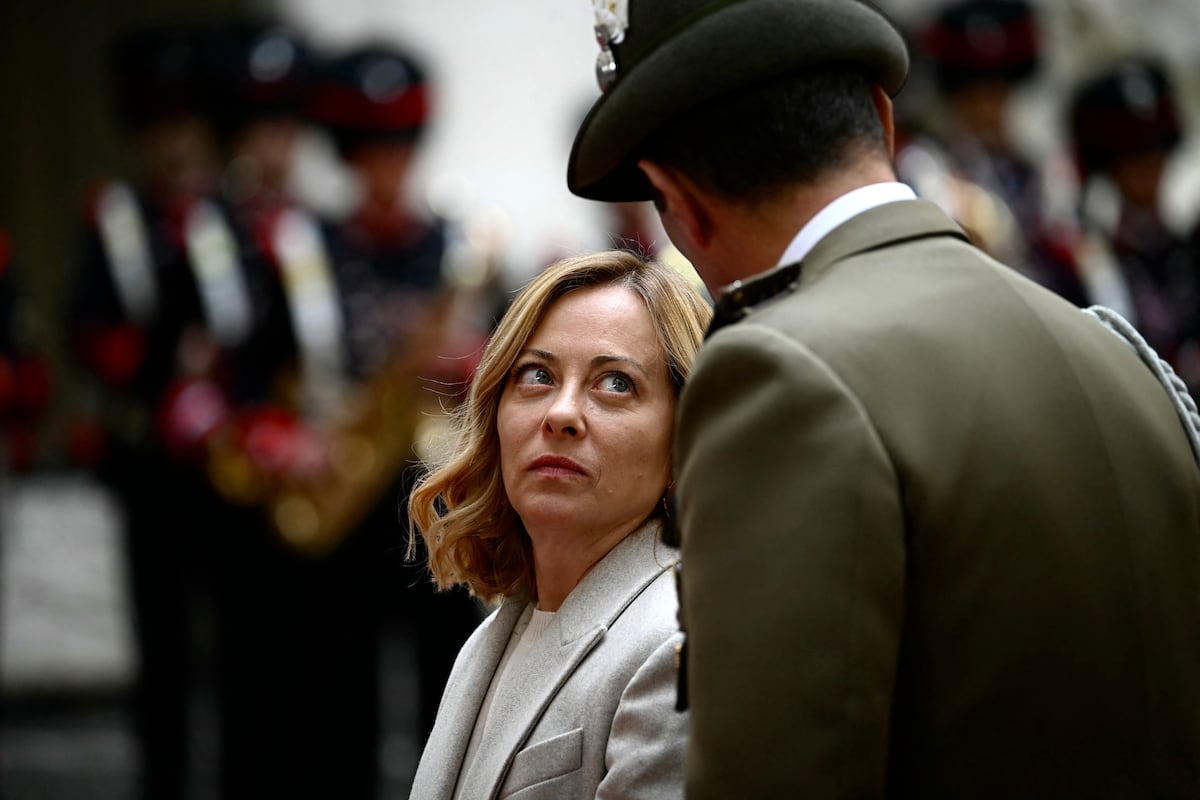
ROME — Italian Prime Minister Giorgia Meloni has opposed European Union plans to raise €800 billion ($870 billion) for defense spending, spoiling the bloc’s show of bravura in the face of Russian aggression and Donald Trump’s disregard.
The European windfall has been proposed by EU commission head Ursula vonder Leyen who is backing plans for €150 billion in loans for defense spending by member states.
A second proposal would see member states allowed to exempt defense spending worth up to 1.5 percent of their national GDP from EU debt rules which are designed to stop members racking up excessive deficits.
If all states take advantage of the exemption, the EU forecasts that bloc-wide defense spending will swell by €650 billion - combining with the loans to achieve a total of €800 billion.
But Italy PM Meloni gave the debt rule scheme a thumbs down when she met Von der Leyen in Brussels on Thursday ahead of an EU summit to discuss the plan.
She said she preferred to see private investors encouraged to put money into defense programs, or direct EU funding which “does not directly impact the state debts.”
Meloni’s lack of enthusiasm will have surprised defense officials in Europe since her government has repeatedly appealed to exempt defense spending from EU deficit spending limits.
That move, her defense minister Guido Crosetto has previously said, was the only way Italy could hope to increase its spending, which is around 1.5 percent of GDP.
Now that the EU has said Italy can do what it has been pushing to do for years, Meloni has declined to take up the offer.
One reason is that whether or not the EU allows fresh debt spending, the markets may be less forgiving.
Another reason is that Meloni remains skeptical about Europe becoming a defense superpower without strong backing from the Unites States.
This month she declined to join in with plans hatched by the U.K. andFrance to deploy peacekeepers to Ukraine in the event of a ceasefire.
In a letter to Italian daily Corriere della Sera on Thursday, Meloni’s defense minister, Crosetto, wrote that only NATO, not the EU, offered a guarantee of military assistance among members.
“The only concrete and practical defense model, here and now, is NATO,” he wrote.
Meloni’s caution on rearming also reflects opposition from Italian voters to spending on arms rather than healthcare.
A poll this month reported that 54.6% of Italians oppose the €800 billion spending plan.
Meloni’s deputy prime minister, Matteo Salvini, a Eurosceptic who has long been soft on Russia, has also this week been opposing extra defense spending, claiming Italy’s biggest threat is Islamic terror, not Vladimir Putin.
Asked about a possible European army on Thursday, he replied, “What would a European army led by France and Germany do today: Would it go to war?”
Tom Kington is the Italy correspondent for Defense News.
罗马——意大利总理乔治娅·梅洛尼反对欧盟筹集 8000 亿欧元(8700 亿美元)用于国防开支的计划,破坏了欧盟在面对俄罗斯侵略和唐纳德·特朗普的漠视时所展现的勇气。
欧盟委员会主席乌尔苏拉·冯德莱恩提议向欧盟成员国提供1500亿欧元的国防贷款,以支持这项欧洲意外之财计划。
第二项提议是允许成员国豁免相当于其国内生产总值 1.5% 的国防开支,使其不受欧盟债务规则的约束。欧盟债务规则旨在阻止成员国积累过多的赤字。
如果所有成员国都利用这项豁免,欧盟预测,欧盟范围内的国防开支将增加 6500 亿欧元——加上贷款,总额将达到 8000 亿欧元。
但意大利总理梅洛尼周四在布鲁塞尔与冯德莱恩会面时,对债务规则方案表示反对。此次会面是在欧盟峰会召开前夕举行的,旨在讨论该方案。
她表示,她更希望看到鼓励私人投资者向国防项目投入资金,或者欧盟直接提供资金,因为“欧盟资金不会直接影响国家债务”。
梅洛尼缺乏热情,这会让欧洲的国防官员感到惊讶,因为她的政府曾多次呼吁将国防开支排除在欧盟赤字支出限制之外。
意大利国防部长圭多·克罗塞托此前曾表示,此举是意大利增加开支的唯一途径,目前意大利的国防开支约占国内生产总值的 1.5%。
既然欧盟已经表示意大利可以做它多年来一直努力争取的事情,梅洛尼却拒绝接受这一提议。
其中一个原因是,无论欧盟是否允许新增债务支出,市场可能不会那么宽容。
另一个原因是,梅洛尼仍然怀疑,如果没有美国的强力支持,欧洲能否成为国防超级大国。
本月,她拒绝加入英国和法国制定的在停火的情况下向乌克兰部署维和人员的计划。
梅洛尼的国防部长克罗塞托周四在致意大利《晚邮报》的一封信中写道,只有北约,而不是欧盟,才能保证成员国之间的军事援助。
他写道:“目前唯一具体可行的防御模式就是北约。”
梅洛尼对重新武装的谨慎态度也反映出意大利选民反对将资金用于武器而非医疗保健。
本月的一项民意调查显示,54.6%的意大利人反对这项8000亿欧元的支出计划。
梅洛尼的副总理马泰奥·萨尔维尼是一位疑欧派人士,长期以来对俄罗斯态度软弱。本周,他也反对增加国防开支,声称意大利面临的最大威胁是伊斯兰恐怖主义,而不是弗拉基米尔·普京。
周四,当被问及是否有可能组建一支欧洲军队时,他回答说:“今天,一支由法国和德国领导的欧洲军队会做什么:它会发动战争吗?”
汤姆·金顿是《防务新闻》驻意大利记者。