Singapore’s wealthy keep more than 70% of assets in cash despite rising wealth: Citi花旗银行:尽管财富不断增长,新加坡富人仍将超过70%的资产以现金形式持有。
Singapore’s wealthy keep 72% of assets in cash as Citi report highlights rising wealth, mutual fund growth and AI in wealth management. Read more at straitstimes.com.
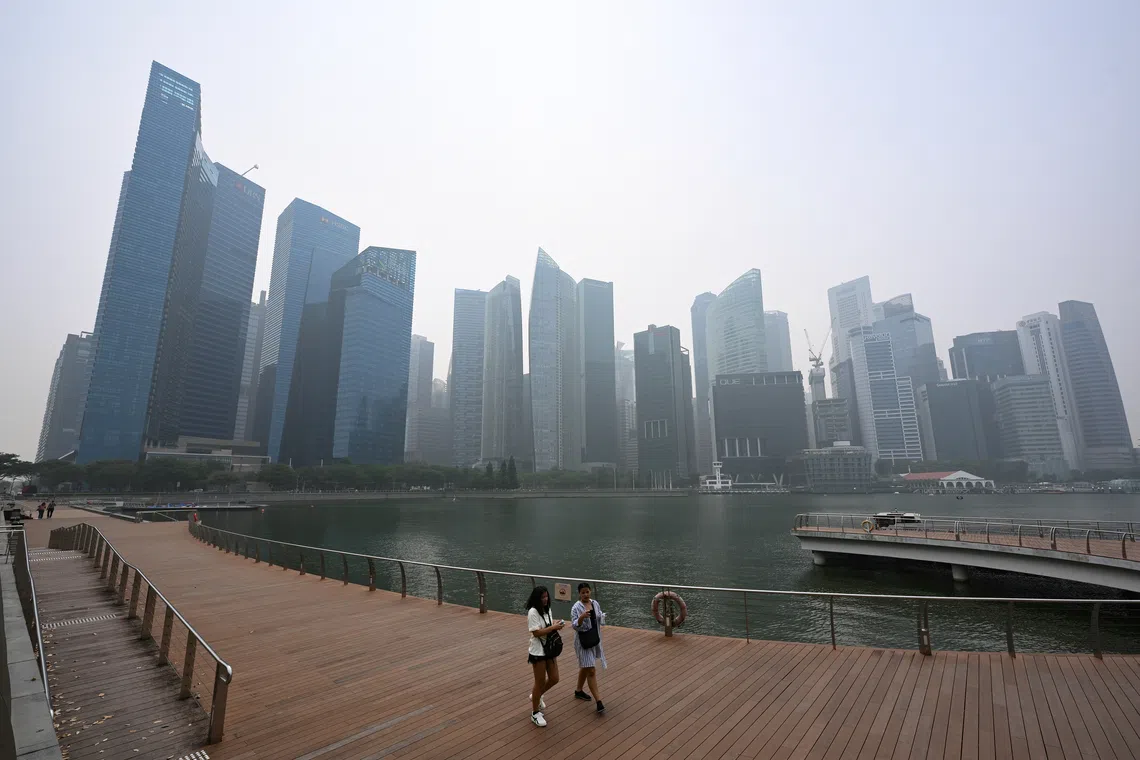
Average assets held by Singapore’s high-net-worth clients rose 6% to US$1.5 million (S$1.95 million) in the first-half of 2026.
ST PHOTO: LIM YAOHUI
Published Oct 27, 2026, 07:30 AM
Updated Oct 27, 2026, 02:43 PM
SINGAPORE – Singapore’s wealthy investors are accumulating more assets but are keeping the bulk of their money in cash and deposits, highlighting a preference for liquidity and a challenge for bankers when it comes to persuading clients to put more of their money to work in investments.
Average assets held by Singapore’s high-net-worth (HWN) clients rose 6% to US$1.5 million (S$1.95 million) in the first-half of 2026, from US$1.41 million in the same period in 2025, according to a report by Citi Wealth and research firm RFI Global released on Oct 22.
Average assets under management (AUM) among affluent clients rose 5% to more than US$565,000 in the first-half of 2026, from US$537,710 in the first-half of 2025.
The HNW segment comprises banking customers with at least US$1 million in AUM, including investible liquid assets, while the affluent segment covers those with US$100,000 to US$1 million.
The increase in average wealth comes as Singapore strengthens its position as a regional wealth management hub, attracting clients who want to manage assets across borders.
However, cash and liquid deposits still accounted for 72% of onshore assets held by affluent clients and 74% of assets booked offshore, the report said. Only 26-28% was allocated to investments. Figures for the HNW segment were not given.
In comparison, affluent and high-net-worth clients in the US allocate 58% of their assets to long-term investments, with 42% held in deposits, the report said.
The high level of cash holdings highlights Singapore investors’ continued preference for liquidity and capital preservation, while also presenting opportunities to diversify into longer-term investment solutions, the Singapore At Heart, Global In Possibilities report said.
For investors, it raises questions about how to balance ready access to cash with the need to grow their wealth over the longer term. Banks and wealth managers may respond by offering more investment products and advisory services to help them do so.
Mutual fund ownership among Singapore’s high-net-worth investors nearly tripled from 11% in 2022 to 31% in 2026, the highest adoption rate in Asia.
Mutual funds pool money from many investors to buy a basket of assets, such as shares and bonds, and are managed by professional fund managers. They offer a way to diversify investments without having to select individual securities.
But the growing use of investment funds has yet to dislodge the preference for cash, which offers flexibility and shields investors from the day-to-day swings of financial markets.
The large share of cash holdings suggests that converting wealth into longer-term investments remains a work in progress.
The report also found that Indonesia accounted for 41% of cross-border banking customers in Singapore, followed by Malaysia at 36%.
Citibank Singapore chief executive Yeo Wenxian said Singapore’s appeal as an international wealth hub is supported by a stable operating environment and deep connectivity to global markets.
“As wealth becomes increasingly international, clients are looking for opportunities that extend beyond their home markets, while seeking trusted advice to help them navigate an increasingly complex investment landscape,” said Yeo, who is also head of wealth for Asia South , which comprises the UAE and Singapore.
For Singapore’s financial sector, the opportunity extends beyond attracting deposits. Banks are also competing to provide investment advice, portfolio management and succession planning as clients’ financial needs become more complex.
Technology is also changing how Singapore’s wealthy approach financial decisions, the report said.
Some 58% of high-net-worth clients and 51% of affluent clients surveyed said they were comfortable exploring artificial intelligence for personalised financial insights, particularly for comparing products and screening investment portfolios.
But they still want control over decisions. The ability to retain full control was the top consideration for adopting AI, cited by 31% of respondents, while 22% wanted the option of consulting a human adviser.
The findings suggest that wealth managers may need to combine digital tools with personal advice, rather than rely on technology alone.
Relationship managers continue to play an important role in providing trusted advice. Investors favour a hybrid advisory model, where AI accelerates analytical and preparatory research, while human advisers deliver contextual judgement, emotional reassurance, and strategic execution.
In Singapore, the relationship manager Net Promoter Score, a measure of how likely customers are to recommend their relationship manager to others, rose from +19 in 2022 to +31 in 2026.
The improvement suggests stronger client advocacy, even as digital capabilities expand.
Yeo said trust remained central to financial decision-making, with advisers increasingly expected to help clients navigate investment opportunities and prepare for the transfer of wealth across generations.
Estate planning is another area in which Singapore performed strongly.
The report found that 76% of its affluent Singaporean customers aged 55 and above had established wills or wealth succession plans, compared with 41% in Hong Kong.
Across the broader affluent population, around three in four Singaporeans had a will or succession plan in place, or intended to establish one.
Financial adviser recommendations and health concerns were the two leading triggers for starting succession planning, each cited by 41% of respondents.
These are followed by retirement planning, marriage or divorce, and the birth of a child.
Protecting family assets was the top priority when structuring estates, cited by 51%, ahead of avoiding family disputes and ensuring fair distribution among heirs, both at 45%.
The findings underline how wealth management goes beyond a client’s balance sheet and takes into account their family dynamics, life goals and the legacy they hope to build, Yeo said.
Angela Tan is senior correspondent at The Straits Times’ business desk.
Private banking/Wealth management
2026 年上半年,新加坡高净值客户的平均资产增长 6%,达到 150 万美元(195 万新元)。
ST 照片:林耀辉
发布于2026年10月27日上午7:30
更新于2026年10月27日下午2:43
新加坡——新加坡的富裕投资者正在积累更多资产,但他们仍将大部分资金以现金和存款的形式持有,这凸显了他们对流动性的偏好,也给银行家们带来了挑战,即如何说服客户将更多资金投入投资。
根据花旗财富和研究公司 RFI Global 于 10 月 22 日发布的一份报告,新加坡高净值客户的平均资产在 2026 年上半年增长了 6%,达到 150 万美元(195 万新元),而 2025 年同期为 141 万美元。
2026 年上半年,富裕客户的平均资产管理规模 (AUM) 增长 5%,超过 565,000 美元,而 2025 年上半年为 537,710 美元。
高净值客户群体包括资产管理规模至少为 100 万美元的银行客户(包括可投资的流动资产),而富裕客户群体则涵盖资产管理规模在 10 万美元至 100 万美元之间的客户。
随着新加坡巩固其作为区域财富管理中心的地位,吸引希望跨境管理资产的客户,平均财富也随之增长。
然而,报告指出,现金和流动资金存款仍占富裕客户境内资产的72%,境外资产的74%,仅有26%至28%用于投资。报告未提供高净值客户群体的具体数据。
报告称,相比之下,美国的富裕和高净值客户将 58% 的资产配置于长期投资,42% 的资产以存款形式持有。
《新加坡心系全球》报告指出,新加坡投资者持有大量现金,凸显了他们对流动性和资本保值的持续偏好,同时也为他们提供了多元化投资、转向长期投资方案的机会。
对于投资者而言,这引发了一个问题:如何在随时获取现金和实现长期财富增长之间取得平衡?银行和财富管理机构可能会通过提供更多投资产品和咨询服务来帮助他们解决这个问题。
新加坡高净值投资者持有共同基金的比例从 2022 年的 11% 增长到 2026 年的 31%,几乎翻了三倍,是亚洲最高的普及率。
共同基金汇集众多投资者的资金,购买一篮子资产,例如股票和债券,并由专业的基金经理进行管理。它们提供了一种无需选择个别证券即可分散投资风险的方式。
但投资基金的日益普及尚未取代人们对现金的偏好,现金提供了灵活性,并使投资者免受金融市场日常波动的影响。
大量现金持有表明,将财富转化为长期投资仍然是一项正在进行的工作。
该报告还发现,印度尼西亚占新加坡跨境银行客户的 41%,其次是马来西亚,占 36%。
花旗银行新加坡首席执行官杨文贤表示,新加坡作为国际财富中心的吸引力得益于稳定的经营环境和与全球市场的深度连接。
“随着财富日益国际化,客户正在寻求超越其本土市场的机会,同时寻求值得信赖的建议,以帮助他们应对日益复杂的投资环境,” Yeo 表示,他同时也是包括阿联酋和新加坡在内的亚洲南部地区的财富主管。
对新加坡金融业而言,机遇不仅限于吸引存款。随着客户财务需求日益复杂,各银行也在竞相提供投资咨询、投资组合管理和继承规划等服务。
报告称,科技也在改变新加坡富人进行财务决策的方式。
调查显示,58%的高净值客户和51%的富裕客户表示,他们乐于探索人工智能在个性化财务洞察方面的应用,尤其是在比较产品和筛选投资组合方面。
但他们仍然希望掌控决策权。31%的受访者表示,能够保持完全控制权是他们采用人工智能的首要考虑因素,而22%的受访者则希望可以选择咨询人类顾问。
研究结果表明,财富管理者可能需要将数字工具与个人建议相结合,而不是仅仅依赖技术。
客户经理在提供值得信赖的建议方面仍然发挥着重要作用。投资者倾向于采用混合咨询模式,即人工智能加速分析和准备性研究,而人工顾问则提供情境判断、情感安抚和战略执行。
在新加坡,客户关系经理净推荐值(衡量客户向他人推荐其客户关系经理的可能性)从 2022 年的 +19 上升到 2026 年的 +31。
这一改进表明,即使数字化能力不断增强,客户支持力度也越来越大。
Yeo表示,信任仍然是财务决策的核心,人们越来越期望理财顾问能够帮助客户把握投资机会,并为财富的代际传承做好准备。
在遗产规划方面,新加坡也表现出色。
报告发现,在新加坡55岁及以上的富裕客户中,76%的人已经立下遗嘱或制定财富继承计划,而香港的这一比例为41%。
在更广泛的富裕人群中,约有四分之三的新加坡人已经立有遗嘱或继承计划,或者打算制定这样的计划。
财务顾问的建议和健康问题是启动继任计划的两大主要触发因素,分别有 41% 的受访者提到了这一点。
接下来依次是退休规划、结婚或离婚以及孩子的出生。
在构建遗产时,保护家庭资产是首要任务,51% 的人提到了这一点,其次是避免家庭纠纷和确保继承人之间的公平分配,这两项的提及率均为 45%。
Yeo表示,研究结果强调了财富管理不仅仅关注客户的资产负债表,还要考虑他们的家庭动态、人生目标以及他们希望建立的遗产。
安吉拉·谭是《海峡时报》商业版的高级记者。
私人银行/财富管理