During crises, youths will provide psychological first aid, help communities be more resilient危机期间,青年人将提供心理急救,帮助社区增强韧性。
Psychological preparedness and putting psychologists into part of the home team operations is like an organisational and operational strategy: a director (psychological research) from MHA's Home Team Psychology Division Read more at straitstimes.com.
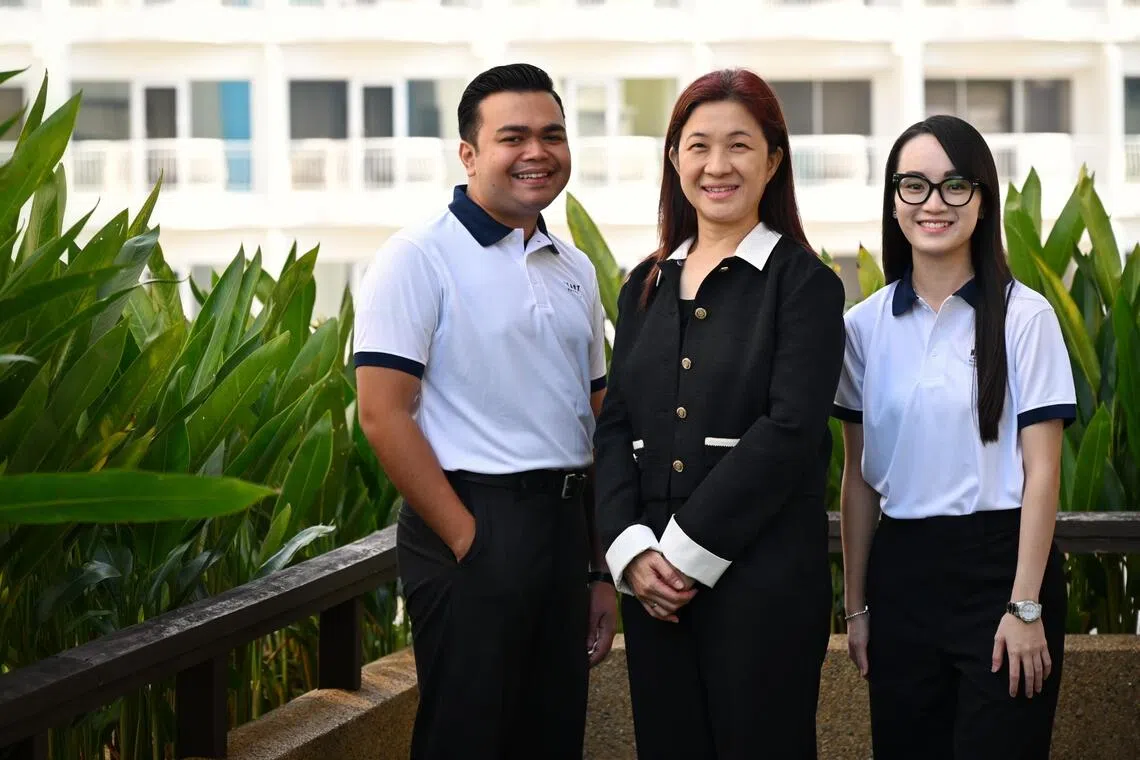
Dr Diong Siew Maan (centre) with HEART volunteers Imran Rashid Fazal (left) and Soh Yi Han at an inaugural professional community forum, Human Behaviour in Crises: Reactions, Response, Resilience, at Furama Riverfront Hotel.
ST PHOTO: KUA CHEE SIONG
Zaihan Mohamed Yusof
Published Oct 27, 2026, 04:45 PM
Updated Oct 27, 2026, 04:45 PM
Sim Ann said crisis response needs both operational skill and psychological preparedness. She said fear and confusion are natural, and the Covid-19 pandemic showed the human side matters.
Dr Diong Siew Maan said officers and responders need psychological support before, during and after crises. She cited the 2013 Little India riot and the 2004 Phuket tsunami as examples.
MHA launched the HEART Associates Youth Wing to train 30 youths in psychological first aid. Members Soh Yi Han and Imran Rashid Fazal said peer support must be empathetic and suited to young people.
SINGAPORE – When the Little India riot broke out on Dec 8, 2013, psychologist, Dr Diong Siew Maan treated several police officers and paramedics injured in the mayhem.
Now a director (psychological research) at the Ministry of Home Affairs’ Home Team Psychology Division (HTPD), Dr Diong said the casualties had been traumatised by Singapore’s first riot since the 1960s.
Lessons were learnt from that incident, such as how to better respond to a crisis, recover from it, and how to come out more resilient from the experience while trying to maintain a sense of calm among the population.
On Oct 27, a voluntary programme to equip youths with psychological first aid skills to support their peers and strengthen community resilience after a crisis, was launched.
Called the Human Emergency Assistance and Response Teams (HEART) Associates Youth Wing Programme, it comprises 30 members.
They are trained to connect with peers through youth-led outreach, and will be asked to help Singapore be more psychologically prepared in the event of a crisis.
The event was held at an inaugural professional community forum, Human Behaviour in Crises: Reactions, Response, Resilience, at Furama Riverfront Hotel .
Dr Diong had established the Singapore Civil Defence Force’s first psychological unit in early 2013 and built a structured system to help responders manage post-critical incident stress.
She was also involved in providing psychological support to police officers deployed in the 2004 Tsunami in Phuket.
Before the deployment , Dr Diong and her team provided police officers with a psychological brief, assessed and offered some morale assessment, including forms of psychological first aid.
When the officers returned, psychologists looked into their psychological well-being as part of the reintegration process.
From her experience in providing psychological support to officers, she said there was a potential in expanding the support to youths connected to social media .
Added Dr Diong: “They also interact with one another in a very different way, so we thought we would want to tap on this particular group of youth who are savvy, educated, and who has the commitment and keenness to help their peers (during a crisis).
“One possibility is in the event of crisis, they can help us spread positive and resilient messages, or advisories to other youths.”
Second Minister for Home Affairs Sim Ann launched the HEART Associates Youth Wing Programme, and stressed on the importance of understanding how people are likely to react in a crisis.
Sim said: “In a crisis, young people, like everyone else, can experience psychological distress. When facing adversity, some may turn to friends and peers first for support and comfort.”
Sim said fear and confusion are natural but people experience them differently.
She added: “Recognising these differences strengthens our operational planning. It helps us communicate clearly, counter misinformation, and identify those who may need additional support.”
Second Minister for Home Affairs Sim Ann stressed on the importance of understanding how people are likely to react in a crisis. ST PHOTO: KUA CHEE SIONG
Second Minister for Home Affairs Sim Ann stressed on the importance of understanding how people are likely to react in a crisis.
She cited how Singaporeans helped each other during the Covid-19 pandemic while following public health measures, and adapting to disruption .
Said Sim: “The experience showed that an effective crisis response depends on both operational capability and psychological preparedness.”
The forum brought over 200 participants such as leaders and officers from the Home Team, including psychologists from across government agencies, community partners, and practitioners.
Organised by the HTPD , the event discussed human responses in times of crises, and how they shape recovery, resilience and longer-term outcomes.
A volunteer from the Youth Wing, Imran Rashid Fazal, 34, an undergraduate from the Singapore University of Social Sciences, draws on his experience from working in the airline industry .
He realised that people respond to situations differently. And dealing with youths in a crisis situation is slightly different as they interact in other ways with family and friends.
Another HEART volunteer, Soh Yi Han, 23, a post graduate student from Nanyang Technological University, Master of Science in Psychology, also volunteers as a victim care officer with the police.
She has helped victims of scams and sexual assaults.
Added Soh: “Some victims really need more time to process what has just happened to recollect their thoughts and emotions.
“They may have different coping systems or support systems, so it’s very important for us to make sure that we don’t expect every individual to cope in the same way. ”
Zaihan Mohamed Yusof is senior crime correspondent at The Straits Times.
Diong Siew Maan 博士(中)与 HEART 志愿者 Imran Rashid Fazal(左)和 Soh Yi Han 在富丽华河畔酒店举行的首届专业社区论坛“危机中的人类行为:反应、应对、复原力”上合影。
《海峡时报》摄影:郭志雄
扎伊汉·穆罕默德·优素福
发布于 2026 年 10 月 27 日下午 4:45
更新于2026年10月27日下午4:45
沈安表示,危机应对既需要操作技能,也需要心理准备。她说,恐惧和困惑是人之常情,新冠疫情凸显了人性的重要性。
迪昂·修曼医生表示,警员和救援人员在危机发生前、发生时和发生后都需要心理支持。她以2013年小印度骚乱和2004年普吉岛海啸为例。
马来西亚内政部成立了“HEART Associates青年分部”,旨在培训30名青年掌握心理急救技能。成员苏怡涵和伊姆兰·拉希德·法扎尔表示,同伴互助必须富有同理心,并且适合年轻人。
新加坡——2013 年 12 月 8 日小印度骚乱爆发时,心理学家 Diong Siew Maan 医生治疗了多名在骚乱中受伤的警察和医护人员。
现任内政部内政团队心理学司(HTPD)心理研究主任的迪昂博士表示,伤亡人员因新加坡自 20 世纪 60 年代以来的首次骚乱而遭受了创伤。
从那次事件中吸取了教训,例如如何更好地应对危机、从危机中恢复,以及如何从这段经历中变得更有韧性,同时努力在民众中保持冷静。
10 月 27 日,一项旨在为青年提供心理急救技能的自愿计划启动,以便他们在危机后能够支持同龄人并增强社区的复原力。
该组织名为“人类紧急援助和响应小组(HEART)青年翼计划”,由 30 名成员组成。
他们接受培训,通过青年主导的外展活动与同龄人建立联系,并将被要求帮助新加坡在危机发生时做好更充分的心理准备。
该活动在富丽华河畔酒店举行的首届专业社区论坛“危机中的人类行为:反应、应对、韧性”上举行。
迪昂博士于 2013 年初建立了新加坡民防部队的第一个心理部门,并建立了一个结构化的系统来帮助应急人员应对重大事件后的压力。
她还参与了为2004年普吉岛海啸中部署的警察提供心理支持的工作。
在部署之前,迪昂博士和她的团队向警官们提供了心理简报,进行了评估并提供了一些士气评估,包括一些心理急救措施。
警员返回后,心理学家对他们的心理健康状况进行了调查,作为重返社会过程的一部分。
根据她为警官提供心理支持的经验,她表示,有可能将这种支持扩展到与社交媒体相关的青少年。
迪昂博士补充道:“他们彼此之间的互动方式也截然不同,因此我们认为应该关注这群精明、受过良好教育,并且有决心和热情在危机期间帮助同龄人的年轻人。
“一种可能性是,在危机发生时,他们可以帮助我们传播积极向上、充满韧性的信息,或者向其他年轻人提供建议。”
内政部第二部长沈颖启动了 HEART Associates 青年团计划,并强调了解人们在危机中可能如何反应的重要性。
Sim表示:“在危机时刻,年轻人和其他人一样,也会经历心理困扰。面对逆境时,有些人可能会首先向朋友和同龄人寻求支持和安慰。”
Sim表示,恐惧和困惑都是人之常情,但人们的感受却各不相同。
她补充说:“认识到这些差异可以加强我们的行动计划。这有助于我们清晰地沟通,打击虚假信息,并识别可能需要额外支持的人。”
内政部第二部长沈颖强调,了解民众在危机中的反应至关重要。(海峡时报照片:柯志雄)
内政部第二部长沈颖强调,了解人们在危机中可能作出的反应至关重要。
她举例说,在新冠疫情期间,新加坡人如何互相帮助,遵守公共卫生措施,并适应疫情带来的种种变化。
Sim表示:“经验表明,有效的危机应对取决于作战能力和心理准备。”
论坛吸引了 200 多名参与者,其中包括内政团队的领导和官员,以及来自各个政府机构的心理学家、社区合作伙伴和从业人员。
本次活动由 HTPD 组织,探讨了危机时期人类的反应,以及这些反应如何影响恢复、韧性和长期结果。
来自青年团的志愿者伊姆兰·拉希德·法扎尔(Imran Rashid Fazal)今年34岁,是新加坡社会科学大学的一名本科生,他利用自己在航空业的工作经验来开展志愿服务。
他意识到人们对不同情况的反应各不相同。处理青少年危机情况也略有不同,因为他们与家人和朋友的互动方式不同。
另一位 HEART 志愿者,23 岁的 Soh Yi Han,是南洋理工大学心理学硕士研究生,同时也是警方的受害者关怀志愿者。
她曾帮助过诈骗和性侵犯的受害者。
Soh补充道:“有些受害者确实需要更多时间来消化刚刚发生的事情,重新整理他们的想法和情绪。
“他们可能有不同的应对方式或支持系统,所以我们必须确保不要期望每个人都以相同的方式应对。”
Zaihan Mohamed Yusof 是《海峡时报》的高级犯罪记者。