Army mismanaged CENTCOM stockpiles of troop supplies modules: Audit审计报告显示,陆军对中央司令部部队物资储备管理不善。
The Army failed to properly maintain Force Provider modules, or containerized support facilities for troops, the Pentagon's IG found.
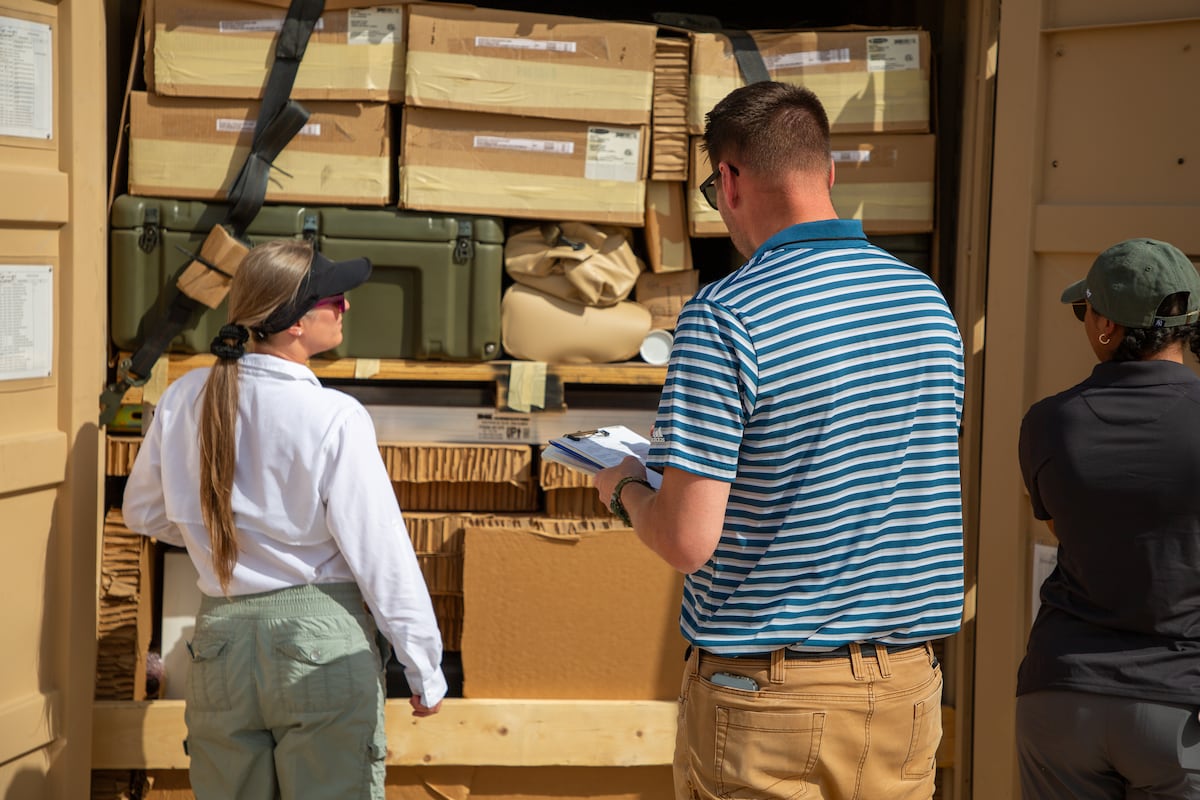
The U.S. Army mismanaged equipment stockpiles for U.S. Central Command, according to a recent Department of Defense Inspector General audit.
The Army failed to properly maintain Force Provider modules, which are prepositioned “tent cities” that comprise 24 to 32 shipping containers packed with materials to erect housing, kitchen and other facilities, said the DOD IG report . Force Provider modules are deployed at four locations around the world, including the CENTCOM region.
Army officials “did not effectively manage FP module COSIS [Care of Supplies in Storage] maintenance and storage requirements,” concluded the heavily redacted report. In particular, auditors faulted the Integrated Logistics Support Center at the Army’s Tank-Automotive & Armaments Command, or TACOM ILSC, for not adequately managing or training contractors who were supposed to maintain the modules.
The issue appears to have begun in 2016, when the Army awarded a $23.8 million contract to an unidentified company to maintain the Force Provider modules. In 2020, the Army transferred responsibility for maintaining the modules to another entity, but “did not specifically add maintenance requirements for FP modules until April 2024,” the DOD IG said.
Troops in the field began complaining about broken equipment. For example, in 2022, units reported that they received Force Provider containers with ripped tents and inoperable generators, laundry equipment and showers, according to the report.
“Had [name redacted] separately accounted for those items that require maintenance and required the contractor to perform maintenance at the appropriate intervals, the defective equipment would have been identified before issuance,” auditors said.
One issue may have been confusion over requirements for inspecting equipment stored outdoors versus indoors. For example, during a training event in June 2024, TACOM’s Integrated Logistics Support Center “instructed [redacted] officials to protect FP modules and add-on kits from the open storage environmental elements by keeping the FP containers at least 6 to 8 inches above the desert ground,” the report said. However, the actual maintenance plan did not include “any requirements to protect FP modules from outdoor elements.”
TACOM also failed to ensure that contractors were adequately trained to maintain stockpiles. Containers need to be opened carefully to avoid degrading the equipment inside, yet the “FP maintenance training requirement is not documented to ensure storage site personnel are aware of the need for the required TACOM ILSC training” to properly preserve FP modules before opening the containers, the DOD IG found. Meanwhile, with a new contractor now becoming responsible for maintaining the modules, auditors worry that qualified personnel could be rotated out before new personnel are trained.
Compounding the problem is that different types of equipment require different levels of maintenance. Yet the audit revealed that contractors did not separately account for items such as skid steers — which require regular maintenance — under requirements set by the Global Combat Support System-Army, or GCSS-A, logistics management system. Thus, “for more than four years, officials did not properly account for FP module components that require maintenance,” including generators and skid steers. The reason was that “TACOM ILSC officials instructed [redacted] to account for all components that comprise a FP module or add-on kit as one line item.”
Failing to account for individual items in GCSS-A can have grave consequences when equipment is needed. For instance, the report notes, Army personnel needed fully mission-capable ventilators during the COVID-19 pandemic, according to Army G-4 officials. Yet, the Army lacked visibility of its ventilator inventory because some were included in medical kits and “not accounted for separately in GCSS-Army,” according to the report.
The DOD IG audit recommended that TACOM’s Integrated Logistics Support Center update the 2011 Force Provider Care of Supplies in Storage plan, including “environmental storage and maintenance requirements specific to outdoor storage yards, providing definitive maintenance intervals and ensuring inclusion of all Force Provider module components and add-on kits.” In addition, the plan should also specify ILSC’s responsibilities to conduct training in Force Provider module maintenance.
Michael Peck is a correspondent for Defense News and a columnist for the Center for European Policy Analysis. He holds an M.A. in political science from Rutgers University. Find him at theuncommondefense.com. His email is mikedefense1@gmail.com.
根据美国国防部监察长最近的一项审计,美国陆军对美国中央司令部的装备库存管理不善。
国防部监察长办公室的报告指出,陆军未能妥善维护“部队供给模块”。这些模块是预先部署的“帐篷城”,由24至32个装满建筑材料的集装箱组成,用于搭建住房、厨房和其他设施。“部队供给模块”部署在全球四个地点,包括中央司令部地区。
这份经过大量删减的报告总结道,陆军官员“未能有效管理FP模块COSIS(物资储存管理)的维护和存储需求”。审计人员特别指出,陆军坦克汽车与武器司令部(TACOM)下属的综合后勤保障中心(ILSC)未能充分管理或培训负责维护这些模块的承包商。
这个问题似乎始于2016年,当时陆军授予一家未透露名称的公司一份价值2380万美元的合同,用于维护部队提供者模块。2020年,陆军将这些模块的维护责任移交给了另一家实体,但国防部监察长表示,“直到2024年4月才明确增加部队提供者模块的维护要求。”
前线部队开始抱怨装备损坏。例如,报告显示,2022年,一些部队反映他们收到的“部队物资供应箱”里的帐篷破损,发电机、洗衣设备和淋浴设施也无法使用。
审计人员表示:“如果[姓名已隐去]对那些需要维护的项目进行单独核算,并要求承包商按适当的间隔进行维护,那么在交付之前就能发现有缺陷的设备。”
其中一个问题可能是对室外存放和室内存放设备的检查要求存在混淆。例如,报告指出,在2024年6月的一次培训活动中,TACOM的综合后勤保障中心“指示[已编辑]官员将FP模块和附加组件的容器抬高至离地至少6到8英寸,以保护它们免受露天存放环境因素的影响”。然而,实际的维护计划中并没有包含“任何保护FP模块免受室外因素影响的要求”。
TACOM 也未能确保承包商接受过充分的库存维护培训。虽然需要小心打开容器以避免损坏内部设备,但国防部监察长发现,“FP 维护培训要求没有相关文件记录,无法确保存储地点人员了解在打开容器前需要接受 TACOM ILSC 培训以妥善保存 FP 模块”。与此同时,由于现在由新的承包商负责维护这些模块,审计人员担心合格人员可能会在新人员接受培训之前就被轮换。
雪上加霜的是,不同类型的设备需要不同级别的维护。然而,审计发现,承包商并未按照全球作战支援系统-陆军(GCSS-A)后勤管理系统的要求,对需要定期维护的滑移装载机等设备进行单独核算。因此,“四年多来,相关官员未能正确核算需要维护的FP模块组件”,包括发电机和滑移装载机。原因是“TACOM ILSC官员指示[已编辑]将构成FP模块或附加套件的所有组件作为一个单独的项目进行核算”。
GCSS-A系统中未能对个别物品进行清点,会在需要装备时造成严重后果。例如,报告指出,据陆军G-4部门官员称,在新冠疫情期间,陆军人员需要功能齐全的呼吸机。然而,报告称,由于部分呼吸机包含在医疗包中,“未在GCSS-Army系统中单独清点”,因此陆军对其呼吸机库存缺乏了解。
国防部监察长办公室的审计建议,TACOM的综合后勤保障中心应更新2011年版《部队物资存储维护计划》,其中包括“针对室外存储场地的环境存储和维护要求,明确维护周期,并确保涵盖所有部队物资模块组件和附加套件”。此外,该计划还应明确ILSC在部队物资模块维护培训方面的职责。
迈克尔·佩克是《防务新闻》的通讯员,也是欧洲政策分析中心的专栏作家。他拥有罗格斯大学政治学硕士学位。您可以在theuncommondefense.com找到他。他的邮箱是mikedefense1@gmail.com。