Parliament gets more independence: What will its new council actually do?议会获得更大独立性:其新委员会究竟会做什么?
KUALA LUMPUR, Oct 28 — Parliament is expected to scrutinise government decisions, debate laws and examine how public money is spent, but who manages the institution itself?That...
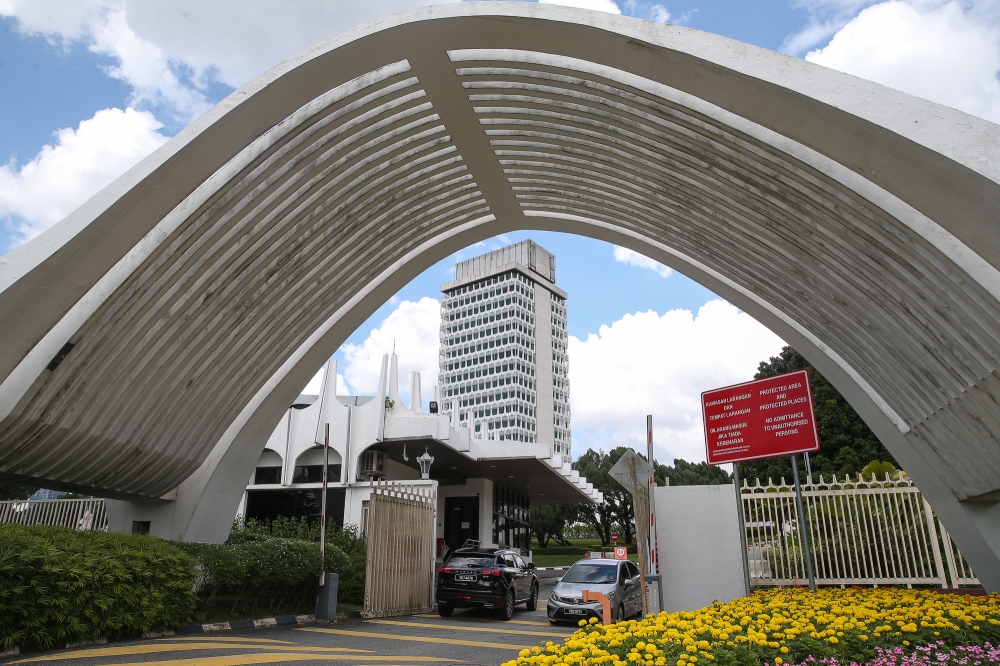
The Parliamentary Service Council, established under the Parliamentary Service Act 2025, aims to enhance the independence of Malaysia's Parliament by overseeing its administration, staffing, and finance, distinct from the executive branch's influence.
Comprised of 16 members from both government and Opposition, as well as civil service officials, the council ensures Parliament has the necessary resources and support to function effectively.
While it does not manage daily operations, it provides strategic oversight, contributing to Parliament's institutional independence.
However, its effectiveness in enhancing accountability depends on MPs' use of the available support and the council's management of its responsibilities.
KUALA LUMPUR, Oct 28 — Parliament is expected to scrutinise government decisions, debate laws and examine how public money is spent, but who manages the institution itself?
That question is at the heart of the Parliamentary Service Act 2025, which came into force on October 1, restoring a dedicated service intended to give Parliament greater control over its staffing, finances and administration after more than three decades under the government’s administrative structure.
The law establishes the Parliamentary Service Council to oversee the service, with the aim of strengthening Parliament’s institutional independence from the executive, which refers to the prime minister, Cabinet and government ministries.
The council came into focus on October 14, when the Dewan Rakyat approved four MPs, two from the government and two from the Opposition, to sit on it.
But what does the council actually do, who sits on it, and how far does its authority extend? Malay Mail explains.
What is the Parliamentary Service Council?
The Parliamentary Service Council is the body responsible for matters relating to the Parliamentary Service, a separate service established under the Parliamentary Service Act 2025 (Act 869).
In practical terms, it is intended to give Parliament greater say over the staff and resources needed to carry out its work, rather than leaving these matters largely dependent on administrative arrangements within the executive.
The council does not replace Parliament or take over MPs’ responsibility for debating legislation and scrutinising the government.
Instead, it oversees the administrative machinery that supports those duties.
Who sits on the council?
The council will have 16 members drawn from Parliament and the public service.
The President of the Dewan Negara serves as chairman, while the Speaker of the Dewan Rakyat is co-chairman.
The other parliamentary members are the Deputy President of the Dewan Negara, two Deputy Speakers of the Dewan Rakyat, two senators and four MPs.
The four MPs must comprise two government representatives and two Opposition representatives.
They are nominated by the Dewan Rakyat’s Committee of Selection and approved through a resolution of the House.
The Dewan Rakyat on October 14 approved Ramkarpal Singh (Pakatan Harapan-Bukit Gelugor) and Datuk Seri Hasni Mohammad (Barisan Nasional-Simpang Renggam) as the government’s representatives, with Datuk Seri Dr Ronald Kiandee (Perikatan Nasional-Beluran) and Datuk Seri Takiyuddin Hassan (PN-Kota Bharu) representing the Opposition.
The two senators are similarly nominated by the Dewan Negara’s Committee of Selection and approved by a resolution of the Senate.
Dewan Negara president Datuk Seri Awang Bemee Awang Ali Basah has said the two senators will be appointed once the Dewan Negara convenes from November 30.
Dewan Rakyat Speaker Tan Sri Johari Abdul has said the council is expected to be formed by December.
The council also includes the clerk to the Dewan Negara and the clerk to the Dewan Rakyat.
Its three ex-officio members are the Treasury secretary-general or a representative, the director-general of Public Service or a representative, and Parliament’s chief administrator.
Ex-officio members do not have voting rights.
That leaves 13 voting members, of whom two are Opposition MPs.
This composition brings together parliamentary leaders, government and Opposition representatives, and officials from the Treasury, the Public Service Department and Parliament’s administration.
What does the council actually do?
The Act gives the council four broad responsibilities.
First, it appoints members of the Parliamentary Service and determines their terms and conditions of appointment, subject to the applicable legal framework.
Second, it oversees financial matters relating to the service.
Third, it develops and implements training and development programmes for Parliamentary Service staff.
Fourth, it may take other steps reasonably necessary to administer the service and carry out its functions.
These responsibilities matter because Parliament needs professional staff to support its proceedings, maintain official records, assist committees and handle legislative and administrative work.
The council may also establish committees to help carry out its responsibilities.
Does the council run Parliament day to day?
Not directly, as the Act hands that job to Parliament’s chief administrator.
The chief administrator is responsible for the institution’s overall administration and management, including its day-to-day affairs and the financial matters of the Parliamentary Service.
The chief administrator acts under the council’s general authority and directions, and is also the council’s secretary.
This creates a division of responsibility: the council oversees the service and provides general direction, while the chief administrator handles its administration and daily operations.
The Act also provides for separate committees dealing with staff promotions, disciplinary matters and appeals.
How will the council make decisions?
The council must meet as often as necessary to carry out its functions.
At least seven members are required for a quorum.
Members other than ex-officio members are entitled to vote, and decisions are made by a majority of those present and voting.
If the votes are tied, the chairman has a casting vote.
The Act also requires members to disclose any direct or indirect interest in a matter being considered.
A member with such an interest cannot take part in the relevant deliberations or decision.
These provisions establish formal procedures for decision-making and help guard against conflicts of interest.
How will it make Parliament more independent?
The central idea is to give Parliament greater control over its own administrative needs, rather than relying on arrangements managed through the executive branch.
When the Parliamentary Service Bill was before Parliament in 2025, Law and Institutional Reform Minister Datuk Seri Azalina Othman Said said the service was intended to strengthen Parliament’s institutional independence and support the separation of powers between the legislative, executive and judicial branches.
She also highlighted the need for professional support for MPs, including help with drafting legislation and access to research expertise for both government and Opposition lawmakers.
Such support could help MPs and parliamentary committees examine bills, assess government policies and scrutinise public spending more effectively.
However, the council itself does not hold the government politically accountable.
Its role is to manage the administrative support that Parliament needs to perform its oversight functions, while MPs and parliamentary committees remain responsible for carrying out that scrutiny.
Will Parliament control its own budget?
Not entirely, because the Act leaves it to the government to provide the funds.
Section 12 of the Act provides that the government must supply sufficient funds annually for the Parliamentary Service to enable the council to perform its functions.
The council is responsible for overseeing financial matters relating to the service, but the statutory provision does not itself spell out every step in the budget-submission process.
Azalina said that the intended arrangement would allow Parliament to submit budget proposals directly to the Finance Ministry without first obtaining approval from the Prime Minister’s Department.
That distinction matters: the obligation to provide sufficient funding is set out in the law, while the direct-submission procedure is part of the minister’s explanation of how the arrangement is intended to work.
Does this mean Parliament is completely separate from the civil service?
No, as the Act keeps links between the Parliamentary Service and the wider public administration.
The Act establishes the Parliamentary Service as a service separate from the general public service.
For example, Section 11 requires the Chief Administrator to be appointed from among members of the federal general public service.
The arrangement therefore gives Parliament a distinct administrative structure under the law without severing all connections with the wider public service and government financial systems.
What does this mean for accountability?
The council creates a formal structure for managing Parliament’s staff, finances and administrative resources, with rules governing appointments, training, voting and conflicts of interest.
Azalina has argued that stronger institutional support would help MPs serve as the “eyes and ears of the people”, including by enabling them to identify wastage and hold the government accountable.
But a new administrative structure alone cannot guarantee more effective scrutiny.
That will also depend on whether MPs make effective use of the support available to them, how parliamentary committees conduct their work and how well the council fulfils its responsibilities.
Ultimately, the council’s significance lies in helping Parliament manage the resources it needs to do its job, while leaving the responsibility for questioning the government and holding it accountable with MPs and parliamentary committees.
Faced with an ageing fleet, Malaysia's fire department turns to robots and upgrades
China still tops list of international students in Malaysia, but other markets are growing, says EMGS
First the floods, then the heat: MetMalaysia warns of challenging months ahead
根据 2025 年《议会服务法》成立的议会服务理事会旨在通过监督马来西亚议会的行政、人员配备和财务,使其免受行政部门的影响,从而增强马来西亚议会的独立性。
该委员会由来自政府和反对党的 16 名成员以及公务员组成,确保议会拥有有效运作所需的资源和支持。
虽然它不负责日常运作,但它提供战略监督,为议会的机构独立性做出了贡献。
然而,它在加强问责制方面的有效性取决于议员们对现有支持的利用以及议会对其职责的管理。
吉隆坡,10 月 28 日——国会负责审查政府决策、辩论法律并审查公共资金的使用情况,但谁来管理国会这个机构本身呢?
这个问题正是 2025 年《议会服务法》的核心所在。该法案于 10 月 1 日生效,恢复了专门的议会服务机构,旨在让议会在政府行政机构管理三十多年后,对其人员配备、财务和行政管理拥有更大的控制权。
该法律设立了议会服务委员会来监督议会服务,目的是加强议会相对于行政部门的制度独立性,而行政部门指的是首相、内阁和政府各部委。
10 月 14 日,国会下议院批准了四名国会议员加入该委员会,其中两名来自政府,两名来自反对党,委员会由此成为关注焦点。
但该委员会究竟是做什么的?成员有哪些?其权限范围有多广?《马来邮报》对此进行了解答。
议会服务委员会是什么?
议会服务委员会是负责处理与议会服务有关事务的机构,议会服务是根据 2025 年议会服务法(第 869 号法案)设立的独立服务机构。
从实际意义上讲,其目的是让议会对开展工作所需的人员和资源拥有更大的发言权,而不是让这些事项主要取决于行政部门内部的行政安排。
该委员会并不取代议会,也不接管议员们辩论立法和监督政府的职责。
相反,它负责监督支持这些职责的行政机构。
议会成员都有哪些人?
理事会将由16名成员组成,成员来自议会和公共服务部门。
上议院议长担任主席,下议院议长担任副主席。
其他国会成员包括上议院副议长、下议院两名副议长、两名上议院议员和四名下议院议员。
这四名议员必须包括两名政府代表和两名反对党代表。
他们由下议院遴选委员会提名,并经下议院决议批准。
下议院于10月14日批准蓝卡巴星(希望联盟-武吉牛汝莪)和拿督斯里哈斯尼穆罕默德(国阵-新邦令金)为政府代表,拿督斯里罗纳德建迪博士(国民联盟-白鲁兰)和拿督斯里达基尤丁哈山(PN-哥打巴鲁)代表反对党。
这两位参议员同样由上议院遴选委员会提名,并经参议院决议批准。
上议院主席拿督斯里阿旺贝米阿旺阿里巴沙表示,一旦下议院于 11 月 30 日召开会议,将任命这两名上议员。
下议院议长丹斯里佐哈里·阿卜杜勒表示,该理事会预计将于12月成立。
理事会成员还包括上议院书记和下议院书记。
其三名当然成员分别是财政部秘书长或其代表、公共服务总干事或其代表以及议会首席行政官。
当然成员没有投票权。
这样一来,就剩下 13 名投票成员,其中两名是反对党议员。
该委员会汇集了议会领导人、政府和反对党代表,以及财政部、公共服务部和议会行政部门的官员。
委员会实际负责哪些工作?
该法案赋予理事会四项广泛的职责。
首先,它任命议会服务人员,并根据适用的法律框架确定其任命条款和条件。
其次,它负责监督与该服务相关的财务事宜。
第三,它为议会服务人员制定和实施培训和发展计划。
第四,它可以采取其他合理必要的措施来管理服务并履行其职能。
这些职责至关重要,因为议会需要专业人员来支持其议事程序、维护官方记录、协助各委员会以及处理立法和行政工作。
理事会还可以设立委员会来协助履行其职责。
议会的日常运作由理事会负责吗?
并非直接如此,因为该法案将这项工作交给了议会首席行政官。
首席行政官负责该机构的全面行政和管理,包括其日常事务和议会服务的财务事宜。
首席行政官在理事会的总体授权和指示下行事,同时也是理事会的秘书。
这就造成了责任划分:理事会负责监督服务并提供总体方向,而首席行政官负责管理其行政和日常运营。
该法案还规定设立专门委员会处理员工晋升、纪律处分和申诉事宜。
委员会将如何做出决定?
委员会必须根据需要经常召开会议,以履行其职责。
至少需要七名成员才能达到法定人数。
除当然成员外,其他成员均有权投票,决议由出席并投票的成员的多数票作出。
如果票数相等,主席有决定性的一票。
该法案还要求成员披露在所审议事项中的任何直接或间接利益。
具有此类利益的成员不能参与相关的审议或决定。
这些规定确立了正式的决策程序,有助于防止利益冲突。
这将如何增强议会的独立性?
其核心思想是赋予议会更大的自主权,使其能够更好地管理自身的行政事务,而不是依赖行政部门的安排。
2025 年,《议会服务法案》提交国会审议时,法律和体制改革部长拿督斯里阿扎丽娜·奥斯曼·赛义德表示,该服务旨在加强国会的体制独立性,并支持立法、行政和司法部门之间的权力分立。
她还强调了为议员提供专业支持的必要性,包括帮助起草立法以及为政府和反对党议员提供研究方面的专业知识。
这样的支持可以帮助议员和议会委员会更有效地审查法案、评估政府政策和审查公共支出。
然而,委员会本身并没有对政府进行政治问责。
其职责是管理议会履行监督职能所需的行政支持,而议员和议会委员会仍然负责执行监督工作。
议会能否掌控自己的预算?
不完全是这样,因为该法案将提供资金的责任留给了政府。
该法第 12 条规定,政府必须每年向议会服务部门提供充足的资金,以使议会能够履行其职能。
委员会负责监督与该服务相关的财务事宜,但法定条款本身并没有详细说明预算提交过程的每一个步骤。
阿扎利娜表示,拟议的安排将允许议会直接向财政部提交预算提案,而无需事先获得总理办公室的批准。
这种区别很重要:提供充足资金的义务在法律中有所规定,而直接提交程序是部长对该安排运作方式的解释的一部分。
这是否意味着议会与公务员制度完全分离?
不,因为该法案保持了议会服务部门与更广泛的公共行政部门之间的联系。
该法案将议会服务部门设立为独立于一般公共服务部门的部门。
例如,第 11 条规定,首席行政官必须从联邦公共服务部门成员中任命。
因此,该安排赋予议会一个独立的法律行政结构,同时又不切断其与更广泛的公共服务和政府财政系统的所有联系。
这对问责制意味着什么?
理事会建立了一个正式的机构来管理议会的员工、财务和行政资源,并制定了关于任命、培训、投票和利益冲突的规则。
阿扎利娜认为,更强有力的制度支持将有助于议员们成为“人民的耳目”,包括使他们能够发现浪费并追究政府的责任。
但仅靠新的行政结构并不能保证更有效的审查。
这还取决于议员们是否有效利用可获得的资源,议会各委员会如何开展工作,以及议会如何履行其职责。
归根结底,该委员会的意义在于帮助议会管理其履行职责所需的资源,同时将质询政府和追究政府责任的责任留给议员和议会委员会。
面对老化的消防车队,马来西亚消防部门转向机器人和设备升级。
EMGS表示,中国仍然是马来西亚国际学生人数最多的国家,但其他市场也在增长。
先是洪水,后是高温:马来西亚气象局警告未来几个月将面临严峻挑战