Indonesia turns to France’s Naval Group for submarines印尼向法国海军集团寻求潜艇供应
Indonesia has signed a contract with local firm PT PAL and France’s Naval Group for two Scorpene-class submarines.
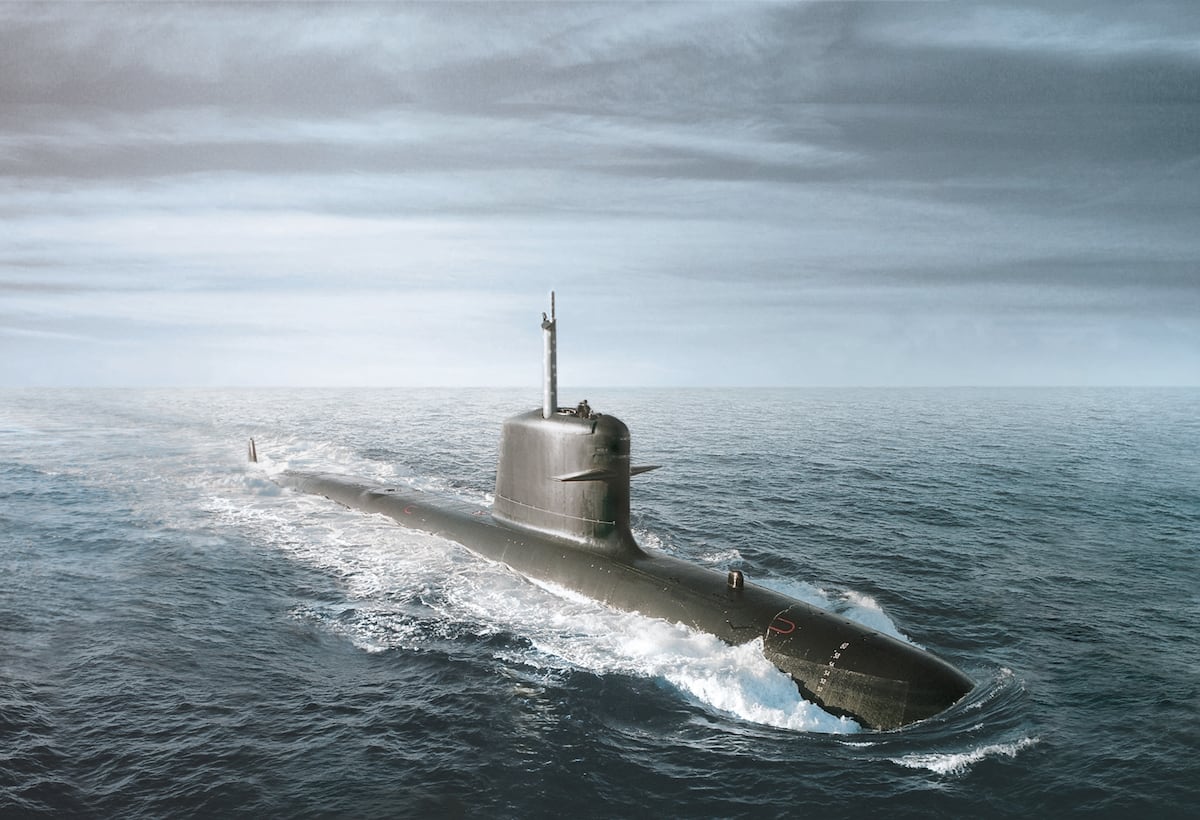
CHRISTCHURCH, New Zealand — Indonesia has signed a contract with local firm PT PAL and France’s Naval Group for two Scorpene-class submarines, the latter business announced.
The two companies will jointly build the boats under the deal, inked March 28.
The Indonesian Navy’s future submarines are described as Scorpene Evolved Full LiB submarines featuring lithium-ion batteries, according to Naval Group’s news release. Indonesia’s Scorpenes are to be the first to use such battery technology.
The French shipbuilder stated the lithium-ion technology allows for more efficient energy, a decreased snorkeling rate and a reduced charging time.
The boats will be “built in Indonesia in a PT PAL shipyard, through transfer of technology from Naval Group,” per a joint news release.
Their assembly in Surabaya follows an August 2021 defense cooperation agreement between Paris and Jakarta as well as a memorandum of understanding for two Scorpenes signed by the two shipbuilders in February 2022.
“This step is a high commitment and trust of the Indonesian government in the capability of local engineers to advancing defense technology, especially submarine technology,” according to Kaharuddin Djenod, the president director of PT PAL. “In the future, Indonesia is expected to be able to master submarine technology.”
Germany and South Korea were also vying for this contract. This latest deal confirms Indonesia has abandoned a 2019 agreement to buy a second trio of Nagapasa-class submarines from South Korea.
Collin Koh, a senior fellow at the Institute of Defence and Strategic Studies with Singapore’s S. Rajaratnam School of International Studies, told Defense News it’s interesting Indonesia didn’t choose Korean submarines, given PT PAL gained experience assembling the Nagapasa class and that the type would have ensured commonality in the fleet. However, it’s likely France likely offered the best package and offsets, Koh said.
“I believe Indonesia probably saw benefits from the tech transfer that could enrich the local submarine industry going forward because ultimately Indonesia wants to build its own submarines,” he said, noting the French firm was “way more aggressive in marketing their wares.”
Under the Korean program that saw three Nagapasa-class submarines commissioned from 2017 to 2021, “PT PAL was able to master at least a rather reasonable local capability,” Koh said. However, this French project “will allow it to absorb and grow” other technologies.
PT PAL has already prepared for local construction. In February 2022, it issued a tender for development and construction of a ship lift and transfer system capable of moving 2,000-ton submarines.
“PT PAL is one of the most experienced shipyards in ASEAN with unique skills and capabilities for large ships and submarine construction,” a Naval Group spokesperson told Defense News. “PT PAL has invested in some infrastructure and tools dedicated to submarine construction, and these investments can be fully reused for construction of the Scorpene submarine.”
The companies did not divulge the value of the latest contract nor the delivery schedule, but Indonesia’s Ministry of Finance approved a request for $2.16 billion in foreign loans for two submarines last year.
Crewed by 31 personnel, the 72-meter-long (233-foot-long) platforms have six launch tubes and carry 18 torpedoes or missiles. Depending on exact configurations, the type displaces 1,600-2,000 tons, can remain submerged for at least 12 days, and can operate on missions lasting 80 days.
Should construction commence next year, the first boat could join service in 2033, based on the comparative build rate of India’s Scorpene program.
The Indonesian Navy is seeking 12 submarines in total.
This story was updated April 11, 2024, at 9:28 a.m. ET with comment from Naval Group.
Gordon Arthur is an Asia correspondent for Defense News. After a 20-year stint working in Hong Kong, he now resides in New Zealand. He has attended military exercises and defense exhibitions in about 20 countries around the Asia-Pacific region.
新西兰基督城——印度尼西亚已与当地企业 PT PAL 和法国海军集团签署合同,订购两艘鲉鱼级潜艇,后者宣布了这一消息。
根据3月28日签署的协议,两家公司将联合建造这些船只。
根据法国海军集团发布的新闻稿,印尼海军未来的潜艇被描述为“鲉鱼级进化型全锂离子潜艇”,配备锂离子电池。印尼的鲉鱼级潜艇将成为首批采用这种电池技术的潜艇。
法国造船商表示,锂离子技术可以提高能源效率,降低浮潜频率,并缩短充电时间。
根据一份联合新闻稿,这些船只将“在印度尼西亚的PT PAL造船厂建造,并通过海军集团的技术转让进行建造”。
此次在泗水举行的会议是继巴黎和雅加达于 2021 年 8 月签署防务合作协议,以及两家造船厂于 2022 年 2 月签署建造两艘鲉鱼级潜艇的谅解备忘录之后进行的。
印尼国家航空航天公司(PT PAL)总裁卡哈鲁丁·杰诺德表示:“这一举措体现了印尼政府对本土工程师推进国防技术,特别是潜艇技术能力的充分信任和高度重视。未来,印尼有望掌握潜艇技术。”
德国和韩国也曾参与竞标这份合同。这项最新协议证实,印尼已放弃2019年与韩国达成的购买第二批三艘“纳加帕萨”级潜艇的协议。
新加坡拉惹勒南国际关系学院国防与战略研究所高级研究员柯林·科赫(Collin Koh)告诉《防务新闻》,印尼没有选择韩国潜艇令人费解,因为PT PAL公司在组装纳加帕萨级潜艇方面积累了丰富的经验,而且该型潜艇能够确保舰队的通用性。不过,科赫表示,法国很可能提供了最佳的方案和补偿措施。
“我相信印尼可能从技术转让中受益,这将有利于当地潜艇产业的未来发展,因为印尼最终想要建造自己的潜艇,”他说道,并指出这家法国公司“在产品营销方面更加积极主动”。
Koh表示,在韩国2017年至2021年间建造的三艘“长尾波凪”级潜艇项目中,“PT PAL至少掌握了相当不错的本土制造能力”。然而,这个法国项目“将使其能够吸收并发展”其他技术。
PT PAL公司已做好本地建设准备。2022年2月,该公司发布招标公告,寻求开发和建造一套能够移动2000吨级潜艇的船舶升降和转运系统。
“PT PAL是东盟地区经验最丰富的造船厂之一,拥有建造大型舰艇和潜艇的独特技能和能力,”海军集团发言人告诉《防务新闻》。“PT PAL已投资建设了一些专门用于潜艇建造的基础设施和工具,这些投资可以完全用于建造鲉鱼级潜艇。”
这些公司没有透露最新合同的金额和交付时间表,但印尼财政部去年批准了一项21.6亿美元的外国贷款申请,用于建造两艘潜艇。
这种长72米(233英尺)的平台由31名人员操作,配备6个发射管,可携带18枚鱼雷或导弹。根据具体配置,该型平台排水量为1600至2000吨,可在水下潜航至少12天,并可执行长达80天的任务。
如果明年开始建造,根据印度“鲉鱼”级潜艇的建造速度,第一艘潜艇最早可能在 2033 年投入使用。
印尼海军总共需要12艘潜艇。
本文于美国东部时间 2024 年 4 月 11 日上午 9:28 更新,加入了海军集团的评论。
戈登·阿瑟是《防务新闻》的亚洲特派记者。在香港工作20年后,他现居新西兰。他曾到访亚太地区约20个国家,参加过军事演习和防务展览。