New Zealand Army chief on modernizing tech, lingering pandemic problem新西兰陆军总司令谈技术现代化和持续存在的疫情问题
Maj. Gen. John Boswell is readying to retire in June. But first he spoke to Defense News about the Army's recruiting issues and ongoing defense programs.
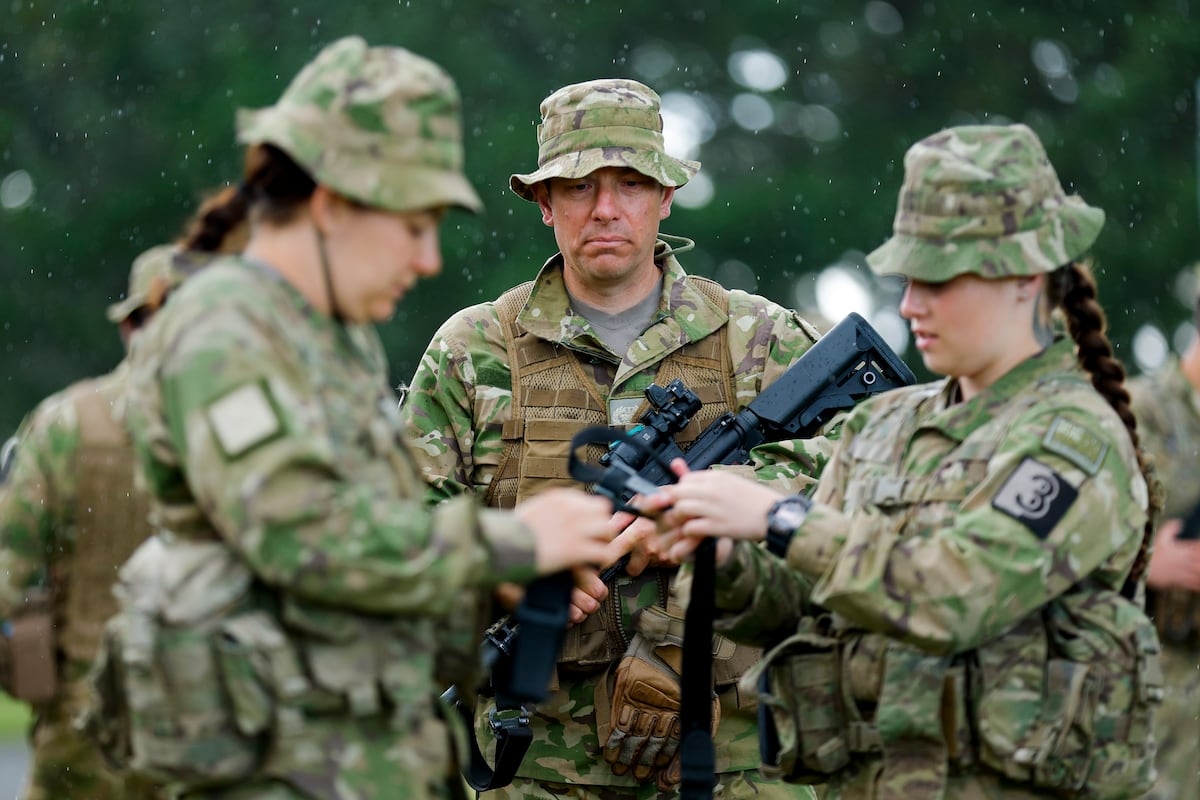
WELLINGTON, New Zealand — The New Zealand Defence Force includes more than 8,700 uniformed personnel, with nearly half serving in the Army, which Maj. Gen. John Boswell has commanded since September 2018.
Among its total inventory, the Army is equipped with Javelin anti-armor missiles, 105mm light guns, and eight-wheel drive light armored vehicles each featuring a 25mm gun. Recently introduced equipment includes the 5.56mm MARS-L rifle and the Australian-made four-wheel drive Bushmaster infantry vehicle.
Like the country’s naval and air forces, the Army has suffered severe attrition in recent years, partly due to remuneration and the state of military housing. Nevertheless, the finance minister announced in January 2024 that government agencies must identify annual savings, including 7.5% from the Defence Ministry and 6.5% from the military, ahead of the budget, due May 30.
Maj. Gen. John Boswell commands the New Zealand Army. (New Zealand Defence Force)
In February, the armed forces said that amid gaps in end strength, they were worried about the remaining staff who are “shouldering significant burden” to ensure major equipment and platforms remained at the ready.
Then on March 25, the chief of the defense force, Air Marshal Kevin Short , announced that Boswell will retire June 9.
During his 40 years of service, Boswell served with the United Nations in Angola, East Timor and the Middle East. Defense News recently connected with the Army chief to discuss the state of the force, ongoing modernization programs and the lingering effects of the pandemic. This interview was edited for length and clarity.
What were your goals as Army chief?
On assuming command, I focused the Army’s effort very clearly toward becoming a modern, agile, highly adaptive, light combat force. Modernization involved giving momentum to the Network Enabled Army and Protected Mobility Capability programs as well as continuous improvement through the ongoing soldier modernization program.
Agility is the need for an army — even a small one — to provide the government with options across the spectrum of conflict while maintaining force structures able to task, organize, and — if required — reorganize as quickly as possible and as often as needed to meet changing requirements.
The New Zealand Army's 1st Brigade holds a skill-at-arms competition at the Waiouru military training area. (New Zealand Defence Force)
Our operating concept was to be framed by highly professional, highly capable special forces and light infantry, artillery and armor supported by agile, responsive combat support and combat service support.
How is the Network Enabled Army program coming along?
The program is a foundational requirement to achieving a networked, combat-capable force able to operate in a multidomain, multinational combat environment. It will provide the Army with a range of capabilities with which it can collect, transmit, manage and disseminate data in the contemporary operating environment.
Significant progress has been made in this space as we identify and introduce into service the equipment and systems that will enable our Army to better meet the challenges of an increasingly complex and uncertain security environment.
What are the easiest and most challenging aspects of your job?
The smoothest was, without question, having the support of incredibly competent commanders and staff at all levels across the Army. We really are fortunate with the caliber of people within the Army, and having the opportunity to lead them was both humbling and an honor.
With respect to the most challenging aspect of my time as the chief of the Army: the COVID-19 period, and the Army’s decisive commitment to our nation’s COVID-19 response, which was significant. [The pandemic had] wide-ranging impacts on the Army — mostly negative.
Challenges with retention, the generation and maintenance of individual and collective capabilities, and the effective introduction into service of new equipment, vehicles and infrastructure have all been impacted. A lot of work took place in the last 12 or so months to give energy, purpose and direction to the Army’s post-COVID-19 regeneration, but we still have some ways to go.
Without question, the toughest thing to deal with has been how environmental factors have, in a relatively short space of time, impacted the number of experienced professionals within the Army. For the vast majority of our command and specialist appointments, we can’t recruit directly and have to attract, train and retain these people.
Police and Royal New Zealand Navy staff are seen at the northern Auckland border at Te Hana on Nov. 17, 2021, amid the global COVID-19 pandemic. (Fiona Goodall/Getty Images)
In the last three years our Army has lost some absolute treasure due to disillusionment with our role during COVID-19, a lack of operational deployments, and external employment opportunities offering more variety and significantly better remuneration.
Commanders at all levels, both within Army and across the New Zealand Defence Force, have worked hard to shift the dial in this space. We are now seeing the results of that effort. It is, however, a circumstance we won’t quickly recover from and are going to have to remain focused on.
How is the hiatus on training and operations that took place during the pandemic still affecting the force?
We are still able to provide the government with immediate response options across the spectrum of conflict, should it choose to commit the Army to an operational theater. Sustaining those commitments for an extended period is problematic because of the gaps we currently have, post-COVID-19, in key specialist, trade and command appointments.
What is foremost on your wish list for the Army, in terms of personnel and equipment?
With respect to personnel, the chief people officer, with support from across the New Zealand Defence Force, including the Army, is leading a range of initiatives reviewing remuneration, conditions of service and allowances. Landing this effort and then resourcing it accordingly will not be easy, but it has to happen, and it has to happen quickly.
From an equipment perspective, giving real momentum to the Network Enabled Army, Protected Mobility Capability and soldier modernization programs will both enable aging capabilities to be replaced and ensure the force is equipped to operate effectively in the contemporary environment.
How does the Army contribute to the defense of its Western allies?
The New Zealand Defence Force is a combat-capable military force, trained, equipped and ready to respond every hour of the day, every day of the year. We contribute to international peace and security and the rules-based order through deployments of importance to New Zealand.
A Shadow drone with the United States flies during this year's Wayfinder exercise held with the New Zealand Army. (New Zealand Defence Force)
The New Zealand Army has a bilateral service cooperation plan, dubbed Plan Anzac, with the Australian Army. How has that impacted your force?
Plan Anzac reflects a broader defense relationship, one that is open, based on mutual respect and is enduring. It reflects the value of land power to both nations, and the value that interoperability between the Australian and New Zealand armies brings to combined joint operations.
The agreement makes sure both armies can work as efficiently as possible, complementing each other’s capabilities and capacity. It provides a focus and framework to take ongoing conversations and engagements between allies and mates, and then formalize these to improve existing cooperation.
We are able to better share lessons across capability development, doctrine for training, and many other areas related to the generation and — in the New Zealand Army’s current case — the regeneration of land combat capability.
Is the New Zealand Army’s culture at risk amid Australian input, or vice versa?
We have much more in common than we have differences, but we will always be who we are as Kiwis. And our Aussie mates will always be who they are. Ultimately we are a pretty potent mix and always the better off when we come together in pursuit of a common cause.
How will the military recover from attrition and a lack of experience before the next conflict breaks out?
The New Zealand Defence Force recognizes it will take some years to fully recover the workforce due to the time needed to train suitably qualified and experienced personnel. Despite this, the program to retain, recruit and reenlist people is showing dividends, with the regular force’s attrition reducing from over 15% this time last year to 10.3% as of Feb. 29, 2024.
Over the past year or more, specific targeted payments to critical trades, and a general forcewide retention payment, have been made as part of a range of initiatives to address attrition rates. These payments have been largely funded from unspent personnel expenditure. When facing workforce challenges, steps need to be taken to address them, so prioritization has been given to critical areas of need across the New Zealand Defence Force.
Are the public and politicians adequately aware of national security threats?
New Zealand is becoming more aware of the geostrategic challenges that we face as a nation . Without question, various agencies of government have a key role to play in monitoring and advising security threats. But equally it is important to recognize the role that other institutions play, such as academia and the media.
A ship passes the historic township of Russell in New Zealand's Bay of Islands on May 29, 2023. (William West/AFP via Getty Images)
Is the military making the best use of domestic industry and academia?
Like anything we do, there is always room for improvement. The New Zealand Defence Force’s relationship with both industry and academia is no different and will only keep going from strength to strength, given the mutual respect and positive engagement that occurs between all parties.
How does climate change affect the balance between training for humanitarian assistance and disaster relief and practicing for combat?
The primary focus of the Army’s training is and always will remain combat. Forces led, trained and equipped for combat can rapidly adjust to the requirements of support operations when the need arises.
Who are your heroes?
My family. They have sacrificed so much to allow me to serve for as long as I have and in the way that I have. I owe them a debt of thanks that I’m not sure I can ever repay.
Nick Lee-Frampton is the New Zealand correspondent for Defense News.
新西兰惠灵顿——新西兰国防军拥有超过 8700 名军人,其中近一半在陆军服役,自 2018 年 9 月以来,约翰·博斯韦尔少将一直担任陆军司令。
陆军的全部装备包括标枪反坦克导弹、105毫米轻型火炮和八轮驱动轻型装甲车(每辆配备一门25毫米火炮)。近期引进的装备包括5.56毫米MARS-L步枪和澳大利亚制造的四轮驱动“丛林之王”步兵战车。
与海军和空军一样,陆军近年来也遭受了严重的人员流失,部分原因是薪酬和军人住房状况不佳。尽管如此,财政部长在2024年1月宣布,各政府机构必须在5月30日到期的预算案提交之前,确定年度节约方案,其中包括国防部7.5%的预算和军队6.5%的预算。
约翰·博斯韦尔少将统领新西兰陆军。(新西兰国防军)
今年2月,武装部队表示,由于兵力不足,他们担心剩余人员“肩负重任”,以确保主要装备和平台保持战备状态。
随后在 3 月 25 日,国防军司令凯文·肖特空军元帅宣布,博斯韦尔将于 6 月 9 日退休。
博斯韦尔服役40年间,曾多次在联合国驻安哥拉、东帝汶和中东地区工作。《防务新闻》近期采访了这位陆军参谋长,探讨了部队现状、正在进行的现代化项目以及新冠疫情的后续影响。本次采访内容经过编辑,以保证篇幅精简和表达清晰。
你担任陆军总司令时的目标是什么?
就任司令后,我明确将陆军的重心放在打造一支现代化、敏捷、高度适应性强、轻型作战部队上。现代化建设包括大力推进“网络化陆军”和“防护机动能力”项目,并通过持续推进士兵现代化项目不断提升部队实力。
敏捷性是指军队(即使是小型军队)需要为政府提供应对各种冲突的选择,同时保持部队结构能够尽快、尽可能频繁地进行任务分配、组织和重组,以满足不断变化的需求。
新西兰陆军第一旅在怀乌鲁军事训练区举行武器技能竞赛。(新西兰国防军)
我们的作战理念是以高度专业化、高能力的特种部队和轻步兵、炮兵和装甲部队为框架,并辅以灵活、反应迅速的作战支援和作战勤务支援。
网络化陆军计划进展如何?
该计划是构建一支能够在多域、多国作战环境中运作的网络化、作战能力部队的基础性要求。它将为陆军提供一系列能力,使其能够在现代作战环境中收集、传输、管理和分发数据。
在这个领域,我们已经取得了重大进展,我们正在确定并引入能够使我们的军队更好地应对日益复杂和不确定的安全环境挑战的设备和系统。
你工作中遇到的最简单和最具挑战性的方面分别是什么?
最顺利的莫过于得到了陆军各级指挥官和参谋人员的鼎力支持。我们非常幸运,陆军拥有如此高素质的人才,能够领导他们,我既感到荣幸又深感责任重大。
就我担任陆军总司令期间最具挑战性的方面而言:新冠疫情时期,以及陆军对国家应对新冠疫情的坚定承诺,这意义重大。[疫情]对陆军产生了广泛的影响——而且大多是负面的。
人员留任、个人和集体能力的培养与维持,以及新装备、车辆和基础设施的有效投入使用都受到了影响。过去12个月左右的时间里,我们做了大量工作,为陆军在新冠疫情后的重建注入活力、目标和方向,但我们仍有很长的路要走。
毫无疑问,最棘手的问题在于环境因素在相对较短的时间内对军队经验丰富的专业人员数量造成了怎样的影响。对于绝大多数指挥和专业岗位,我们无法直接招募,只能通过吸引、培训和留住人才来实现。
2021年11月17日,在全球新冠疫情大流行期间,警方和新西兰皇家海军人员在奥克兰北部边境的特哈纳(Te Hana)执勤。(Fiona Goodall/Getty Images)
在过去的三年里,由于对新冠疫情期间自身角色的失望、缺乏作战部署以及外部就业机会提供更多选择和更高薪酬,我们的军队失去了一些绝对的宝贵人才。
陆军和新西兰国防军各级指挥官都为此付出了巨大努力,力求扭转局面。我们现在看到了努力的成果。然而,这种情况我们无法迅速摆脱,必须继续保持警惕。
疫情期间训练和行动的中断对部队目前有何影响?
如果政府选择将陆军部署到作战区域,我们仍然能够为政府提供应对各种冲突的即时响应方案。但由于新冠疫情后我们在关键专业人才、贸易人员和指挥岗位上存在缺口,长期维持这些部署存在困难。
就人员和装备而言,你最希望军队拥有什么?
在人事方面,首席人事官在包括陆军在内的新西兰国防军各部门的支持下,正牵头开展一系列举措,审查薪酬、服务条件和津贴。落实这项工作并为其配备相应的资源并非易事,但这势在必行,而且必须尽快完成。
从装备角度来看,真正推动网络化军队、受保护的机动能力和士兵现代化计划,既能使老化的能力得到替换,又能确保部队有能力在现代环境中有效作战。
陆军如何为保卫其西方盟国做出贡献?
新西兰国防军是一支具备作战能力的军队,训练有素、装备精良,随时准备应对任何情况,一年365天,每天24小时。我们通过对新西兰至关重要的军事部署,为国际和平与安全以及基于规则的国际秩序做出贡献。
一架美国“影子”无人机在今年与新西兰陆军联合举行的“寻路者”演习中飞行。(新西兰国防军)
新西兰陆军与澳大利亚陆军有一项双边军事合作计划,名为“澳新军团计划”。这对你们部队有何影响?
澳新军团计划体现了一种更广泛的防务关系,这种关系是开放的、基于相互尊重的、持久的。它体现了陆军力量对两国的重要性,以及澳新军队之间的互操作性为联合行动带来的价值。
该协议确保两国军队能够尽可能高效地协同作战,充分发挥彼此的优势和能力。它为盟友和伙伴之间持续的对话与交流提供了一个重点和框架,并将其正式化,从而加强现有的合作。
我们能够更好地分享能力发展、训练理论以及与陆地作战能力的产生(就新西兰陆军目前的情况而言)相关的许多其他领域的经验教训。
澳大利亚的介入是否会危及新西兰军队的文化,反之亦然?
我们之间的共同点远多于分歧,但我们始终是新西兰人,我们的澳大利亚朋友也始终是他们自己。最终,我们组成了一个非常强大的组合,为了共同的目标团结起来,我们总是能做得更好。
在下一次冲突爆发之前,军队将如何从人员损耗和经验不足中恢复过来?
新西兰国防军意识到,由于需要时间培训合格且经验丰富的人员,因此需要数年时间才能完全恢复兵力。尽管如此,旨在留住、招募和续签人员的计划已初见成效,正规军的人员流失率已从去年同期的15%以上降至2024年2月29日的10.3%。
过去一年多来,为应对人员流失率,新西兰国防军采取了一系列举措,其中包括向关键工种发放专项补贴,以及向全军发放普遍的留任补贴。这些补贴主要来自未使用的人员经费。面对人员短缺的挑战,必须采取措施予以应对,因此新西兰国防军已将重点领域列为优先事项。
公众和政治家是否充分认识到国家安全威胁?
新西兰越来越意识到我们作为一个国家所面临的地缘战略挑战。毫无疑问,政府各部门在监测和应对安全威胁方面发挥着关键作用。但同样重要的是,我们也必须认识到其他机构,例如学术界和媒体,所发挥的作用。
2023年5月29日,一艘船驶过新西兰岛屿湾历史悠久的拉塞尔镇。(William West/AFP via Getty Images)
军方是否充分利用了国内工业和学术资源?
任何事情都有改进的空间,新西兰国防军与工业界和学术界的关系也不例外。鉴于各方之间的相互尊重和积极互动,这种关系只会不断发展壮大。
气候变化如何影响人道主义援助和灾害救援训练与作战训练之间的平衡?
陆军训练的首要重点始终是作战,并将永远如此。一支以作战为导向,经过作战训练和装备的部队,能够在需要时迅速调整以适应支援行动的需求。
你心目中的英雄是谁?
我的家人。他们为了让我能以这样的方式服务这么长时间,付出了太多。我对他们的感激之情,恐怕永远也无法偿还。
Nick Lee-Frampton 是《国防新闻》驻新西兰记者。