Seeking to make F-35s ready for war, maintainers think outside the box为了让F-35战机做好作战准备,维护人员跳出了固有思维模式。
As the F-35C fleet expands at Naval Air Station Lemoore, the service and a government oversight group worry the jets aren’t available for missions enough.
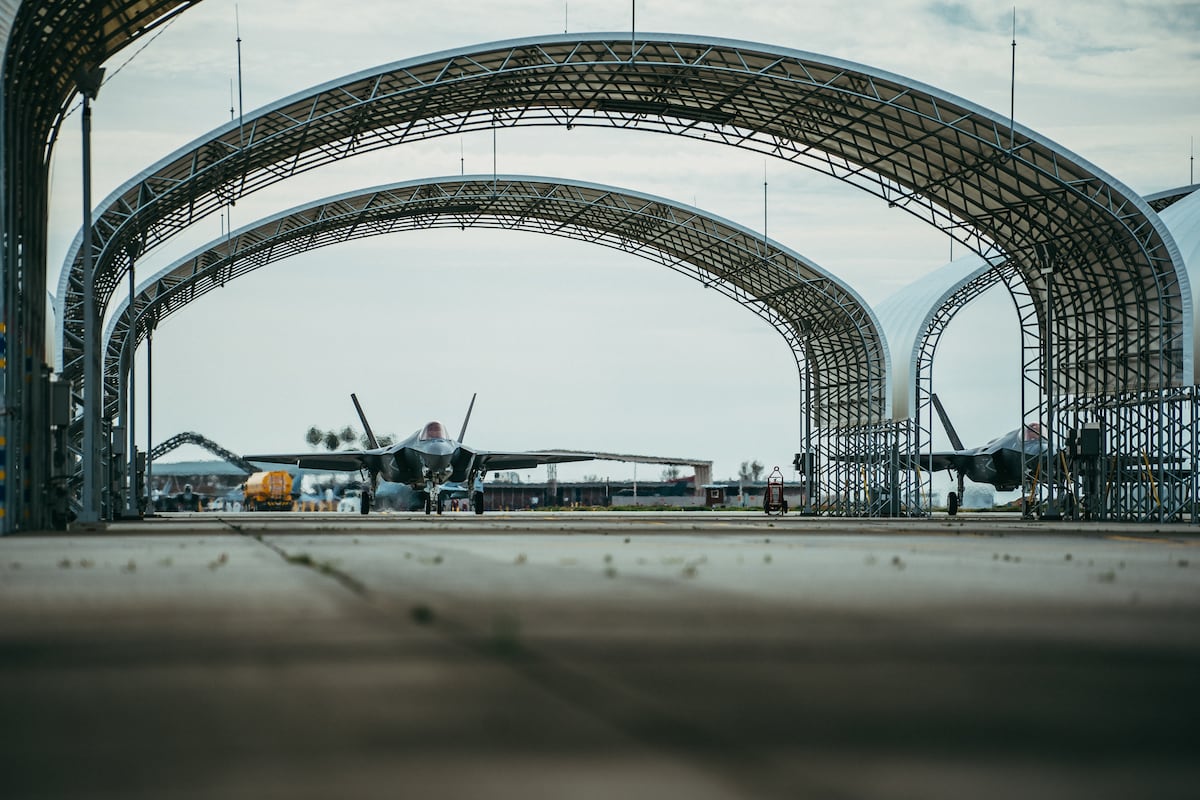
NAVAL AIR STATION LEMOORE, Calif. — From the air control tower at the center of the U.S. Navy’s largest jet base, the roar of fighter engines is inescapable.
It’s coming from the rows of F/A-18E/F Super Hornets — and, increasingly, F-35C Joint Strike Fighters — on the flight line, going through routine maintenance before hitting the skies.
It’s also coming from the runway, as jets speed by with chest-rattling force as they return from practicing flight formations over the surrounding farmland.
It’s a reassuring sound to Navy leaders — a sign the squadrons’ maintainers and the depot artisans at Fleet Readiness Center West are turning jets around so pilots can get back in the air for training and deployment preparations.
But as the service’s F-35C fleet expands here in Lemoore, both the Navy and a government oversight group worry the Joint Strike Fighters aren’t available for missions often enough . And to make matters worse for the fleet, it’s costing more than expected to sustain the aircraft.
The Joint Strike Fighter program stands in contrast to most other military aircraft programs: Lockheed Martin plays an outsized role in jet readiness, with the company responsible for maintenance planning and management, distribution of repair parts and supplies, engineering, maintenance training, and more. The government’s F-35 Joint Program Office, or JPO, oversees the global fleet of F-35 jets and manages the facilities and people that support maintenance.
This leaves the services with little control over ensuring their own readiness. But the Joint Strike Fighter Wing in Lemoore, which oversees all Navy F-35Cs, is taking extra steps to directly improve readiness by drawing lessons from the service’s F/A-18E/F Super Hornets.
U.S. Navy sailors perform maintenance on an F/A-18F Super Hornet assigned to a squadron from Naval Air Station Lemoore, Calif., during a weapons system evaluation program at Tyndall Air Force Base, Fla., on March 22, 2023. (Senior Airman Anabel Del Valle/U.S. Air Force)
In 2018, then-Defense Secretary Jim Mattis ordered the military branches to hit an 80% mission-capable rate for all fighters in fiscal 2019. With Super Hornet mission-capable rates barely above 50% for much of 2008 through 2018 , the Navy kicked off a data-driven effort to analyze its processes, facilities, supply practices and more, dubbed Naval Sustainment System-Aviation. By the end of FY19, the service surpassed 80% and has sustained that readiness since.
Now, the Joint Strike Fighter Wing is working with its F-18 counterparts to adopt proven practices on operation-level maintenance to boost readiness and lower costs. As part of this effort, the Navy is particularly bolstering its data collection and communication efforts.
Those efforts are yielding results: The Navy’s F-35C community has higher readiness rates and fewer aircraft awaiting supply parts than the rest of the global F-35 fleet’s average, a service leader told Defense News.
That improvement on readiness and cost matters, given the threat of a high-end fight in the Pacific and mushrooming procurement costs .
“From a budget standpoint, it is simple economics: The more it costs to buy and maintain aircraft, the fewer we can procure in a tight fiscal environment and the more onerous it will be to repair them,” Rep. Rob Wittman , R-Va., the vice chairman of the House Armed Services Committee, told Defense News.
“We also cannot go to war, especially against an adversary with advanced [anti-access/area-denial] capabilities, without our most advanced fifth-generation aircraft,” he added.
Slow repair times, lower aircraft readiness
In a September report , the Government Accountability Office detailed the failures in Joint Strike Fighter maintenance and availability of spare parts.
The watchdog’s report noted that in March 2023, 55% of planes were considered mission capable, meaning they were able to fly and conduct at least some warfighting missions. It attributed this low readiness to maintenance challenges at the squadron and depot levels.
The report detailed the unique maintenance setup: Other programs like the Navy’s Super Hornets are repaired through operational-level maintenance by squadrons, intermediate-level work by the Navy’s fleet readiness centers located at the jet bases, and depot-level work at select fleet readiness centers.
But the F-35 program does not include any intermediate-level maintenance; instead squadrons must undertake more work on the flight line with help from contractors, while farming out more work to industry at depot locations and at the original builder’s facilities.
This rate is the percentage of time during which aircraft in the possession of F-35 units are unable to conduct any of their assigned missions because of maintenance. (Eric Parsons/U.S. Navy)
In the case of the Super Hornet, the Navy controls all three levels of maintenance and signs its own contracts for support and parts. In contrast, the F-35 program gives significant responsibility to manufacturer Lockheed Martin and to the Joint Program Office, leaving the services with little ability to change or improve the supply system and contractor-led maintenance.
At the operational level, the GAO report noted, squadrons lack some technical data and training experience needed to efficiently conduct maintenance — a challenge that will only grow if the JPO decides to shift more work from industry to the services by adding intermediate-level maintenance to the plan.
At the depots, it noted the JPO is now 12 years behind schedule in standing up some of its repair capabilities, or “workloads.” As of last spring, 44 of 68 workloads were activated.
“Delays in standing up the F-35 program’s depot repair capacity has had several effects, including slow repair times, a growing backlog of components needing repair, and lower aircraft readiness,” the report found.
GAO projects the total fleet’s mission-capable rate could have been at 65% instead of 55% last spring if not for the lack of depot repair capacity.
The lack of depot capacity is also increasing the cost.
With the depots now facing a backlog of 10,000 components to repair, “the F-35 Joint Program Office has purchased new parts instead of repairing the parts it already has in inventory. According to [Department of Defense] officials, this is a practice that program officials do not believe is a sustainable solution.”
Those officials said the approach keeps the aircraft flying, but it results in “higher sustainment costs because buying new parts generally costs more than repairing existing parts.”
Hard-earned lessons from the F-18
In remote Lemoore — where fighter jet squadrons are based a six-hour drive from the admirals in San Diego and a six-hour flight from the JPO in Arlington, Virginia — the captains are in charge.
Joint Strike Fighter Wing Commodore Capt. Barrett Smith and Strike Fighter Wing Pacific Commodore Capt. Michael Stokes are part of a “council of captains” that work together to manage aircraft readiness, facilities, personnel and families at Lemoore.
Two fleet technicians attach ALR-67 test equipment onto an F/A-18 aircraft at Naval Air Station Lemoore, Calif., on Feb. 14, 2019. (Chief Aviation Machinist's Mate Alvin Zuilan/U.S. Navy)
Smith and Stokes leveraged this close collaboration to boost the Joint Strike Fighter Wing’s primary contribution to F-35C readiness: operational-level maintenance performed by each squadron.
Stokes said the Navy in 2018 brought in the Boston Consulting Group to make recommendations as part of the effort to get F-18s to an 80% mission-capable rate.
He said one of the most consequential results was the creation of the Maintenance Operations Center, which monitors aircraft status daily. The center uses that data to prioritize distribution of parts, provide technical assistance, and identify potential broader changes to boost readiness or reduce cost.
Smith said the F-35C joined the center in October 2022 as part of its own effort to boost the readiness of its planes.
This data can point to problems in real time — for example, a supply issue that’s holding up several planes in a single squadron that has a major exercise coming up — and can also reveal trends over time that might make a squadron reconsider its workflow or whether maintainers need additional training, Smith said.
Stokes said one seemingly simple change recommended by the Boston Consulting Group was to put a whiteboard by each aircraft undergoing maintenance in the squadron hangar or down the road at Fleet Readiness Center West. Each whiteboard would note “the lead person and all of the outstanding items so you can see it in front of that aircraft,” he said.
The two say these practices are yielding results.
On a Feb. 15 visit by Defense News, the Navy had 347 mission-capable Super Hornets, well above the Navy’s requirement to maintain a monthly average of 333.
This rate is the percentage of time during which aircraft in the possession of F-35 units are unable to conduct any of their assigned missions because they are awaiting supply parts. (Rick Goodfriend/U.S. Air Force)
(The Navy previously had a goal of 341 and then 360 mission-capable Super Hornets, to reflect Mattis’ 80% goal. The inventory of Super Hornets is smaller today, as some squadrons have transitioned to the F-35C. Stokes said the 333-plane goal still equates to an approximately 80% mission-capable rate.)
On the Joint Strike Fighter side, the F-35 JPO wants to see 64% of its planes mission capable, 21% non-mission capable due to waiting on supply parts, and 15% non-mission capable due to waiting on maintainers to do a job. Those numbers will eventually shift to have more planes ready and fewer planes waiting on parts and maintenance work.
Smith’s fleet of Navy F-35Cs is already beating those goals. He told Defense News his wing already surpassed the 64% mission-capable goal. In addition, it’s had a non-mission-capable maintenance rate — the only rate the wing can truly affect on its own — below 15% from January 2023 through March 2024.
Even as Smith and his Joint Strike Fighter Wing do what they can from Lemoore to boost readiness, some things are out of their hands.
Smith is stymied by the same parts challenges outlined in the GAO report.
“Parts availability ebbs and flows,” he said. However, the JPO has a Lightning Sustainment Center with a Navy representative on staff, who Smith can call when there’s a delay in getting a needed part flown to Lemoore.
To increase communication, Smith said that Lightning Sustainment Center representative also sits in on Maintenance Operations Center meetings. He noted cross-community meetings were a big part of the 2018 Naval Sustainment System-Aviation reforms.
Warren Scovell, the director of fleet readiness at the F-35 Joint Program Office, said the organization is closely tracking feedback regarding which parts cause the biggest headaches for the fleet.
A CH-53K carries a non-flying F-35C model during a load certification lift out of Naval Air Station Patuxent River, Md., on Dec. 13, 2022. (Kyra Helwick/U.S. Navy)
The JPO had a top 10 list of readiness degraders, which was later expanded to 20 and then 40. Over the last year, Scovell said, the office eliminated 13 of the top 20 degraders — in many cases, replacing parts with more reliable ones that won’t break as often and therefore won’t be such a drag on the supply system.
Though some parts have remained thornier than others — Defense News reported last year canopies and the electro-optical distributed aperture system were two tough ones that affected all three models of the F-35 jet — Scovell said the fleet can get down to the goal of 21% non-mission capable supply by the end of this year, and then reduce that even further. That rate shows how many planes are down while awaiting supply parts.
Asked if that would drive down cost, he replied: “Absolutely yes.”
“The No. 1 focus is always to keep parts on wing longer. So whenever you can do that, you will absolutely drive down cost,” he added.
Similarly, Smith and the head of Fleet Readiness Center West, Capt. Joseph Hidalgo, agree they’d like the center to perform intermediate maintenance on F-35s instead of outsourcing that to industry. However, that’s up to the JPO.
In the meantime, Smith is trying to apply Naval Sustainment System-Aviation principles to monitoring depot performance data, if only to demonstrate to the JPO what the Navy is experiencing at industry-led depot availabilities and how it affects F-35C readiness.
Scovell said the JPO is working on a new sustainment strategy that would move more work away from industry and to the services. He said that effort is ongoing and declined to provide a timeline for its release, but noted it would allow fleet readiness centers to play a bigger role in F-35 sustainment, including uniformed personnel conducting more maintenance and the services buying their own spare parts.
In a statement, Lockheed Martin said it stands “ready to partner with the government as plans are created for the future of F-35 sustainment.” The company noted it is working with the government to “accelerate depot activations to increase repair capacity” and said that since 2015, the firm has lowered its portion of the F-35′s cost per flight hour by 50%.
The naval aviation budget is tight this year and expected to remain that way.
In fiscal 2025, the Navy asked for 13 F-35C jets, down from a recent 19-per-year rate to reflect congressionally imposed spending caps. That number is expected to grow as high as 24 jets a year later this decade — but that comes as aviation procurement needs will balloon by 34%, ship procurement 35%, and weapons procurement 71% in the coming years, according to Navy FY25 budget materials.
It’s unclear if the Navy will be able to secure that kind of funding to grow its fleet. And even if it does, it then has to pay to sustain the new platforms.
In FY25, the Navy asked for 13 F-35C jets, down from a recent 19-per-year rate to reflect congressionally imposed spending caps. (Colin Demarest/Staff)
“The entire naval aviation enterprise is acutely aware of the burgeoning costs required to sustain air operations and remains focused on increasing lethality and readiness through process improvement and driving efficiency at all levels of the organization,” according to a Navy budget document.
When F-35C sustainment overruns its estimates, the Navy has to reconsider the whole portfolio.
“There is not a single bill-payer for higher-than-expected F-35C maintenance costs. The Navy evaluates cost increases through the lens of the larger Navy priorities and balances the budget in accordance with strategic guidance; this can result in reductions in other areas of the budget,” a Navy spokesperson told Defense News.
The spokesperson noted the cost per tail to operate the F-35C has decreased as the aircraft inventory grows, and that both the JPO and naval squadrons are finding ways to improve performance and lower cost.
Stokes and Smith said they are seeking to minimize mishaps: engines sucking up debris that damages them from the inside, crew damaging planes while towing them, canopies being scraped during operations and more. When they can avoid these mishaps, they pay less to repair the damage.
Hidalgo and Smith are closely monitoring F-35C corrosion and looking to take early intervention steps, after corrosion proved to be a costly challenge with the Super Hornets and the legacy Hornets before them.
Scovell said the JPO is about 90% complete in writing a structural repair manual to send to squadrons so they can do more of their own maintenance on the flight line. He said the squadrons doing this work themselves would be faster and cheaper than waiting on contractor maintenance.
Wittman, who also chairs the Tactical Air and Land Forces Subcommittee, said the Navy and Air Force are now turning to unmanned wingmen — also known as collaborative combat aircraft — to achieve “affordable capacity” in tight budgets.
He said the U.S. military cannot afford — monetarily or operationally — to lose out on F-35 readiness.
“The combined force in the Indo-Pacific will rely on F-35s in a near-peer fight: South Korea, Japan and Australia all operate the aircraft,” he noted. “Losing that capability from readiness delays, or not achieving the required aircraft capacity due to cost overruns, will inevitably hamper our ability to respond to threats and aggression in the region.”
Wittman also said he hopes the services learn from the F-35′s cost and readiness challenges when pursuing future programs.
“Contractor-led sustainment of the aircraft will eventually phase out in the coming years as it transitions to service-led governance,” he said. “Although contractor-led sustainment was the primary acquisition strategy initially, we are watching setbacks of that original acquisition sustainment strategy play out in real time.”
Correction: A previous version of this story erroneously described the meaning of the bar graphs. Their respective captions have been updated.
Megan Eckstein is the naval warfare reporter at Defense News. She has covered military news since 2009, with a focus on U.S. Navy and Marine Corps operations, acquisition programs and budgets. She has reported from four geographic fleets and is happiest when she’s filing stories from a ship. Megan is a University of Maryland alumna.
加利福尼亚州勒莫尔海军航空站——从美国海军最大的喷气式飞机基地中心的空中控制塔楼,战斗机引擎的轰鸣声无处不在。
声音来自飞行线上成排的 F/A-18E/F 超级大黄蜂战斗机,以及越来越多的 F-35C 联合攻击战斗机,它们正在进行例行维护,准备升空。
跑道上也传来这种声音,喷气式飞机高速飞过,发出震耳欲聋的轰鸣声,它们刚刚结束在周围农田上空的飞行编队训练返回。
对于海军领导人来说,这是一个令人安心的声音——这表明中队的维护人员和西部舰队战备中心的维修技师正在对喷气式飞机进行维修,以便飞行员能够重新升空进行训练和部署准备。
但随着海军在勒莫尔基地扩充F-35C机队,海军和政府监督机构都担心联合攻击战斗机的出勤率不够高。更糟糕的是,维持这些战机的运转成本也超出了预期。
联合攻击战斗机(JSF)项目与其他大多数军用飞机项目截然不同:洛克希德·马丁公司在战备方面扮演着举足轻重的角色,该公司负责维护计划和管理、维修零件和物资的分发、工程设计、维护培训等等。政府的F-35联合项目办公室(JPO)负责监管全球F-35机队,并管理支持维护的设施和人员。
这使得各军种对确保自身战备状态几乎没有控制权。但位于勒莫尔的联合攻击战斗机联队负责监管所有海军F-35C战斗机,该联队正采取额外措施,通过借鉴海军F/A-18E/F“超级大黄蜂”战斗机的经验,直接提升战备水平。
2023年3月22日,在佛罗里达州廷德尔空军基地,美国海军水兵正在对一架隶属于加利福尼亚州勒莫尔海军航空站中队的F/A-18F超级大黄蜂战斗机进行维护,这是武器系统评估项目的一部分。(美国空军高级飞行员安娜贝尔·德尔·瓦列摄)
2018年,时任国防部长吉姆·马蒂斯下令各军种在2019财年实现所有战斗机80%的任务可用率。由于2008年至2018年的大部分时间里,超级大黄蜂战斗机的任务可用率勉强超过50%,海军启动了一项以数据为驱动的计划,旨在分析其流程、设施、供应方式等,该计划被称为“海军保障系统-航空”。到2019财年末,海军的任务可用率超过了80%,并一直保持至今。
目前,联合攻击战斗机联队正与F-18战机联队合作,采用成熟的作战级维护方法,以提高战备水平并降低成本。作为这项工作的一部分,海军正在重点加强数据收集和沟通工作。
一位海军领导人告诉《防务新闻》,这些努力正在取得成效:海军的 F-35C 战备率高于全球其他 F-35 机队的平均水平,等待补给零件的飞机数量也更少。
考虑到太平洋地区爆发高端战争的威胁以及不断上涨的采购成本,提高战备水平和降低成本至关重要。
“从预算角度来看,这是简单的经济学原理:购买和维护飞机的成本越高,在财政紧张的环境下我们能采购的飞机就越少,维修飞机也会更加困难,”众议院军事委员会副主席、弗吉尼亚州共和党众议员罗伯·威特曼告诉《防务新闻》。
他还补充说:“如果没有我们最先进的第五代战机,我们也不能去打仗,尤其是不能去对抗拥有先进反介入/区域拒止能力的对手。”
维修时间延长,飞机战备状态降低
美国政府问责局在9月份的一份报告中详细列举了联合攻击战斗机维护和备件供应方面的不足。
监督机构的报告指出,截至2023年3月,仅有55%的飞机被认为具备任务能力,这意味着它们能够飞行并执行至少部分作战任务。报告将这种低战备率归因于中队和维修站层面的维护挑战。
该报告详细介绍了独特的维护设置:其他项目,如海军的超级大黄蜂战斗机,是通过中队的作战级维护、位于喷气机基地的海军舰队战备中心的中级维护以及在特定舰队战备中心进行的仓库级维护来进行维修的。
但 F-35 项目不包含任何中级维护;相反,各中队必须在承包商的帮助下在飞行线上进行更多工作,同时将更多工作外包给工厂和原始制造商的设施中的工业界。
该比率是指F-35部队所拥有的飞机因维护而无法执行任何既定任务的时间百分比。(埃里克·帕森斯/美国海军)
以超级大黄蜂为例,海军掌控着所有三个层级的维护工作,并自行签署支持和零部件合同。相比之下,F-35项目则将大部分责任赋予制造商洛克希德·马丁公司和联合项目办公室,使得各军种几乎没有能力改变或改进供应系统和承包商主导的维护工作。
GAO 的报告指出,在作战层面,各中队缺乏有效进行维护所需的一些技术数据和培训经验——如果联合计划办公室 (JPO) 决定通过在计划中加入中级维护来将更多工作从工业界转移到军队,那么这一挑战只会加剧。
报告指出,各维修站的联合维修办公室(JPO)在建立部分维修能力或“工作量”方面,目前已比原计划落后12年。截至去年春季,68项工作量中仅有44项已启动。
报告指出,“F-35 项目大修能力的建立延迟造成了多种影响,包括维修时间延长、需要维修的零部件积压越来越多以及飞机战备水平降低。”
美国政府问责局 (GAO) 预测,如果不是因为缺乏维修能力,去年春天整个舰队的作战能力率本可以达到 65%,而不是 55%。
仓库容量不足也导致成本增加。
由于各维修站目前积压了1万个零部件需要维修,“F-35联合项目办公室选择购买新零件,而不是维修库存中的现有零件。据国防部官员称,项目官员认为这种做法并非可持续的解决方案。”
这些官员表示,这种方法可以保证飞机继续飞行,但会导致“更高的维护成本,因为购买新零件通常比修理现有零件成本更高”。
从F-18战斗机中汲取的宝贵经验
在偏远的勒莫尔(战斗机中队驻扎于此,距离圣地亚哥的海军上将有 6 小时的车程,距离弗吉尼亚州阿灵顿的联合计划办公室有 6 小时的飞行时间),舰长们负责一切。
联合攻击战斗机联队准将巴雷特·史密斯上校和太平洋攻击战斗机联队准将迈克尔·斯托克斯上校是“上校委员会”的成员,该委员会共同负责管理勒莫尔空军基地的飞机战备、设施、人员和家属。
2019年2月14日,在加利福尼亚州勒莫尔海军航空站,两名舰队技术人员正在将ALR-67测试设备安装到一架F/A-18飞机上。(美国海军首席航空机械师阿尔文·祖兰摄)
史密斯和斯托克斯利用这种密切的合作,提升了联合攻击战斗机联队对 F-35C 战备的主要贡献:由每个中队执行的作战级维护。
斯托克斯表示,海军在 2018 年聘请了波士顿咨询集团提出建议,作为将 F-18 战斗机的任务能力率提高到 80% 的努力的一部分。
他表示,其中一项最重要的成果是建立了维护运营中心,该中心每日监控飞机状态。中心利用这些数据来确定零部件分配的优先顺序、提供技术支持,并确定可能有助于提高战备水平或降低成本的更广泛的改进措施。
史密斯表示,F-35C 于 2022 年 10 月加入该中心,这是该中心为提高其飞机战备水平而采取的措施之一。
史密斯说,这些数据可以实时指出问题——例如,某个中队即将进行重大演习,但供应问题却导致几架飞机无法交付——还可以揭示一段时间内的趋势,这可能会让中队重新考虑其工作流程,或者维护人员是否需要额外的培训。
斯托克斯说,波士顿咨询集团建议的一项看似简单的改进措施,就是在中队机库或附近的西部舰队战备中心,为每架正在维修的飞机配备一块白板。他说,每块白板上都会记录“负责人和所有待办事项,这样你就能在飞机前一目了然”。
两人表示,这些做法正在取得成效。
2 月 15 日,《防务新闻》记者到访时发现,海军拥有 347 架可执行任务的超级大黄蜂战机,远远超过海军每月平均 333 架的要求。
该比率是指F-35部队所拥有的飞机因等待补给部件而无法执行任何既定任务的时间百分比。(里克·古德弗兰德/美国空军)
(海军此前的目标是拥有341架,后来又改为360架具备作战能力的超级大黄蜂战斗机,以符合马蒂斯提出的80%的作战能力目标。如今超级大黄蜂的存量有所减少,因为一些中队已经换装了F-35C。斯托克斯表示,333架的目标仍然相当于大约80%的作战能力率。)
在联合攻击战斗机方面,F-35联合项目办公室希望其64%的飞机能够执行任务,21%的飞机因等待零部件供应而无法执行任务,15%的飞机因等待维护人员完成维护工作而无法执行任务。这些数字最终将有所变化,更多的飞机可以随时投入使用,而等待零部件供应和维护工作的飞机数量将会减少。
史密斯指挥的海军F-35C机队已经超额完成了这些目标。他告诉《防务新闻》,他的联队已经超过了64%的任务可用率目标。此外,从2023年1月到2024年3月,该联队的非任务可用维护率——这是联队唯一能够真正自主控制的指标——一直低于15%。
即使史密斯和他的联合攻击战斗机联队在勒莫尔尽其所能提高战备水平,但有些事情是他们无法控制的。
Smith也遇到了与GAO报告中概述的相同的零部件难题。
“零部件供应时好时坏,”他说。不过,联合项目办公室(JPO)设有一个“闪电”战斗机保障中心,配备有海军代表,如果所需零部件空运到勒莫尔基地出现延误,史密斯可以联系该代表。
史密斯表示,为了加强沟通,闪电保障中心的代表也会列席维护运营中心的会议。他指出,跨部门会议是2018年海军保障系统-航空改革的重要组成部分。
F-35 联合项目办公室舰队战备主管沃伦·斯科维尔表示,该组织正在密切关注有关哪些部件给舰队带来最大麻烦的反馈。
2022年12月13日,一架CH-53K直升机在马里兰州帕图克森特河海军航空站进行载荷认证吊装作业,吊运一架未飞行状态的F-35C模型。(Kyra Helwick/美国海军)
联合战备办公室 (JPO) 最初列出了十大战备劣势因素,后来扩展到 20 个,然后又扩展到 40 个。斯科维尔表示,在过去一年里,该办公室淘汰了前 20 个劣势因素中的 13 个——在很多情况下,是用更可靠的部件替换了那些故障率更低、因此不会对供应系统造成太大拖累的部件。
尽管有些部件的更换难度比其他部件更大——据《防务新闻》去年报道,座舱盖和光电分布式孔径系统是影响F-35战机所有三种型号的两个棘手问题——斯科维尔表示,到今年年底,F-35机队可以实现非任务可用部件供应率降至21%的目标,并在此基础上进一步降低这一比例。该比例反映了有多少飞机因等待部件供应而停飞。
当被问及这是否会降低成本时,他回答说:“绝对会。”
“首要任务始终是延长零部件的使用寿命。所以,只要能做到这一点,就一定能降低成本,”他补充道。
同样,史密斯和西部舰队战备中心负责人约瑟夫·伊达尔戈上校也一致认为,他们希望该中心能够对F-35战机进行中期维护,而不是将这项工作外包给工业界。然而,最终决定权在于联合项目办公室(JPO)。
与此同时,史密斯正尝试将海军保障系统-航空的原则应用于监测维修站性能数据,哪怕只是为了向联合项目办公室 (JPO) 展示海军在工业主导的维修站可用性方面所遇到的问题,以及这些问题如何影响 F-35C 的战备状态。
斯科维尔表示,联合项目办公室(JPO)正在制定一项新的保障战略,旨在将更多工作从工业界转移到军方。他表示这项工作仍在进行中,拒绝透露发布时间表,但指出该战略将使舰队战备中心在F-35战机的保障工作中发挥更大的作用,包括让军方人员承担更多维护工作,以及让军方自行采购备件。
洛克希德·马丁公司在一份声明中表示,该公司“随时准备与政府合作,共同制定F-35战机未来保障计划”。该公司指出,正与政府合作“加快启动维修基地建设,以提高维修能力”,并表示自2015年以来,该公司已将其在F-35每飞行小时成本中所占的比例降低了50%。
今年海军航空预算紧张,预计这种情况还会持续下去。
2025财年,海军申请采购13架F-35C战斗机,低于此前每年19架的采购量,以符合国会设定的支出上限。预计本十年后期,这一数字将增长至每年24架——但根据海军2025财年预算资料,未来几年航空采购需求将激增34%,舰艇采购需求将激增35%,武器采购需求将激增71%。
目前尚不清楚海军能否获得足够的资金来扩充舰队。即便获得了资金,也需要支付新平台的维护费用。
2025财年,海军申请采购13架F-35C战斗机,低于此前每年19架的采购量,这是为了应对国会设定的支出上限。(科林·德马雷斯特/工作人员)
根据海军的一份预算文件,“整个海军航空兵部队都深刻意识到维持空中作战所需的不断增长的成本,并将继续致力于通过流程改进和提高组织各个层面的效率来增强杀伤力和战备能力。”
当 F-35C 的维护成本超出预算时,海军必须重新考虑整个项目组合。
海军发言人告诉《防务新闻》:“F-35C维护成本超出预期,没有哪个部门会为此买单。海军会从海军整体优先事项的角度评估成本增长,并根据战略指导平衡预算;这可能会导致预算其他领域的削减。”
发言人指出,随着F-35C飞机数量的增加,每架飞机的运营成本有所下降,联合项目办公室和海军中队都在寻找提高性能和降低成本的方法。
斯托克斯和史密斯表示,他们正努力将事故降到最低:例如发动机吸入碎片导致内部损坏、机组人员在拖曳飞机时损坏飞机、座舱盖在运行过程中被刮擦等等。如果能够避免这些事故,他们就能减少维修费用。
Hidalgo 和 Smith 正在密切关注 F-35C 的腐蚀情况,并寻求采取早期干预措施,因为腐蚀已被证明是超级大黄蜂和之前的老式大黄蜂战斗机面临的一个代价高昂的挑战。
斯科维尔表示,联合项目办公室(JPO)已完成约90%的结构维修手册编写工作,该手册将分发给各飞行中队,以便他们能够在飞行线上开展更多自主维护工作。他指出,各飞行中队自行开展这些工作比等待承包商进行维护要更快、更经济。
维特曼同时也是战术空军和陆军小组委员会的主席,他表示,海军和空军现在正转向无人僚机(也称为协同作战飞机),以在预算紧张的情况下实现“经济实惠的能力”。
他表示,美国军方无论从经济上还是作战上都无法承受失去 F-35 战备能力的后果。
他指出:“在印太地区,联合部队将依靠F-35战机与势均力敌的对手作战:韩国、日本和澳大利亚都装备了这种战机。如果因为战备延误而失去这种能力,或者因为成本超支而无法达到所需的战机数量,势必会削弱我们应对该地区威胁和侵略的能力。”
维特曼还表示,他希望各军种在推进未来项目时,能够从 F-35 的成本和战备挑战中吸取教训。
他说:“随着飞机维护管理模式向军方主导模式过渡,由承包商主导的飞机维护模式将在未来几年逐步淘汰。虽然最初以承包商主导的维护模式作为主要的采购策略,但我们正在实时目睹这一最初采购维护策略的弊端。”
更正:此前版本对柱状图的含义描述有误,现已更新相应的图注。
梅根·埃克斯坦是《防务新闻》的海军作战记者。自2009年以来,她一直从事军事新闻报道,主要关注美国海军和海军陆战队的行动、采购项目和预算。她曾报道过四个不同地理区域的舰队,最喜欢在舰艇上进行新闻报道。梅根毕业于马里兰大学。