Explosive-Filled Dummies And Other Ruses Helped Clear The Way For Real Paratroopers On D-Day在诺曼底登陆日,装满炸药的假人和其他计谋帮助真正的伞兵扫清了道路。
75 years after the Allied invasion of France, it remains one of the largest single military operations ever, which required massive deception to hide.
新闻视频
By Joseph Trevithick
Updated Dec 1, 2019 5:51 AM EST
Commemorations to mark the 75th anniversary of the Allied invasion of Nazi-occupied France during World War II, better known as D-Day, have already been underway for days and will continue for some time. President Donald Trump and French President Emmanuel Macron both attended a ceremony in Normandy this morning to mark the official beginning of the operation on June 5-6, 1944. This included a massive flyover of French and American military aircraft, consisting in part of a large number of Douglas C-47 transport aircraft, some of which actually took part in the airborne assault three-quarters of a century ago.
But what may get overlooked in the events to remember this tide-turning event is just how risky it was and how Allied military and intelligence elements had been conducting massive deception and disinformation campaigns for months ahead of time to ensure Operation Overlord had the best chance of succeeding. These side activities to confuse and disorient the Germans continued right alongside the beginning of the invasion itself, including British forces dumping radar confusing chaff , dummy paratroopers rigged with explosives, as well as Special Air Service (SAS) commandos with loudspeakers to broadcast disorienting recordings, to try to pull German forces away from the real drop zones.
The full commemorative flyover in Normandy on June 6, 2019, , which you can watch in the video below, also included more modern U.S. Air Force C-17 Globemaster III and C-130 Hercules transports, the latter of which carried black-and-white “invasion stripes” that Allied aircraft wore to help distinguish them from German planes during the invasion. A U.S. Coast HC-130 rescue aircraft flew over the beach, too, along with four F-15E Strike Eagles , which performed the missing man maneuver to honor the Allied troops who died during the operation. French Mirage 2000 fighter jets, an A400M transport aircraft, and the Alpha Jets of French Air Force’s Patrouille Acrobatique de France demonstration team all took part, as well.
There have been other flyovers, in Europe and elsewhere, to mark the D-Day anniversary, as well. On June 5, 2019, six CV-22 Osprey tilt-rotors and six MC-130J Commando II special operations transports from the U.S. Air Force’s 352nd Special Operations Wing flew past Duxford in the United Kingdom to commemorate the event. This particular fly-by was in part to mark the contributions of early special operations units that took part in the lead up to D-Day and the invasion itself.
These included the Royal Air Force’s No. 3 Group , which oversaw all of the RAF’s “special duties” squadrons tasked with various specialized missions, and the SAS, a legendary organization that served as a basis for modern special operations forces around the world and continues to be a central part of the U.K. military’s special operations community.
On the night of June 5, 1944, four squadrons from No. 3 Group – No. 90, No. 138, No. 149, and No. 161 – left their bases in the United Kingdom and began wending their way toward northern France. They were flying a mixture of Handley Page Halifaxes and Short Stirlings , as well as Lockheed Hudsons . The Halifax and Stirling designs had both started life as heavy bombers, but both companies also built variants to carry cargo and drop paratroopers. Variants of the smaller Lockheed Hudson also served in a variety of roles, including as light bombers and light transports.
A Handley Page Halifax B.III bomber, similar to the aircraft that squadrons of No. 3 Group flew during Operation Titanic., Crown Copyright
At the same time, thousands of Allied paratroopers were also riding in dozens of C-47s, as well as other transport planes and towed gliders, heading for drop zones in Normandy. The 82nd and 101st Airborne Divisions would land north of Carentan to the west of the beaches, while the British 6th Airborne Division would drop north of Caen, situated to the east. The mission of the airborne forces was to take control of various strategic points beyond the invasion beaches to stymie German forces and otherwise help pave the way for a breakout into Northern France.
No. 3 Group’s planes were following the same general routes, but were not heading to the exact same places and they weren’t carrying any significant numbers of actual troops. They were executing Operation Titanic , a set of ruses to try and draw German forces out of position and away from the actual airborne forces.
A map showing the routes that aircraft took during Operation Titanic. Operations Mandrel, Taxable, and Glimmer were other aerial and combined aerial and maritime deception efforts., Bonhams
Titanic was among the last thrusts of a larger allied deception effort known as Operation Bodyguard . Early in 1944, amid planning for D-Day, Allied military and intelligence arms had begun a multi-pronged effort to conceal the preparations from the Nazis. To this day, the landings at Normandy remains the largest seaborne invasion in history and the airborne component of Operation Overlord also represents one of the largest such operations ever.
This involved assembling massive amounts of ships, aircraft, troops, tanks, and other equipment in position ahead of the operation, something the Germans would be hard pressed to miss. Operation Bodyguard used a host of different tactics, including double agents feeding disinformation invasion plans outside of France and an entire “ Ghost Army ” equipped with things such as inflatable tanks, to throw off the Nazis.
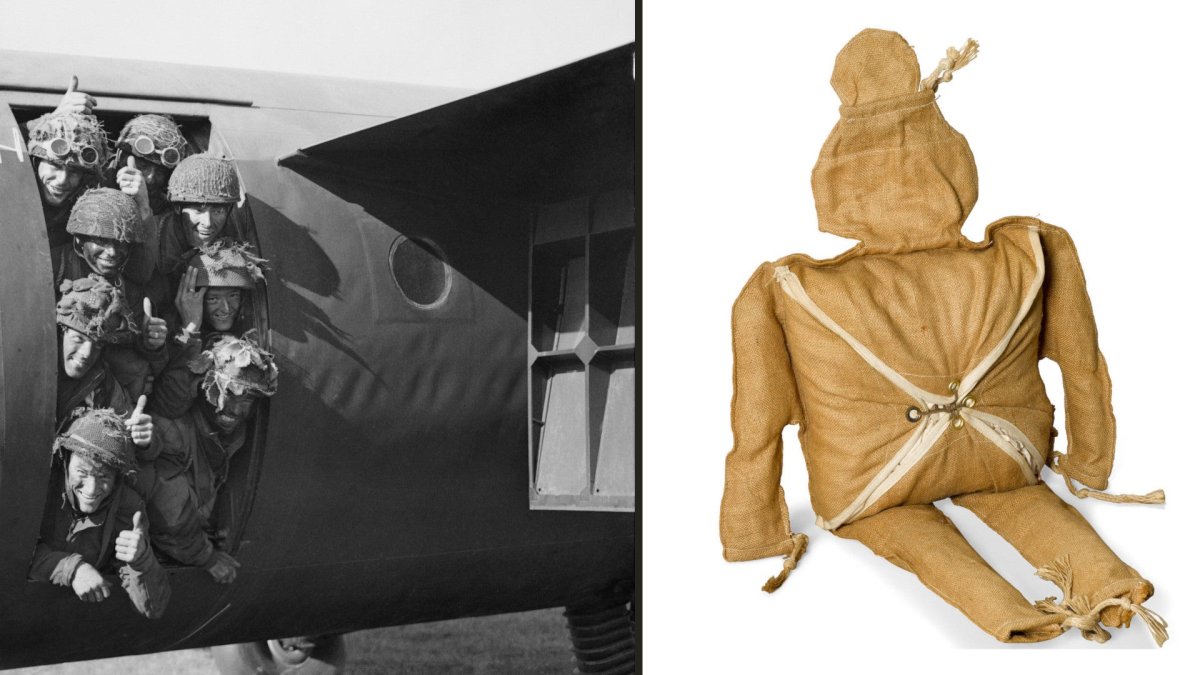
The main component of Operation Titanic were drops of approximately 400 dummy paratroopers, nicknamed “ Ruperts ,” in four drop zones across Normandy. These manikins had pyrotechnic noisemakers called pintails that made popping sounds akin to gunfire. Each one also had a small explosive charge, ostensibly to try to conceal evidence of the ruse by destroying the dummy. The timed detonation could also potentially have killed or wounded German forces who went to investigate the purported landings.
In addition, No. 3 Group’s aircraft dropped two small SAS teams near the city of Saint-Lô, a major allied objective, ahead of the actual airborne assault there. The commandos used their loudspeakers to broadcast sounds of men shouting and various types of weapon fire to convince the Germans that paratroopers were coming from a different direction. They also engaged in very limited combat against German forces to try to reinforce the ruse.
Some of the planes also dropped loads of metalized paper or aluminum strips, known as chaff , which can blind and confuse radar. This component of the operation helped conceal the size of the Operation Titanic force, as well as that of the main airborne armada, and where they were heading. Other units dropped chaff as part of separate deception aerial operations, which also included various maritime ruses, such as mock amphibious landings.
Examples of World War II-era British chaff, a technology that U.K. authorities had codenamed “Window.”, Imperial War Museums
The exact results of Operation Titanic are hard to deduce, but there is significant evidence that it contributed to German confusion about what was happening and where, all of which would have benefitted the actual airborne operation. Despite having received reports of significant aircraft and ship noise off the coast, Nazi General Hans Speidel , Chief of Staff to Field Marshall Erwin Rommel , head of Army Group B in Northern France, did decrease the alert level for forces in the region after some troops in the field found the dummy paratroopers.
At the same time, the SS ordered the entire 12th SS Panzer Division was ordered to respond to another one of the mock landings west of the city of Caen, another major Allied objective. Another regular Wehrmacht infantry regiment, the 915th Grenadier Regiment, found itself hunting ghosts in the woods further rather than heading to the beach to reinforce troops there.
A Panzer IV tank, belonging to the 12th SS Panzer Division, in Rouen, France in the weeks following the Allied invasion., Bundesarchiv
Unfortunately, despite its success and even though it only involved a limited number of real forces, Operation Titanic was not without its own losses. Two Stirlings from No. 149 squadron got shot down and eight members of the SAS died either in fighting with German forces on the ground or after getting captured and sent to the Bergen-Belsen concentration camp in Germany. In 1942, the German High Command had decreed in secret that any Allied commandos that its forces captured were to be summarily executed.
Fast forward 75 years and deception and psychological warfare remain important, if often obscure components of modern U.S. military operations, as well as those of other countries around the world. Confusing and disorienting the enemy to draw their attention away from actual objectives is just as viable a tactic as it was during the invasion of France. Intelligence agents and other outlets seeding disinformation off the battlefield and troops on the ground using loudspeakers to pump out confusing and disturbing messages continue to be components of modern information and psychological operations.
When it comes to D-Day, side efforts such as Operation Titanic only underscore just how massive an undertaking the invasion really was and all the work that occurred on the sidelines to make sure it came off as smoothly as possible. It’s hard to contemplate what would have happened if the invasion had failed.
June 6, 1944, is certainly a day worth commemorating, as are the immense sacrifices that Allied forces made on and off the beaches and inside and out of the drop zones in Normandy to help turn the tide of World War II and ultimately bring about the downfall of Nazi Germany. Hopefully, it’s an event that the world will never have to experience again.
Contact the author: joe@thedrive.com
Comments couldn’t be loaded. Please refresh the page.
作者:约瑟夫·特雷维西克
更新于美国东部时间2019年12月1日凌晨5:51。
为纪念二战期间盟军入侵纳粹占领下的法国(即著名的诺曼底登陆)75周年,相关纪念活动已持续数日,并将持续一段时间。美国总统唐纳德·特朗普和法国总统埃马纽埃尔·马克龙今天上午出席了在诺曼底举行的纪念仪式,以纪念1944年6月5日至6日诺曼底登陆行动的正式开始。仪式包括大规模的法美军机队飞行表演,其中有大量道格拉斯C-47运输机,部分C-47曾参与了75年前的空降作战。
然而,在人们回顾这场扭转战局的行动时,往往会忽略其风险之大,以及盟军军事和情报部门为了确保“霸王行动”取得最大成功,提前数月开展的大规模欺骗和虚假信息宣传活动。这些旨在迷惑和扰乱德军的辅助行动与入侵行动本身同步进行,包括英军投放干扰雷达的箔条、部署装有炸药的假伞兵,以及特种空勤团(SAS)突击队员携带扩音器播放干扰录音,试图将德军从真正的空降区引开。
2019年6月6日,在诺曼底举行的完整纪念飞行表演(您可以在下方视频中观看)中,除了美国空军的C-17“环球霸王III”和C-130“大力神”运输机外,还有更多现代化的C-17“环球霸王III”和C-130“大力神”运输机参与其中。后者涂有黑白相间的“入侵条纹”,这是盟军飞机在入侵期间用来与德军飞机区分开来的标志。一架美国海岸警卫队的HC-130救援飞机也飞越了海滩,此外还有四架F-15E“攻击鹰”战斗机,它们进行了“失踪者机动”飞行表演,以纪念在行动中牺牲的盟军士兵。法国的幻影2000战斗机、一架A400M运输机以及法国空军特技飞行表演队的阿尔法喷气机也参与了此次飞行表演。
为了纪念诺曼底登陆日,欧洲和其他地区也举行了其他飞行表演。2019年6月5日,美国空军第352特种作战联队的六架CV-22“鱼鹰”倾转旋翼机和六架MC-130J“突击队员II”特种作战运输机飞越英国达克斯福德上空,以纪念这一事件。此次飞行表演的部分目的是为了表彰早期特种作战部队在诺曼底登陆日前夕和登陆行动中所做出的贡献。
其中包括皇家空军第 3 大队,该大队负责监督皇家空军所有执行各种特殊任务的“特种任务”中队;以及 SAS,这是一个传奇组织,它为世界各地的现代特种作战部队奠定了基础,并且仍然是英国军队特种作战部队的核心组成部分。
1944年6月5日夜间,隶属于第3大队的四个中队——第90、138、149和161中队——离开英国基地,开始向法国北部进发。他们驾驶的飞机包括汉德利·佩奇哈利法克斯轰炸机、肖特·斯特林轰炸机以及洛克希德·哈德逊运输机。哈利法克斯和斯特林最初都是作为重型轰炸机设计的,但两家公司也都生产了用于运输货物和空投伞兵的衍生机型。较小的洛克希德·哈德逊运输机也执行过多种任务,包括轻型轰炸机和轻型运输机。
一架汉德利·佩奇哈利法克斯B.III型轰炸机,与第3轰炸大队在“泰坦尼克号行动”中使用的飞机类似。(图片版权归英国皇家所有)
与此同时,数千名盟军伞兵也乘坐数十架C-47运输机以及其他运输机和滑翔机,飞往诺曼底的空降区。第82空降师和第101空降师将在卡朗唐以北、海滩西侧着陆,而英国第6空降师则将在卡昂以北、海滩东侧着陆。空降部队的任务是控制登陆海滩后方的各个战略要点,以阻击德军,并为向法国北部突围铺平道路。
第3大队的飞机虽然飞行路线大致相同,但目的地并不完全相同,而且也没有搭载大量实际部队。他们正在执行“泰坦尼克行动”,这是一系列旨在引诱德军离开阵地、脱离空降部队的佯攻。
一张地图显示了“泰坦尼克行动”期间飞机的飞行路线。“曼德雷尔行动”、“应税行动”和“闪光行动”是其他空中以及海空联合欺骗行动。邦瀚斯
“泰坦尼克号”行动是盟军大规模欺骗行动“保镖行动”(Operation Bodyguard)的最后阶段之一。1944年初,在筹备诺曼底登陆的同时,盟军军事和情报部门开始实施一项多管齐下的行动,以向纳粹隐瞒准备工作。时至今日,诺曼底登陆仍然是历史上规模最大的海上入侵行动,而“霸王行动”(Operation Overlord)的空降部分也是规模最大的空降作战之一。
这包括在行动开始前集结大量的舰船、飞机、部队、坦克和其他装备,让德军难以忽视。保镖行动运用了多种战术,包括派遣双重间谍在法国境外散布虚假入侵计划,以及组建一支配备充气坦克等装备的“幽灵部队”,以迷惑纳粹。
“泰坦尼克行动”的主要组成部分是在诺曼底的四个空投区投放约400名假伞兵,绰号“鲁伯特”。这些假人身上装有名为“针尾”的烟火发声器,能发出类似枪声的爆裂声。每个假人还装有小型炸药,表面上是为了通过炸毁假人来掩盖骗局的证据。定时引爆也可能造成前来调查所谓登陆行动的德军伤亡。
此外,在正式空降突击行动开始前,第3大队的飞机在盟军重要目标圣洛市附近投放了两支小型特种空勤团(SAS)小队。这些突击队员利用扩音器播放士兵的喊叫声和各种武器射击声,以使德军误以为伞兵是从另一个方向发起的。他们还与德军进行了小规模交火,以加强伪装效果。
部分飞机还投放了大量镀金属纸或铝条,即所谓的箔条,这种箔条可以干扰雷达。行动的这一部分有助于掩盖“泰坦尼克行动”部队的规模,以及主力空中编队的规模和飞行方向。其他部队则在单独的欺骗性空中行动中投放箔条,这些行动还包括各种海上佯攻,例如模拟两栖登陆。
二战时期英国箔条的实例,英国当局将这种技术代号称为“窗口”。(帝国战争博物馆)
“泰坦尼克行动”的确切结果难以推断,但有大量证据表明,它加剧了德军对战场态势和位置的混乱,而这本应有利于实际的空降作战。尽管收到了有关近海飞机和舰船噪音显著的报告,但纳粹将军汉斯·施佩德尔(陆军元帅埃尔温·隆美尔的参谋长,隆美尔是驻扎在法国北部的B集团军群司令)在一些前线部队发现假伞兵后,还是降低了该地区部队的警戒级别。
与此同时,党卫军命令整个第12党卫军装甲师前往卡昂市以西,应对另一次模拟登陆行动。卡昂是盟军的另一个重要目标。而另一支正规的国防军步兵团——第915掷弹兵团——则被迫在更远的树林中搜寻敌军,而不是前往海滩增援部队。
盟军入侵法国鲁昂后几周内,一辆隶属于第12党卫军装甲师的四号坦克。(图片来源:德国联邦档案馆)
不幸的是,尽管“泰坦尼克行动”取得了成功,而且实际投入的兵力有限,但它也并非没有损失。第149中队的两架斯特林轰炸机被击落,八名英国特种空勤团(SAS)成员在与德军地面作战或被俘后送往德国贝尔根-贝尔森集中营后阵亡。1942年,德国最高统帅部曾秘密下令,任何被德军俘虏的盟军突击队员都将被立即处决。
时光荏苒,75年过去了,欺骗和心理战仍然是现代美国军事行动以及世界其他国家军事行动中重要但往往不为人知的组成部分。迷惑和扰乱敌人,使其注意力偏离实际目标,这种战术与当年入侵法国时一样有效。情报人员和其他渠道在战场外散布虚假信息,以及地面部队使用扩音器播放令人困惑和不安的信息,仍然是现代信息和心理战的重要组成部分。
谈到诺曼底登陆,像“泰坦尼克行动”这样的辅助行动,更凸显了这场入侵行动的规模之庞大,以及为了确保行动顺利进行而开展的大量幕后工作。很难想象如果入侵失败将会发生什么。
1944年6月6日无疑是一个值得纪念的日子,盟军在诺曼底登陆区内外,无论是在海滩上还是在空降区内,都做出了巨大的牺牲,扭转了第二次世界大战的战局,最终推翻了纳粹德国。我们衷心希望,这样的悲剧永远不要再重演。
联系作者:joe@thedrive.com
评论加载失败,请刷新页面。