The Air Force Blew It When It Decided Not To Give Its KC-135s Winglets 40 Years Ago40年前,空军决定不给KC-135加油机安装翼梢小翼,真是个错误。
The KC-135 pioneered the winglet concept, but it never got them even after it was proven that they could save millions of gallons of gas every year.
Updated Sep 20, 2021 3:51 PM EDT
Take a look out the window the next time you fly on an airliner and there’s a very good chance you’ll see winglets — the typically upturned wingtip devices at the ends of the wings designed to improve efficiency by reducing drag. As well as being commonplace on new designs, winglets have been retrofitted to a variety of older aircraft, too, like the ubiquitous Boeing 737 series , to improve performance and lower fuel costs. One of the types that doesn’t have them is the U.S. Air Force’s hard-worked fleet of KC-135 Stratotanker aerial refuelers and their many derivatives . But the reality is that winglets were tested on the KC-135. In fact, the type played a major part in pioneering the concept. The results were overwhelming. As such, it’s maddening to comprehend that the KC-135 never got winglets decades ago.
Much of the drive that led to a KC-135 flying with winglets — as early as 1979, long before they became commonplace — was the energy crisis of that same decade. The effects of the Yom Kippur War caused interruptions in exports of Middle Eastern oil and Western countries began to feel the pinch, with another worsening of the situation in 1979, triggered by the Iranian Revolution and the events that followed . As the crisis drove up fuel prices, the effects were felt keenly by the gas-thirsty Air Force.
A close-up of the KC-135 winglet, fitted with tufts to examine wake , NASA DFRC
At NASA’s Langley Research Center, meanwhile, Dr. Richard T. Whitcomb had come up with the winglet concept, noting that its addition to a wingtip reduced drag and in the process saved fuel. Interestingly, Whitcomb had also been responsible for developing the ‘Coke bottle’ area-ruled fuselage in the 1950s, before coming up with the supercritical wing that’s another efficiency-boosting feature of many jet transports today. As such, his is a name that certainly deserves to be better known.
After the successful wind-tunnel tests of the Whitcom winglets at Langley, a memorandum of understanding was signed in 1976 for a joint development program between NASA and the Air Force. In June the following year, Boeing received a $3-million contract to develop, install, and then test a set of winglets on a KC-135. At this stage, the wind-tunnel tests showed that the modification should reduce total drag by 8 percent during cruise flight. Based on that improvement, the Air Force was expected to cut annual fuel demands by a figure of an incredible 37 million gallons across the entire fleet.
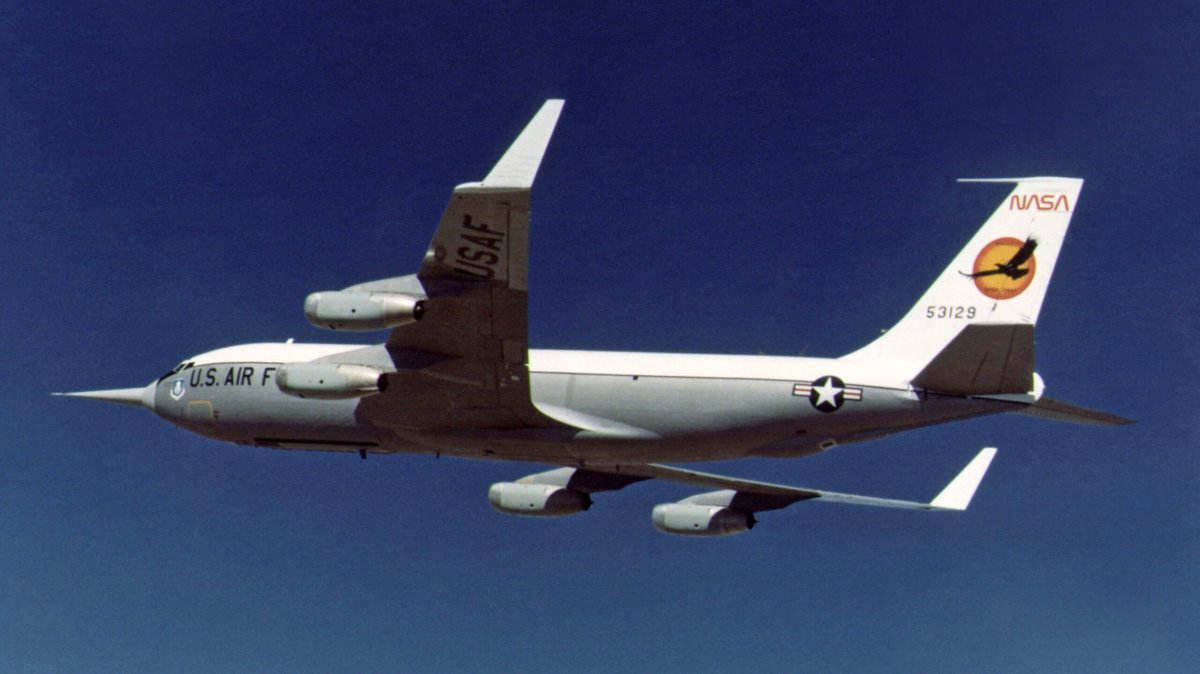
Work on the winglets ran for much of the first half of 1978 and, before the end of the same year, the Air Force’s NKC-135A testbed , serial number 55-3129, had been transferred to NASA at Edwards Air Force Base, California, for the modifications.
Winglets, the elegant upturned composite structures seen at the tips of most airliners’ wings today, are a ‘no-brainer’ option even for older aircraft as they save gobs of fuel over an aircraft’s operational life. Here we see a 757 with retrofitted winglets. , Moto “Club4AG” Miwa/WIkicommons
By May 1979, it was time to install the winglets, which had been produced by converting the wingtips of another KC-135A, serial number 55-3126, a former Speckled Trout VIP transport . Each winglet weighed around 150 pounds, was approximately 9 feet high, and could be set to different angles of incidence to gather a range of test data. A long boom containing air-data measuring equipment was added to the nose, completing 55-3129’s new look, and this provided real-time flight-test data that was presented on a CRT display in the cockpit.
Between July 1979 and January 1981, the winglet-equipped 55-3129 completed 39 flights and over 170 flying hours in this configuration, demonstrating a 6.5 percent fuel saving throughout the aircraft’s usual flight regime, equivalent to nearly 45 million gallons per year across the entire fleet. At the same time, the reconfigured aircraft also demonstrated improved takeoff performance and fuel offload capability.
The winglet-equipped NKC-135A testbed, serial number 55-3129, in flight., NASA DFRC
Despite the obvious promise of the winglets, the Air Force was not interested in the modification and instead chose to take an alternative path toward fuel savings. This was the Fuel Savings Advisory/Cockpit Avionics System (FSA/CAS), a flight-management system based on a new computer.
Compared to the winglets, the advantages of FSA/CAS were disappointing — just a 2 percent saving on fuel, and this was only achieved with the KC-135 flying a specially tailored, airliner-style flight profile, which had little in common with the Stratotanker’s normal missions. On the plus side, the FSA/CAS update, which was installed fleet-wide, did bring with it the MIL STD-1553 data bus, making it easier to introduce future cockpit upgrades .
As for 55-3129, the aircraft had lost its distinctive winglets before the end of 1981 and was returned to the Air Force for various other test duties.
IRobert S. Hopkins III, who flew 17 different variants of KC-135 tankers, EC-135 airborne command posts, and RC-135 strategic reconnaissance aircraft during his Air Force career, and now writes extensively about these aircraft and others , recalled to The War Zone that NASA, Air Force Logistics Command (AFLC), and Air Force Systems Command (AFSC) were “all for the winglets. They reduced drag consistently over the entire flight spectrum, meaning they saved fuel from takeoff to landing.”
A somewhat artistic study of the NKC-135A under test. The 9-foot-high winglets led to a radically altered appearance., NASA DFRC
“Strategic Air Command (SAC), however, was less interested in fuel savings per se than the future computerized expandability of the KC-135 and opted for the FSA/CAS,” Hopkins explained. “Unfortunately, that was built on software that mimicked an airliner step-climb profile that was utterly irrelevant to the KC-135 mission profile of takeoff, air refueling, nav leg (all at constant altitude), and landing practice. Fuel savings were in fact less than the promised 6%, averaged 2%, and the damn thing never worked.”
“Programming it during preflight was a nightmare,” says Hopkins of the FSA/CAS. “It refused to accept the SAC flight profile as ‘invalid,’ so was a lot like being told ‘if your internet service is down please send us an e-mail.’ It could not be turned off, so I turned the brightness down to full dim to avoid looking at the darn thing.”
Had Strategic Air Command known, back in 1981, that the KC-135 fleet would still be serving as the most important part of the Air Force tanker fleet 40 years later, it’s impossible to think that the savings promised by a winglet-equipped fleet of Stratotanker-family aircraft wouldn’t have won broader support.
In the event, the Stratotanker family did undergo various other important modifications, most significantly the replacement of the older aircraft’s jet engines, four Pratt & Whitney J57s, with an equal number of more powerful and efficient CFM56s.
A CFM56-engined KC-135R Stratotanker from the 134th Air Refueling Wing taxies during an exercise at McGhee Tyson ANG Base, Tennessee., U.S. Air Force
Other upgrades since then included Pacer Crag, which replaced various parts of the cockpit and fuel management system between 1997 and 2001.
With the Air Force now looking to keep at least a portion of its fleet of nearly 400 KC-135Rs flying until Fiscal Year 2040, and possibly for another decade after that, the savings in fuel costs after the introduction of the winglets many decades ago would have been absolutely massive, to say the least.
The fleet of RC-135 intelligence-gathering aircraft is also as busy as ever, monitoring potential hotspots around the globe, and would have similarly benefitted from the additional efficiency offered by winglet modifications. Although, not all those aircraft may have been able to receive the winglets because of where sensors and antenna are placed around the airframe.
As well as the Block 45 cockpit upgrades intended to keep the KC-135R viable potentially through to 2050, the Air Force is exploring other capabilities for the venerable Stratotanker, too, including serving as a communications node for other platforms . With an eye on the increasing vulnerability of tankers and other support assets to enemy air defenses, the Air Force is also increasingly looking at ways of protecting its KC-135s, too, including a laser defense system as well as loyal wingman drones .
The flight deck of a KC-135R Stratotanker after completing the Block 45 avionics upgrade at Tinker Air Force Base, Oklahoma. , U.S. Air Force/Greg L. Davis
In the meantime, the near-antique C-135 family is as busy as ever and the introduction of the new KC-46A Pegasus to the aerial refueling community has been painful, to say the least . With that in mind, it seems the Air Force really did miss a big opportunity when it had the chance to equip these aircraft with winglets back in the early 1980s. The modifications would have paid for themselves many, many times over by now, and then some.
Contact the author: thomas@thedrive.com
Comments couldn’t be loaded. Please refresh the page.
更新于美国东部时间2021年9月20日下午3:51
下次乘坐客机时,不妨看看窗外,很有可能会看到翼梢小翼——这种通常向上翘起的翼尖装置位于机翼末端,旨在通过减少阻力来提高效率。翼梢小翼不仅在新机型上很常见,也被改装到许多老式飞机上,例如常见的波音737系列,以提高性能并降低燃油成本。美国空军的KC-135空中加油机及其众多衍生机型就是其中之一,它们并未配备翼梢小翼。但事实上,KC-135曾进行过翼梢小翼的测试。实际上,该机型在这一概念的开创性研究中发挥了重要作用。测试结果令人瞩目。因此,令人费解的是,几十年前KC-135竟然没有配备翼梢小翼。
早在1979年,KC-135就配备了翼梢小翼,远早于翼梢小翼普及之前,这很大程度上要归功于同年爆发的能源危机。赎罪日战争导致中东石油出口中断,西方国家开始感受到压力。1979年,伊朗革命及其后续事件进一步加剧了这一局面。随着危机推高燃油价格,对耗油量巨大的空军造成了尤为严重的冲击。
这是KC-135翼梢小翼的特写照片,小翼上装有簇状物,用于检查尾流,图片来自NASA DFRC。
与此同时,在NASA兰利研究中心,理查德·T·惠特科姆博士提出了翼梢小翼的概念,他指出,在翼尖加装翼梢小翼可以减少阻力,从而节省燃料。有趣的是,惠特科姆在20世纪50年代还负责开发了“可乐瓶”式面积律机身,之后又提出了超临界机翼的概念,如今许多喷气式运输机都采用了这种机翼来提高效率。因此,他的名字理应被更多人所知。
在兰利研究中心成功完成惠特科姆翼梢小翼的风洞试验后,美国国家航空航天局(NASA)和美国空军于1976年签署了一份谅解备忘录,启动联合研发项目。次年6月,波音公司获得一份价值300万美元的合同,负责为KC-135加油机研发、安装并测试一套翼梢小翼。此时,风洞试验表明,该改进措施可使巡航飞行时的总阻力降低8%。基于这一改进,美国空军预计每年可节省高达3700万加仑的燃油,覆盖整个机队。
翼梢小翼的研制工作在 1978 年上半年的大部分时间里都在进行,同年年底之前,空军的 NKC-135A 试验机(序列号 55-3129)被移交给位于加利福尼亚州爱德华兹空军基地的美国国家航空航天局进行改装。
翼梢小翼,这种优雅的向上翘起的复合材料结构,如今常见于大多数客机的机翼翼尖,即使对于老旧飞机来说也是“明智之选”,因为它们能在飞机的整个使用寿命期间节省大量燃油。图中所示为一架加装了翼梢小翼的波音757客机。(图片来源:Moto “Club4AG” Miwa/WIkicommons)
到1979年5月,是时候安装翼梢小翼了。这些翼梢小翼是由另一架KC-135A(序列号55-3126,原为“斑点鳟鱼”VIP运输机)的翼尖改装而成。每个翼梢小翼重约150磅,高约9英尺,可以设置不同的迎角以收集各种测试数据。机头加装了一根装有空速测量设备的长杆,使55-3129号机焕然一新。这根长杆可以提供实时飞行测试数据,并显示在驾驶舱内的CRT显示器上。
从1979年7月到1981年1月,加装翼梢小翼的55-3129号飞机以这种配置完成了39次飞行,累计飞行时间超过170小时,在飞机的常规飞行工况下,燃油效率提高了6.5%,相当于整个机队每年节省近4500万加仑燃油。同时,改装后的飞机还展现出更优异的起飞性能和燃油卸载能力。
配备翼梢小翼的NKC-135A试验机,序列号55-3129,正在飞行中。(NASA DFRC)
尽管翼梢小翼的优势显而易见,但空军对此改装并不感兴趣,而是选择了另一条节约燃油的途径。这条途径就是燃油节约咨询/座舱航空电子系统(FSA/CAS),一种基于新型计算机的飞行管理系统。
与翼梢小翼相比,FSA/CAS 的优势令人失望——仅节省了 2% 的燃油,而且只有在 KC-135 采用专门定制的、类似客机的飞行剖面时才能实现,这与同温层加油机的常规任务几乎没有共同之处。不过,值得一提的是,此次全机队安装的 FSA/CAS 升级确实带来了 MIL-STD-1553 数据总线,这使得未来进行驾驶舱升级更加便捷。
至于 55-3129 号飞机,它在 1981 年底之前就失去了其独特的翼梢小翼,并被送回空军执行各种其他测试任务。
罗伯特·S·霍普金斯三世在其空军生涯中驾驶过17种不同型号的KC-135加油机、EC-135空中指挥所和RC-135战略侦察机,如今他撰写了大量关于这些飞机和其他飞机的文章。他向《战区》杂志回忆说,美国国家航空航天局(NASA)、空军后勤司令部(AFLC)和空军系统司令部(AFSC)“都非常支持翼梢小翼。翼梢小翼能够持续降低整个飞行过程中的阻力,这意味着从起飞到降落都能节省燃油。”
这是一幅略带艺术气息的NKC-135A测试图。9英尺高的翼梢小翼使其外观发生了显著变化。(NASA DFRC)
霍普金斯解释说:“然而,战略空军司令部(SAC)对燃油节省本身并不那么感兴趣,他们更看重的是KC-135未来计算机化的扩展能力,因此选择了FSA/CAS系统。不幸的是,该系统所用的软件模拟的是客机的阶梯爬升飞行剖面,这与KC-135的起飞、空中加油、导航航段(全程保持恒定高度)和着陆训练等任务剖面完全不符。实际上,燃油节省量甚至低于承诺的6%,平均只有2%,而且这玩意儿根本就没正常工作过。”
“飞行前编程简直是一场噩梦,”FSA/CAS的霍普金斯说。“它拒绝接受SAC的飞行剖面图,显示为‘无效’,感觉就像有人告诉我‘如果你的网络服务中断了,请给我们发邮件’一样。它关不掉,所以我把亮度调到最低,免得去看那玩意儿。”
如果战略空军司令部在 1981 年就知道 KC-135 机队在 40 年后仍将是美国空军加油机队最重要的组成部分,那么配备翼梢小翼的同温层加油机系列飞机所承诺的节省成本,不可能没有赢得更广泛的支持。
事实上,Stratotanker 系列飞机确实经历了其他各种重要的改进,其中最重要的是用同样数量的更强大、更高效的 CFM56 发动机替换了老式飞机的四台普惠 J57 喷气发动机。
美国空军第134空中加油联队的一架配备CFM56发动机的KC-135R同温层加油机在田纳西州麦吉泰森国民警卫队基地进行演习时滑行。
此后的其他升级包括 Pacer Crag,它在 1997 年至 2001 年间更换了驾驶舱和燃油管理系统的各个部分。
鉴于美国空军目前计划让其近 400 架 KC-135R 加油机中的一部分至少飞行到 2040 财年,甚至可能再飞行十年,毫不夸张地说,几十年前引入翼梢小翼后节省的燃油成本将是巨大的。
RC-135情报收集机队也一如既往地繁忙,监控着全球各地的潜在热点地区,加装翼梢小翼带来的效率提升同样会令它们受益匪浅。然而,由于传感器和天线在机身周围的位置限制,并非所有飞机都能加装翼梢小翼。
除了旨在使KC-135R保持良好性能直至2050年的Block 45座舱升级之外,美国空军还在探索这款久经考验的同温层加油机的其他功能,例如作为其他平台的通信节点。鉴于加油机和其他支援资产日益容易受到敌方防空系统的攻击,美国空军也在不断寻求保护其KC-135的方法,包括激光防御系统和忠诚僚机无人机。
在俄克拉荷马州廷克空军基地完成Block 45航电升级后的KC-135R同温层加油机的驾驶舱。(美国空军/格雷格·L·戴维斯摄)
与此同时,老旧的C-135系列飞机依然繁忙,而新型KC-46A“飞马”空中加油机的引入,至少可以说,给空中加油领域带来了不小的挑战。考虑到这一点,空军在20世纪80年代初错失了为这些飞机加装翼梢小翼的绝佳机会。如果当时进行了改装,这些投入如今早已物超所值。
联系作者:thomas@thedrive.com
评论加载失败,请刷新页面。