Sea freight, postal service providers in S’pore charging more after Middle East conflict: SingStat新加坡统计局:中东冲突后,新加坡海运和邮政服务提供商提高收费
This is based on an analysis of producer prices, which are charged at the wholesale level and could indicate future consumer price hikes. Read more at straitstimes.com.
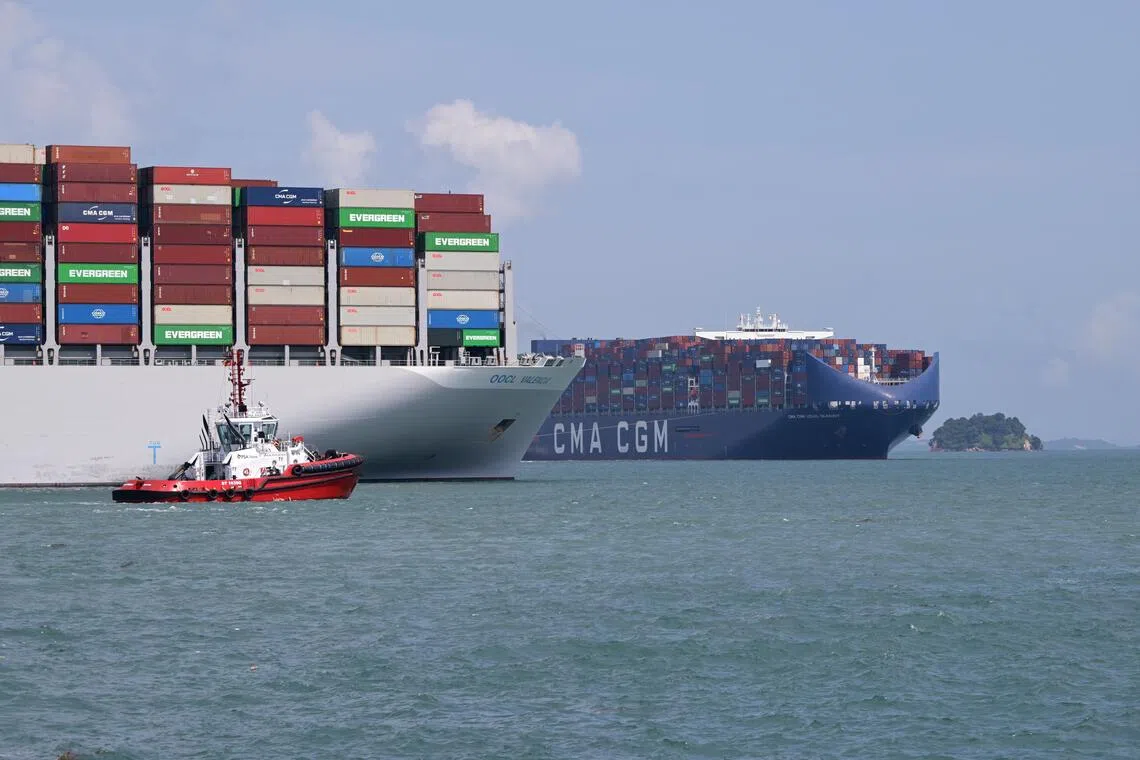
The price increases were particularly pronounced in the sea freight transport, freight forwarding, and postal and courier segments.
ST PHOTO: NG SOR LUAN
Published Oct 28, 2026, 03:00 PM
Updated Oct 28, 2026, 04:50 PM
Producer prices in the transport and storage sector have risen after the Middle East conflict drove up the cost of imported fuels, says the Department of Statistics.
Sea freight transport saw the biggest rise, up 25.4% in the second quarter, while freight forwarding rose 10.2% and postal and courier prices rose 7.1%.
The outbreak of the Iran war on Feb 28 has effectively closed the Strait of Hormuz, which is critical to oil and gas supply chains.
SINGAPORE – Businesses in Singapore’s transport and storage sector are charging more for their services in the wholesale market, after the Middle East conflict drove up the cost of imported fuels like crude oil and refined petroleum products, according to the Department of Statistics (SingStat) on Oct 28.
The price increases were particularly pronounced in the sea freight transport, freight forwarding, and postal and courier segments, based on an analysis on producer prices by SingStat in its latest newsletter.
Producer prices refer to the amount that domestic businesses and manufacturers receive for the goods and services they sell at the wholesale level.
Higher producer prices do not always pass through to consumers immediately, as retail businesses may choose to absorb the additional cost or switch suppliers to keep their prices steady. But a rise in producer prices can be an early indicator of future price hikes for consumers.
Producer prices have been inflated by the outbreak of the Iran war on Feb 28 that effectively closed the Strait of Hormuz, which was used to transport around one-fifth of the world’s oil and gas.
This drove an index tracking the price movements of imported fuels, lubricants and related materials to jump by almost 79% month on month in March. It has since eased while remaining well above pre-conflict levels.
SingStat said the index “reflects oil prices at the point of entry into the domestic economy and can provide an early indication of upstream cost pressures”.
It added: “The extent and timing of pass-through to prices can differ across transport and storage activities. These differences were likely influenced by fuel exposure, route exposure, contract terms and firms’ ability to adjust prices during the period.”
Sea freight saw the biggest increase in producer prices, surging by 25.4% in the second quarter as compared to the first quarter.
According to the newsletter, shipping activity involving liquid bulk and gas freight was more affected because of how much it relies on the Strait of Hormuz. This includes shipments of crude oil and liquefied natural gas.
Meanwhile, container shipping companies which mainly operate outside the Middle East were less affected, although they could face indirect pressures from higher bunker costs and broader shipping disruptions.
Prior to the onset of the Middle East conflict, liquid bulk and gas freight transport prices recorded relatively modest movements, while container freight transport prices were on a declining trend.
Freight forwarding was also heavily affected, with producer prices increasing by 10.2% in the second quarter from the preceding quarter.
Since the Middle East conflict began, air freight forwarding faced the most immediate cost pressures because of flight rerouting, reduced capacity and higher fuel costs, the newsletter said.
Sea freight forwarding was also affected by higher carrier rates, fuel costs and war risks surcharges. However, land freight forwarding prices have remained broadly stable.
Postal and courier prices also rose in the second quarter, with an index tracking producer price movements jumping by 7.1% as compared to the first quarter.
SingStat noted that international postal and courier prices rose, while local postal and courier prices eased. “The increase was consistent with higher fuel-related costs affecting international postal and courier prices,” it added.
Postal and courier service providers have routinely raised prices to cope with higher operational costs.
DHL Express, which recently announced a rate increase taking effect in January 2027, said its business was “influenced not only by local economic conditions but also by developments across global markets” and factors like energy costs.
Prices for cargo handling and warehouse and storage services in Singapore also increased in the second quarter by 2.7% and 0.6% respectively, month on month.
The indexes inform businesses and policymakers looking to understand emerging price pressures, which could eventually be passed down to customers.
“While the Singapore Government has introduced support packages to help businesses and households manage cost pressures, continued monitoring of producer prices remains important as global developments continue to evolve,” said SingStat in the newsletter.
Oil prices are trading slightly below six-month highs. On Oct 23, Brent surged to more than US$117 a barrel, the highest level seen since April, after Iranian attacks on tankers around the Strait of Hormuz.
Annabelle Liang is a business correspondent at The Straits Times, where she specialises in trade and macroeconomics.
Postal and delivery services
Maritime and shipping
Singapore Statistics
海运、货运代理以及邮政和快递领域的物价上涨尤为明显。
圣徒照片:吴索銮
发布于2026年10月28日下午3:00
更新于2026年10月28日下午4:50
统计部门表示,中东冲突推高了进口燃料成本,导致运输和仓储行业的生产者价格上涨。
海运运输价格涨幅最大,第二季度上涨了 25.4%,货运代理价格上涨了 10.2%,邮政和快递价格上涨了 7.1%。
2月28日爆发的伊朗战争实际上已经关闭了霍尔木兹海峡,而霍尔木兹海峡对石油和天然气供应链至关重要。
新加坡——据新加坡统计局(SingStat)10月28日发布的数据显示,由于中东冲突推高了原油和成品油等进口燃料的价格,新加坡运输和仓储行业的企业正在提高批发市场的服务价格。
根据新加坡统计局在其最新简报中对生产者价格的分析,海运、货运代理以及邮政和快递领域的物价上涨尤为明显。
生产者价格是指国内企业和制造商在批发层面销售商品和服务所获得的价格。
生产者价格上涨并不总是会立即转嫁给消费者,因为零售商可能会选择自行承担额外成本,或者更换供应商以维持价格稳定。但生产者价格上涨可能是未来消费者面临价格上涨的早期信号。
2月28日爆发的伊朗战争导致霍尔木兹海峡关闭,生产者价格因此上涨。霍尔木兹海峡曾是全球约五分之一石油和天然气的运输通道。
这导致追踪进口燃料、润滑油及相关材料价格走势的指数在3月份环比飙升近79%。此后该指数有所回落,但仍远高于冲突前的水平。
新加坡统计局表示,该指数“反映了石油进入国内经济时的价格,可以提前表明上游成本压力”。
报告还补充道:“运输和仓储活动的价格传导程度和时间可能有所不同。这些差异可能受到燃料风险敞口、路线风险敞口、合同条款以及企业在此期间调整价格的能力的影响。”
海运生产者价格涨幅最大,第二季度比第一季度上涨了 25.4%。
根据该简报,由于液体散货和气体运输高度依赖霍尔木兹海峡,因此相关航运活动受到的影响更大。这其中包括原油和液化天然气的运输。
与此同时,主要在中东以外地区运营的集装箱航运公司受到的影响较小,尽管它们可能会面临燃油成本上涨和航运中断等间接压力。
在中东冲突爆发之前,液体散货和气体货运价格波动相对较小,而集装箱货运价格则呈下降趋势。
货运代理业也受到严重影响,第二季度生产者价格较上一季度上涨了 10.2%。
该简报称,自中东冲突爆发以来,由于航班改道、运力下降和燃油成本上涨,空运货运面临着最直接的成本压力。
海运货运也受到承运人运费上涨、燃油成本增加和战争风险附加费上涨的影响。然而,陆路货运价格总体上保持稳定。
第二季度邮政和快递价格也有所上涨,追踪生产者价格变动的指数与第一季度相比上涨了 7.1%。
新加坡统计局指出,国际邮政和快递价格上涨,而本地邮政和快递价格则有所回落。“此次价格上涨与燃油相关成本上升影响国际邮政和快递价格的情况相符,”该机构补充道。
邮政和快递服务提供商为了应对不断上涨的运营成本,经常提高价格。
DHL Express 最近宣布将于 2027 年 1 月上调运费,并表示其业务“不仅受到当地经济状况的影响,还受到全球市场发展和能源成本等因素的影响”。
新加坡的货物装卸和仓储服务价格在第二季度也分别环比上涨了 2.7% 和 0.6%。
这些指数可以帮助企业和政策制定者了解新出现的价格压力,这些压力最终可能会转嫁给消费者。
新加坡统计局在简报中表示:“虽然新加坡政府已推出一系列支持措施,帮助企业和家庭应对成本压力,但随着全球形势的不断变化,持续监测生产者价格仍然十分重要。”
目前油价略低于六个月高点。10月23日,布伦特原油价格飙升至每桶117美元以上,创下4月以来的最高水平,此前伊朗袭击了霍尔木兹海峡附近的油轮。
梁安娜贝尔是《海峡时报》的商业记者,专门报道贸易和宏观经济。
邮政和递送服务
海事和航运
新加坡统计局