Singapore, Indonesia to move quickly on joint haze task force, says Vivian Balakrishnan维维安·巴拉克里希南表示,新加坡和印度尼西亚将迅速成立联合雾霾工作组。
The task force would facilitate information-sharing and help authorities in their work. Read more at straitstimes.com.
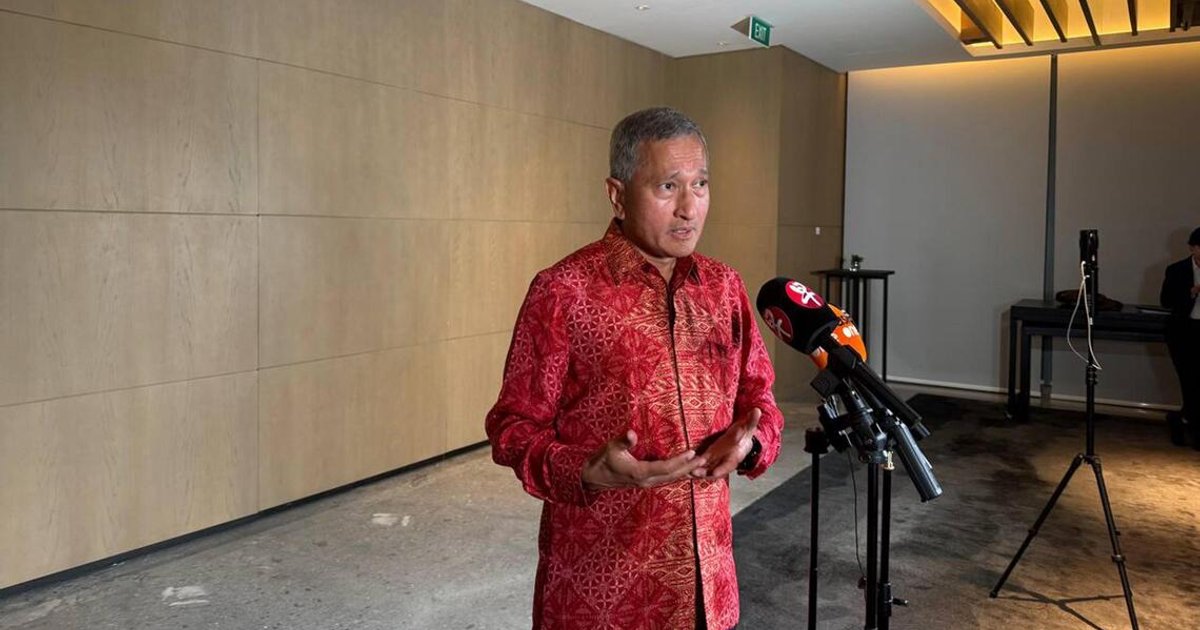
Foreign Minister Vivian Balakrishnan said the task force would facilitate information-sharing and help authorities in both countries carry out their work within their respective jurisdictions.
ST PHOTO: HARIZ BAHARUDIN
Published Oct 28, 2026, 08:30 PM
Updated Oct 28, 2026, 08:50 PM
JAKARTA – Singapore and Indonesia will move quickly to establish a joint task force to tackle transboundary haze , Foreign Minister Vivian Balakrishnan said on Oct 28, stressing the need for both countries to work together to identify and hold accountable companies suspected of contributing to the recurring problem.
Speaking to reporters in Jakarta on the second day of his three-day visit, Balakrishnan said the task force would facilitate information-sharing and help authorities in both countries carry out their work within their respective jurisdictions.
He said details of its composition and staffing had yet to be finalised, but both governments were committed to getting it operational promptly.
“Given the commitment at the senior levels of both countries, we will get this done quickly, promptly, and effectively,” he said.
The task force was announced on Oct 27 following talks between Balakrishnan and his Indonesian counterpart, Arrmanatha Nasir, as both countries stepped up efforts to address the forest and land fires that have caused widespread haze across the region.
Balakrishnan said the task force reflected a recognition that haze was a transboundary problem requiring a collective response from both countries.
Its purpose was to facilitate cooperation and information sharing so that authorities could deter companies from engaging in haze-causing activities and hold those responsible accountable.
“The problem of haze in South-east Asia has unfortunately been one now which is almost three decades long. That’s far too long, and we do need to find solutions,” he said.
Balakrishnan said the haze that had affected Singapore in recent weeks had caused concern, anxiety and anger among residents, making it necessary for the Government to respond.
But he stressed that Indonesians were also bearing the brunt of the crisis, with communities near the fires facing the greatest exposure to the pollution.
His visit reinforced the importance of direct communication between governments, particularly when transboundary problems affect people on both sides of the border, Balakrishnan said.
“You can’t conduct diplomacy just by the phone or through the media,” he said, stressing the need for face-to-face discussions to convey concerns and find solutions.
The minister added that while such crises inevitably involved domestic political considerations, it was essential for governments to remain focused on cooperative and constructive solutions.
He said Singapore’s response also underscored the importance of preparing for crises before they emerged, praising government agencies and community volunteers for distributing masks and helping vulnerable residents.
Balakrishnan said his discussions with Indonesian leaders had been candid and constructive, with cooperation on tackling haze among the approaches agreed upon, some of which were already being implemented.
His remarks came as Singapore announced plans on Oct 28 to amend its Transboundary Haze Pollution Act to strengthen enforcement powers and make it easier to investigate companies suspected of contributing to transboundary haze.
Singapore has identified 10 companies in Indonesia linked to fires suspected of contributing to the haze, while the National Environment Agency has separately sought information from 10 Singapore-based companies about their activities and corporate links. A specialist panel has also been convened to investigate corporate relationships and supply chains.
Hariz Baharudin is Indonesia correspondent at The Straits Times. He has an interest in Indonesia and the wider currents shaping South-east Asia.
外交部长维文·巴拉克里希南表示,该工作组将促进信息共享,并帮助两国当局在其各自管辖范围内开展工作。
圣路易斯照片:哈里兹·巴哈鲁丁
发布于2026年10月28日晚上8:30
更新于2026年10月28日晚上8:50
雅加达——新加坡外交部长维文·巴拉克里希南10月28日表示,新加坡和印度尼西亚将迅速成立联合工作组,以应对跨境雾霾问题。他强调,两国需要共同努力,查明并追究涉嫌造成这一反复出现问题的公司的责任。
巴拉克里希南在为期三天的访问的第二天于雅加达对记者表示,该工作组将促进信息共享,并帮助两国当局在其各自管辖范围内开展工作。
他表示,该机构的组成和人员配备细节尚未最终确定,但两国政府都致力于尽快使其投入运作。
他说:“鉴于两国高层都做出了承诺,我们将迅速、及时、有效地完成这项工作。”
10 月 27 日,巴拉克里希南与印尼外长阿曼纳塔·纳西尔举行会谈后,宣布成立特别工作组。两国加大力度应对森林和土地火灾,这些火灾已在该地区造成大范围的雾霾。
巴拉克里希南表示,该工作组的成立体现了人们认识到雾霾是一个跨境问题,需要两国共同应对。
其目的是促进合作和信息共享,以便当局能够阻止公司从事造成雾霾的活动,并追究相关责任人的责任。
“东南亚的雾霾问题不幸已经持续了近三十年。时间太长了,我们确实需要找到解决办法,”他说。
巴拉克里希南表示,近几周来影响新加坡的雾霾引起了居民的担忧、焦虑和愤怒,因此政府有必要做出回应。
但他强调,印尼民众也承受着这场危机的严重影响,火灾附近的社区面临着最大的污染风险。
巴拉克里希南表示,他的访问强调了政府间直接沟通的重要性,尤其是在跨境问题影响到边境两侧人民的情况下。
“你不能只通过电话或媒体进行外交,”他强调,需要面对面的讨论来传达关切并找到解决方案。
部长补充说,虽然此类危机不可避免地涉及国内政治因素,但各国政府必须继续专注于合作和建设性的解决方案。
他表示,新加坡的应对措施也凸显了在危机出现之前做好准备的重要性,并赞扬了政府机构和社区志愿者分发口罩和帮助弱势居民的做法。
巴拉克里希南表示,他与印尼领导人的讨论坦诚而富有建设性,双方就应对雾霾问题达成了合作,其中一些合作措施已经开始实施。
他的这番言论发表之际,新加坡于 10 月 28 日宣布计划修订其《跨境烟霾污染法》,以加强执法权力,并更容易调查涉嫌造成跨境烟霾的公司。
新加坡已确认印尼境内有10家公司与疑似造成雾霾的火灾有关,同时,新加坡国家环境局也已向10家新加坡公司索取有关其业务活动和关联公司的信息。此外,一个专家小组也已成立,负责调查相关公司关系和供应链。
哈里兹·巴哈鲁丁是《海峡时报》驻印度尼西亚记者。他对印度尼西亚以及影响东南亚的更广泛趋势很感兴趣。