Inside KL’s SMART Tunnel: The hidden work behind its flood-fighting operation吉隆坡智慧隧道内部:防洪行动背后的秘密
KUALA LUMPUR, Oct 29 — On a daily basis, motorists driving through the motorway section of Kuala Lumpur’s SMART Tunnel may pass through without giving much thought to the two...
KUALA LUMPUR, Oct 29 — On a daily basis, motorists driving through the motorway section of Kuala Lumpur’s SMART Tunnel may pass through without giving much thought to the two gates that remain shut beyond the familiar stretch of road.
Yet behind those gates lies another side of the tunnel — never seen by motorists.
During a visit to the facility, a current of air from the flood tunnel felt surprisingly cool against the skin, almost like a breeze offering relief from the heat outside.
This was coming from the 9.7km-long infrastructure beneath the city that is part of a flood-mitigation system designed to divert excess water from the confluence of Sungai Klang and Sungai Ampang at Kampung Berembang towards a holding pond in Taman Desa.
Only about 3km of the tunnel doubles as a motorway.
When heavy rain threatens to overwhelm the river system, that section can be closed to traffic so the tunnel can fulfil its other purpose: carrying floodwater away from vulnerable parts of Kuala Lumpur.
Constructing the tunnel required specialised underground engineering —a 13.2-metre-diameter Slurry Mix-Shield tunnel-boring machine (TBM) to excavate the passage beneath the city.
The machine was among the largest of its kind in the region at the time, helping create the stormwater tunnel that now serves two very different purposes, depending on the weather.
What happens behind the gates when the weather turns?
Two control centres, one flood threat
The first signs of a possible flood operation emerge well before water enters the motorway section.
The Department of Irrigation and Drainage (DID) monitors river conditions and water levels, assessing the threat posed by rising water and managing the diversion of excess flows.
Meanwhile, Amanat Lebuhraya Rakyat Berhad’s (ALR) SMART Traffic Control Centre oversees traffic operations, including traffic diversions and motorway closures.
ALR, is the holding company of the SMART Tunnel concessionaire.
When the threat of flooding requires the motorway to be closed, traffic must first be cleared and the road secured before the tunnel can be used for flood mitigation.
These warnings — through various channels, today via social media platforms — begin when Mode 3 is activated, as the motorway is closed and motorists are advised to avoid the SMART Tunnel and use alternative routes.
Mode 3 is a precautionary measure that places the tunnel on standby for possible flooding.
Although the motorway is closed, the traffic compartment is not necessarily flooded at this stage.
Only if heavy rain persists, Mode 4 is activated and the motorway compartment is used to trap floodwater.
What happens behind the gates?
Under normal conditions, the motorway remains open and the gates stay shut.
Most motorists have little reason to think about what lies beyond them.
The tunnel is designed to operate in four modes, depending on rainfall and flood conditions.
Under Mode 1, the motorway operates normally, with no floodwater diverted through the tunnel.
In Mode 2, excess water is channelled through the lower section while the road remains open to traffic.
When a more serious storm threatens, the system moves to Mode 3, then subsequently, Mode 4 is activated if the rain arrives at a threatening stage.
For the first time in nearly 20 years, the gates were opened for viewing to the press, offering a glimpse of the tunnel’s interior.
Once diverted, excess water is channelled towards Taman Desa Pond, where it is temporarily stored before being released into Sungai Kerayong through a separate, approximately 500m-long twin box culvert.
The gates are only one part of a system that also relies on river monitoring, traffic control, water diversion and storage.
Since the tunnel began operating in 2007, Mode 4 has been activated 11 times, turning the motorway into a flood channel when heavy rain threatens Kuala Lumpur.
When the rain stops, work continues
After a Mode 4 operation, floodwater must be pumped out and debris removed before the tunnel can be restored for traffic.
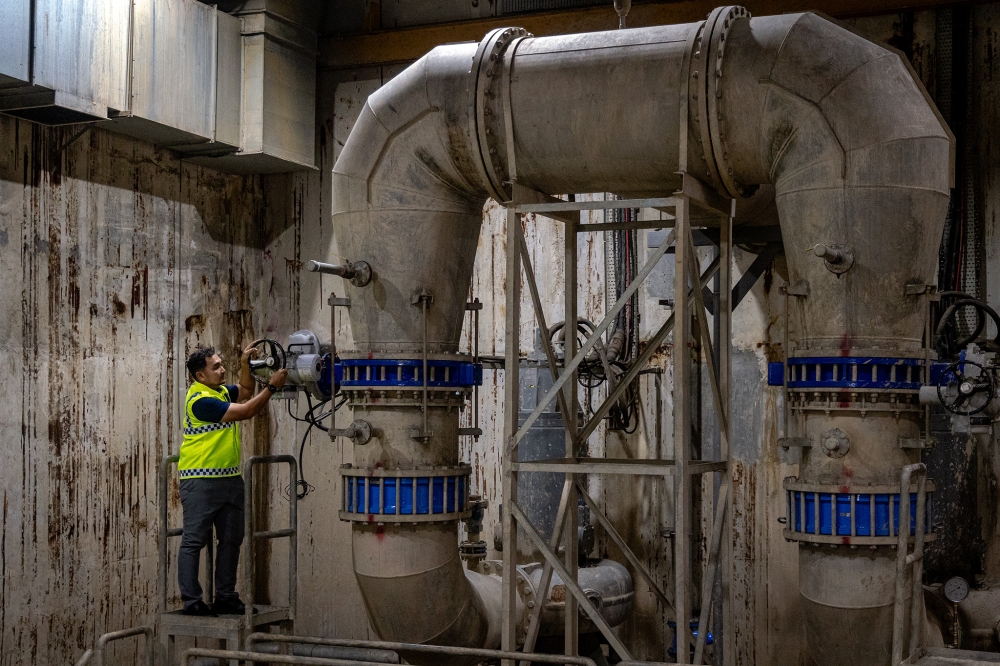
About 30m underground, seven floors below ground level, there is the Pump Room that houses five large pumps.
These large pumps are responsible for draining water that’s been trapped in the tunnel.
Floodwater can leave behind mud, sediment, driftwood and other debris, while the force of the water may also damage lights, signboards and other tunnel fixtures.
Crews must check for gas and other potential hazards before proceeding with cleaning.
The recovery process is estimated to take an average of about two days, with a reopening target of up to four days after closure.
RM500,000 in average repair costs
The physical damage caused by floodwater also carries a substantial cost and could be estimated at RM500,00 each time Mode 4 was activated.
There is also a financial trade-off when the motorway closes. During Modes 3 and 4, vehicles cannot use the motorway section, meaning toll collection through that section stops while the road is unavailable to traffic.
Awaiting the next storm
For motorists, the SMART Tunnel may be little more than a few kilometres of road beneath Kuala Lumpur. Its other function is largely invisible during ordinary journeys.
Behind the closed gates is a system that must be monitored and prepared before floodwater can be diverted, then drained, cleaned and repaired before traffic can return.
Ventilation, pumping and maintenance all play a part in keeping the infrastructure ready for the moment it must change purpose.
The cool breeze ends once the visit was over, it was lights-off and the tunnel was left in pitch darkness, awaiting the next time it would be called into service.
FMM report: Haze cost some Malaysian firms about RM280,000 in masks, medical expenses
Malaysia’s latest haze cost RM8b in welfare losses, may have led to 1,700 deaths, report finds
A road when it’s dry, a river when it pours: How KL’s SMART Tunnel switches from highway to flood channel
吉隆坡,10 月 29 日讯——每天,驾车穿过吉隆坡 SMART 隧道高速公路段的司机们可能不会过多关注熟悉的路段之外仍然关闭的两扇大门。
然而,在那道大门之后,却是隧道的另一面——驾车者永远看不到的一面。
参观该设施期间,从泄洪隧道吹出的气流拂过皮肤,感觉出奇地凉爽,就像一阵微风,让人感到一丝凉意,仿佛能缓解外面的炎热。
这是来自城市下方长达 9.7 公里的基础设施,它是防洪系统的一部分,旨在将巴生河和安邦河在甘榜贝伦邦交汇处的过剩水流引至塔曼德萨的蓄水池。
隧道中只有大约 3 公里是兼作高速公路的路段。
当暴雨威胁到河流系统时,可以关闭该路段的交通,以便隧道能够发挥其另一作用:将洪水从吉隆坡的脆弱地区排出。
修建这条隧道需要专门的地下工程技术——一台直径 13.2 米的泥浆混合盾构机(TBM)来挖掘城市下方的通道。
这台机器在当时是该地区同类机器中最大的之一,它帮助建造了雨水隧道,如今该隧道根据天气情况发挥着两种截然不同的作用。
天气突变时,大门后面会发生什么?
两个控制中心,一次洪水威胁
在洪水涌入高速公路路段之前,可能发生防洪行动的最初迹象就已经出现了。
灌溉和排水部门 (DID) 监测河流状况和水位,评估水位上涨带来的威胁,并管理过剩流量的分流。
与此同时,人民高速公路管理局 (ALR) 的 SMART 交通控制中心负责监督交通运营,包括交通改道和高速公路封闭。
ALR是SMART隧道特许经营商的控股公司。
当洪水威胁需要封闭高速公路时,必须先疏散交通并确保道路安全,然后才能使用隧道进行防洪。
这些警告——通过各种渠道,如今通过社交媒体平台——在模式 3 激活时开始发出,因为高速公路会关闭,建议驾车者避开 SMART 隧道并使用替代路线。
模式 3 是一种预防措施,使隧道处于待命状态,以应对可能发生的洪水。
虽然高速公路封闭,但目前交通路段未必已被洪水淹没。
只有当暴雨持续不断时,才会启动模式 4,并利用高速公路隔间来拦截洪水。
大门后面会发生什么?
正常情况下,高速公路保持开放,大门保持关闭。
大多数驾驶者很少会去思考车外的景色。
根据降雨和洪水情况,隧道设计有四种运行模式。
模式 1 下,高速公路正常运行,没有洪水通过隧道改道。
在模式 2 中,多余的水通过下部路段排出,而道路仍然保持开放通行。
当更严重的风暴来袭时,系统会切换到模式 3;如果降雨达到威胁阶段,则会激活模式 4。
近 20 年来,隧道大门首次向媒体开放,让人们得以一窥隧道内部。
改道后的多余水流被引向塔曼德萨池塘,在那里暂时储存,然后通过一条单独的、大约 500 米长的双箱涵排放到克拉永河中。
闸门只是整个系统的一部分,该系统还包括河流监测、交通管制、引水和蓄水。
自 2007 年隧道投入运营以来,4 号模式已启动 11 次,每当吉隆坡遭遇暴雨威胁时,该模式都会将高速公路变成泄洪道。
雨停后,工作继续进行。
按照 4 级模式运行后,必须先将洪水抽出并清除碎片,然后才能恢复隧道的交通。
在地下约 30 米、地面以下七层的地方,有一间泵房,里面有五台大型水泵。
这些大型水泵负责排出隧道中积存的水。
洪水可能会留下淤泥、沉积物、浮木和其他杂物,水流的冲击力也可能损坏隧道内的灯具、标志牌和其他设施。
工作人员在进行清理工作前,必须检查是否存在气体和其他潜在危险。
预计恢复过程平均需要两天左右,目标是在关闭后四天内重新开放。
平均维修费用为50万令吉
洪水造成的物理损害也会带来巨大的损失,每次启动 4 号模式,损失估计可达 500,000 令吉。
高速公路封闭也会带来经济上的损失。在模式3和模式4期间,车辆无法使用该高速公路路段,这意味着在道路封闭期间,该路段的收费也将停止。
等待下一场风暴
对于驾车者而言,SMART隧道可能只不过是吉隆坡地下几公里长的道路。它的其他功能在日常行程中几乎难以察觉。
紧闭的大门后面是一个系统,必须对其进行监控和准备,然后才能转移洪水,然后进行排水、清理和修复,之后才能恢复交通。
通风、抽水和维护都在确保基础设施随时准备应对用途变更方面发挥着作用。
参观结束后,凉爽的微风也随之消失,灯光熄灭,隧道陷入一片漆黑,等待着下次投入使用。
FMM报告:雾霾导致部分马来西亚公司在口罩和医疗费用方面损失约28万令吉。
报告显示,马来西亚最近一次雾霾造成80亿令吉的福利损失,并可能导致1700人死亡。
旱季是公路,暴雨时是河流:吉隆坡智慧隧道如何从高速公路变身为泄洪道