Malaysia’s latest haze cost RM8b in welfare losses, may have led to 1,700 deaths, report finds报告显示,马来西亚最近一次雾霾造成80亿令吉的福利损失,并可能导致1700人死亡。
KUALA LUMPUR, Oct 29 — Malaysia’s recent haze episode carried an estimated RM8 billion in welfare losses, while short-term exposure to fine particles from fires may have...
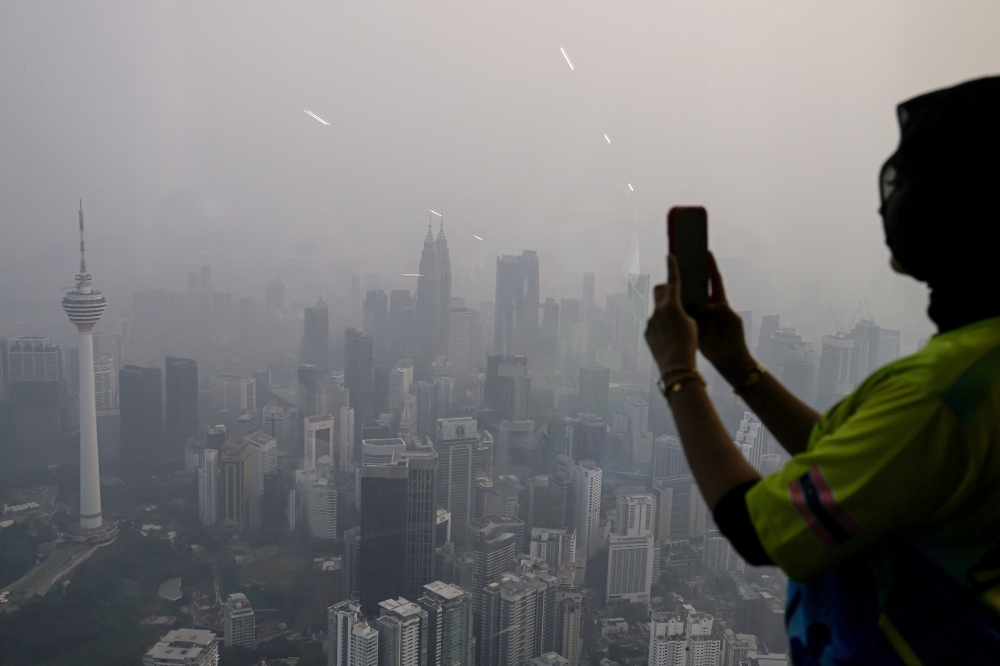
KUALA LUMPUR, Oct 29 — Malaysia’s recent haze episode carried an estimated RM8 billion in welfare losses, while short-term exposure to fine particles from fires may have contributed to about 1,700 deaths, according to a report commissioned by the Federation of Malaysian Manufacturers (FMM).
The report valued the health burden of estimated premature deaths at between RM3 billion and RM15 billion, using standard benefit-transfer methods.
It said this represents what people would be willing to pay to avoid the risk of premature death — not lost economic output — and should not be added to other economic losses.
The haze also disrupted manufacturers indirectly through staff absences and school closures.
Among 59 sites reporting some operational impact in FMM’s survey, 81 per cent said they experienced more sick leave or health-related absence, while 63 per cent said school closures affected staff availability.
The report also highlighted that, at 14 per cent of affected sites, staff shortages disrupted shifts, production or deliveries.
Overall, 37 per cent of sites reporting an impact said output fell, and 27 per cent temporarily shut down at least one operation.
The survey received responses from 86 FMM member sites, including 81 manufacturers.
More than two-thirds reported some operational impact, while 26 per cent said disruption was moderate or significant. The report cautioned that the survey was not representative of all manufacturers; most responses came from Selangor and Penang, and only two came from Sarawak.
School closures during the haze affected an estimated 8.4 million to 13.4 million student-days, the report said. It did not assign a monetary value to any loss in teaching quality.
FMM president Jacob Lee Chor Kok said the haze should no longer be viewed exclusively as an environmental issue but also a matter of public health, labour productivity, economic sustainability and regional competitiveness.
“Manufacturing industries are increasingly interconnected through regional and global supply chains. Environmental disruptions in one country can affect economic activities and business operations across national boundaries.
“Preventing haze is therefore not only an environmental responsibility but also an investment in economic resilience, sustainable industrial development and the wellbeing of future generations,” he added.
The report also estimated 1,700 deaths related to the haze, with a 95 per cent interval of about 1,300 to 2,300, which covers the period from July 1 to Oct 22.
About 1,600 were attributed to smoke from fires outside Malaysia, the report said.
The report stressed that the figures are statistical estimates of deaths brought forward across the population, not individually identified cases.
If fire smoke is assumed to be no more toxic than other fine particles, the estimated toll falls to about 600.
The main estimate also carries uncertainty because the health-risk study used did not include Malaysian cities and was based mostly on forest fires rather than peat fires.
The research paper, titled “The 2026 Fire Season and Transboundary Haze in Malaysia,” covers the period from 1 July to 22 October 2026. It draws on satellite observations, air-quality monitoring, atmospheric modelling and findings from FMM’s member survey to assess the sources, severity and consequences of prolonged haze exposure.
The study was undertaken by Piyu Ke, Chief Scientist of Carbon Spur Sdn Bhd.
The study combined multiple scientific approaches to provide a more comprehensive understanding of the haze problem, including the cumulative effects of prolonged pollution exposure rather than focusing solely on peak air pollution readings.
FMM report: Haze cost some Malaysian firms about RM280,000 in masks, medical expenses
A road when it’s dry, a river when it pours: How KL’s SMART Tunnel switches from highway to flood channel
Inside KL’s SMART Tunnel: The hidden work behind its flood-fighting operation
吉隆坡,10 月 29 日——马来西亚制造商联合会 (FMM) 委托撰写的一份报告显示,马来西亚最近的雾霾事件估计造成了 80 亿令吉的福利损失,而短期接触火灾产生的细颗粒物可能导致约 1700 人死亡。
该报告采用标准福利转移方法,估算出过早死亡造成的健康负担在 30 亿至 150 亿令吉之间。
报告称,这代表人们愿意为避免过早死亡的风险而支付的金额,而不是经济产出的损失,因此不应计入其他经济损失。
雾霾还通过员工缺勤和学校停课间接影响了制造商的生产。
在 FMM 的调查中,59 个报告运营受到影响的地点中,81% 表示他们经历了更多的病假或与健康相关的缺勤,而 63% 表示学校关闭影响了员工的可用性。
该报告还强调,在受影响的 14% 的地点,人员短缺扰乱了轮班、生产或交付。
总体而言,37% 的报告受到影响的站点表示产量下降,27% 的站点暂时关闭了至少一项业务。
该调查收到了来自 86 个 FMM 成员网站的回复,其中包括 81 家制造商。
超过三分之二的受访者表示运营受到一定程度的影响,其中26%的受访者表示中断程度中等或严重。报告提醒,此次调查结果并不代表所有制造商的情况;大多数受访者来自雪兰莪州和槟城州,只有两份来自砂拉越州。
报告称,雾霾期间学校停课影响了约840万至1340万个学生日。报告并未对教学质量损失进行货币估值。
马来西亚制造商联合会主席李祖国表示,雾霾不应再仅仅被视为一个环境问题,而应被视为一个公共卫生、劳动生产率、经济可持续性和区域竞争力问题。
“制造业通过区域和全球供应链日益相互联系。一个国家的环境破坏可能会影响跨国界的经济活动和商业运营。”
“因此,防止雾霾不仅是一项环境责任,也是对经济韧性、可持续工业发展和子孙后代福祉的投资,”他补充道。
该报告还估计,与雾霾相关的死亡人数为 1700 人,95% 的置信区间约为 1300 至 2300 人,涵盖了 7 月 1 日至 10 月 22 日期间。
报告称,约有 1600 例死亡病例归因于马来西亚境外火灾产生的烟雾。
报告强调,这些数字是对人口死亡人数的统计估计,而不是对个别病例的统计估计。
如果假设火灾烟雾的毒性不高于其他细颗粒物,则估计死亡人数将降至约 600 人。
主要估计也存在不确定性,因为所使用的健康风险研究不包括马来西亚城市,而且主要基于森林火灾而不是泥炭火灾。
这篇题为《2026年马来西亚火灾季与跨境烟霾》的研究论文涵盖了2026年7月1日至10月22日期间的情况。它利用卫星观测、空气质量监测、大气模型以及马来西亚农民联合会(FMM)成员调查的结果,评估了长期暴露于烟霾的来源、严重程度和后果。
该研究由 Carbon Spur Sdn Bhd 的首席科学家 Piyu Ke 进行。
该研究结合了多种科学方法,以更全面地了解雾霾问题,包括长期暴露于污染的累积效应,而不是仅仅关注空气污染峰值读数。
FMM报告:雾霾导致部分马来西亚公司在口罩和医疗费用方面损失约28万令吉。
旱季是公路,暴雨时是河流:吉隆坡智慧隧道如何从高速公路变身为泄洪道
吉隆坡智慧隧道内部:防洪行动背后的秘密