GE16 Election Night promises surprises wrapped in surprises第16届全国大选之夜,惊喜层出不穷
OCTOBER 29 — As anything goes is the current ethos of Malaysian politics, mayhem post-GE16 — ostensibly before the end of 2027 — is inevitable.A political vacuum precedes...
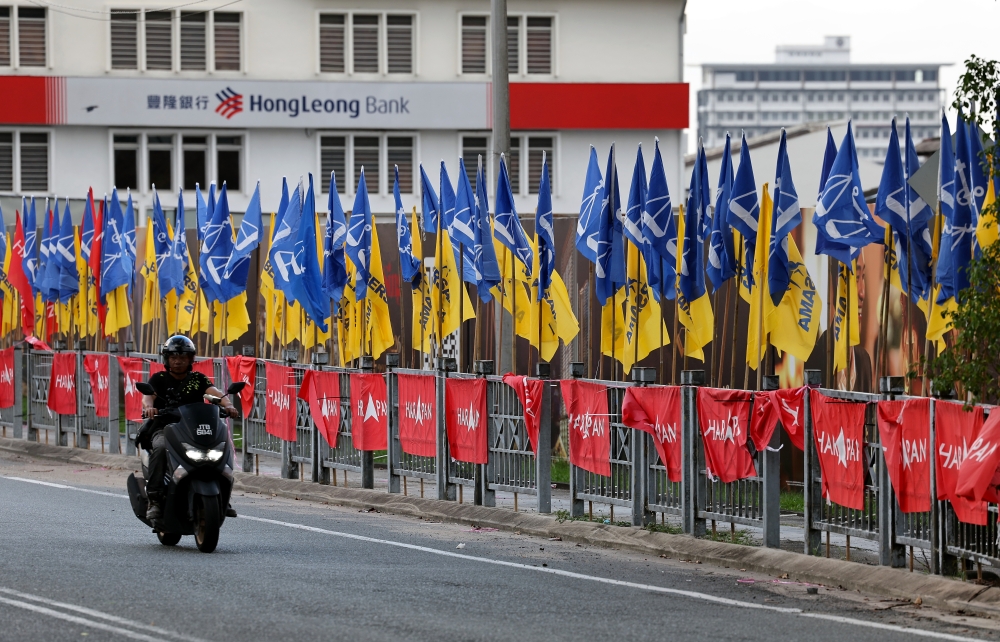
OCTOBER 29 — As anything goes is the current ethos of Malaysian politics, mayhem post-GE16 — ostensibly before the end of 2027 — is inevitable.
A political vacuum precedes before a fragile minority government forms.
We, as a nation, are at the precipice of the great unknown.
Endless possibilities
Just in case you’ve been in a cave the last five months, all kinds have occurred.
In Johor, Barisan Nasional (BN) squared off with Pakatan Harapan and Perikatan Nasional (PN) — with Bersatu in its lines.
Yet, towards the end of the campaign, PAS president Hadi Awang gathers his 11 candidates and announces the Islamists primary goal is Pakatan’s defeat and not their own victory.
In the name of greater Malay unity. It literally rerouted PAS votes to Umno or forced their voters to stay home on July 11, election day.
BN mauled all pretenders and won 48 of the 56 contests. Pakatan retained eight and PN lost everything, humiliating Bersatu president and former Johor MB Muhyiddin Yassin.
By Negeri Sembilan’s nomination day on July 18, PN reconstituted itself. Bersatu, rudely uninvited, was forced to compete solo.
Bersatu’s splinters Wawasan Negara and Pejuang danced into the warm embrace of PN. BN set aside 11 seats for PN in a strategic partnership for polling on August 1.
The BN-PN coalition, with 18 and seven wins respectively, hold a supermajority. Its excos currently do not administer the state, but that’s a completely different bizarre story.
Now for Melaka, BN and PN are in agreement, despite PN rendered the junior member allowed to contest only seven seats opposed to BN’s 21. Pakatan faces an uphill task.
Why, Batman, why is Gotham in mayhem?
Regardless of Melaka’s outcome, there are three reasons for grave uncertainties after the votes are cast at GE16.
Many forget that by the time Ismail Sabri Yaakob took over from Muhyiddin in 2021, the country was truly in a flux.
By early 2022, despite being in the federal government together, PN and BN had already battled in Melaka (November 2021) and Johor (March 2022).
Mahathir Mohamad was still the Langkawi MP. Anwar the Port Dickson MP with his motley crew pressing a government unsure of itself. Ismail Sabri signed a MOU with Pakatan to guarantee the passage of the Budget.
Historians will tag that era as the first instance of parliamentary uncertainty inside the house — the prior 2020 transfer of prime minister post was conducted via a series of interviews in the palace, not in Parliament.
The last will obviously be the Madani experiment advised by the palace following the hung Dewan Rakyat after GE15 in late 2022. The relative calm of the first two years has been followed by the chaotic relationship BN and Pakatan navigate in the present.
Wait for greater volatility after GE16.
The last six months have been a bunch of maybes from both PN and BN in their pursuit of unity.
They did not manage to coalesce for Johor, and for Negeri and Melaka it is about PN accepting a minor role — 11 seats and 7 seats (or 35 per cent and 28 per cent of the available races) respectively to contest.
Far more worrying is that the negotiations swallow up an inordinate amount of time.
After Negeri, BN and PN had almost three months to shape an electorate pact for Melaka.
The obvious explanation is that all sides play a game of chicken and wait till the hourglass almost runs out. See who flinches first.
In the last two state elections, PN gave in and ended up with the poor man’s share of the spoils. The strain inside PN — more so in dominant PAS — will be visible if on November 14, they get pittance from the state election.
As such, when it comes to the general election, with PN and BN firmly set on sustaining their brands and opting for an electoral pact, the wheeling and dealing will ebb and flow till nomination day. With the usual characters to strut till the string breaks and party elders firefight.
PN has all parliamentary seats in Perlis, Kedah, Terengganu and Kelantan minus one, 39 seats.
Using the “recontest what you have” principle that Umno assiduously drew in Negeri and Melaka, there will be only a single Umno candidate in those four states, which is Sungai Petani.
The focus here is not the final electoral pact formula they’ll commit to, but that they will do so grudgingly, which then lends itself thereafter to a series of internal protests and sabotages.
Sulking is synonymous with our politicians. The situation won’t please neither PN nor BN.
There is no visible solution to this.
BN leaves PN as a junior member in the peninsula’s west and PN shuts out Umno in the conservative belt.
There’ll be complaints all across Semenanjung. Setting the tone for future betrayals.
KK prefers KL, not Newcastle
Second, the Borneo inclination
If BN emerges stronger than PN, it may cast aside PN if it has enough seats to form a government with Borneo parties and their 57 seats.
If BN secures 60 seats from the 165 in Semenanjung, the temptation to bolt grows.
Equally, PN can abandon BN. What is clearer, between the two, is Borneo’s multiculturalists prefer BN. PAS-controlled PN is an existentialist threat to the way of life in East Malaysia.
It is an electoral pact, it bears reminding. BN and PN MPs owe their allegiance to their chairmen, not to the pact.
There is a romantic flavour to BN and East Malaysia tying the knot, reviving the old BN — in name, even if not in function — which East Malaysia has decades of experience with.
If Borneo had to choose, it would be in this order: Renew partnership with Anwar Ibrahim’s Pakatan if he has the numbers, settle for the BN-only universe, and third, grudgingly get into bed with PN-BN with the belief BN can offset PAS’ overzealousness.
Pakatan forming an electoral pact with Bersatu six years after the former both decimated its government and PKR’s leadership in 2020, means nothing is off the table in Malaysian politics. These strange days.
The message is crystal clear. Pakatan understands reforms are a priority but without power, reform is impossible in its estimation.
Granted, the theory is full of holes, that’s the approach they’ve picked, the lesser of all evils — cynics point out that Pakatan is full of itself if it anoints itself as the objective good in this political play of hypocrisy.
And its credentials are thin, super thin, after it took back turncoats Kamaruddin Jaffar, Edmund Santhara and Steve Choong into PKR.
Politicians can run out of parties and coalitions for the most absurd of reasons, usually cover for their personal unabashed self-interest, and within a reasonable time shift allegiance without the risk of censure or punishment.
The sticky reality all sides in Malaysian politics refuse to admit is that opportunism is the shared dogma across the aisle.
Outcomes and only outcomes matter. Narratives, the messaging team can work on and the social media team pour out the graphics and videos, damn the lawsuits. Everything is after the fact to power.
Which points to a free for all, immaterial of what type of electoral pacts are formed prior.
States can meander without administrations for lengthy durations, or change relationships as the 2021 supermajority BN Melaka government absorbed Pakatan two years after both became bosom buddies at the federal level. They parted company acrimoniously this year.
In an overly federalised country, the real power is in Putrajaya. The general election is a be all for our politics.
State governments are malleable to whatever is the federal situation. And since all moves, even the diabolical ones, are kosher, nothing is done and dusted till a prime minister is sworn in.
Expect absolute pandemonium as election results stream out and hypocrisy is the guiding light.
The great unknown is ahead.
So I wrote a book. Now I have to publish it
Extreme Value Theory and how one bad day can change your life
‘Clayface’: James Gunn’s body horror spin on DC villain is a hugely refreshing win
In Dewan Rakyat today: AI literacy, Brics role and AI Bill on the agenda
FMM report: Haze cost some Malaysian firms about RM280,000 in masks, medical expenses
Malaysia’s latest haze cost RM8b in welfare losses, may have led to 1,700 deaths, report finds
10 月 29 日——鉴于马来西亚政治目前奉行的是无所不用其极的风气,第 16 届全国大选后(表面上是在 2027 年底之前)的混乱局面是不可避免的。
在脆弱的少数派政府形成之前,会先出现政治真空。
作为一个国家,我们正站在未知世界的边缘。
无限可能
如果你过去五个月一直与世隔绝,那么你可能不知道,这期间发生了各种各样的事情。
在柔佛州,国阵(BN)与希望联盟(Pakatan Harapan)和国民联盟(PN)展开对峙,土团党也站在其中。
然而,在竞选活动的尾声,伊斯兰党主席哈迪·阿旺召集了他的 11 名候选人,并宣布伊斯兰主义者的首要目标是击败希望联盟,而不是他们自己的胜利。
以马来人团结的名义,他们实际上将伊斯兰党的选票转移到了巫统,或者强迫伊斯兰党的选民在7月11日选举日待在家中。
国阵横扫所有竞争对手,在56场选举中赢得48场。希望联盟保住了8个席位,而国盟则全部落败,令土著团结党主席、前柔佛州务大臣慕尤丁颜面尽失。
7月18日森美兰州提名日当天,国民联盟重组完毕。土著团结党未经邀请,被迫单独参选。
土团党的分裂国家宏愿和国家团结党跳进了国盟的温暖怀抱。国阵在战略伙伴关系中为国盟预留了11个席位,以便在8月1日进行投票。
国阵和国盟分别赢得18个和7个席位,占据绝对多数。虽然其执政委员会目前并不实际管理州政府,但这又是另一个完全离奇的故事了。
现在,在马六甲问题上,尽管国民阵线和国民联盟允许年轻成员竞选7个席位(而国阵允许21个),但双方仍达成了一致。希望联盟面临着艰巨的任务。
蝙蝠侠,为什么哥谭市会陷入混乱?
无论马六甲的选举结果如何,第 16 届全国大选投票结束后,仍存在三个严重的不确定性。
许多人忘记了,当伊斯梅尔·萨布里·雅各布在 2021 年接替穆希丁时,马来西亚正处于剧烈的变革之中。
到 2022 年初,尽管国盟和国阵同属联邦政府,但双方已经在马六甲(2021 年 11 月)和柔佛(2022 年 3 月)展开了斗争。
马哈蒂尔·穆罕默德当时仍是兰卡威国会议员。安华是波德申国会议员,他带领着一群乌合之众向一个自身都缺乏信心的政府施压。伊斯迈尔·萨布里与希望联盟签署了一份谅解备忘录,以确保预算案的通过。
历史学家会将那个时代视为议会内部出现不确定性的第一个例子——此前 2020 年的首相职位交接是通过在王宫进行的一系列面试完成的,而不是在议会进行的。
最后一项显然是王室在2022年底第15届全国大选后,在国会下议院陷入僵局的情况下,建议推行的“马达尼”实验。前两年的相对平静之后,国阵和希望联盟目前的关系陷入了混乱。
等待第16届全国大选后更大的市场波动。
过去六个月,国盟和国阵在追求团结的过程中都做出了许多模棱两可的决定。
他们未能团结起来争取柔佛州的席位,而对于马六甲州和内里州来说,国盟只能扮演次要角色——分别竞选 11 个和 7 个席位(分别占可用席位的 35% 和 28%)。
更令人担忧的是,谈判耗费了过多的时间。
在内格里选举之后,国阵和国盟有近三个月的时间来制定马六甲的选民联盟。
显而易见的解释是,各方都在玩一场胆量游戏,等到时间快要耗尽时,看看谁先退缩。
在过去两届州选举中,国盟都做出了让步,最终只分到了微薄的份额。如果11月14日的州选举中,国盟——尤其是其主导政党伊斯兰党——再次颗粒无收,那么国盟内部的紧张局势将会显露无疑。
因此,在即将到来的大选中,由于国盟和国阵都决心维护各自的品牌并选择结成选举联盟,各种幕后交易将会持续到提名日。届时,一些老面孔会继续招摇过市,直到联盟破裂,党内元老之间爆发激烈的内讧。
国盟拥有玻璃市、吉打、登嘉楼和吉兰丹的所有国会议席,减去 1 个,即 39 个议席。
根据巫统在内地和马六甲精心推行的“重新竞争你所拥有的”原则,这四个州将只有一个巫统候选人,即双溪大年候选人。
这里的重点不是他们最终会接受的选举协议方案,而是他们会不情愿地接受,这随后会导致一系列内部抗议和破坏活动。
耍脾气已经成了我们政客的代名词。这种情况既不会让国盟满意,也不会让国阵满意。
目前尚无明显的解决办法。
国阵使国民联盟在半岛西部沦为次要成员,而国民联盟则在保守地带将巫统拒之门外。
整个西马都会怨声载道。这无疑会为未来的背叛埋下伏笔。
KK更喜欢吉隆坡,而不是纽卡斯尔
第二,婆罗洲倾向
如果国阵比国民联盟更强大,并且拥有足够的席位与婆罗洲各政党及其57个席位组建政府,那么国阵可能会抛弃国民联盟。
如果国阵在西马的 165 个席位中获得 60 个,那么它退出的诱惑就会越来越大。
同样,国民党也可以抛弃国阵。但两者之间更明显的是,婆罗洲的多元文化主义者更倾向于国阵。由伊斯兰党控制的国民党对东马的生活方式构成生存威胁。
需要提醒的是,这是一项选举协议。国阵和国盟的议员效忠的是他们的主席,而不是这项协议。
国阵与东马的联姻颇具浪漫色彩,这标志着旧国阵的复兴——即便在名义上并非如此——而东马在这方面拥有数十年的经验。
如果婆罗洲必须做出选择,那么顺序应该是这样的:如果安华·易卜拉欣的希望联盟有足够的票数,就与他续约;其次,接受只有国阵的局面;第三,勉强与国盟-国阵结盟,相信国阵可以抵消伊斯兰党的过度热情。
希望联盟在2020年大选中击败土著团结党及其政府和人民公正党领导层六年之后,如今却与土著团结党结成选举联盟,这意味着在马来西亚政坛,一切皆有可能。真是世事难料。
信息非常明确。希望联盟明白改革是当务之急,但它认为没有权力,改革就无从谈起。
诚然,这个理论漏洞百出,但这是他们选择的方法,是所有恶果中较轻的——愤世嫉俗者指出,如果希望联盟在这场虚伪的政治游戏中自诩为客观正义,那它就是自恋。
而且,在人民公正党重新接纳了叛徒卡马鲁丁·贾法尔、埃德蒙·桑塔拉和史蒂夫·钟之后,该党的信誉就变得非常薄弱了。
政治人物可能会因为最荒谬的原因而失去政党和联盟,这通常是为了掩盖他们毫不掩饰的个人私利,而且在合理的时间内,他们可以改变效忠对象而不会面临谴责或惩罚的风险。
马来西亚政坛各方都不愿承认的棘手现实是,机会主义是各派系共同的信条。
结果至上,只有结果才重要。叙事方面,信息团队可以负责,社交媒体团队可以负责制作图片和视频,至于诉讼,管它呢。对权力而言,一切都是事后诸葛亮。
这表明将会是一场自由竞争,而事先达成何种选举协议都无关紧要。
各州可能会长期处于无政府状态,或者像2021年马六甲州超级多数派国阵政府那样,在联邦层面与希望联盟结成两年亲密盟友后,改变彼此间的关系。但今年,双方却不欢而散。
在一个联邦制过度集中的国家,真正的权力掌握在布城。大选对我们的政治至关重要。
各州政府的行动完全取决于联邦政府的政策。由于所有举措,即使是那些阴险的手段,都被视为合法,因此在总理宣誓就职之前,一切都无法尘埃落定。
预计随着选举结果陆续公布,现场将一片混乱,而虚伪将成为贯穿始终的主题。
前方充满未知。
所以我写了一本书。现在我得把它出版。
极值理论以及糟糕的一天如何改变你的人生
《泥脸》:詹姆斯·古恩对DC反派的恐怖演绎令人耳目一新,堪称一次巨大的胜利
今天在下议院:人工智能素养、金砖国家的作用和人工智能法案列入议程。
FMM报告:雾霾导致部分马来西亚公司在口罩和医疗费用方面损失约28万令吉。
报告显示,马来西亚最近一次雾霾造成80亿令吉的福利损失,并可能导致1700人死亡。