Patriot makers hedge on Ukraine production deal as officials question cause of hold-up爱国者导弹制造商对乌克兰生产协议持观望态度,官员们质疑协议延误的原因
Though Trump promised Kyiv a license to build Patriot missile interceptors last month, Lockheed Martin and Raytheon have put the brakes on production.
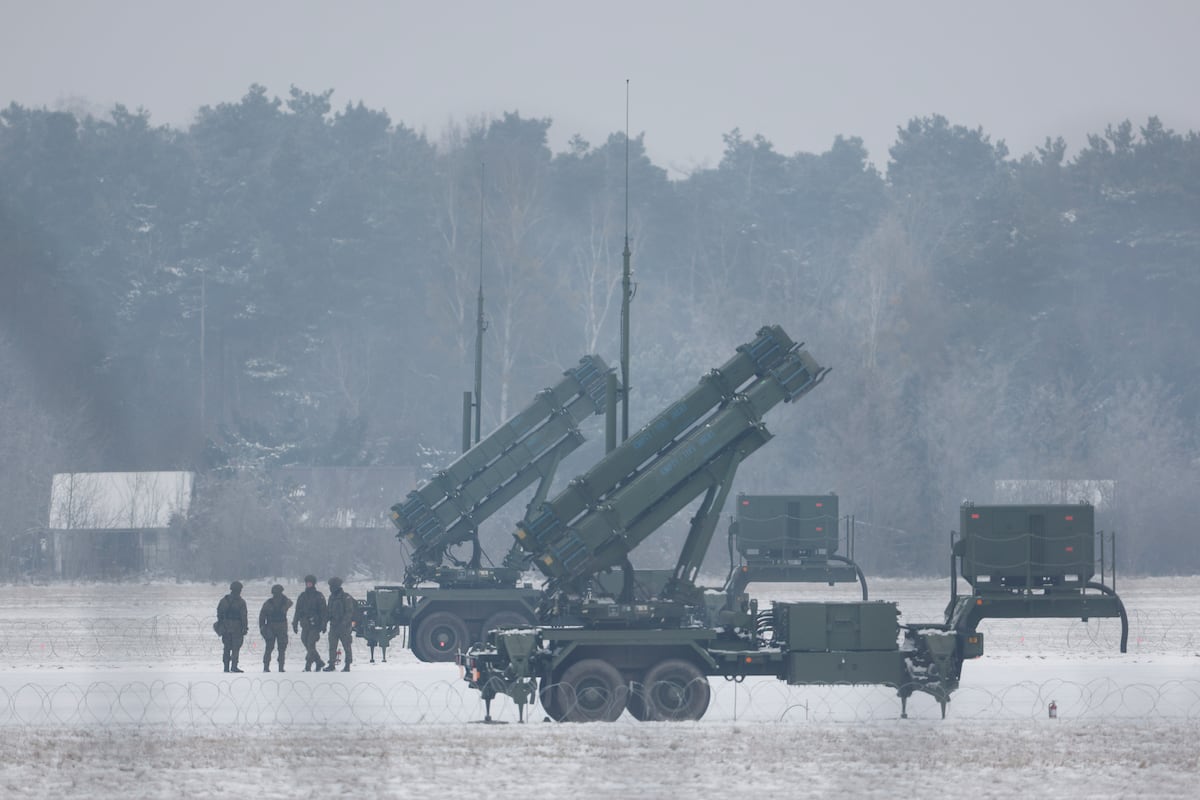
KYIV, Ukraine — Though U.S. President Donald Trump promised Kyiv a license to build Patriot missile interceptors last month, Lockheed Martin and Raytheon have begun putting the brakes on a joint-production deal as executives weigh what is “feasible” and the licensing runs into Washington’s red tape.
American officials are backpedaling too. Trump on July 20 told the Financial Times that the U.S. has to be “a little bit careful of who we license to.” Despite that, Ukrainian President Volodymyr Zelenskyy on Saturday posted on X that the two sides have “now reached an agreement.”
The glacial progress may reflect American defense giants’ fear that Kyiv could become a defense industry competitor — rather than posing risk to technology or intellectual property — a Republican official on Capitol Hill told The Atlantic .
“Their real worry is that the Ukrainians will find a way to improve the Patriot and then produce them at scale faster and for much less money than what the existing production lines in the U.S. could do,” the official said, adding that the companies will publicly frame their concerns around “IP theft and tech transfer” instead.
Ukraine’s weapons industry, honed by nearly five years of Russia’s full-scale invasion, has been booming since the U.S.-Israel war with Iran began in the spring. The conflict with Iran has drained an estimated two-thirds of America’s pre-war Patriot interceptor inventory, sparking discussion about inventory and strategy.
Some defense partners are eager to work with Ukraine, a country with rare recent experience fighting a large-scale land war, and have shown strong interest in collaborating with Kyiv to develop and field cheaper, faster-to-produce alternatives to million-dollar weapons.
The race toward competition is problematic for the defense giants, the official said — not because Ukraine might steal the Patriot — but because the country’s partners might outbuild it, cutting into the current monopoly on antiballistic capabilities and profits.
Trump first pledged the license at the July NATO summit in Ankara, promising Ukraine permission to produce Patriot missiles for the first time.
“We’re going to give a license to you to make Patriots. That’s pretty cool. This way, you can’t complain that we’re not giving ‘em enough,” Trump said, adding that the companies had not yet been consulted on the plan.
Zelenskyy said the next day that the question had been “resolved politically,” telling reporters that technical teams needed to start work “without delay, so that we can get licenses very quickly and start production in Ukraine as soon as possible.”
Five days after Trump’s pledge, Ukraine, nine European countries and defense heavyweights including Eurosam, Leonardo, Thales and Saab launched a coalition in Paris to field Freyja, an entirely new antiballistic system built around a Ukrainian interceptor priced at roughly one-fifth of a Patriot round.
A week after that, Lockheed unveiled its own cheaper, faster-to-produce Patriot missile at the Farnborough International Airshow, advertising the PAC-3 ACE at roughly $2 million a round – less than half the price of the round Ukraine fires at Russian ballistic missiles today.
The Patriot line rarely moves that fast. Its current top round, the PAC-3 MSE, was first accepted by the U.S. Army in 2015 and took until 2018 to reach full-rate production, per the Missile Defense Advocacy Alliance .
On July 21, one day after the ACE debut, Tim Cahill, president of Lockheed Martin Missiles and Fire Control, described production talks with Ukraine as simply “early,” telling reporters the company will “support the US Army and the [Trump] administration on what they want to go do,” according to Breaking Defense .
Raytheon’s process “has just started,” with the company working with the U.S. government “to determine what is feasible and what is best for Ukraine,” its president of land and air defense systems, Tom Laliberty, said at the same show.
Two days later, Zelenskyy wrote in a post on X that he was “grateful for the company’s readiness to take our partnership to an even higher level, where Ukraine would co-produce, together with Raytheon, some of the most vital air defense assets – Patriot interceptors,” after meeting representatives of the group.
But when Zelenskyy asked Trump for “several hundred” interceptors at a July 28 Oval Office meeting, the president refused, citing America’s shrunken stocks, The Atlantic reported.
Three days later, Trump reversed course on the license entirely.
“We have not agreed to that,” he said at a Camp David Cabinet meeting . “We’re talking about it, but it’s a hard thing to give away that kind of technology.”
Then, U.S. NATO Ambassador Matthew Whitaker dampened expectations further on Aug. 3, telling Fox News that “we do not allow anybody but US manufacturers to make those in the United States,” adding that a long-term production agreement “will not be concluded before this winter,” per Euronews .
The deal’s current status is unclear.
“The decision has been made,” Zelenskyy said during an interview on Ukrainian television over the weekend, according to United24 . “It was made by the President of the United States and other important American government institutions.”
American officials have yet to respond to Zelenskyy’s latest comments.
Katie Livingstone is the Ukraine correspondent for Defense News and Military Times. Based in Kyiv, she has covered Russia's full-scale invasion since its first days. She is a former Fulbright fellow whose award-winning work has appeared in outlets across Europe and the U.S.
乌克兰基辅——尽管美国总统唐纳德·特朗普上个月承诺向基辅颁发建造“爱国者”导弹拦截器的许可证,但洛克希德·马丁公司和雷神公司已经开始放缓联合生产协议的进程,因为高管们正在权衡什么是“可行的”,而许可证的颁发又遇到了华盛顿的繁文缛节。
美国官员也在改口。特朗普7月20日告诉《金融时报》,美国必须“谨慎选择授权对象”。尽管如此,乌克兰总统泽连斯基周六在X网站上发帖称,双方“现已达成协议”。
一位国会山的共和党官员告诉《大西洋月刊》:“这种缓慢的进展可能反映出美国国防巨头担心基辅可能会成为国防工业的竞争对手,而不是对技术或知识产权构成风险。”
这位官员表示:“他们真正担心的是,乌克兰人会找到改进爱国者导弹系统的方法,然后以比美国现有生产线更快、更便宜的速度大规模生产。”他还补充说,这些公司将公开表达他们的担忧,转而关注“知识产权盗窃和技术转让”。
乌克兰的武器工业在经历了近五年俄罗斯全面入侵后日臻完善,自今年春季美以两伊战争爆发以来更是蓬勃发展。与伊朗的冲突已消耗了美国战前“爱国者”导弹拦截器库存的约三分之二,引发了关于库存和战略的讨论。
一些国防伙伴渴望与乌克兰合作,乌克兰是近年来罕见地经历过大规模地面战争的国家,他们对与基辅合作开发和部署更便宜、生产速度更快的百万美元武器替代品表现出了浓厚的兴趣。
这位官员表示,这场竞争对国防巨头来说是个问题——不是因为乌克兰可能会窃取“爱国者”导弹——而是因为该国的合作伙伴可能会建造出比它更先进的导弹系统,从而削弱其目前在反弹道导弹能力和利润方面的垄断地位。
特朗普在7月于安卡拉举行的北约峰会上首次承诺颁发许可证,允许乌克兰首次生产爱国者导弹。
“我们将授权你们生产《爱国者》游戏。这很棒。这样一来,你们就不能抱怨我们给他们的不够了,”特朗普说道,并补充说,这些公司尚未就该计划进行磋商。
泽连斯基第二天表示,这个问题已经“在政治上得到解决”,并告诉记者,技术团队需要“立即开始工作,以便我们能够尽快获得许可证,并尽快在乌克兰开始生产”。
在特朗普做出承诺五天后,乌克兰、九个欧洲国家以及包括 Eurosam、Leonardo、Thales 和 Saab 在内的国防巨头在巴黎成立了一个联盟,部署 Freyja,这是一种全新的反弹道导弹系统,其核心是乌克兰拦截弹,价格约为爱国者导弹的五分之一。
一周后,洛克希德公司在范堡罗国际航展上推出了自己更便宜、生产速度更快的“爱国者”导弹,PAC-3 ACE 导弹的售价约为每枚 200 万美元——不到乌克兰今天用来攻击俄罗斯弹道导弹的导弹价格的一半。
“爱国者”导弹系统的发展速度很少这么快。据导弹防御倡导联盟称,其目前的最先进型号PAC-3 MSE于2015年首次被美国陆军接受,但直到2018年才达到全面量产。
据 Breaking Defense 报道,7 月 21 日,也就是 ACE 首次亮相的第二天,洛克希德·马丁导弹与火控公司总裁蒂姆·卡希尔将与乌克兰的生产谈判描述为“尚处于早期阶段”,并告诉记者,该公司将“支持美国陆军和(特朗普)政府想要做的事情”。
雷神公司陆空防御系统总裁汤姆·拉利伯蒂在同一展会上表示,雷神公司的相关流程“才刚刚开始”,该公司正在与美国政府合作,“以确定哪些方案可行,哪些方案对乌克兰最有利”。
两天后,泽连斯基在 X 上发帖称,在与该集团代表会面后,他“感谢该公司愿意将我们的合作关系提升到更高的水平,乌克兰将与雷神公司共同生产一些最重要的防空资产——爱国者拦截器”。
但据《大西洋月刊》报道,当泽连斯基在7月28日于椭圆形办公室会见特朗普,要求提供“数百架”拦截器时,总统以美国库存减少为由拒绝了。
三天后,特朗普彻底改变了对许可证的决定。
他在戴维营内阁会议上说:“我们还没有同意这样做。我们正在讨论,但要放弃这种技术是很困难的。”
随后,美国驻北约大使马修·惠特克于 8 月 3 日进一步降低了人们的期望,他告诉福克斯新闻,“我们不允许除美国制造商以外的任何人在美国生产这些产品”,并补充说,长期生产协议“在今年冬天之前不会达成”,据欧洲新闻台报道。
该交易目前的状况尚不明确。
据United24报道,泽连斯基周末在接受乌克兰电视台采访时表示:“决定已经做出。这是美国总统和其他重要的美国政府机构做出的决定。”
美国官员尚未对泽连斯基的最新言论作出回应。
凯蒂·利文斯通是《防务新闻》和《军事时报》的乌克兰特派记者。她常驻基辅,自俄罗斯全面入侵乌克兰之初便开始报道此事。她曾是富布赖特学者,其获奖作品发表于欧洲和美国的多家媒体。