CNA Explains: Is secretly recording a workplace meeting allowed, and when can it get you into trouble?CNA 解读:秘密录制工作场所会议是否允许?什么情况下会给你带来麻烦?
A recent tribunal case involving a secretly recorded workplace meeting raises questions about when such recordings are allowed and when they can get you fired.
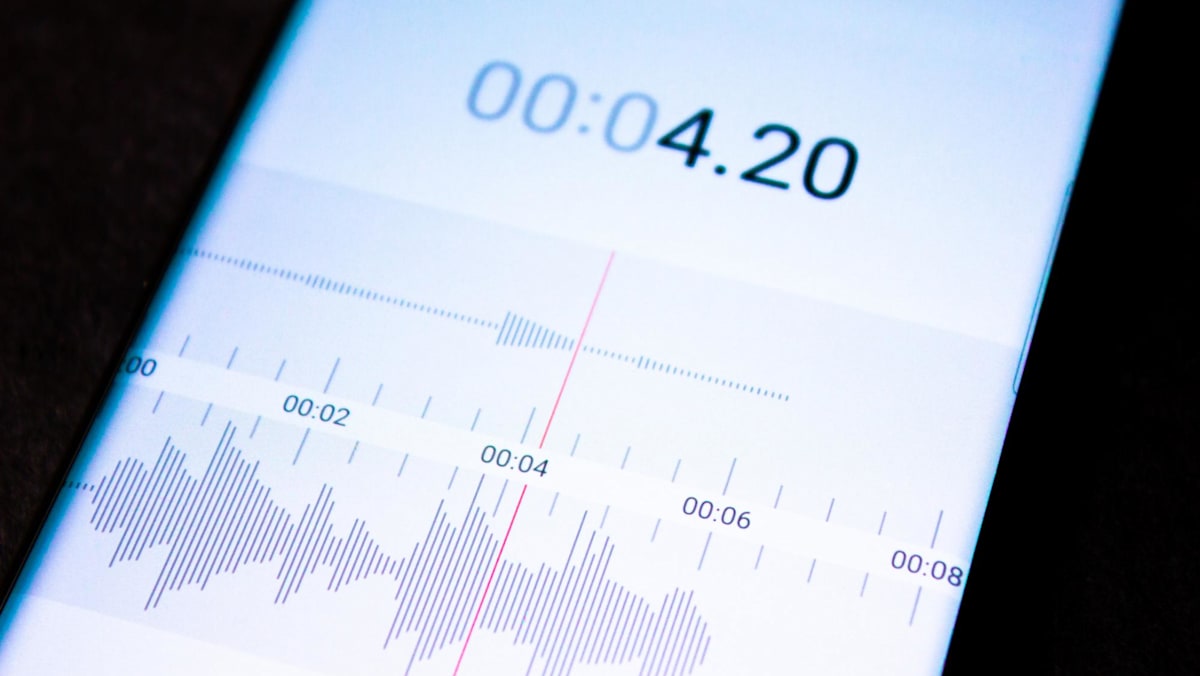
A recent tribunal case involving a secretly recorded workplace meeting raises questions about when such recordings are allowed and when they can get you fired.
A voice recording wave on the screen of a smartphone. (Photo: iStock)
This audio is generated by an AI tool.
SINGAPORE: A managing director of a public relations firm who was sacked for secretly recording a meeting had her wrongful dismissal claim thrown out by the Employment Claims Tribunal (ECT).
The claimant - identified only as JJT in court documents - was meeting with the company’s president and chief human resources officer when the president noticed that JJT was recording the meeting on her phone without consent.
In a written judgment on Oct 23, the tribunal found that, in the circumstances of the case, JJT’s covert recording was “sufficient to destroy the trust and confidence” in the employment relationship.
But is it illegal to secretly record a conversation in Singapore? And even if it is not, could doing so get you fired or land you in other legal trouble?
CNA asked lawyers and an employment expert about the rules and risks surrounding covert recordings.
Is it legal to secretly record a conversation in Singapore?
Recording someone without consent is not illegal in Singapore, said lawyer Chooi Jing Yen.
“We don’t have data privacy legislation which says that you can’t record things without people’s knowledge,” said the director of Chooi Jing Yen LLC.
"What we do have are common law protections, so your usual tortious acts or harassment. We have a harassment act, but I mean, nothing that directly says you cannot record a conversation."
But the absence of a general prohibition does not give people an unrestricted right to record conversations.
Ms Amarjit Kaur, who heads Withers KhattarWong's Singapore employment team, said that while making a recording may not in itself constitute a criminal offence, an employee is not necessarily entitled to do so.
“The recording may breach the employment contract, an express workplace policy, duties of confidentiality, data protection requirements and/or the implied obligation of trust and confidence in the employment relationship," Ms Kaur said.
Beyond the legal considerations, a human resources expert said covert recordings should generally be discouraged in the workplace.
Mr Alvin Aloysius Goh, chief executive officer of the Singapore Human Resources Institute (SHRI), said trust and confidence are at the heart of an employment relationship.
"If employees or managers begin to assume that conversations may be secretly recorded, people can become more guarded, which can undermine candid and constructive workplace conversations," he said.
Can you be fired for secretly recording a workplace conversation?
The tribunal noted that there were no reported Singapore judgments directly addressing whether secretly recording a company meeting amounted to misconduct serious enough to justify immediate dismissal.
Whether a covert recording amounts to misconduct depends on the full circumstances of the case, Ms Kaur said.
“A covert recording may potentially justify disciplinary action and, in sufficiently serious cases, dismissal without notice,” she said.
The recent tribunal decision showed that the absence of an express policy prohibiting recordings is not necessarily decisive, Ms Kaur said. At the same time, not every covert recording would justify dismissal.
While the ruling gives employers support for treating secret recordings seriously, they should investigate the circumstances of each case and conduct a fair inquiry before deciding on a sanction, she added.
Ms Harjeet Kaur of Harjeet Kaur Chambers LLC said the nature of the conversation being recorded is also relevant.
“Ultimately, the more private, confidential or sensitive the workplace discussion, the greater the likelihood that a covert recording may be regarded as misconduct, even if the recording is not in itself unlawful,” she said.
What if you're secretly recording a conversation to protect yourself?
For employees facing workplace harassment, the Tripartite Alliance for Fair and Progressive Employment Practices advises retaining evidence of wrongdoing, which can include recordings.
Where an employee believes they need to preserve evidence of bullying, harassment, discrimination or other serious misconduct, employers should “look beyond the fact that a recording was made and understand why it was made”, said SHRI's Mr Goh.
“Where an employee says a recording was made to protect themselves, employers should examine both the appropriateness of the recording and the substance of the underlying allegation,” he added.
However, in such situations, an employer may still consider whether the employee has breached a workplace policy or duty of confidentiality, Ms Amarjit Kaur said.
Mr Chooi said that if an employee recorded misconduct in breach of contractual obligations, this could potentially give rise to claims by both sides.
There may nevertheless be grounds to argue that a covert recording was justified if, for example, an employee was being bullied behind closed doors and would otherwise have difficulty proving it, said Ms Harjeet Kaur.
Can secret recordings be used as evidence in court?
A covert recording is not necessarily inadmissible just because it was made without the knowledge or consent of the other participants, said Ms Amarjit Kaur.
Even if making the recording breached an employee's contract, that would not by itself make the recording inadmissible, Mr Chooi said.
“Under the Evidence Act, the central starting point is whether the evidence is relevant to a fact in issue,” Ms Amarjit Kaur said.
But admissibility and the weight given to the evidence are separate questions. A court or tribunal may consider whether the recording is “authentic, complete, reliable and presented in its proper context”, she added.
Even if the recording is admitted as evidence, the manner in which it was obtained may still have separate consequences.
“An employee could potentially rely on a recording as evidence while also facing a claim or disciplinary action concerning the way it was obtained, retained or disclosed,” she said.
Singapore courts and tribunals have previously treated covert recordings as admissible and given them significant weight.
In a recent case where a pregnant employee was wrongfully dismissed , a recording of a call with her boss was described by the tribunal as “the crucial piece pf evidence”.
Employees considering secretly recording a workplace conversation should weigh the evidential benefit of the recording against disciplinary risk, Ms Amarjit Kaur said.
What should you do if you want to record a workplace conversation?
The safest approach is to get the other participants’ consent before recording a workplace conversation, said Mr Chooi, as that would forestall any arguments that the recording cannot be used or that a contract is breached.
If consent is refused, employees should not assume that they are entitled to record the conversation secretly, said Ms Amarjit Kaur.
Instead, Ms Harjeet Kaur advised employees to check their employment contract and handbook for any confidentiality or recording clauses.
“If you are unable to record, take contemporaneous notes and consider sending a follow-up email setting out what was discussed, and keep a copy of all emails and messages,” she said.
She also advised those who have already made a recording to seek legal advice if they are unsure about the consequences.
If an employee believes that a covert recording is genuinely necessary to protect their personal safety or preserve evidence of serious wrongdoing, they should consider obtaining legal advice first, Ms Amarjit Kaur said.
“Any recording should be limited to what is reasonably necessary, securely preserved, left unedited and not distributed more widely than required.”
Want an issue or topic explained? Email us at digitalnews [at] mediacorp.com.sg . Your question might become a story on our site.
Get our pick of top stories and thought-provoking articles in your inbox
Stay updated with notifications for breaking news and our best stories
Join our channel for the top reads for the day on your preferred chat app
最近一起涉及秘密录制工作场所会议的法庭案件引发了人们对何时允许此类录音以及何时会导致解雇的问题。
智能手机屏幕上出现录音波形图。(图片:iStock)
这段音频是由人工智能工具生成的。
新加坡:一名公关公司董事总经理因秘密录制会议而被解雇,其不当解雇索赔被就业索赔法庭 (ECT) 驳回。
原告(在法庭文件中仅以 JJT 的代号指代)当时正在与公司总裁兼首席人力资源官会面,总裁发现 JJT 未经同意用手机录音。
10 月 23 日,法庭在一份书面判决中认定,在本案情况下,JJT 的秘密录音“足以破坏雇佣关系中的信任和信心”。
在新加坡秘密录音是否违法?即使不违法,这样做会不会导致你被解雇或惹上其他法律麻烦?
CNA就秘密录音的相关规定和风险咨询了律师和就业专家。
在新加坡秘密录音合法吗?
律师崔静燕表示,在新加坡,未经同意录音并不违法。
“我们没有数据隐私立法规定,未经他人同意不得记录信息,”Chooi Jing Yen LLC 的负责人表示。
“我们现有的是普通法保护,比如常见的侵权行为或骚扰行为。我们有反骚扰法,但我的意思是,并没有直接规定禁止录音。”
但是,即使没有普遍禁止,也不意味着人们拥有不受限制地录制对话的权利。
Withers KhattarWong 新加坡就业团队负责人 Amarjit Kaur 女士表示,虽然录音本身可能不构成刑事犯罪,但员工未必有权这样做。
考尔女士表示:“录音可能违反雇佣合同、明确的工作场所政策、保密义务、数据保护要求和/或雇佣关系中隐含的信任和信赖义务。”
除了法律方面的考虑之外,一位人力资源专家表示,在工作场所通常应该避免秘密录音。
新加坡人力资源协会 (SHRI) 首席执行官吴安基先生表示,信任和信心是雇佣关系的核心。
他说:“如果员工或经理开始认为谈话可能会被秘密录音,人们就会变得更加谨慎,这会破坏坦诚和建设性的工作场所对话。”
偷偷录制工作场所对话会被解雇吗?
法庭注意到,新加坡没有已公布的判决直接涉及秘密录制公司会议是否构成足以立即解雇的严重不当行为。
考尔女士表示,秘密录音是否构成不当行为,取决于案件的全部情况。
她说:“秘密录音可能构成采取纪律处分的理由,在足够严重的情况下,甚至可能导致立即解雇。”
考尔女士表示,最近的仲裁裁决表明,没有明确禁止录音的政策并非决定性因素。同时,并非所有秘密录音都足以构成解雇的理由。
她补充说,虽然这项裁决支持雇主认真对待秘密录音,但他们应该调查每个案件的具体情况,并在决定处罚之前进行公平的调查。
Harjeet Kaur Chambers LLC 的 Harjeet Kaur 女士表示,被录音的对话性质也具有相关性。
“归根结底,工作场所的讨论越是私密、机密或敏感,即使录音本身并不违法,秘密录音就越有可能被视为不当行为,”她说。
如果你为了保护自己而秘密录音呢?
对于面临职场骚扰的员工,公平和进步就业实践三方联盟建议保留不当行为的证据,包括录音。
SHRI 的 Goh 先生表示,如果员工认为需要保存欺凌、骚扰、歧视或其他严重不当行为的证据,雇主应该“超越录音本身,了解录音的原因”。
“如果员工声称录音是为了保护自己,雇主应该审查录音的适当性以及相关指控的实质内容,”他补充道。
然而,在这种情况下,雇主仍然可能会考虑雇员是否违反了工作场所政策或保密义务,Amarjit Kaur 女士说。
Chooi先生表示,如果员工记录了违反合同义务的不当行为,这可能会引发双方的索赔。
哈吉特·考尔女士表示,即便如此,如果例如一名员工在私下受到欺凌,并且很难证明这一点,那么或许也有理由认为秘密录音是合理的。
秘密录音可以作为法庭证据吗?
阿玛吉特·考尔女士表示,即使秘密录音是在其他参与者不知情或未经其同意的情况下进行的,也不一定意味着该录音是不可采纳的。
Chooi先生表示,即使录音违反了雇员的合同,但这本身并不会使录音本身成为不可采纳的证据。
“根据《证据法》,核心出发点是证据是否与待证事实相关,”阿玛吉特·考尔女士说。
但证据的可采性和其分量是两个不同的问题。她补充说,法院或法庭可以考虑录音是否“真实、完整、可靠,以及是否在恰当的语境中呈现”。
即使录音被采纳为证据,其获取方式仍可能产生其他后果。
“员工可能会将录音作为证据,但同时也可能面临与录音的获取、保存或披露方式相关的索赔或纪律处分,”她说。
新加坡法院和法庭此前已将秘密录音视为可采纳的证据,并给予其相当大的重视。
在最近一起怀孕员工被错误解雇的案件中,法庭称一段她与老板通话的录音是“关键证据”。
阿玛吉特·考尔女士表示,考虑秘密录制工作场所对话的员工应该权衡录音的证据价值与纪律风险。
如果你想录制一段工作场所的对话,应该怎么做?
Chooi 先生表示,最安全的做法是在录制工作场所对话之前征得其他参与者的同意,因为这样可以避免任何关于录音不能使用或违反合同的争论。
阿玛吉特·考尔女士表示,如果对方拒绝同意,员工不应认为他们有权秘密录音。
哈吉特·考尔女士建议员工查看他们的雇佣合同和员工手册,了解是否有任何保密或录音条款。
“如果您无法录音,请同时做笔记,并考虑发送后续电子邮件,说明讨论内容,并保留所有电子邮件和信息的副本,”她说。
她还建议那些已经录音的人,如果不确定后果,应该寻求法律建议。
阿玛吉特·考尔女士表示,如果员工认为秘密录音对于保护自身人身安全或保存严重不当行为的证据确实有必要,他们应该首先考虑寻求法律建议。
“任何录音都应限于合理必要的范围,妥善保存,不得编辑,且不得过度传播。”
想了解某个问题或话题?请发送邮件至 digitalnews [at] mediacorp.com.sg。您的提问可能会成为我们网站上的报道内容。
订阅我们的邮件,即可获取精选热点新闻和引人深思的文章。
订阅通知,第一时间获取突发新闻和精彩报道。
加入我们的频道,即可在您常用的聊天应用上获取当日热门文章。