Bombs headed for Iran in Operation Epic Fury don names of US sailors“史诗狂怒行动”中飞向伊朗的炸弹印有美国水兵的名字
Photos released by U.S. Central Command shows that U.S. sailors aboard the USS Abraham Lincoln marked ordnances headed for Iran with their names.
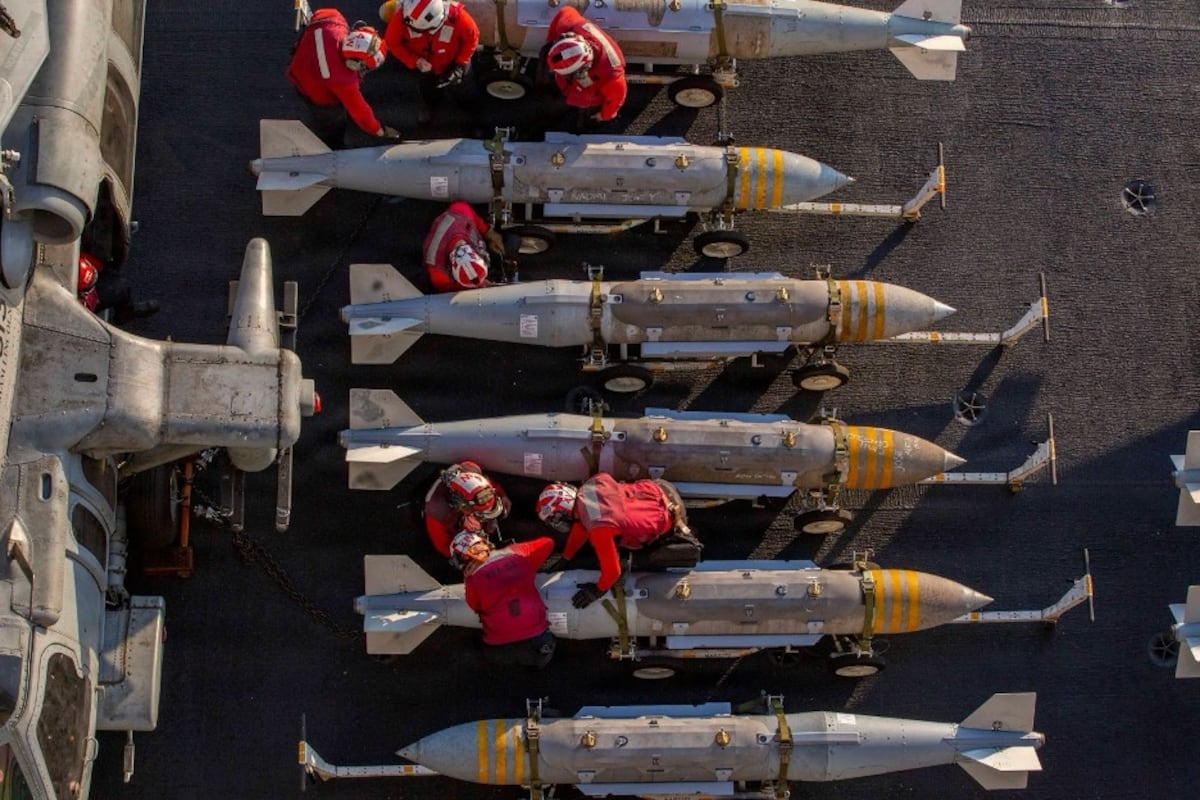
U.S. sailors partook in a time-honored tradition of writing messages or their own names on bombs loaded onto planes during Operation Epic Fury.
Sailors aboard the USS Abraham Lincoln marked the ordnances they helped prepare for the mission, according to recent photos posted by the U.S. Central Command. Task & Purpose senior editor Matt White was first to notice the trend.
The photos show ordnances — which appear to be GBU-31s, a 2,000-pound class Joint Direct Attack Munition — being staged on Feb. 28 by red-vested aviation ordnancemen prior to being loaded onto strike fighter aircraft in support of Operation Epic Fury, according to CENTCOM photos.
It is unclear if the ordnancemen seen in the photos are those with their names on the bombs.
On the tails, noses and sides of the bombs, names and messages are scribbled in chalk and marker.
While visible names include “Jose,” “Alex,” “Naomi,” “Joey” messages written in smaller script and on the tails are less visible.
But messages of bravado inscribed on bombs, missiles and other munitions are nothing new.
A lead sling bullet, now housed at The British Museum , can be seen with the tongue-in-cheek inscription of DEXAI or “Catch!” in Greek.
Historian John McCaul in " On Inscribed Sling-Bullets ," notes that slings and lead bullets were frequently employed during sieges with town names and deities also inscribed on the projectiles.
The more ironic ones have stood the test of time, with zingers like the one found near the city of Argos, Greece, with the inscription “Bite it in vain” — aka the ancient equivalent to the idiom “This is a hard nut to crack.”
In 1945, the atomic bomb “Fat Man” was dropped by the U.S. at Nagasaki, Japan, and photos of its assembly show that names and messages were etched into the atomic bomb by people involved in its creation. Norman Ramsey, a physicist and member of the Manhattan Project, can be seen signing his name on “Fat Man” prior to its polar cap being placed on.
Photos from the National Museum of the U.S. Navy shows messages on the atomic bomb, like “Here’s to you” and “Lots of love.”
This action can be seen throughout history and is still prevalent today for many countries’ military members.
In 2015, Jordanian pilots used chalk to write messages on missiles headed for Syria vowing to eliminate the Islamic State. The messages included quotes from the Quran and statements meant for its target: “For you, the enemies of Islam,” according to BBC reporting at the time.
More recently, Ukrainian artillerymen have been writing messages on rockets, mortar shells or explosive drones used during the war in Ukraine as a way to symbolically voice their anger . Charity groups and even the military itself have capitalized on this idea by using this as a way to raise funds, per New York Times reporting.
While such expressions may appear infantile bordering on the obscene, the impulse to personalize weapons of war taps into, according to an American pilot who served in Vietnam , “the very primitive magical notion that, once you have named something, you have control over it.”
Cristina Stassis is a reporter covering stories surrounding the defense industry, national security, military/veteran affairs and more. She previously worked as an editorial fellow for Defense News in 2024 where she assisted the newsroom in breaking news across Sightline Media Group.
在“史诗狂怒行动”中,美国水兵们遵循一项由来已久的传统,在装载到飞机上的炸弹上写下信息或自己的名字。
根据美国中央司令部最近发布的照片,林肯号航空母舰上的水兵们在他们参与准备的任务用弹药上做了标记。Task & Purpose 高级编辑马特·怀特最先注意到了这一现象。
根据中央司令部照片显示,2月28日,身穿红色背心的航空军械员正在将弹药(看起来像是GBU-31,一种2000磅级的联合直接攻击弹药)装载到攻击战斗机上,以支援“史诗狂怒行动”。
目前尚不清楚照片中出现的军械兵是否就是那些在炸弹上刻有名字的人。
炸弹的尾部、头部和侧面都用粉笔和记号笔潦草地写着名字和信息。
虽然可见的名字包括“Jose”、“Alex”、“Naomi”、“Joey”,但用较小字体写在尾巴上的信息不太容易被看到。
但是,在炸弹、导弹和其他弹药上刻上炫耀武力的标语并非新鲜事。
现藏于大英博物馆的一颗铅弹弓子弹上刻有略带讽刺意味的希腊文铭文“DEXAI”,意为“抓住!”。
历史学家约翰·麦考尔在《论刻有铭文的投石子弹》一文中指出,投石索和铅弹在围攻期间经常被使用,子弹上还刻有城镇名称和神灵的名字。
更具讽刺意味的那些经受住了时间的考验,例如在希腊阿尔戈斯城附近发现的一块刻有“徒劳地咬它”字样的石头——也就是古代“这是个难啃的硬骨头”的另一种说法。
1945年,美国在日本长崎投下了原子弹“胖子”。组装照片显示,参与原子弹制造的人员在弹体上刻下了姓名和留言。照片中可以看到,物理学家、曼哈顿计划成员诺曼·拉姆齐在“胖子”安装极盖之前,正在上面签名。
美国海军国家博物馆的照片显示,原子弹上刻有“敬你一杯”和“满满的爱”等字样。
这种行为在历史上屡见不鲜,至今在许多国家的军人中仍然普遍存在。
2015年,约旦飞行员用粉笔在飞往叙利亚的导弹上写下誓言要消灭伊斯兰国的信息。这些信息包括《古兰经》经文和针对目标的宣言,例如“为了你们,伊斯兰的敌人”,据当时的BBC报道。
据《纽约时报》报道,最近,乌克兰炮兵开始在战争中使用的火箭弹、迫击炮弹或爆炸无人机上书写信息,以此象征性地表达他们的愤怒。慈善团体甚至军方本身也利用了这一做法来筹集资金。
虽然这种表达方式可能显得幼稚,甚至近乎猥亵,但据一位曾在越南服役的美国飞行员所说,将战争武器个性化的冲动源于“一种非常原始的魔法观念,即一旦你给某物命名,你就能控制它”。
克里斯蒂娜·斯塔西斯是一位记者,主要报道国防工业、国家安全、军事/退伍军人事务等领域的新闻。她曾于2024年在《防务新闻》担任编辑助理,协助Sightline媒体集团旗下新闻编辑室处理突发新闻。