Flights delayed and passengers deboarded after subsidence under China Airlines jet at Suvarnabhumi素万那普机场中华航空飞机下方发生地面沉降,导致航班延误,乘客被要求下机。
Airport nightmare in Bangkok. A China Airlines Boeing 737-800 gets stuck in sinking pavement for nearly four hours. Five flights are hit, 116 passengers evacuated… Read More ›
新闻视频
October 29, 2026 at 9:34 pm
in Economy , Living , Media , Politics , Thailand
A China Airlines passenger jet sank into collapsing pavement at Bangkok’s Suvarnabhumi Airport on Wednesday night, trapping the aircraft for nearly four hours. All 116 passengers were evacuated as five flights faced disruption. By Thursday, officials blamed heavy rainfall and rising groundwater. However, the incident has revived serious questions about Thailand’s ฿120 billion airport, opened in 2006. Runway cracks in 2007 and major subsidence in 2012 had already exposed infrastructure problems. Now, aviation regulators have ordered sweeping inspections of runways and taxiways. The fresh failure comes as Airports of Thailand prepares another ฿210 billion expansion, including a fourth runway.
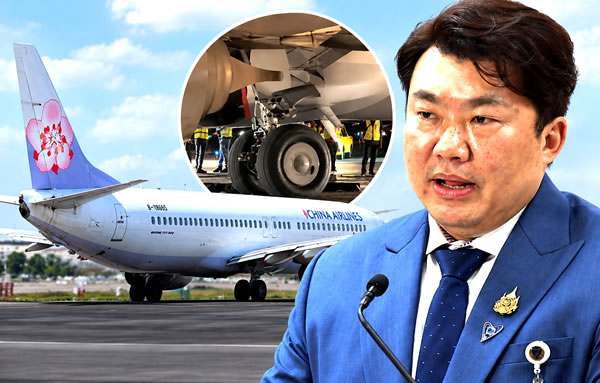
A China Airlines jet sank into Suvarnabhumi Airport pavement, disrupting five flights. All 116 passengers were evacuated. Deputy Transport Minister Siripong Angkasakulkiat responded as the incident revived concerns over past runway failures and a planned ฿210 billion expansion. ( Source: Matichon )
A China Airlines passenger jet became trapped in a subsiding runway surface at Bangkok’s Suvarnabhumi Airport on Wednesday evening. The emergency disrupted five flights and forced the evacuation of 116 passengers.
Recovery crews then spent nearly four hours freeing the Boeing 737-800. By Thursday, airport authorities blamed heavy rainfall and rising groundwater for weakening the pavement. The incident has revived scrutiny of Thailand’s principal international airport, built for approximately ฿120 billion before opening in 2006.
Similar pavement failures struck in 2007 and 2012, despite extensive repairs and subsequent infrastructure investment. Aviation regulators have since ordered wider inspections as Airports of Thailand (AOT) advances further expansion plans exceeding ฿210 billion.
China Airlines jet sinks into damaged Suvarnabhumi pavement as crews evacuate 116 passengers safely
The incident occurred at approximately 7.25 pm on Wednesday, 28 October, at Suvarnabhumi Airport in Samut Prakan province. China Airlines flight CI840 was preparing to depart for Kaohsiung International Airport in Taiwan.
The Boeing 737-800, registered B-18665, was approaching runway 02R through taxiway E21. However, the pavement beneath its main landing gear deteriorated. The wheels sank into the damaged surface, leaving the jet immobilised. As a result, other aircraft were unable to proceed normally towards their departure runway.
Photographs circulated by aviation monitoring page Outsider’s Aviation showed the aircraft stranded on the pavement. Its main landing gear was trapped in the damaged surface. Airport authorities immediately deployed firefighters, rescue personnel, maintenance engineers and specialist recovery teams.
At the same time, ground crews brought heavy equipment and recovery vehicles to the scene. The aircraft was carrying 116 passengers and eight crew members. Airport officials began transferring passengers to the terminal at 9.02 pm.
Within 14 minutes, all 116 passengers had been evacuated safely. Yet the aircraft remained immobilised as engineers continued their recovery operation. Crews worked to release the landing gear from the damaged pavement without causing further damage. Finally, at approximately 11.10 pm, engineers freed the Boeing 737-800.
Five flights disrupted as stranded China Airlines aircraft blocks taxiway and forces flight diversions
The aircraft had remained trapped for nearly four hours. Initial examinations found no damage to the aircraft. Nevertheless, China Airlines arranged additional technical inspections before returning the jet to service.
The runway obstruction also disrupted four other departures. Ground crews had to redirect aircraft already approaching the affected area. The Ministry of Transport identified five flights affected by the incident.
They included services operated by China Airlines, Thai Vietjet, Thai Airways and China Southern Airlines. Thai Vietjet flight TVJ2308 was scheduled to depart for Phuket. The ministry identified its aircraft as a Boeing 737-800. Separately, Thai Airways flight TG349 was bound for Islamabad, Pakistan, using an Airbus A350-900.
China Southern Airlines flight CZ364 was preparing to depart for Guangzhou, China, using an Airbus A321neo. Thai Airways flight TG317, bound for Mumbai, India, was also affected. That service was operating a Boeing 777-200.
All four aircraft were unable to continue along their intended taxiway routes. Consequently, ground personnel moved them backwards individually using aircraft towing vehicles. The manoeuvres allowed the aircraft to take alternative routes towards runway 02L. The operation delayed departures while recovery teams remained at the damaged section.
According to the Ministry of Transport, the disruption delayed affected flights by approximately two hours. The five services were not all cancelled. China Airlines, however, faced a longer interruption.
Its Kaohsiung departure was postponed until Thursday morning. The airline cited the damaged airport pavement and restrictions on night-time operations at Kaohsiung International Airport. Accordingly, passengers received hotel accommodation, meals and ground transport. The airline subsequently arranged onward departures beginning Thursday morning.
Airport officials blame heavy rainfall and groundwater after aircraft becomes trapped near runway
In parallel, Aeronautical Radio of Thailand coordinated aircraft movements with AOT. Controllers redirected departures through alternative taxiways and runways. Deputy Transport Minister Siripong Angkasakulkiat said officials had contained the disruption.
He also reported that further significant delays had been prevented. Even so, the incident temporarily obstructed operations at Thailand’s principal international aviation gateway. Suvarnabhumi handles long-haul international flights, regional services, domestic operations and substantial cargo traffic. Its runways regularly accommodate aircraft considerably larger than the stranded China Airlines jet.
The Boeing 737-800 is a standard narrow-body commercial aircraft. By comparison, Suvarnabhumi routinely handles heavy wide-body passenger jets and cargo aircraft. The failure therefore focused attention on the condition of pavement supporting ordinary commercial aircraft operations.
On Thursday, airport authorities issued an explanation identifying exceptionally heavy rainfall as a factor behind the subsidence. According to AOT, accumulated surface water and rising groundwater levels had weakened parts of the airport’s operating surfaces. The pavement subsequently failed beneath the China Airlines aircraft, trapping its main landing gear.
The explanation placed groundwater and drainage conditions at the centre of the investigation. Suvarnabhumi was constructed on former marshland east of Bangkok.
Accordingly, extensive ground preparation and drainage infrastructure formed essential parts of its original development. The site required specialised engineering to support heavy aircraft, terminal buildings and other aviation facilities.
Engineers reopen runway after overnight repairs as aviation regulator orders wider safety checks
The latest incident again exposed pavement deterioration as an operational problem two decades after the airport opened. Deputy Transport Minister Siripong said officials were examining the wider condition of the airport’s infrastructure. Their investigation also covers whether substantial repairs are necessary.
Throughout Wednesday night, airport engineers worked to restore the damaged section. According to AOT’s official statement, runway 02R/20L reopened at 6.30 am on Thursday, 29 October. The reopening followed emergency repairs and safety inspections.
Later, Deputy Prime Minister and Transport Minister Phiphat Ratchakitprakarn described additional checks on the affected pavement. His Thursday statement referred to further surface-density inspections near taxiway E21. He also identified approximately 6 pm as the target for reopening the affected section.
The statements described different stages and schedules for restoring operations. AOT reported that the runway had reopened early Thursday. By contrast, the minister referred to further verification work later that day. The Civil Aviation Authority of Thailand (CAAT) also ordered broader inspections of the airport’s infrastructure.
The regulator directed attention towards runways, taxiways and aircraft parking areas. Furthermore, it recommended non-destructive inspection technology to assess pavement conditions without extensive drilling or excavation.
Suvarnabhumi faces renewed scrutiny over runway cracks and groundwater problems first reported in 2007
Such equipment can identify deterioration beneath airport surfaces, including moisture-related weaknesses and defects affecting supporting layers. The investigation therefore extends beyond the pavement damaged beneath the China Airlines aircraft.
Inspectors will assess whether other operating surfaces require additional engineering examinations or repairs. Notably, the incident follows earlier pavement problems during Suvarnabhumi’s 20-year operating history. The airport officially opened on 28 September 2006. Its development followed years of construction, delays, political controversy and substantial expenditure.
The original project represented an investment of approximately ฿120 billion, although subsequent cost estimates and adjustments varied. Suvarnabhumi was intended to provide Thailand with a modern international aviation hub.
Its infrastructure was designed to accommodate heavy commercial aircraft and growing passenger traffic. Construction required extensive drainage systems, ground preparation and specialised pavement engineering. Despite that investment, serious problems emerged within months of the airport opening.
In early 2007, engineers investigated approximately 100 cracks affecting runways and taxiways. Reports at the time linked some damage to underground water seepage.
Investigators also examined construction materials, engineering design and workmanship. The defects attracted considerable attention because the airport had only recently entered commercial service. Contemporary reports described damage affecting approximately 78,000 square metres of runway, taxiway and related surfaces.
Repair estimates ranged from ฿300 million to ฿500 million. In response, AOT faced questions about responsibility for the repairs. The extent of insurance coverage also became an issue. An investigation led by engineer Tortrakul Yomnak concluded that much of the damage was superficial.
Previous runway subsidence in 2012 disrupted 200 aircraft movements and forced 11 flight diversions
Nonetheless, the episode established an early history of pavement deterioration and groundwater concerns at Suvarnabhumi. The latest failure has returned attention to those findings. In both cases, water beneath or around airport pavement featured in explanations of the deterioration.
The incidents, however, occurred nearly two decades apart. The earlier findings do not establish an identical engineering cause. Suvarnabhumi subsequently experienced another serious runway subsidence incident in July 2012. On that occasion, a section of the western runway sank by five centimetres.
The affected area measured approximately 60 centimetres by 60 centimetres. Despite its relatively small size, the damage caused widespread disruption. Approximately 200 aircraft movements were affected, while 11 aircraft were diverted to other airports. The diversions included flights redirected to Don Mueang, U-Tapao and Chiang Mai.
Airport management attributed the 2012 problem to normal wear and tear. Airline representatives, however, questioned the quality of construction materials and engineering techniques used. The Airline Operators Committee subsequently called for thorough inspections to prevent further disruption.
The 2012 incident involved the western runway, which had experienced heavy use. Wednesday’s failure occurred near runway 02R, the former western runway redesignated after the introduction of the third runway.
The latest incident therefore places renewed attention on the condition of Suvarnabhumi’s original airfield infrastructure. Since opening, the airport has undergone substantial expansion. Billions of baht have been invested in additional aviation facilities. AOT has developed new passenger infrastructure, aircraft facilities and runway capacity.
Airport expansion adds third runway as Thailand advances further investment exceeding ฿210 billion
The SAT-1 satellite terminal formed a major part of the expansion programme. Its development increased the airport’s capacity to accommodate passengers and aircraft. Further investment included construction of a third runway, which officially entered service on 1 November 2024.
The new runway measures 4,000 metres and lies west of the original airfield. It was designed to increase potential aircraft-handling capacity from 68 to 94 movements per hour. Earlier AOT plans placed the investment at approximately ฿21.8 billion. Later project estimates were higher.
The additional runway increased operational flexibility by providing another route for aircraft movements. That capacity became relevant during Wednesday’s disruption. Other aircraft were redirected towards runway 02L while recovery crews worked near runway 02R. On another front, further expansion proposals have become considerably more ambitious.
In 2026, the Thai government reported that AOT was advancing a development programme exceeding ฿210 billion. The proposals include a new South Terminal and further development of the airport’s eastern facilities. They also envisage a fourth runway and substantially greater passenger-handling capacity.
The programme forms part of efforts to expand Suvarnabhumi’s role as a regional aviation hub. Yet the airport’s underlying ground conditions remain an important element of the proposed developments. AOT has explicitly acknowledged that Suvarnabhumi was constructed on former swamp land vulnerable to subsidence.
South Terminal plans include ground improvements as engineers examine airport pavement weaknesses
Accordingly, the proposed South Terminal includes an initial phase devoted to ground improvement and foundation preparation. These works address engineering requirements associated with constructing major facilities on the site. The latest pavement failure has returned attention to groundwater management and the structural strength of existing airport surfaces.
Airport runways and taxiways consist of layered structures designed to distribute heavy aircraft loads. Their performance depends on surface strength and the condition of supporting materials.
The stability of the underlying ground is equally important. In addition, drainage systems protect pavement structures from excessive moisture. When water accumulates beneath pavement, supporting materials can lose strength. Repeated aircraft movements can then contribute to deformation, cracking or localised subsidence. Heavy rainfall and rising groundwater can increase these pressures.
The effects depend on pavement condition, drainage performance and the strength of underlying materials. AOT identified rainfall and groundwater as factors in Wednesday’s incident.
Against that background, CAAT’s wider inspection order places additional attention on the airport’s structural condition. Engineers will examine the affected pavement and its supporting layers. The investigation also covers nearby operating surfaces. Drainage performance near runway 02R and taxiway E21 forms part of the engineering assessment.
Maintenance records and pavement strength face scrutiny after runway failure disrupts departures
Previous maintenance and inspection records are relevant to establishing the history of the affected pavement. The investigation will determine whether the damaged section requires more extensive repairs.
Meanwhile, officials must assess the structural strength of the repaired surface before determining further engineering requirements. Substantial reconstruction would involve additional work and operational coordination. Any major repairs would also need scheduling around aircraft movements to limit disruption.
The incident has already demonstrated the commercial consequences of an unexpected runway obstruction. Aircraft delays can affect fuel consumption, ground handling, crew schedules and subsequent flights.
Airlines may also incur accommodation, meal and transport costs when passengers face overnight delays. China Airlines incurred those obligations after postponing flight CI840. Additionally, the carrier arranged technical examinations of the recovered aircraft. AOT was responsible for restoring the affected pavement and coordinating the safe resumption of operations.
Air traffic authorities, meanwhile, redirected other departures through alternative routes. The incident demonstrated how damage affecting a limited section of pavement can disrupt several flights. It also highlighted the operational importance of alternative taxiways and additional runway capacity.
Transport Minister Phiphat’s intervention placed the investigation under direct government scrutiny. CAAT subsequently widened the examination to include other parts of the airport’s airfield infrastructure. The regulator’s recommended technology can identify subsurface weaknesses that ordinary visual inspections might miss.
Officials consider further repairs as fresh runway incident revives two decades of pavement concerns
Separately, Deputy Transport Minister Siripong directed attention towards the possibility of more extensive repairs. The findings will determine the damage’s extent and the engineering work required. The investigation comes almost exactly 20 years after Suvarnabhumi began commercial operations.
During that period, the airport has received substantial additional investment and undergone major expansion. Its original infrastructure, however, has also experienced several documented pavement failures.
The first major problems emerged within months of opening in 2006. Engineers subsequently investigated approximately 100 cracks during 2007. Five years later, runway subsidence disrupted approximately 200 aircraft movements and forced 11 diversions.
This week, another pavement failure immobilised a commercial passenger aircraft and disrupted five departures. The latest incident involved a Boeing 737-800 operating a routine international service to Taiwan. Its main landing gear sank into the pavement while approaching runway 02R through taxiway E21.
The aircraft remained trapped for nearly four hours. During that period, 116 passengers were evacuated and other departures were redirected. Emergency crews eventually recovered the aircraft shortly after 11 pm Wednesday. By Thursday morning, AOT had reported the runway reopened following repairs and safety checks.
Further inspections were then ordered as officials examined the damaged surface and surrounding infrastructure. CAAT has extended its attention to runways, taxiways and aircraft parking areas.
Investigation into runway subsidence continues as airport pursues major expansion and further repairs
The investigation will examine pavement strength, groundwater conditions and the extent of any additional deterioration. In parallel, AOT continues preparing major expansion projects, including the proposed South Terminal and fourth runway.
Those developments follow billions of baht already invested in Suvarnabhumi since its opening. The airport’s original construction cost approximately ฿120 billion. Further projects have added new terminals, aviation facilities and runway capacity.
The latest incident adds another pavement failure to a history extending from 2007 through 2012 and into 2026. The immediate emergency ended with the safe evacuation of passengers and recovery of the China Airlines aircraft.
Airport operations subsequently resumed while authorities arranged further engineering examinations. CAAT’s findings and AOT’s assessments will determine the extent of any additional repairs.
The results will also establish whether the damaged section requires permanent reconstruction or further maintenance work. Twenty years after Suvarnabhumi opened, the investigation has again centred on the condition of its original operating surfaces. This time, the failure trapped an international passenger aircraft, disrupted five departures and triggered another examination of Thailand’s principal airport.
Thai Airways now says baggage failure was five times worse than admitted. Board orders compensation
Thai Airways boss fired by the board chaired by Finance Ministry chief on Friday over baggage crisis
Business leaders pile pressure on Thai Airways over vital air cargo artery for the kingdom’s exports to the world
Government takes a stronger hand as Thai Airways crisis at Suvarnabhumi Airport worsened Wednesday
Thai Airways admits it got it wrong as Suvarnabhumi Airport public areas are swamped by a baggage flood
Thai Airways CEO apologises for ongoing flooding crisis issues with defective carts and delayed flights
Military operations are expanded at Suvarnabhumi Airport as crisis is still not brought under control
Tourism minister directs acute airport baggage crisis caused by workers who failed to turn up for shifts
Royal Thai Army deployed to Suvarnabhumi Airport after baggage chaos gets the better of exhausted staff
Bangkok airports open and flights running but there are delays and baggage issues at Suvarnabhumi
Flooding tragedy in Samut Prakan near Bangkok. Two die from electrocution after family car is submerged
Engineers work through night after Sunday’s fire on Bangkok’s Blue Line saw more damage than thought
State Railway company brings charges against private drivers linked to last Saturday’s Bangkok train disaster
Police to review 58 rail crossings after 8 people died in train bus smash. Train driver had a drug habit
Arrested man linked with Chatuchak building collapse now tells police he is a Chinese state employee
Joseph Anthony is an expat from Ireland who has lived in Thailand for the last decade. He has worked extensively in the media including editorial positions in Ireland and Thailand. He is focused on economic and business stories in Thailand as well as the expat lifestyle.
All posts by Joseph O' Connor
Thailand falls behind Southeast Asian peers in race to build more flight connections as tourism fades October 24, 2026 High-season alarm for Thailand as direct international
Israeli woman on Koh Phangan faces deportation after her visa was revoked. Rising diplomatic tensions October 24, 2026 Israeli woman, 33, faces visa cancellation on Koh
American YouTuber brutally attacked robbed and beaten outside a Pattaya bar by two ‘foreign’ assailants October 22, 2026 American YouTuber Chris Barnes exposes a grim Pattaya
Prime Minister Anutin pushes a hard line on narcotics suppression which will jail even more yaba users October 22, 2026 Thailand’s drug crisis sees Anutin act with new
Departures tax to be axed as Thailand’s hotel sector reels from a debt crisis linked with the Covid era October 22, 2026 Revolt puts Thailand’s ฿1,000 departure tax in
12 properties raided, 85 people charged after Pattaya police raids linked to the illegal foreign ownership crackdown October 21, 2026 Police target ฿800 million in Pattaya property
Controversy on two wheels rages in Pattaya as city’s mototaxi drivers switch to blue vests from orange October 21, 2026 Blue replaces orange for 5,281 Pattaya motorcycle taxi
Queen Suthida meets the Emperor and Empress of Japan on a visit promoting international women’s ice hockey October 21, 2026 Queen Suthida meets Japan’s Emperor Naruhito and
Men accused of murdering Russian siblings in July plead guilty to all counts in Pattaya including rape October 20, 2026 Death penalty looms for two Thai men after guilty
Tourism industry shaken by the latest Chinese warning coming from its diplomatic missions in Thailand October 20, 2026 China warns its citizens of abductions and trafficking
PM orders hands off land and property by foreigners as enforcement to be moved ahead by December October 20, 2026 Anutin puts thousands of suspected foreign land
Chinese and Vietnamese links probed in police open files on nightlife activities in Bangkok and Rayong October 19, 2026 Police storm a karaoke bar at 4 am, arresting 13
Nigerian cocaine gang arrested after strict crackdown orders from the Immigration Bureau chief Big Nop October 18, 2026 Bangkok cocaine sting leads police from a dealer to a
Midnight raids in Rayong on karaoke clubs fronting for prostitution see local police chief sidelined pending enquiries October 17, 2026 Four unlicensed KTV clubs serving Chinese customers
American company director arrested in Bangkok Thursday for failing to over a million baht in wages October 17, 2026 Nearly four months after a court issued its first
Pheu Thai leadership assures PM of support in the No Conference debate and vote at the end of October October 17, 2026 Pheu Thai chiefs promise Anutin all 71 MPs to defeat a
Justice Ministry boss reveals ‘Black Research’ aimed at High School students. 3,000 sexual abuse images October 16, 2026 Schoolboys aged 15–17 were tricked into supplying
Prime Minister in a spot as no confidence debate looks like it’s being stalled or postponed in parliament October 24, 2026
PM calls police chief and orders preparations to make sure Thailand is not subject to French like rioting October 22, 2026
Pledges on investment are up but Foreign Direct Investment for the first six months is down nearly 5% October 22, 2026
Frenchman arrested by Immigration. Officer spotted him on Interpol wanted list for drug trafficking October 22, 2026
Drunk woman stripped naked on a Pattaya public street Tuesday night hurling abuse. Arrested by police October 21, 2026
Former top Democrat Party aide and MP met DSI over Bhumjaithai MP’s husband’s links to online gambling October 21, 2026
Row over handling of two online gambling cases related to MPs. Questions of jurisdiction and fair play October 21, 2026
German family members injured in Phuket after app based taxi driver lost control of car looking at GPS October 20, 2026
Bhumjaithai MP and her husband answer questions of the elite DSI police over links to online gambling October 20, 2026
Hellish battle with UK Home Office for Brit seeking to bring Burmese fiancée and son home for Christmas October 20, 2026
7kg heroin in drink sachets bound for Australia found in a Samut Prakan premises after police tip off October 19, 2026
Much loved Robocop, a popular figure in Nonthaburi near Bangkok dies in a tragic road traffic accident October 19, 2026
Thai star Nene Royal faces trademark headaches in Thailand and South Korea as she secures her fortune October 18, 2026
Six dead in deadly clashes in Southern Thailand including a policeman killed on National Police Day October 17, 2026
Underfire southern MP says Prime Minister Anutin telephoned her and urged her to post a selfie online October 17, 2026
Prime Minister cock a hoop as IMF World Bank meet ends in Bangkok. Insists Thailand’s standing has risen October 17, 2026
Departures tax pushed by the Ministry of Finance is the death kiss for the tourist sector say top execs October 16, 2026
US Bangkok broadside to the IMF and the World Bank delivered by Scott Bessent who snubbed the meeting October 16, 2026
Friday protests by anti IMF World Bank activists continue after overnight camp event in central Bangkok October 16, 2026
Air hostess linked to international trafficking ring smuggling Chinese nationals in and out of Thailand October 16, 2026
Protests at the IMF World Bank meetings turn violent but Bangkok police deny being heavy handed October 15, 2026
Bhumjaithai Party Southern MP facing political strain as questions grow about her husband’s online fortune October 15, 2026
© 2026 Thai Examiner. All rights reserved.
2026年10月29日晚上9:34
经济、生活、媒体、政治、泰国
周三晚间,一架中华航空公司的客机在曼谷素万那普机场滑行时,因跑道路面塌陷而下沉,被困近四个小时。机上116名乘客全部安全撤离,导致五个航班受到影响。周四,官方将事故归咎于强降雨和地下水位上升。然而,此次事故再次引发了人们对这座耗资1200亿泰铢、于2006年启用的泰国机场的严重质疑。早在2007年跑道出现裂缝以及2012年发生严重地面沉降,就已暴露出该机场的基础设施问题。如今,航空监管机构已下令对跑道和滑行道进行全面检查。此次事故发生之际,泰国机场管理局正准备进行另一项耗资2100亿泰铢的扩建工程,其中包括修建第四条跑道。
一架中华航空公司的客机在素万那普机场滑入跑道,导致五个航班延误。机上116名乘客全部安全撤离。交通部副部长西里蓬·昂卡萨库尔基亚特就此事作出回应,该事件再次引发了人们对机场以往跑道故障以及计划投资2100亿泰铢扩建项目的担忧。(来源:Matichon)
周三晚间,一架中华航空公司的客机在曼谷素万那普机场遭遇跑道下沉,被困跑道内。此次紧急情况导致五个航班延误,116名乘客被迫疏散。
救援人员随后花了近四个小时才将这架波音737-800飞机解救出来。周四,机场当局将事故归咎于暴雨和地下水位上升导致路面松动。此次事故再次引发了人们对泰国主要国际机场的关注,该机场于2006年启用,耗资约1200亿泰铢。
尽管进行了大规模维修和后续基础设施投资,类似的路面损坏事件仍在2007年和2012年发生。随着泰国机场管理局(AOT)推进超过2100亿泰铢的进一步扩建计划,航空监管机构已下令进行更广泛的检查。
中华航空一架客机在素万那普机场受损路面上沉入,机组人员安全疏散了116名乘客。
事件发生在10月28日星期三晚上7点25分左右,地点位于泰国北榄府素万那普机场。中华航空CI840航班当时正准备飞往台湾高雄国际机场。
注册号为B-18665的波音737-800客机正经由E21滑行道接近02R跑道。然而,其主起落架下方的路面突然损坏,导致轮子陷入受损路面,飞机无法继续飞行。受此影响,其他飞机也无法正常滑行至起飞跑道。
航空监测网站Outsider's Aviation发布的照片显示,这架飞机搁浅在人行道上,主起落架被困在受损的路面中。机场当局立即部署了消防员、救援人员、维修工程师和专业救援队。
与此同时,地面工作人员将重型设备和救援车辆运抵现场。飞机上载有116名乘客和8名机组人员。机场工作人员于晚上9点02分开始安排乘客前往航站楼。
14分钟内,机上116名乘客全部安全撤离。然而,飞机仍然无法移动,工程师们继续进行救援作业。工作人员努力将起落架从受损的路面上解脱出来,同时避免造成进一步损坏。最终,大约晚上11点10分,工程师们成功解救了这架波音737-800飞机。
中华航空飞机滞留堵塞滑行道,导致五架航班延误或取消,迫使航班改道。
飞机被困近四个小时。初步检查显示飞机未受损。尽管如此,中华航空公司还是安排了额外的技术检查,之后才让这架飞机恢复运营。
跑道阻塞还影响了另外四个航班的起飞。地勤人员不得不重新引导已接近受影响区域的飞机。交通部确认了受此次事件影响的五个航班。
其中包括中华航空、泰国越捷航空、泰国航空和中国南方航空运营的航班。泰国越捷航空TVJ2308航班原计划飞往普吉岛。交通部确认该航班使用的机型为波音737-800。此外,泰国航空TG349航班原计划使用空客A350-900飞往巴基斯坦伊斯兰堡。
中国南方航空CZ364航班原计划使用空客A321neo客机执飞广州航线。泰国航空TG317航班也受到影响,该航班原计划飞往印度孟买,由波音777-200客机执飞。
四架飞机均无法继续沿预定滑行道滑行。因此,地面人员使用飞机牵引车将它们逐一后移。这些操作使飞机能够选择其他路线飞往02L跑道。由于救援队仍在受损区域作业,此次行动导致航班延误。
据交通运输部消息,此次航班延误导致受影响航班延误约两小时。五趟航班并非全部取消,但中华航空的航班延误时间较长。
原定于高雄起飞的航班被推迟至周四上午。航空公司解释说,高雄国际机场路面受损,且夜间运营受到限制。因此,航空公司为乘客安排了酒店住宿、餐饮和地面交通。随后,航空公司安排了从周四上午开始的后续航班。
机场官员将飞机被困跑道附近的事故归咎于强降雨和地下水。
与此同时,泰国航空无线电公司与泰国空中交通管制局(AOT)协调飞机运行。管制员引导飞机改道使用备用滑行道和跑道起飞。交通部副部长西里蓬·昂卡萨库尔基亚特表示,官员们已控制住了此次混乱局面。
他还报告说,已避免了进一步的重大延误。即便如此,此次事件仍暂时阻碍了泰国主要国际航空门户的运营。素万那普机场承担长途国际航班、区域航线、国内航班以及大量的货运业务。其跑道通常可容纳比滞留的中华航空客机大得多的飞机。
波音737-800是一款标准的窄体商用飞机。相比之下,素万那普机场通常起降的是重型宽体客机和货机。因此,此次事故引发了人们对支撑普通商用飞机起降的跑道状况的关注。
周四,机场当局发布解释,指出异常强降雨是造成地面沉降的原因之一。据机场运营公司(AOT)称,地表积水和地下水位上升导致机场部分路面结构松动。随后,中华航空飞机下方的路面发生塌陷,导致其主起落架被困。
该解释将地下水和排水状况置于调查的核心位置。素万那普机场建于曼谷东部一片曾经的沼泽地上。
因此,大规模的场地平整和排水基础设施建设是其最初开发的重要组成部分。该场地需要专门的工程设计来支撑重型飞机、航站楼和其他航空设施。
经过一夜的维修,工程师们重新开放了跑道,与此同时,航空监管机构下令进行更广泛的安全检查。
最新发生的这起事故再次暴露了机场启用二十年来路面老化这一运营问题。交通部副部长西里蓬表示,官员们正在对机场基础设施的整体状况进行调查,调查内容还包括是否需要进行大规模维修。
周三晚间,机场工程师一直在努力修复受损路段。根据奥克兰机场管理局(AOT)的官方声明,02R/20L跑道于10月29日(周四)早上6点30分重新开放。此次重新开放是在完成紧急维修和安全检查之后进行的。
随后,副总理兼交通部长皮帕·拉差吉帕卡恩表示,将对受影响的路面进行进一步检查。他在周四的声明中提到,将在E21滑行道附近进行进一步的路面密度检测。他还表示,预计将于下午6点左右重新开放受影响路段。
声明中描述了恢复运营的不同阶段和时间表。泰国机场管理局(AOT)报告称,跑道已于周四早些时候重新开放。但与此同时,部长在当天晚些时候提到需要进行进一步的核查工作。泰国民航局(CAAT)也下令对机场基础设施进行更广泛的检查。
监管机构重点关注跑道、滑行道和飞机停机坪。此外,它还建议采用无损检测技术来评估路面状况,而无需进行大规模钻探或挖掘。
素万那普机场因跑道裂缝和地下水问题再次受到审查,这些问题最早于2007年被报道。
此类设备可以识别机场路面下方的劣化情况,包括与潮湿相关的薄弱点和影响支撑层的缺陷。因此,调查范围不仅限于中华航空飞机下方受损的路面。
检查人员将评估其他运行路面是否需要进行额外的工程检查或维修。值得注意的是,此次事故是素万那普机场20年运营历史中首次出现路面问题。该机场于2006年9月28日正式启用。其建设历经多年,期间经历了延误、政治争议和巨额支出。
最初的项目投资额约为1200亿泰铢,但后续的成本估算和调整有所不同。素万那普机场旨在为泰国提供一个现代化的国际航空枢纽。
其基础设施的设计旨在满足大型商用飞机和日益增长的客运量需求。建设过程中需要庞大的排水系统、场地平整和专业的路面工程。尽管投入了如此巨资,机场启用几个月后就出现了严重问题。
2007年初,工程师们调查了大约100处影响跑道和滑行道的裂缝。当时的报告将部分损坏与地下水渗漏联系起来。
调查人员还检查了建筑材料、工程设计和施工工艺。由于该机场刚刚投入商业运营不久,这些缺陷引起了广泛关注。当时的报道显示,跑道、滑行道及相关地面受损面积约达7.8万平方米。
维修费用估算在3亿至5亿泰铢之间。对此,泰国机场管理局(AOT)面临着关于其维修责任的质疑。保险覆盖范围也成为争议焦点。由工程师托特拉库尔·约姆纳克(Tortrakul Yomnak)领导的调查得出结论,大部分损坏仅为表面损伤。
2012年曾发生的跑道沉降事故导致200架次飞机起降中断,并迫使11架次航班改道。
然而,这起事件揭示了素万那普机场路面老化和地下水问题的早期历史。最近发生的事故再次引发了人们对这些问题的关注。在这两起事故中,机场路面下方或周围的水都是造成路面老化的原因之一。
然而,这两起事件相隔近二十年。早期的调查结果并未发现相同的工程原因。素万那普机场随后在2012年7月再次发生严重的跑道沉降事件。当时,西侧跑道的一部分下沉了5厘米。
受损区域面积约为60厘米×60厘米。尽管面积相对较小,但此次事故造成了广泛的混乱。约200架次航班受到影响,另有11架次航班改道飞往其他机场。改道航班包括飞往廊曼机场、乌塔堡机场和清迈机场的航班。
机场管理部门将2012年的问题归咎于正常的损耗。然而,航空公司代表对建筑材料的质量和工程技术提出了质疑。随后,航空公司运营委员会被召集进行彻底检查,以防止再次发生事故。
2012年的事故涉及使用频繁的西跑道。周三的故障发生在02R跑道附近,该跑道原为西跑道,在第三条跑道启用后重新命名。
因此,此次事件再次引发人们对素万那普机场原有基础设施状况的关注。自启用以来,该机场经历了大规模扩建,数十亿泰铢已投资用于建设更多航空设施。泰国机场集团(AOT)已开发了新的旅客基础设施、飞机设施和跑道容量。
泰国机场扩建工程新增第三条跑道,进一步投资超过2100亿泰铢。
SAT-1卫星航站楼是扩建计划的重要组成部分。它的建成提升了机场的旅客和飞机接待能力。其他投资还包括建设第三条跑道,该跑道已于2024年11月1日正式投入使用。
新跑道长4000米,位于原机场西侧。其设计目的是将潜在的飞机起降能力从每小时68架次提升至94架次。AOT早期的计划投资额约为218亿泰铢,但后来的项目预算更高。
新增的跑道为飞机起降提供了另一条航线,提高了运营灵活性。这一优势在周三的事故中发挥了重要作用。当时,其他飞机被引导至02L跑道,而救援人员则在02R跑道附近作业。另一方面,进一步的扩建方案也变得更加雄心勃勃。
2026年,泰国政府报告称,泰国机场管理局(AOT)正在推进一项超过2100亿泰铢的发展计划。该计划包括新建南航站楼,并进一步扩建机场东部设施。此外,该计划还设想修建第四条跑道,并大幅提升旅客吞吐能力。
该项目旨在提升素万那普机场作为区域航空枢纽的地位。然而,机场的地质条件仍然是拟议发展方案的重要组成部分。泰国机场运营商协会(AOT)已明确承认,素万那普机场建于易受地面沉降影响的沼泽地上。
南航站楼改造计划包括地面设施升级,工程师们正在检查机场路面的薄弱环节。
因此,拟建的南航站楼包含一个专门用于地基改良和基础准备的初始阶段。这些工程旨在满足在该地块上建造主要设施的相关工程要求。最近发生的路面损坏事件再次引发了人们对地下水管理和现有机场路面结构强度的关注。
机场跑道和滑行道由多层结构组成,旨在分散飞机的重型载荷。它们的性能取决于表面强度和支撑材料的状况。
地基的稳定性同样重要。此外,排水系统可以保护路面结构免受过度潮湿的影响。当路面下方积水时,支撑材料的强度会降低。飞机的反复起降会导致路面变形、开裂或局部沉降。暴雨和地下水位上升会加剧这些压力。
影响程度取决于路面状况、排水性能和下层材料的强度。AOT 认定降雨和地下水是造成周三事故的因素。
在此背景下,民航局扩大检查范围的指令更加关注机场的结构状况。工程师将检查受影响的路面及其支撑层。调查还涵盖附近的作业路面。跑道02R和滑行道E21附近的排水性能也是工程评估的一部分。
跑道故障导致航班起飞中断后,跑道维护记录和路面强度将受到审查。
以往的维护和检查记录对于了解受损路面的历史至关重要。调查将确定受损路段是否需要更全面的维修。
与此同时,相关部门必须评估修复后路面的结构强度,才能确定进一步的工程需求。大规模重建将涉及额外的工作和运营协调。任何重大维修都需要根据飞机起降时间安排,以尽量减少对飞机的影响。
此次事件已经表明,跑道意外阻塞会造成严重的商业后果。飞机延误会影响燃油消耗、地面服务、机组人员排班以及后续航班。
航空公司在乘客遭遇过夜延误时,可能还需承担住宿、餐饮和交通费用。中华航空在延误CI840航班后承担了这些费用。此外,该航空公司还安排了对已回收飞机的技术检查。AOT公司负责修复受损路面并协调安全恢复运营。
与此同时,空中交通管制部门将其他航班改道至其他航线。此次事件表明,即使是小段路面的损坏也会对多架航班造成严重影响。这也凸显了备用滑行道和额外跑道容量在运行中的重要性。
交通部长皮帕特的介入使这项调查直接置于政府的监督之下。随后,民航局扩大了调查范围,将机场其他基础设施也纳入其中。监管机构推荐的技术可以识别出普通目视检查可能遗漏的地下缺陷。
官员们正在考虑进一步维修,因为一起新的跑道事故再次引发了人们对跑道路面长达二十年的担忧。
此外,交通部副部长西里蓬表示,可能需要进行更广泛的维修。调查结果将确定损坏程度和所需的工程量。此次调查距离素万那普机场投入商业运营已近20年。
在此期间,机场获得了大量额外投资并进行了大规模扩建。然而,其原有基础设施也曾多次出现有记录的路面损坏。
2006 年启用后几个月内就出现了第一个重大问题。随后,工程师在 2007 年调查了大约 100 条裂缝。五年后,跑道沉降导致大约 200 架次飞机起降中断,并迫使 11 架次飞机改道。
本周,另一起路面塌陷事故导致一架商用客机无法起飞,并影响了五个航班的起飞。最新一起事故涉及一架执飞台湾例行国际航线的波音737-800客机。该飞机在通过E21滑行道接近02R跑道时,主起落架陷入路面。
飞机被困近四个小时。在此期间,116名乘客被疏散,其他航班也被改道。救援人员最终在周三晚上11点后不久找到了飞机。到周四早上,AOT报告称,跑道在维修和安全检查后已重新开放。
随后,官员们对受损路面及周边基础设施进行了检查,并下令开展进一步调查。民航局已将调查范围扩大至跑道、滑行道和飞机停机坪。
机场正在进行大规模扩建和进一步维修,同时对跑道沉降问题的调查仍在继续。
此次调查将检查路面强度、地下水状况以及任何其他损坏的程度。与此同时,AOT 继续推进重大扩建项目,包括拟建的南航站楼和第四跑道。
这些发展是在素万那普机场自启用以来已投入数十亿泰铢的基础上进行的。该机场最初的建设成本约为1200亿泰铢。后续项目又新增了航站楼、航空设施和跑道容量。
最新发生的这起事故,使从2007年到2012年乃至到2026年,路面损坏的记录又添了一笔。紧急状况最终以乘客安全疏散和中华航空飞机被回收而告终。
机场运营随后恢复,同时当局安排了进一步的工程勘察。CAAT的调查结果和AOT的评估将决定任何额外维修的范围。
调查结果还将确定受损部分是需要永久性重建还是需要进一步维护。素万那普机场启用20年后,调查再次聚焦于其原始运行面的状况。此次故障导致一架国际客机被困,五个航班延误,并引发了对泰国主要机场的又一次审查。
泰航现称行李事故的严重程度是此前承认的五倍。董事会责令赔偿。
泰国航空公司首席执行官因行李危机于周五被财政部长主持的董事会解雇。
商界领袖们就泰国航空向世界出口这一至关重要的航空货运通道施加压力
周三,泰国航空公司在素万那普机场的危机进一步恶化,政府采取了更强硬的措施。
泰国航空公司承认失误,素万那普机场公共区域被大量行李淹没。
泰国航空公司首席执行官就持续不断的洪水危机问题、缺陷推车和航班延误致歉。
由于危机仍未得到控制,素万那普机场的军事行动范围已扩大。
旅游部长指示处理因工作人员未按时上班而导致的机场行李严重短缺危机。
行李混乱导致疲惫不堪的工作人员不堪重负,泰国皇家陆军已部署至素万那普机场。
曼谷机场已开放并有航班运行,但素万那普机场出现延误和行李问题。
曼谷附近北榄府发生洪灾悲剧,一辆汽车被淹,两人触电身亡。
周日曼谷地铁蓝线发生火灾,损失比预想的要严重,工程师们连夜抢修。
泰国国家铁路公司对与上周六曼谷火车事故有关的私人司机提起诉讼。
警方将对58个铁路道口进行审查,此前一起火车与巴士相撞事故造成8人死亡。火车司机曾有吸毒史。
因与乍都乍周末市场大楼倒塌事件有关的被捕男子现在告诉警方,他是中国国家雇员。
约瑟夫·安东尼是一位来自爱尔兰的侨民,过去十年一直居住在泰国。他曾在爱尔兰和泰国的媒体行业担任过编辑职务,拥有丰富的媒体从业经验。他主要关注泰国的经济和商业新闻,以及侨民的生活方式。
约瑟夫·奥康纳的所有帖子
随着旅游业的衰退,泰国在建设更多航线连接方面落后于东南亚其他国家(2026年10月24日) 泰国旅游旺季警报:直航国际航线减少
一名以色列女子在帕岸岛面临签证被吊销后被驱逐出境。外交紧张局势加剧 2026年10月24日 一名33岁的以色列女子在帕岸岛面临签证被取消的困境
2026年10月22日,美国YouTube博主克里斯·巴恩斯在芭堤雅一家酒吧外遭到两名“外国”袭击者残忍袭击、抢劫和殴打。巴恩斯揭露了芭堤雅的黑暗面。
泰国总理阿努廷对毒品问题采取强硬立场,将有更多吸食冰毒者入狱 2026年10月22日 泰国毒品危机促使阿努廷采取新举措
泰国酒店业因新冠疫情引发的债务危机而遭受重创,离境税或将取消 2026年10月22日 民众抗议泰国1000泰铢的离境税
芭堤雅警方突击搜查12处房产,85人被控,此次行动与打击非法外资房产有关(2026年10月21日)。警方目标是芭堤雅价值8亿泰铢的房产。
芭堤雅两轮车争议:摩托出租车司机将背心颜色由橙色改为蓝色 2026年10月21日 芭堤雅5281辆摩托出租车司机将背心颜色由橙色改为蓝色
2026年10月21日,苏提达王后访问日本,旨在推广国际女子冰球运动,并会见了日本天皇和皇后。苏提达王后会见了日本天皇德仁。
两名被控于7月在芭堤雅谋杀俄罗斯兄妹的男子,于2026年10月20日认罪,承认所有指控,包括强奸罪。两名泰国男子因罪名成立,面临死刑。
泰国旅游业受到中国驻外使领馆最新警告的震动 2026年10月20日 中国警告其公民提防绑架和人口贩运
总理下令禁止外国人侵占土地和房产,执法行动将于2026年10月20日前推进。阿努廷将数千块疑似外国土地划为非法占地。
2026年10月19日,警方公开调查曼谷和罗勇夜生活场所的中国和越南关联,并展开调查。凌晨4点,警方突袭一家卡拉OK酒吧,逮捕13人。
2026年10月18日,在移民局局长“大诺普”(Big Nop)的严厉打击下,一个尼日利亚可卡因团伙在曼谷落网。此次缉毒行动将警方从一名毒贩引向了最终的犯罪团伙。
2026年10月17日午夜,罗勇府警方突击搜查以卖淫为幌子的卡拉OK俱乐部,当地警察局长因接受调查而被停职。四家无证KTV俱乐部为中国顾客提供服务。
一名美国公司董事周四在曼谷被捕,原因是拖欠超过一百万泰铢的工资(2026年10月17日)。此前近四个月,法院首次发出逮捕令。
为泰党领导层向总理保证,将在10月底的反对党大会辩论和投票中给予支持。2026年10月17日,为泰党领导人向阿努廷承诺,将动用全部71名议员的力量,击败反对党大会。
司法部部长揭露针对高中生的“黑名单”调查。2026年10月16日,3000张性虐待图片曝光。15至17岁的男学生被骗提供图片。
首相处境艰难,不信任投票似乎将在议会陷入停滞或推迟(2026年10月24日)
总理召见警察局长,命令做好准备,确保泰国不会像法国那样在2026年10月22日发生骚乱。
投资承诺有所增加,但前六个月的外国直接投资下降了近5%(2026年10月22日)
一名法国男子因涉嫌贩毒被移民局逮捕。官员于2026年10月22日在国际刑警组织的通缉名单上发现了他的踪迹。
周二晚间,一名醉酒女子在芭堤雅街头被扒光衣服并辱骂他人。她于2026年10月21日被警方逮捕。
前民主党高级助手兼国会议员于2026年10月21日会见了泰国特别调查局,讨论泰自豪党议员的丈夫与网络赌博的关联。
围绕两起与议员有关的网络赌博案件处理方式的争议。管辖权和公平性问题 2026年10月21日
2026年10月20日,普吉岛发生一起车祸,一家德国人在乘坐网约车时因司机看GPS导航而失控受伤。
2026年10月20日,泰自豪党议员及其丈夫就网络赌博案接受泰国特警队(DSI)的质询。
一名英国男子试图将缅甸未婚妻和儿子带回家过圣诞节,却与英国内政部展开了一场艰苦卓绝的斗争(2026年10月20日)
2026年10月19日,警方根据线报在北榄府一处房屋内查获7公斤海洛因,这些海洛因藏在饮料袋中,原计划运往澳大利亚。
深受喜爱的“机械战警”(Robocop)是曼谷附近暖武里府的知名人物,于2026年10月19日因一场悲惨的交通事故去世。
泰国明星妮妮·罗亚尔(Nene Royal)在泰国和韩国面临商标纠纷,她正努力保住自己的财富。2026年10月18日
泰国南部发生致命冲突,造成六人死亡,其中包括一名在2026年10月17日国家警察日当天殉职的警察。
备受争议的南方议员称,总理阿努廷于2026年10月17日致电她,敦促她在网上发布一张自拍照。
泰国总理在曼谷举行的国际货币基金组织和世界银行会议闭幕之际沾沾自喜,坚称泰国的地位已经提升。(2026年10月17日)
财政部力推的离境税是旅游业的致命一击,高管们表示 2026年10月16日
美国驻曼谷大使斯科特·贝森特向国际货币基金组织和世界银行发出严厉警告,他缺席了2026年10月16日举行的会议。
2026年10月16日,在曼谷市中心举行通宵露营活动后,反对国际货币基金组织和世界银行的活动人士的抗议活动仍在继续。
2026年10月16日,一名空姐被曝与国际人口贩运团伙有关联,该团伙负责将中国公民偷渡出泰国。
国际货币基金组织和世界银行会议期间的抗议活动演变为暴力事件,但曼谷警方否认使用暴力手段 2026年10月15日
泰自豪党南部议员因其丈夫的网上财富受到质疑而面临政治压力 2026年10月15日
© 2026 Thai Examiner。版权所有。