Flying the Iconic Swing-Wing F-111 Aardvark at the Height of the Cold War在冷战高峰时期驾驶标志性的可变后掠翼F-111“土豚”战斗机
Swing-wings, blistering fast down low, and super temperamental. What’s not to love?
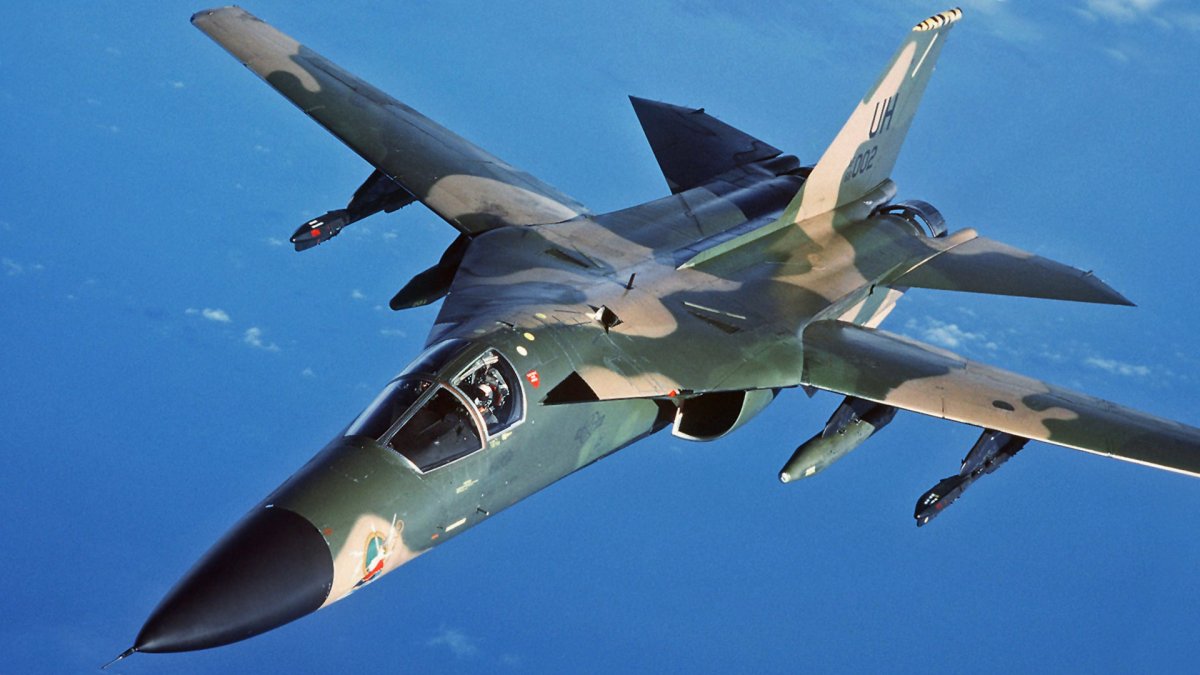
By Richard Crandall and Tyler Rogoway
Updated Jul 2, 2020 3:17 PM EDT
After giving us an amazing inside look at flying the F-15E Strike Eagle and how its presence in Saudi Arabia has evolved, Richard Crandall is back. This time he paints an awesomely in-depth picture of what it was like strapping into the cockpit of the legendary F-111 Aardvark during the tumultuous final decade of the Cold War.
Joining the F-111 family
I asked for F-15s, F-16s, F-4s, F-111s, or A-10s on my dream sheet. I then called to change the order to put A-10s over F-111s. The assignment guy at Randolph told me not to worry about it, as a classmate had put F-111s first. In fact, his father had died flying the F-111 in Vietnam. Took off and was never heard from again.
He got the F-111. Well, we both got F-111s and I got the second.
I was not thrilled but I sucked it up and got to it. I went to Holloman AFB for Lead-In Fighter Training (LIFT) in the T-38B Talon. I loved the training! I loved the air-to-air sorties and did okay at it. Sadly, the F-111 was lousy at air-to-air. It had way too high a wing loading, poor visibility, and huge energy bleed-off when turning. It was almost impossible to get above 5 g’s in it, and when you did you had just lost about 200-plus knots in the break turn. Oh well.
From Holloman I went to Cannon AFB to fly the F-111D model. The F-111A model first went to Vietnam in 1968 but was withdrawn quickly after three crashes. It returned in 1972 and was very successful. It was named “Whispering Death” by the North Vietnamese. Most of the U.S. pilots called it the “Vark,” short for its name, “Aardvark.” The Aussies called it “Pig,” which was fitting, as its air-to-air maneuverability was that of a fat pig.
F-111 over the desert., USAF
The A model had an all-analog cockpit. The Weapon System Officer (WSO) had to twist dials to change the latitude and longitude to the next coordinate. The pilot would turn to the next heading and hack a watch (or use a running time) while the WSO would change the inertial navigation system (INS) coordinates and then make sure the computed heading/time agreed with the dead reckoning time. All F-111 pilots lived by their stopwatch. You could not fly without it, as the INS died young.
The F-111B model for the Navy was cancelled. Too big, too heavy, and not maneuverable. They got the Tomcat instead. Face it: Tom Cruise in an F-111 just wouldn’t have hacked it for a movie. The Tomcat was a good choice on their part.
The F-111C was for the Aussies. It was an F-111A with three-foot longer wings on each side for better range. Strategic Air Command used the same long wings in the FB-111. It had slightly less allowed g loading, but that wasn’t a big deal as we didn’t pull a lot of g’s very often.
The F-111D model was radical. It had a glass cockpit . This included a multi-function monochrome TV for the pilot and a much bigger one for the WSO. It also had digital computers with a tape to pre-load a planned route. It was a paper tape with holes in it, on a reel—no kidding—but it worked, eventually.
The D model had two terrain following radars (TFRs) built by Texas Instruments, just like all the other F-111’s, but it could use the transmitter/receiver from one TFR to power the attack radar up to a range of 20nm. We used that feature a lot and it was a great benefit, as the attack radar often failed. It also had a great Doppler navigation system tied into the INS. This was awesome for overwater flight to keep the INS on track. This was a very difficult system to maintain, and eventually it was canned. It also had a moving map, which was great, but of course that, too, was difficult to maintain, and eventually canned in the ’80s.
The truth is that the D model didn’t work. They parked every single one of them in Fort Worth for several years as they worked to fix the bugs. Meanwhile, they built the F-111E, which was basically an F-111A with bigger air inlets. It was all analog, just like the A model, but It worked.
They then built the F model, which was the Cadillac of the F-111 force. It had huge engines and could even go slightly better than one-to-one thrust-to-weight ratio when almost dry and without stores. It was fast and digital, but not as integrated and as fancy as the D model. No multi-function displays, but it did have digital computers. Eventually, they put the Pave Tack laser targeting system into the F-111F and it carried it internally, which was much better and had less drag than on the F-4, where it was called “Pave Drag.” The F model was most famous for the raid on Gaddafi.
An F-111 cockpit at night., USAF
Really low and really fast
The F-111 worked in Vietnam because it flew really low and was really fast. It could fly down to 200 feet AGL (above ground level) using terrain following radar in all but the heaviest rain. As long as the TFR could see the difference between the weather and the ground, it could fly safely.
The Vietnamese would barely hear it coming as it was pushing the mach and was really low, hence the nickname. That tactic, low and fast, became THE doctrine until the third night of Desert Storm. The phrases “speed is life,” “one pass, haul ass,” and “you do more than one pass in a target area you die” all came from Vietnam.
The radar was the best in the fighter world at the time. An F-111 WSO would use the great real beam map from the radar to update the INS and navigate, but also clear the terrain ahead of the jet. If an aircraft is below a mountain peak the shadow behind the peak diverges; if an airplane is above a peak the shadow converges. Thus, the WSO would clear out to much farther range than the pilot could see on his display.
The pilot had a logarithmic presentation of the ground that was weird: level ground would start high on the far right at the greatest range displayed, and then curve down and left in a sort of parabolic curve. The first half of the scope, from left to the center, was one mile. The next half of the scope, from the center to three quarters, was another mile. Then, from three quarters to seven eighths of the display was another mile, from seven eighths to fifteen sixteenths was another mile, until finally hitting ten miles at the far right edge of the display. Thus, the pilot could see terrain fairly clearly from the nose to about three miles or so. After that it all tended to blend in.
The terrain following radar was tied into the autopilot, or you could get a manual steering bar and hand-fly it. We used the auto pilot most often, as when chasing the needles (steering cues) we would tend to get focused only on the needles and would not be cross-checking our other instruments as well as when we monitored the system with the autopilot flying it. It was just safer to use the autopilot, as I was able to have a lot more situational awareness of what was going on.
I learned to do manual TFR without the TFR computer working, which is called raw data TFR. I was comfortable going down to around 500 feet doing that, although I only practiced the technique during the day in Visual Flight Rules conditions, as it was truly a no-kidding, combat-emergency-only technique
During normal operations the WSO would call the terrain down until the pilot called he had the terrain and then the WSO would listen as the pilot would verbalize the climb for the terrain, when they were clear of it, and then “painting out to xxxx miles.” The WSO would then call the next terrain in. So you always had two people cross-checking terrain using two independent systems. It was pretty safe, actually.
The lights in the cockpit were pretty bright. We had no forward-looking infrared picture at all. The F model did have the Pave Tack pod for the WSO to target with, but that wasn’t used to see the terrain normally. The pilot had no way to see the Pave Tack video in the F model. Sometimes we would be flying low through the mountains of New Mexico or southwest Texas and the jet’s external rotating beacon would flash off the terrain that we were flying by and it would seem to be right next to the wingtip. Some aircrew would turn it off as it unnerved them.
The F-111D’s APQ-130 main radar and terrain following radar suite. , USAF
In the D model, the pilot could get distracted and see the radar, since it was a flat screen with no hood around it. That was not good to do though. The pilot needed to stay focused on the TFR and not sight-see on the radar scope. A quick story about distractions in the cockpit, especially in the two-man side-by-side cockpit of the F-111:
When I went through training at Cannon AFB my instructor pilot was Fernando Ribas, the pilot who died during Operation Eldorado Canyon (the raid on Libya) along with Paul Lawrence, a great WSO I flew with several times at RAF Lakenheath in the F model.
On one instruction flight, our aircraft had a failure on the multi-Function Display. Fernando—remember, he was a pilot, so think dog-watching-TV here—had to press four buttons and hold them in to get a radar sweep in Narrow Sector Expand. This was the best mode to use for air-to-ground targeting. He had to use both hands to do this. We were at 1,000 feet and were cleared hot at the Melrose Bomb Range located about 25 miles West of Cannon AFB as the crow flies.
When he tried to move the cursor using the goat turd (the cursor control looked like a goat turd and worked on pressure) there was no physical motion and he would lose the radar picture. He wasn’t going to give up. It was fascinating to watch: he would get a picture holding the buttons in, then release it and move the cursor, then push the buttons again. Amazingly, he found the target and had it nailed! Time ran down and we get a “no spot” call from the Range Control Officer. Yep, I forgot to pickle (hit the trigger to release the weapon)—I was having so much fun watching him that I didn’t do my job.
Fernando was from Puerto Rico and had a strong accent. I had taken Spanish in high school and I grew up in a town that was at least 30 percent Mexican-American and had lots of friends and coworkers who spoke Spanish. That night I heard words that I never before heard in my life. If we would not have been on auto pilot we would have died as I shrunk down to about two inches high in shame.
This taught me a lesson, though. Keep your mind on the job and don’t sight-see.
F-111 carrying laser guided bombs with the Pave Tack systems seen along the jet’s belly., USAF
Bombs, bombs, and more bombs.
The WSO was far more important for mission accomplishment in the F-111 than in any other aircraft. We were the night fighter for the USAF. When everyone else was grounded for weather, we flew. No illumination flares needed, just get the radar working and away we go. TFR breaks? Who cares. We had minimum en route altitudes planned for each leg and routinely flew nighttime low levels in the mountains, using them as our TFRs broke a lot. As long as the Attack Radar had a picture, we would find the target.
Our inertial navigation system was nice, but we trained to use dead reckoning and basic radar scope interpretation to get to the target even without the INS. We had backups to the backups to the backup. INS dead? Build a wind model and use the computers without the INS. That doesn’t work? Use a radar timed release based on a fixed angle offset. We practiced them all and got good at them all.
We also carried a ton of bombs. My favorite was laser guided bombs (LGBs), of course, but those were only in the F model. The D model could do them and I practiced a couple of times with an F-4 buddy-lasing the target, and did a bunch with troops using ground-based lasers. Still, my favorite was really the ballutes .
USAF F-111 dropping 500lb Mk82 bombs with ballute retard kits. , USAF
The MK-82 snake eyes used in Vietnam tended to fail if released above 450 knots. We didn’t like to be below 480 knots. Remember, speed is life. I preferred 540 knots. Slick bombs have a huge blast radius and we had to climb pretty aggressively to avoid fragging ourselves when releasing them down low. The solution was the BSU-49 and BSU-50. They basically had a parachute-like balloon that would inflate even at supersonic speeds and retard (slow via drag) the bomb safely behind us. Of course, if they didn’t inflate you had problems. If I remember right, we would still do a safe escape maneuver in case they went “slick” and failed to open.
If you watch the footage of the aircrew that hit the IL-76s on the ground in Libya, only one crew out of six succeeded. You will see two of the bombs flash through the targeting video slick. Thankfully, the crew made it back fine and destroyed two and damaged two of the transports.
Fast forward to 4:52 to see the Pave Tack footage of the strike:
During daytime I had backups, too. For dropping LGBs, if the INS failed, I would use dead reckoning to get to the target, climb to 2,000 feet or so, and have the WSO put the Pave Tack Pod to “snow plow” (looking straight ahead). I would pickle on the target and the WSO would then track the target, designate it and guide the bomb in.
For a loft attack I would have visual timer reference points to the pull-up and then to a manual release. Some of the more elaborate toss and loft release profiles wouldn’t work that well during wartime, unless you were releasing a nuke. Even with 24,500 pounds of bombs you are not likely to hit a target, but for an exercise by golly I would get my bombs off the airplane and at least scare the gophers somewhere near the target area!
The F-111 was a very good bombing platform. It was extremely stable. We had a pilot that was a year ahead of me who became a Weapons School grad, he won the Gunsmoke gunnery and bombing competition and beat out the new F-16s using manual bombing in an F-111E.
I was not that good. However, I got really good at killing the drift and calculating the offset. We would then be releasing a string of bombs, a minimum of four and often up to 20 or 24 (20 let us sweep the wings back farther than 24 did). I could almost always put the string right through the target. Maybe not the middle bomb, but the target would be hit.
Some of the F-111 guys I flew with had been F-100 pilots in Vietnam. They would get down into the weeds dropping Mk-82 snake eyes, pickling them off while in a ten degree dive while really, really low. They said they could pick the window they wanted the bomb to fly through.
When I was at RAF Lakenheath we deployed to Incirlik Air Base in Turkey for a Weapons and Tactics training. It was great flying and a fun time. On the flightline were tons of F-100s. When I walked down it with our Ops Officer he would say “flew than one, and that one, and….”
One of our guys went to Konya Range on the ground as a range control officer and got to know the Turkish F-100 pilots there. One of them showed him his Martin Baker coin that he got for successfully ejecting from an F-100. The F-111 pilot said “wow, that’s really unique!” The Turkish pilot turned to the bar and shouted out “hey guys, show him your coins!” Almost every single one of them had one. Ouch!
F-111 with other US tactical aircraft of the day. , USAF
Nukes and the one-way plane ticket to Armageddon
F-111 and nukes. We all trained for it. We all were willing and ready for it. I feel—personal opinion, not based on a poll—that most of us expected it to occur in our lifetime. We all got good at it and there was always a group of F-111s loaded out and in the alert facility in the middle of RAF Lakenheath ready to do the deed if called upon.
We knew we had about 15 minutes, max, to get airborne—and possibly less, as that was the flight time for Russian submarine-launched nuclear-tipped ballistic missiles that would target the base. All of the families living near the airfields in East Anglia would be toast.
To get airborne we had to respond fast. When I first got to RAF Lakenheath as a young Lieutenant we had four door Dodge pickups with the HUGE V8s. Massive horsepower and four-wheel-drive as well as lights and sirens. When the klaxon sounded, that thing would scream. We would go flying down the taxiway using fingers as the password. If the number of the day was seven and the military police held up three fingers you would respond with four and keep flying by. Once at the aircraft you would jump out, climb in, and fire the cart.
The cart was basically a solid-rocket fuel motor that put out a ton of smoke and pressure and was used to spin up the number one engine. You then cross bled the air to the number two engine and fired it up. This all happened very fast.
By this point in the process the WSO had the INS on a fast alignment and we would copy the message. If it was valid, then out onto the taxiway, high speed up to the end of the runway, and then off in full afterburner to end the world.
We all practiced this over and over and over again. Every alert you would at least scramble once, but we would never taxi out of the alert area. Once the wall fell it all came to a stop. Even with terrorism, the world is a far safe place today than it was during the Cold War.
F-111 refuels from a KC-135 tanker., USAF
One of the stories told to us by a visiting general was of a volatile time in the Cold War when it was so tense at one of the bases, I think in Spain, that they weren’t supposed to run any exercises. This might have been Torrejon Air Base, which had B-47s in the early ‘60s. They made a mistake and launched to an airborne hold (where jets are armed and waiting in the air for the order to execute nuclear strikes). Evidently, every single pilot thought it was the real thing. They knew they wouldn’t launch unless it was real. They got to the hold point and found out it was an exercise.
The point the general made was that every single aircrew executed—not one balked. They launched while convinced their families were dead, as every base was targeted, but they launched nonetheless.
I was absolutely convinced I would have to nuke a Warsaw Pact nation, as that was about all we could hit with the F-111. We had a couple of targets in Russia where we would have had to recover with emergency fuel at one of the far northern bases in Norway. But really, we all knew the base would be gone and we would have to punch out. We also knew that we would not be the first nuke on the target. Every single target I ever saw had ICBMs and then SLBMs and then us on it, and then hours and hours later, the stateside B-52s and B-1s.
We always practiced World War III as starting conventional, usually with the Russians punching through the Fulda Gap . I remember looking at the plans and seeing that we had a handful of tanks to stop them, compared to thousands of Russian and East German tanks lined up just waiting to punch through. We would fall back, and back, and then stand down, load up the nukes, and then sortie. Exercise over.
The Russians, however, planned to fight through the nuclear war and win. I don’t know how it would have really turned out. Every single one of us was absolutely shocked when the wall suddenly fell and the USSR was no more. In hindsight, it was inevitable.
You go back and read the stories, though, and I don’t think anyone saw it coming. What a relief it was when Germany reunited and we found out Ivan wasn’t ten feet tall after all. Yeah, we knew our stuff was better, but face it—they had a gazillion of their stuff.
F-111 pilots ready for a flight., Via globalsecurity.org
Aardvark’s effectiveness
Most of my fellow F-111 aircrews and I were good, and we really felt we would take the target out. But let’s look at the raid on Libya: 24 aircraft launch, several break and return, one crashes. Out of the three targets targeted by the aircraft that made it to the target area, only three aircraft hit the target—one on each target. All the others missed.
It was terrible when I look back on it, but hats off to the crew who flew it! This was even with the Pave Tack pod on the aircraft and with two of the targets being attacked with LGBs, the airport used MK-82s but had the Pave Tack pod to find and designate the target.
The aircrew that hit the airport, hats off to them! I knew the WSO extremely well, a good friend and fellow instructor for several years. In watching his tape, he nailed the radar offset for the airport. The radar was not good at burning out flat concrete but did much better on targets with more radar reflectivity. He went to narrow sector expand mode on the offset and then switched back to the Pave Tack infrared video, and nothing appeared. He went back and checked the offset again, and still dead on. The he switched back to the Pave Tack. Every other aircraft let the bombs fly using the radar offset. Their bombs hit the airfield between the taxiway and the runway. The coordinates on the offset were evidently bad.
F-111F loaded with GBU-10s before heading to Libya during Operation Eldorado Canyon., USAF
My friend went from narrow sector to wide sector in the Pave Tack and in the right side edge of the field of view he caught sight of the IL-76s. You hear him shout “come right come right” to the Pilot who is seeing nothing except tons of anti-aircraft artillery exploding and his TFR screen. The pilot made a hard turn. As he rolls out, his WSO has fired the lasers and the bombs immediately flew off. You see in the video the Pave Tack’s video rotate to upside down due to the mechanics of the pod rotating to see the target behind the aircraft. The WSOs had to learn how to track upside down when guiding LGBs. You then see a huge explosion rip through the airplanes. That was incredible teamwork in the cockpit. Good on the WSO to switch to wide field of view—it went from a really narrow straw to a slightly fatter straw to look through, but got him onto the target.
Fast forward to Desert Storm five years later. Most aircraft on the first night hit their targets successfully. In fact, I think all but the few who turned back due to bad Mode 4 IFF or other maintenance issues hit their targets.
F-111s over Giza. , Via globalsecurity.org
Keeping skills sharp in the F-111 community
I trained for five and a half years in the F-111. I had a little over 900 hours. We just didn’t fly as much as other aircraft did. Our short missions were two and a half hours long. I was getting around 200 hours a year and I had moves, deployments, vacation etc. that cut that down some. Some of our missions would be three and a half-plus hours long, all on internal fuel, no bags (external fuel tanks). The plane had legs, and boy was it fast.
It all worked out to about 90 flights a year. How about that F-16 guy, a bunch of .9 hour or less air-to-air hops, I’m guessing. Let’s be generous and say every sortie was 1.3 hours on average. If they flew the same 200 hours, then they flew many more flights, as the F-16 just didn’t break the way the Vark did. If you do the math, that would equal over 150 sorties a year for the F-16 guy. Guess what? They dropped the same number of bombs, on average, every mission—six from the trusty old SUU-20 practice bomb rack .
In the F-111, we would use two of these practice bombs per mission to keep our radar laydown and toss tactics up to snuff, and the remaining four for visual dive bombing. The F-16 driver, even counting their air-to-air training flights, got way more bombs per year than us. The A-10 guys, it was no comparison. All they did was bomb and strafe, bomb and strafe. Love the A-10.
Aussie F-111 doing the dump and burn during an air show., PAUL CROCK/AFP/Getty Images
The F-111’s infamous “dump and burn” maneuver
We had an F-111D from Cannon AFB head out to Canada for Maple Flag in the ‘80s. Everybody did an unofficial “arrival show.” Upon arrival in the overhead pattern the F-16s would pull 9 gs, the F-15s would pull 9 gs, the F-4s would pull 7 gs, the A-10s would pull however many they could. Then again, for the Warthog it didn’t really matter how many gs, as it could turn on a dime. And then there was the F-111.
If really light and pushing .95 mach or so while over-speeding the wings (if wings were swept forward, the jet was mach-limited) you might get 5 gs for a nano-second or so, and then you would be doing about .001 mach. Your awesome break turn would have taken half the state of Texas, too.
The pilot at the center of this story was a great guy. He was a high-time flyer with many thousands of hours under his belt. What was he to do? Sneak in and go hide in the corner of the bar while everyone else bragged? Nope. He came around and leveled off about ten feet above the runway and hit the dump switch, paused, then stroked the burners.
A RAAF F-111 executing an extremely low dump and burn before retirement., Jeff Gilbert/wikicommons
Momentary pause for style points.
Dumping and Torching needed to be in that order. If you torched first and then dumped you ended up with more fizzle and far less flame. For Olympic-class style points, even from the Russian judge, you needed to let the fuel fully aerosolize and then light the cans. The result? A massive stream of fire double the length of the jet pouring out of its tail.
There was Dick, streaking all the way down the runway trailing a wall of flame behind him. Best thing ever next to Napalm! The crowd went wild, but no buying beers for him and his WSO that night. When he pulled up in a closed pattern to land and threw the gear down, he looked at the runway. It was still burning. His fire had lit up all the rubber from the skid marks from aircraft landing!
He really thought he was going to get in trouble but the Canadians loved it. They said it was the best show they had ever seen!
The Vark’s weaknesses and strengths in retrospect
The F-111 was great at low altitude. It did good in Desert Storm, too. Great legs, lots of bombs, and really, really fast! It couldn’t turn worth a darn. That’s okay, and for most of Desert Storm it was fine. It was rightly retired because it was nine percent of Tactical Air Command’s fleet but ate up a whopping 25 percent of the maintenance budget.
Too often I would lose the radar because its mean-time between failure (MTBF) was less than 20 hours or so. Other systems like INS had a MTBF that was far less than 20 hours. When the TFR went out I would end up with a twin engine F-100 and would have to bomb using “iron sights.” Still, it could haul lots of bombs and was stable as all get out.
Weakness? They took the gun out. General Creech, a TAC commander during the F-111 development, was quoted saying he wasn’t going to have a $20 million dollar airplane strafing $20,000 trucks. We could only carry the AIM-9P Sidewinder with no radar cueing, and that was the mid ‘80s before it became routine to have the Aim-9 loaded up at all. The AIM-9P is only going to hit if launched from the rear against someone running hot, and we had no maneuverability to get to the rear of the bad guy. At least the smoke trail coming off my wing after launching the thing might make the other guy flinch, so I could get low and run like a scalded ape.
The capsule ejection system was both a weakness and a strength. We had a lot of guys mess up their backs with ejections. A squadron commander at Mountain Home was a paraplegic after ejecting, when the air bag failed to work. We never had anyone die from wind-blast, though. We had several supersonic ejections, no big deal. Plus, when ejecting into the cold ocean, you don’t get wet until they show up to rescue you.
A used F-111 escape module, basically the whole cockpit and upper forward portion of the jet. , Public Domain
It did take too long to get the chute deployment during ejection, though. It was something like 10 seconds from pulling the handle to the chute deploying. I had an instructor pilot who was my cadet squadron commander when I was a sophomore at the Academy who ejected at Mountain Home when he had a compressor stall doing a break turn at 500 feet above the field. The A model did not have the mod at that time to keep it from departing in yaw when exceeding the max angle of attack. With the loss of thrust he had less than a second to go full forward on the stick to avoid a high speed stall/departure. They punched out too low and both crew died.
The amount of bombs the F-111 could carry was definitely a strength. I have a picture of the F-111C dropping 48 Mk-82s. I think he had to be in full burner to barely get to 10,000 feet. They used fixed pylons on the outboard stations to carry six 500-pounders on each pylon. You can’t sweep the wings unless you punch the pylons off. Totally impractical, but also really cool!
Range was a huge plus for the F-111. I did a four-hour low-level using internal fuel and two weapons bay tanks with no wing tanks. Try to do that in a Strike Eagle or a Viper. Of course, who on Earth in their right mind wants to sit in an ejection seat for 4 hours while flying continuously at low-level?
The Vark’s big strength was that it was fast as hell. I routinely cruised at .95 mach in military power (full throttle with no afterburner augmentation) while on the deck. The F model was nearly super cruise-capable. I saw 1.1 mach on the deck in a D model, and I knew guys who had the F model up to 1.4 mach on the deck! It held enough gas to do it for a while, too. Not many planes could keep up.
A loaded up F-111D., USAF
Living the swing-wing dream
My favorite memory while flying the Vark remains as vivid in my mind today as the day after it happened. I was flying right at sunset, dropping bombs in the North Sea off of Eastern Scotland. We had a Pave Tack pod but no way to really measure miss distance, but at least we could see the smoke from the practice bombs and if it was close to the target, we could tell. It was kind of like plinking cans with a .22—not really doing much damage but fun nonetheless.
It was completely overcast and very dark under the clouds with marginal visibility. In other words, standard English weather! We were grounded from night flying on the TFR at the time due to maintenance problems. We had several instances, including a fatal crash at night, where the TFR failed in ways the engineers had no idea it could, even though the system was nearly 20 years old by then.
Since we had to knock off at sunset I was watching my clock. By then it was getting really dark under the clouds, especially since we were out over the ocean with no lights anywhere. I waited until the last second and then lit both burners. 54,000 pounds of thrust awoke behind us and I pulled back on the stick to punch up through the clouds.
We weren’t allowed to do any over-the-top maneuvers. No loops, Cuban 8s , Immelmanns, etc. To be legal, I therefore went to 89 degrees of pull instead of 90 degrees. We hit the clouds on our back and punched through very quickly as the layer wasn’t very thick. It surprised me when I saw, upside down, the most beautiful sight I had seen yet while flying: The sun was suspended, half-buried in a field of solid white with a fiery display in the cirrus high altitude clouds still above me. I froze the climb while inverted, still with my nose 45 degrees above the horizon, still in full afterburner, and said to my WSO:
“And we get paid for doing this?!”
Via globalsecurity.org
A huge thanks to Richard Crandall for sharing his incredible experiences in the F-111 with us.
Contact the editor Tyler@thedrive.com
Comments couldn’t be loaded. Please refresh the page.
作者:理查德·克兰德尔和泰勒·罗戈韦
更新于美国东部时间2020年7月2日下午3:17
继为我们带来驾驶F-15E“攻击鹰”战斗机的精彩内幕以及它在沙特阿拉伯的部署演变之后,理查德·克兰德尔再次回归。这一次,他将以令人叹为观止的深度,描绘在冷战动荡的最后十年里,驾驶传奇的F-111“土豚”战斗机的感受。
加入F-111家族
我在选课清单上列出了F-15、F-16、F-4、F-111或A-10。之后我打电话要求把顺序改成A-10,而不是F-111。兰道夫空军基地的分配员告诉我不用担心,因为我一个同学把F-111排在了第一位。事实上,他的父亲就是在越南驾驶F-111时牺牲的。飞机起飞后就杳无音信了。
他拿到了F-111。嗯,我们俩都拿到了F-111,我拿到了第二架。
我当时并不兴奋,但还是咬牙坚持了下来。我去霍洛曼空军基地参加T-38B“鹰爪”教练机的战斗机入门训练(LIFT)。我非常喜欢训练!我喜欢空对空作战,而且表现还不错。可惜的是,F-111的空对空性能很差。它的翼载荷过高,视野很差,转弯时能量损失巨大。驾驶它几乎不可能达到5g以上的过载,即使达到了,在转弯时也会损失200多节的速度。唉。
从霍洛曼空军基地出来后,我去了坎农空军基地驾驶F-111D型战斗机。F-111A型战斗机于1968年首次部署到越南,但在发生三起坠机事故后很快撤回。它于1972年重返越南战场,并取得了巨大的成功。北越方面称其为“低语死神”(Whispering Death)。大多数美国飞行员称其为“Vark”,是“Aardvark”(土豚)的简称。澳大利亚人则称其为“猪”(Pig),这个绰号很贴切,因为它的空战机动性就像一头肥猪一样笨拙。
美国空军F-111战机飞越沙漠。
A型F-111采用全模拟座舱。武器系统操作员(WSO)必须旋转旋钮来调整经纬度坐标。飞行员会转向下一个航向,并快速计时(或使用计时器),而武器系统操作员则会调整惯性导航系统(INS)坐标,然后确保计算出的航向/时间与航位推算时间一致。所有F-111飞行员都依赖秒表。没有秒表,飞机根本无法飞行,因为惯性导航系统很快就损坏了。
海军的F-111B型战斗机项目被取消了。它太大、太重,而且机动性差。他们最终选择了“雄猫”战斗机。说实话,汤姆·克鲁斯开着F-111拍电影肯定不行。“雄猫”战斗机对他们来说是个明智的选择。
F-111C是为澳大利亚人设计的。它是在F-111A的基础上,每侧机翼加长了三英尺,以获得更远的航程。战略空军司令部在FB-111上也使用了同样的加长机翼。它的允许过载略低,但这无关紧要,因为我们很少需要承受高过载。
F-111D 型战斗机堪称革命性的设计。它采用了全玻璃座舱,包括一台供飞行员使用的多功能单色电视,以及一台更大的供武器系统操作员使用的电视。此外,它还配备了数字计算机,并用纸带预先加载预定航线。没错,就是那种卷轴式的、带孔的纸带——一点也不夸张——但最终还是奏效了。
D型F-111与其他所有F-111一样,配备了两部由德州仪器公司制造的地形跟踪雷达(TFR),但它可以利用其中一部TFR的收发器为攻击雷达供电,有效范围可达20海里。我们经常使用这项功能,它非常实用,因为攻击雷达经常出现故障。它还配备了一套与惯性导航系统(INS)相连的出色多普勒导航系统。这对于水上飞行来说非常有用,可以确保INS始终保持航向。然而,这套系统维护起来非常困难,最终被取消了。它还配备了移动地图,这很棒,但当然,这套系统维护起来也很困难,最终在20世纪80年代也被取消了。
事实是,D型机根本行不通。他们把所有D型机都停放在沃斯堡好几年,以便修复各种缺陷。与此同时,他们研制了F-111E型,它基本上就是F-111A型的改进型,只是进气口更大。它和A型一样,都是模拟电路,但它却成功了。
随后他们制造了F型,堪称F-111系列中的“凯迪拉克”。它配备了巨大的发动机,在几乎空载且不携带外挂物的情况下,推重比甚至可以略高于1:1。它速度快,采用数字化技术,但不如D型那样集成化和先进。它没有多功能显示器,但配备了数字计算机。最终,他们将“铺路追踪”(Pave Tack)激光瞄准系统安装到F-111F上,并将其内置,这比在F-4上被称为“铺路阻力”(Pave Drag)的系统性能更好,阻力也更小。F型最著名的战绩是对卡扎菲的突袭。
夜间的F-111战斗机座舱。(美国空军)
非常低,速度非常快
F-111战斗机在越南战场上之所以奏效,是因为它飞行高度极低,速度极快。除了暴雨天气外,它几乎可以在所有情况下利用地形跟踪雷达,将飞行高度降至离地200英尺(约61米)。只要临时飞行限制区(TFR)能够区分天气状况和地面情况,它就能安全飞行。
由于飞机以接近音速的速度低空飞行,越南人几乎听不到它的到来,因此得名“低空快速轰炸”。这种低空快速的战术,在“沙漠风暴”行动的第三个夜晚之前,一直是美军的作战准则。“速度就是生命”、“一击即中”、“在目标区域内多次飞行必死无疑”等格言警句都源自越南战争。
这款雷达在当时的战斗机领域堪称一流。F-111的武器系统操作员(WSO)会利用雷达提供的精确波束图来更新惯性导航系统(INS)并进行导航,同时还能清除飞机前方的地形障碍。如果飞机位于山峰下方,山峰后的阴影会发散;如果飞机位于山峰上方,阴影则会收敛。因此,武器系统操作员能够清除的障碍范围远超飞行员在显示器上所能看到的范围。
飞行员看到的地面景象呈对数式分布,很奇怪:平坦的地面从最右侧显示的最大距离处开始,然后向下向左弯曲,呈抛物线状。视野的前半部分,从左到中心,代表一英里。视野的后半部分,从中心到四分之三处,代表另一英里。然后,从四分之三到七分之八处是一英里,从七分之八到十五分之十六处又是一英里,直到最后在视野最右侧边缘达到十英里。因此,飞行员可以比较清楚地看到机头前方大约三英里左右的地形。再往后,所有景象就变得模糊不清了。
地形跟踪雷达与自动驾驶系统相连,或者也可以使用手动操纵杆进行手动飞行。我们最常使用自动驾驶系统,因为如果手动操作,我们往往会只关注指针(转向指示),而无法像使用自动驾驶系统时那样,同时兼顾其他仪表。使用自动驾驶系统更安全,因为我可以更好地掌握周围环境。
我学会了在临时飞行限制区(TFR)计算机不工作的情况下手动进行TFR操作,这被称为原始数据TFR。我能很轻松地将飞行高度降低到大约500英尺,尽管我只在白天目视飞行规则(VFR)条件下练习这项技术,因为它确实是一种不折不扣的、仅在紧急情况下才使用的技术。
在正常操作中,武器系统操作员(WSO)会逐一播报地形信息,直到飞行员确认已到达目标地形。之后,WSO会聆听飞行员口头报告爬升路线,确认已飞越目标地形后,再报告“向外飞行至xxxx英里”。随后,WSO会播报下一个目标地形。因此,始终有两人使用两套独立的系统进行地形信息交叉核对。实际上,这种方式相当安全。
驾驶舱的灯光非常明亮。我们完全没有前视红外图像。F型飞机确实配备了Pave Tack吊舱供武器系统操作员(WSO)瞄准目标,但通常情况下,它并不用于观察地形。飞行员在F型飞机上也无法查看Pave Tack的视频。有时,当我们低空飞越新墨西哥州或德克萨斯州西南部的山区时,飞机外部的旋转信标灯会照射到我们飞过的地形上,看起来就像就在翼尖旁边一样。有些机组人员会把它关掉,因为它让他们感到不安。
F-111D 的 APQ-130 主雷达和地形跟踪雷达套件。(美国空军)
在D型机上,由于雷达屏幕是平面的,没有遮光罩,飞行员可能会分心去看雷达。但这很不好。飞行员需要专注于临时飞行限制区(TFR),而不是去看雷达屏幕。下面是一个关于驾驶舱内分心的小故事,尤其是在F-111的双人并排座舱中:
我在坎农空军基地接受训练时,我的教官飞行员是费尔南多·里巴斯,他在埃尔多拉多峡谷行动(对利比亚的突袭)中牺牲,与他一同牺牲的还有保罗·劳伦斯,一位很棒的武器系统操作员,我曾在莱肯希思皇家空军基地驾驶F型飞机与他一起飞行过几次。
在一次训练飞行中,我们的飞机多功能显示器出了故障。费尔南多——别忘了,他可是个飞行员,所以想想他当时正像个看电视的狗一样——不得不同时按下四个按钮并按住不放,才能在窄扇区扩展模式下进行雷达扫描。这是进行空对地目标瞄准的最佳模式。他必须双手操作才能完成这个操作。当时我们飞行高度为1000英尺,并被允许在梅尔罗斯轰炸靶场进行实弹射击,该靶场位于坎农空军基地以西约25英里(直线距离)处。
当他试图用那个形似山羊粪便的按钮(光标控制按钮看起来像一坨山羊粪便,通过按压来操作)移动光标时,光标纹丝不动,雷达图像也随之丢失。但他不肯放弃。看着他操作真是令人着迷:他按住按钮拍下图像,然后松开按钮移动光标,再按下按钮。令人惊讶的是,他竟然找到了目标,而且击中了要害!时间到了,靶场控制员报告“未发现目标”。没错,我忘了扣动扳机(释放武器)——我光顾着看他操作了,完全忘了尽职尽责。
费尔南多来自波多黎各,口音很重。我高中时学过西班牙语,我从小在一个至少有30%墨西哥裔美国人的小镇长大,有很多朋友和同事都会说西班牙语。那天晚上,我听到了一些我这辈子从未听过的词语。如果不是当时我们处于自动驾驶模式,我们恐怕早就死了,而我羞愧得缩成两英寸高。
这件事给我上了一课:要专心工作,不要到处观光。
一架F-111战斗机机腹挂载着带有“铺路钉”(Pave Tack)系统的激光制导炸弹。(美国空军)
炸弹,炸弹,还是炸弹。
在F-111战斗机上,武器系统操作员(WSO)对任务完成的重要性远超其他任何飞机。我们是美国空军的夜间战斗机。当其他飞机因天气原因停飞时,我们依然飞行。无需照明弹,只要雷达正常工作,我们就能起飞。临时飞行限制区(TFR)?谁在乎?我们为每一段航程都规划了最低飞行高度,并且经常在夜间低空飞越山区,利用这些低空飞行来应对TFR的频繁中断。只要攻击雷达有目标图像,我们就能找到目标。
我们的惯性导航系统固然不错,但我们训练有素,即使没有惯性导航,也能利用航位推算和基本的雷达图像判读来锁定目标。我们甚至有多层备份。惯性导航失效?那就建立风场模型,在没有惯性导航的情况下利用计算机进行导航。这招也不行?那就使用基于固定角度偏移的雷达定时释放系统。我们反复练习,并且熟练掌握了所有这些方法。
我们还携带了大量的炸弹。我最喜欢的当然是激光制导炸弹(LGB),但那只有F型才有。D型也能发射,我曾和一架F-4战机进行过几次激光制导训练,也和地面部队用激光制导进行过多次训练。不过,我最喜欢的还是跳弹。
美国空军F-111战斗机投掷装有减速伞的500磅Mk82炸弹。
越战中使用的MK-82蛇眼炸弹在速度超过450节时容易失效。我们不喜欢低于480节的速度。记住,速度就是生命。我更喜欢540节的速度。这种滑翔炸弹的爆炸半径巨大,我们必须快速爬升,才能避免在低空投掷时被碎片炸伤。解决方案是BSU-49和BSU-50。它们基本上有一个类似降落伞的气球,即使在超音速飞行时也能充气,并通过阻力减速,使炸弹安全地滞留在我们身后。当然,如果它们没有充气,那就麻烦了。如果我没记错的话,即使它们“滑翔”失效,我们仍然会进行安全逃生机动。
如果你观看在利比亚地面攻击伊尔-76运输机的机组人员的录像,你会发现六组机组人员中只有一组成功。你会看到两枚炸弹在瞄准视频画面中一闪而过。幸运的是,机组人员安全返回,摧毁了两架运输机,并击伤了另外两架。
快进到 4 分 52 秒,观看 Pave Tack 拍摄的罢工视频:
白天我也有备用方案。投放激光制导炸弹时,如果惯性导航系统失效,我会使用航位推算到达目标位置,爬升到大约2000英尺的高度,然后让武器系统操作员将铺路追踪吊舱设置为“雪犁式”(即直视前方)。我会锁定目标,然后武器系统操作员会跟踪目标,进行目标指示,并引导炸弹落入目标。
如果是高空投弹,我会设置视觉计时器参考点,引导弹体拉起,然后手动释放。一些更复杂的抛掷和高空投弹方案在战时不太适用,除非你是在投掷核弹。即使携带24500磅的炸弹,你也不太可能击中目标,但如果是演习的话,我至少会把炸弹从飞机上卸下来,吓唬吓唬目标区域附近的地鼠!
F-111 是一款非常优秀的轰炸平台,稳定性极佳。我们队里有一位比我高一年级的飞行员,他从武器学校毕业后,赢得了“枪烟”射击和轰炸比赛的冠军,驾驶 F-111E 手动投弹击败了新型 F-16。
我技术其实不算好。不过,我练就了一身消除偏航和计算偏移量的本领。然后我们会投下一连串炸弹,最少四枚,通常多达二十枚或二十四枚(二十枚可以让机翼后掠角度更大)。我几乎总能把这串炸弹精准地投到目标上。也许中间那枚没中,但目标肯定能被击中。
我以前一起飞过的F-111飞行员,有些以前是越战时期的F-100飞行员。他们会飞到杂草丛生的地方,投掷Mk-82“蛇眼”炸弹,以十度俯冲角,在极低的高度精准地击落目标。他们说,他们可以随意选择炸弹飞过的目标。
我在莱肯希思皇家空军基地服役时,我们被派往土耳其的因吉尔利克空军基地进行武器战术训练。飞行体验很棒,也很有趣。停机坪上停满了F-100战斗机。我和作战参谋沿着停机坪走的时候,他会说“飞过那架,还有那架,以及……”
我们有个伙计去科尼亚靶场做地面管制员,认识了那里的土耳其F-100飞行员。其中一位飞行员给他看了他从F-100成功弹射后获得的马丁·贝克纪念币。F-111飞行员惊叹道:“哇,这真特别!”土耳其飞行员转身朝酒吧喊道:“嘿,伙计们,给他看看你们的纪念币!”几乎每个人都有一枚。哎哟!
F-111 与当时的其他美国战术飞机一起。(美国空军)
核武器和通往世界末日的单程机票
F-111 和核武器。我们都接受过这方面的训练。我们都做好了准备,并且愿意执行这项任务。我个人认为——这并非基于民意调查——我们大多数人都预料到这一天会在我们有生之年到来。我们都精通此道,而且总有一批装载着核弹头的 F-111 战机在莱肯希思皇家空军基地中心的戒备设施中待命,一旦接到命令,随时可以执行任务。
我们知道最多只有15分钟的时间起飞——甚至可能更短,因为这是俄罗斯潜射核弹道导弹的飞行时间,它们的目标是我们的基地。所有住在东安格利亚机场附近的家庭都将遭受灭顶之灾。
为了起飞,我们必须迅速反应。我刚到莱肯希思皇家空军基地时,还是个年轻的少尉,我们开的是四门道奇皮卡,配着巨大的V8发动机。马力强劲,四轮驱动,还有警灯和警报器。警报一响,那家伙就轰鸣起来。我们沿着滑行道飞驰,用手指作为暗号。如果当天的数字是7,宪兵举起三根手指,你就回应4,然后继续飞驰过去。到了飞机旁,你就跳下车,爬进去,然后启动推车。
这辆小车基本上就是一个固体火箭燃料发动机,它喷出大量的烟雾和压力,用来启动一号发动机。然后,你把空气交叉导入二号发动机并点火。这一切都发生得非常快。
此时,武器系统操作员已将惯性导航系统调整至快速对准状态,我们会接收信息。如果信息有效,则滑行至滑行道,高速滑行至跑道尽头,然后开启加力燃烧室,结束这场灾难。
我们一遍又一遍地练习过。每次警报响起,我们至少会紧急起飞一次,但我们绝不会滑出警报区域。柏林墙倒塌后,一切都停止了。即使存在恐怖主义,如今的世界也比冷战时期安全得多。
美国空军F-111战斗机正在接受KC-135加油机的空中加油。
一位来访的将军给我们讲了一个故事,是关于冷战时期一段动荡不安的时期。当时,我记得好像是在西班牙的某个基地,气氛非常紧张,以至于他们本不应该进行任何演习。这可能是托雷洪空军基地,那里在六十年代初驻扎着B-47轰炸机。他们犯了一个错误,起飞前往一个空中等待点(那里战机都已装弹待命,准备执行核打击命令)。显然,每个飞行员都以为这是真的。他们知道,除非是真的,否则他们不会起飞。结果他们到达等待点后才发现,这只是一次演习。
将军指出,所有机组人员都执行了任务——没有一个退缩。他们明知家人已经遇难,因为每个基地都成了攻击目标,但他们仍然毅然起飞。
我当时确信我必须用核弹轰炸一个华沙条约成员国,因为F-111的打击能力几乎只能覆盖到这些国家。我们在俄罗斯有几个目标,如果轰炸失败,我们只能依靠挪威北部某个偏远基地的应急燃料进行撤离。但实际上,我们都知道基地肯定会被摧毁,我们只能撤离。我们也知道,我们不会是第一个轰炸目标的。我见过的每一个目标,都是先被洲际弹道导弹攻击,然后是潜射弹道导弹,最后才是我们,几个小时后,美国本土的B-52和B-1轰炸机才会跟进。
我们演练第三次世界大战时,总是以常规战争开局,通常是苏军突破富尔达山口。我记得看过作战计划,发现我们只有寥寥几辆坦克来阻挡他们,而成千上万的苏军和东德坦克却排成一列,等着突破。我们会不断后撤,然后停止推进,装填核弹,再发起攻击。演习结束。
然而,俄国人计划打赢这场核战争。我不知道最终结果会如何。当柏林墙突然倒塌,苏联解体时,我们所有人都震惊不已。事后看来,这一切似乎都是不可避免的。
不过,你回头再读读那些故事,就会发现谁也没想到会是这样的结果。德国统一后,我们发现伊万其实没那么高,真是松了一口气。没错,我们知道我们的东西更好,但不得不承认——他们的东西也多得数不清。
F-111飞行员已做好飞行准备。(图片来自globalsecurity.org)
土豚的有效性
我和我的大多数F-111战友状态都很好,我们真心觉得能击落目标。但让我们来看看对利比亚的那次空袭:24架飞机起飞,几架中途折返,还有一架坠毁。最终抵达目标区域的飞机瞄准了三个目标,但只有三架击中了目标——每个目标一架。其余飞机全部脱靶。
现在回想起来真是太糟糕了,但我还是要向驾驶这架飞机的机组人员致敬!当时飞机上装有铺路追踪吊舱,而且其中两个目标还遭到了激光制导炸弹的攻击,机场使用了MK-82导弹,但借助铺路追踪吊舱来发现和指示目标。
向击中机场的机组人员致敬!我非常了解那位武器系统操作员(WSO),他是我多年的好友和同事。在观看他的录像时,他准确地确定了机场的雷达偏移量。雷达对平坦的混凝土目标探测效果不佳,但对雷达反射率较高的目标则效果显著。他将偏移量调整到窄扇区扩展模式,然后切换回Pave Tack红外视频,结果什么也没显示。他再次检查了偏移量,仍然准确无误。然后他又切换回Pave Tack。其他所有飞机都使用雷达偏移量投弹。他们的炸弹落在了滑行道和跑道之间的机场区域。显然,偏移量的坐标设置有误。
在“埃尔多拉多峡谷行动”期间,一架装载着GBU-10炸弹的F-111F战斗机飞往利比亚。(美国空军)
我的朋友驾驶着“铺路追踪”(Pave Tack)无人机,从窄视野切换到宽视野,在视野右侧边缘发现了伊尔-76运输机。你可以听到他向飞行员大喊“向右!向右!”,而飞行员除了成堆的防空炮弹爆炸和临时飞行限制区(TFR)屏幕外什么也看不到。飞行员猛地转弯。就在他滑行出击的同时,武器系统操作员(WSO)发射了激光制导炸弹,炸弹立即飞出。视频中可以看到,“铺路追踪”无人机的画面由于吊舱旋转以观察飞机后方的目标而上下颠倒。武器系统操作员必须学会如何在倒置的视野下引导激光制导炸弹。随后,你看到巨大的爆炸撕裂了飞机。这是驾驶舱内令人难以置信的团队合作。武器系统操作员切换到宽视野的做法非常明智——虽然视野从一根非常窄的吸管变成了一根稍微宽一点的吸管,但最终还是让他锁定了目标。
时间快进到五年后的沙漠风暴行动。第一晚,大多数飞机都成功击中了目标。事实上,我认为除了少数因四模式敌我识别系统故障或其他维护问题而返航的飞机外,其余飞机都击中了目标。
F-111战机飞越吉萨。(图片来自globalsecurity.org)
在F-111社区保持技能精湛
我在F-111上训练了五年半,飞行时间略超过900小时。我们的飞行量远不及其他机型。我们的短途任务只有两个半小时。我每年大约能飞200小时,但还要兼顾调动、部署、休假等等,这些都会减少我的飞行时间。有些任务甚至长达三个半小时以上,全程只靠内部燃料,没有外挂油箱。这架飞机的续航能力很强,速度也很快。
算下来,一年大概飞90架次。那F-16飞行员呢?我猜他飞的都是些0.9小时或更短时间的空对空短途飞行。就算我们慷慨一点,假设每次飞行平均1.3小时。如果他们的飞行时间也是200小时,那他们实际飞行的架次肯定更多,因为F-16不像Vark那样容易出故障。算一下,F-16飞行员一年至少要飞150架次。你猜怎么着?他们每次任务平均投弹数量都一样——六枚,都是从可靠的老款SUU-20练习炸弹挂架上投下来的。
在F-111上,我们每次任务会用两枚练习炸弹来保持雷达定位和投掷战术的熟练度,剩下的四枚用于目视俯冲轰炸。F-16飞行员,即使算上空对空训练飞行,每年获得的炸弹数量也比我们多得多。A-10飞行员就更不用说了,他们除了轰炸和扫射,就是轰炸和扫射。我爱A-10。
澳大利亚F-111战斗机在航展上进行倾泻燃烧特技表演。(图片来源:PAUL CROCK/AFP/Getty Images)
F-111臭名昭著的“倾泻燃烧”机动
上世纪80年代,坎农空军基地的一架F-111D战斗机飞往加拿大参加枫叶节。大家都会进行一场非正式的“降落表演”。飞机降落时,F-16会承受9个过载,F-15会承受9个过载,F-4会承受7个过载,A-10则会尽可能地承受更高的过载。不过,对于“疣猪”A-10来说,过载多少其实并不重要,因为它的转弯半径非常小。然后,还有F-111。
如果飞机非常轻,速度达到0.95马赫左右,同时机翼超速(如果机翼前掠,喷气式飞机的马赫数就会受到限制),你或许能在一纳秒左右的时间内获得5G的过载,然后速度就只有0.001马赫左右了。你那惊人的急转弯动作,估计能把半个德克萨斯州都毁掉。
故事的主角是一位很棒的飞行员。他飞行经验丰富,飞行时间长达数千小时。他能怎么办呢?偷偷溜进酒吧,躲在角落里,看着其他人吹嘘吗?不。他绕到跑道上方约十英尺处,平飞后按下泄压阀,稍作停顿,然后轻踩油门。
一架澳大利亚皇家空军的F-111战斗机在退役前进行超低空倾转燃烧。图片来源:Jeff Gilbert/wikicommons
稍作停顿,展现风度。
倾倒燃料和点燃燃料必须按这个顺序进行。如果先点燃燃料再倾倒燃料,最终只会产生更多嘶嘶声,火焰也会小得多。即使是俄罗斯裁判,想要达到奥运级别的评分,也必须让燃料完全雾化后再点燃燃料罐。结果呢?一道巨大的火焰从尾部喷出,长度是喷射长度的两倍。
只见迪克驾驶着飞机,沿着跑道一路疾驰,身后拖着一道火墙。这简直比凝固汽油弹还厉害!人群沸腾了,但他和他的武器系统操作员当晚可没钱买啤酒了。当他拉起飞机盘旋降落,放下起落架时,他看了看跑道。跑道还在燃烧。他的火焰点燃了飞机着陆时留下的轮胎印!
他真以为自己要倒霉了,但加拿大人却很喜欢。他们说这是他们看过的最精彩的演出!
回顾Vark的弱点和优势
F-111低空性能出色,在“沙漠风暴”行动中也表现出色。它航程远,载弹量大,速度也非常快!但它的转弯性能实在糟糕。不过这也没什么大不了的,在“沙漠风暴”行动的大部分时间里,它的表现都还不错。它最终退役是理所应当的,因为它只占战术空军司令部机队的9%,却消耗了高达25%的维护预算。
雷达经常出故障,因为它的平均故障间隔时间(MTBF)不到20小时左右。其他系统,比如惯性导航系统(INS),MTBF 甚至远低于20小时。临时飞行限制区(TFR)失效后,我只能驾驶双引擎的F-100,用机械瞄具进行轰炸。不过,它载弹量很大,而且非常稳定。
弱点?他们把机炮卸掉了。克里奇将军,F-111研发期间的战术空军指挥官,曾说过他不会让价值2000万美元的飞机去扫射价值2万美元的卡车。我们当时只能携带AIM-9P“响尾蛇”导弹,而且没有雷达引导,那还是80年代中期,AIM-9导弹的挂载还远未普及。AIM-9P只有从后方发射才能命中高速飞行的目标,而我们当时根本没有机动能力绕到敌机后方。至少发射导弹后机翼留下的烟雾能让对方畏缩一下,这样我就可以低空飞行,然后像受惊的猴子一样逃跑。
弹射舱系统既是优点也是缺点。很多队员因为弹射而伤到了背部。驻扎在山地之家的一位中队长在一次弹射中,由于安全气囊失灵,导致他下半身瘫痪。不过,我们从未有人因风压而丧命。我们进行过几次超音速弹射,都没什么大碍。而且,弹射到冰冷的海水里,在救援人员赶到之前,你都不会弄湿衣服。
一个二手的F-111逃生舱,基本上包括整个驾驶舱和飞机上部前段。,公共领域
不过,弹射过程中降落伞展开的时间确实太长了。从拉动手柄到降落伞展开,大约需要10秒钟。我大二时,我的学员中队指挥官,一位教官飞行员,在山地之家机场上空500英尺处进行急转弯时,由于压气机失速而弹射。当时的A型飞机还没有改装,无法防止飞机在超过最大迎角时发生偏航。由于推力丧失,他只有不到一秒钟的时间将操纵杆推到底,以避免高速失速/离地。他们弹射的高度太低,两名机组人员全部遇难。
F-111的载弹量绝对是一大优势。我有一张F-111C投掷48枚Mk-82炸弹的照片。我记得当时它好像必须开到最大功率才能勉强爬升到10000英尺。外侧挂架是固定的,每个挂架可以挂载六枚500磅炸弹。除非把挂架拆掉,否则没法调整机翼后掠角。这设计完全不实用,但也确实很酷!
F-111的航程是一大优势。我曾驾驶它低空飞行了四个小时,只用了机内燃油和两个副油箱,没有使用翼下副油箱。你试试驾驶F-15E“攻击鹰”或F-15E“蝰蛇”能不能做到。当然,谁会愿意在弹射座椅上连续低空飞行四个小时呢?
Vark最大的优势就是速度极快。我经常在甲板上以军用功率(全油门,不使用加力燃烧室)巡航0.95马赫。F型几乎具备超音速巡航能力。我见过D型在甲板上达到1.1马赫的速度,而且我知道有人驾驶F型在甲板上达到了1.4马赫!它的燃油储备也足够长,可以长时间保持这种速度。很少有飞机能跟上它。
一架满载的F-111D战斗机,美国空军
实现摇摆翼梦想
驾驶“瓦克”轰炸机时最难忘的回忆,至今仍历历在目。那是在日落时分,我在苏格兰东部北海海域投弹。我们当时装了“铺路追踪”吊舱,但没办法精确测量脱靶距离,不过至少我们能看到练习弹的烟雾,如果弹着点接近目标,就能判断出来。这感觉就像用.22口径步枪打易拉罐——虽然没什么实际杀伤力,但玩起来却很过瘾。
当时天色阴沉,云层下漆黑一片,能见度极低。换句话说,典型的英国天气!由于维护问题,我们当时被禁止在临时飞行限制区 (TFR) 进行夜间飞行。我们遇到过好几次 TFR 系统故障,其中一次夜间坠机事故更是致命,而工程师们对此却毫无察觉,尽管这套系统当时已经使用了近 20 年。
由于日落时分必须收工,我一直在看时间。那时云层下已经非常暗了,尤其是在茫茫大海上空,周围没有任何灯光的情况下。我等到最后一刻才点燃了两个发动机。54000磅的推力瞬间涌上心头,我猛拉操纵杆,冲破云层,直冲云霄。
我们不能做任何极限机动动作。不能做筋斗、古巴8字、伊梅尔曼回转等等。为了符合规定,我把拉杆角度从90度降到了89度。我们背对着云层,由于云层不厚,很快就穿过了云层。当我倒飞时,看到了迄今为止飞行中最美的景象,这让我非常惊讶:太阳悬停在空中,半隐在一片纯白的云层中,而卷云高空云层中则燃烧着耀眼的火光。我倒飞时停止了爬升,机头仍然保持在地平线以上45度,加力燃烧室也开到最大,然后对我的武器系统操作员说:
“我们做这个还能拿到报酬?!”
通过 globalsecurity.org
非常感谢 Richard Crandall 与我们分享他在 F-111 战斗机上的精彩经历。
联系编辑:Tyler@thedrive.com
评论加载失败,请刷新页面。