You don’t need to be a natural salesperson to be a banker: Bank of Singapore CEO新加坡银行首席执行官表示,你不必是天生的销售员才能成为银行家。
Bank of Singapore CEO Jason Moo says trust, not personality, defines private banking success as the lender targets growth in Asia. Read more at straitstimes.com.
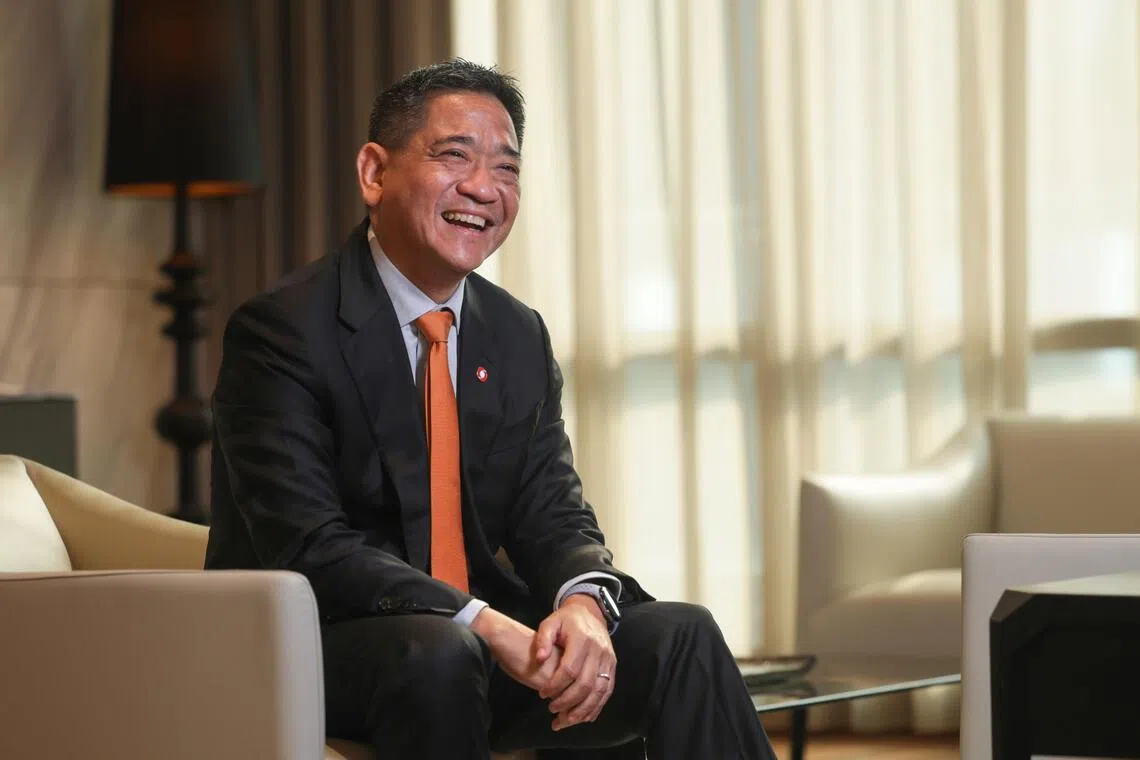
Bank of Singapore CEO Jason Moo said it is important to have a diverse pool of bankers with different personality types.
Published Oct 30, 2026, 06:00 AM
Updated Oct 30, 2026, 09:04 AM
Bank of Singapore CEO Jason Moo says great bankers are built on trust, not a fixed personality type. Extroverts and introverts can both succeed by building strong client relationships.
The bank plans to hire “hundreds of private bankers over the next few years” and had over 500 by early 2026. It grew AUM by over 20% in 2025, led by UHNW and FIM clients.
Moo says growth will come mainly from Asia, where wealth is rising fast. The bank is building bespoke products, digital tools and stronger OCBC ties to serve wealthy families and complex needs.
SINGAPORE – Success in the private banking profession is not defined by a particular personality type, but by the ability to build lasting client relationships grounded in trust, said Bank of Singapore (BOS) chief Jason Moo.
“In my almost 30 years of experience, there’s never a particular personality type that makes a great banker. At the foundation of it, it’s always trust,” Moo told The Straits Times in an interview at the BOS Centre in Market Street.
In his opinion, a banker often reflects the client’s personality. For example, a client who is quiet and passive may be less inclined to work with a banker who is overly extroverted, outspoken and loud.
Instead, the client may gravitate towards someone with a similar personality, or a younger client may be more inclined to work with a banker closer to their own age, as they may feel a greater sense of familiarity and relatability.
Therefore, it is important to have a diverse pool of bankers with different personality types to cater to the varying preferences and needs of clients, said the 53-year-old banking veteran, who previously held senior roles at Julius Baer and Goldman Sachs.
Moo said that a successful banker is one who can understand the client, identify his or her needs, build trust and provide appropriate solutions. Ultimately, a good banker is a solutions provider.
Further, he said that bankers may not be natural salespeople.
Moo, who joined BOS in 2023, illustrated this with the example of salespeople at a gathering of 100 people.
One salesperson might get to know 20 people and collect their contact details, while another might get to know just five people but follow up by meeting them for meals or coffee. A third one might spend the entire evening speaking to just one person, developing a deep understanding of their family background, likes and dislikes.
Moo said salespeople can succeed through different approaches to relationship-building.
While extroverts may thrive on meeting and connecting with a large number of people, introverts may focus on building deeper relationships with fewer individuals. Both approaches can be equally effective, he said, as success ultimately depends on the strength and depth of the relationships built rather than the number of contacts made.
“The client needs to be able to walk out of every meeting or every engagement saying, ‘Okay, he or she has my best interests at heart.’ That’s really the core of making a banker successful,” he said.
Asked what type of personality he has, Moo said he focuses on building relationships.
Pointing to the example of being at a gathering of 100 people, Moo said: “I’m probably closer to the one-contact or five-contacts person than I am to the 20-contacts person because it’s just not my natural inclination to go out and immediately start to sell. But I’m a people person, so I will try to get to know people first and build relationships,” he said.
Moo’s comments come as BOS, OCBC’s private banking arm, expects to add “hundreds of private bankers over the next few years” to fuel the bank’s next leg of growth.
BOS achieved its target of 500 bankers globally by the end of 2024, ahead of its original 2025 schedule.
The bank serves high-net-worth individuals with over US$5 million (S$6.4 million) in investable assets, as well as ultra-high-net-worth (UHNW) individuals with a net worth of at least US$100 million. It also caters to family offices and financial intermediaries (FIMs), also known as independent asset managers that serve multiple wealthy families.
BOS recorded strong business momentum in 2025, surpassing its target of US$145 billion in assets under management (AUM) set in 2023 and growing its AUM by over 20% year on year in 2025.
AUM from UHNW clients grew by 25% while AUM from FIM clients increased by more than 30% in 2025. Moo said that the bank is on a similar growth trajectory in 2026.
“Two out of our three main hubs are in Asia – Singapore and Hong Kong. You can count on a very large percentage of that growth in the UHNW segment really coming from Asia,” said Moo. The bank’s third key hub is in Dubai.
He noted that the UHNW segment is a key focus for the bank. Asia is home to many such individuals, most of whom are based in North Asia and South-east Asia.
“We feel we could do more with clients in that client segment. Their needs tend to be more complex by nature. Some of them have a single family office. Some of them will have multi-generational requirements,” said Moo, adding that the bank is developing bespoke platform products to cater to the complex needs of the UHNW.
The vast majority of Asian private wealth is built by the first generation over the past three to five decades through the post-industrialisation and tech booms.
“Most of the clients we talk to are still running a company or remain active in operating one,” he said. This means the bank must first understand and address their business needs before helping them manage their personal wealth.
North Asia has seen wealth accumulate at a faster pace than South-east Asia, said Moo.
North Asian wealth, particularly in South Korea, China and Hong Kong, tends to skew younger, reflecting the rise of younger entrepreneurs and founders in innovative, technology-driven industries.
But that does not make South-east Asia any less important to the bank, said Moo, pointing to growth opportunities in areas such as data centres in Malaysia and consumer tech companies in Thailand.
The affluent segment in South-east Asia is growing wealthier, while a generational transfer of wealth is also under way in the region, said Moo.
BOS’s strong Asian roots and global capabilities, as well as its ability to tap the strong franchise and regional reach of its parent OCBC, give it an edge over Western rivals in winning wealthy clients from Asia, he said.
“I keep telling clients that we are their neighbours. We grew up from the same background, so we understand what they are going through. And family values are so important to Asian culture, which is why all our advertisements and branding campaigns are around families and legacies,” he said.
“This is becoming more important as we grow, so that clients will start to align with and recognise themselves in our banking and values, and be able to appreciate our investment capabilities and global perspective.”
Hundreds of referrals have been made between OCBC and BOS as part of its “one group” efforts. In one case, OCBC referred an existing commercial banking client in the regional logistics and shipping sector to BOS. The client subsequently opened a family office account with the private bank, bringing in more than US$50 million in AUM.
Another important and fast-growing segment for the bank is the FIMs, a business that BOS has made significant strides in building over the past three years.
BOS’ digital capabilities also allow it to scale its financial intermediaries business more efficiently, said Moo. By allowing external asset managers to place orders on its platform, BOS can handle higher transaction volumes and serve more clients.
Asked what the bank can do better, he said it needs to “grow bigger” through increased hiring and a continued focus on enhancing its platform and offerings to meet client needs.
“The big growth will come from hiring. The incremental growth will come from offering more bespoke investments or something unique that clients don’t see from other banks,” he said.
“I call it inside out, outside in.”
Inside out means offering Asian clients global capabilities, while outside in means offering global investors investment opportunities in this part of the world, he said.
“That’s one thing I don’t think a lot of banks, including us, have done extremely well.”
Sheila Chiang is a business correspondent at The Straits Times.
Private banking/Wealth management
Banks and financial institutions
新加坡银行首席执行官Jason Moo表示,拥有不同性格类型的多元化银行家队伍非常重要。
发布于2026年10月30日上午6:00
更新于2026年10月30日上午9:04
新加坡银行首席执行官Jason Moo表示,优秀的银行家建立在信任之上,而非某种固定的性格类型。外向者和内向者都能通过建立牢固的客户关系而获得成功。
该银行计划在未来几年内招聘“数百名私人银行家”,到 2026 年初,私人银行家人数将超过 500 人。2025 年,该银行的资产管理规模增长超过 20%,主要得益于超高净值客户和金融市场投资者 (FIM) 的支持。
Moo表示,增长主要来自亚洲,那里的财富正在快速增长。该银行正在打造定制产品、开发数字化工具,并加强与华侨银行的联系,以更好地服务于富裕家庭及其复杂的客户需求。
新加坡——新加坡银行(BOS)首席执行官Jason Moo表示,私人银行行业的成功并非取决于某种特定的性格类型,而是取决于能否建立以信任为基础的持久客户关系。
“在我近30年的经验中,从来没有哪种特定的性格类型能造就一位优秀的银行家。归根结底,信任始终是关键,”穆先生在市场街的BOS中心接受《海峡时报》采访时表示。
在他看来,银行家的性格往往会反映客户的性格。例如,性格内向、被动的客户可能不太愿意与过于外向、直言不讳、嗓门很大的银行家合作。
相反,客户可能会倾向于选择与自己性格相似的人,或者年轻的客户可能更倾向于与年龄相仿的银行家合作,因为他们可能会感到更熟悉、更亲近。
因此,拥有不同性格类型的多元化银行家群体非常重要,以便满足客户不同的偏好和需求。这位 53 岁的银行业资深人士说道,他此前曾在 Julius Baer 和高盛担任高级职务。
穆先生表示,成功的银行家应该能够理解客户,识别客户需求,建立信任并提供合适的解决方案。归根结底,优秀的银行家是解决方案的提供者。
此外,他还表示,银行家可能不是天生的销售员。
2023 年加入 BOS 的 Moo 以 100 人聚会上的销售人员为例说明了这一点。
一位销售人员可能会结识20位客户并收集他们的联系方式,而另一位可能只认识5位客户,但会通过与他们共进餐或喝咖啡等方式跟进。第三位销售人员可能会花一整个晚上与一位客户交谈,深入了解其家庭背景、喜好和厌恶。
Moo表示,销售人员可以通过不同的关系建立方式获得成功。
外向者可能乐于结识和接触大量人群,而内向者则可能更专注于与少数人建立更深层次的关系。他表示,这两种方式都同样有效,因为成功最终取决于所建立关系的牢固程度和深度,而非接触人数。
他说:“客户需要能够在每次会议或每次合作结束后都说,‘好吧,他或她确实把我的利益放在心上。’这才是银行家成功的核心所在。”
当被问及他是什么性格时,Moo表示他注重建立人际关系。
穆先生以参加百人聚会为例说:“我可能更接近于那种只需要一两个联系人就能建立联系的人,而不是那种需要二十个联系人的人,因为我天生就没有那种一上来就推销的倾向。但我喜欢与人交往,所以我会先努力了解别人,建立关系。”
Moo发表上述评论之际,华侨银行的私人银行部门BOS预计将在未来几年内增加“数百名私人银行家”,以推动该行下一阶段的增长。
BOS提前实现了到2024年底在全球拥有500名银行家的目标,比原计划的2025年提前完成。
该银行服务于拥有超过500万美元(640万新元)可投资资产的高净值人士,以及净资产至少1亿美元的超高净值人士。此外,它还服务于家族办公室和金融中介机构(FIM),这些机构也称为独立资产管理公司,为多个富裕家族提供服务。
BOS 在 2025 年取得了强劲的业务增长势头,超过了其在 2023 年设定的 1450 亿美元的资产管理规模 (AUM) 目标,并且在 2025 年实现了超过 20% 的年资产管理规模增长。
2025年,来自超高净值客户的资产管理规模增长了25%,而来自金融和市场基础设施客户的资产管理规模增长了30%以上。Moo表示,该行在2026年将保持类似的增长势头。
“我们三大主要枢纽中有两个位于亚洲——新加坡和香港。可以肯定的是,超高净值客户群体的大部分增长都来自亚洲,”穆先生表示。该银行的第三个主要枢纽位于迪拜。
他指出,超高净值客户群体是该银行的重点关注领域。亚洲聚集了许多这类人群,其中大部分集中在北亚和东南亚。
“我们觉得我们还能为这个客户群体做更多的事情。他们的需求本质上往往更加复杂。有些客户只有一家家族办公室,有些客户则有跨代的需求,”穆说道,并补充说,该银行正在开发定制化的平台产品,以满足超高净值人士的复杂需求。
亚洲绝大多数私人财富是由第一代人在过去三五十年间,通过后工业化和科技繁荣积累起来的。
他说:“我们接触的大多数客户仍在经营公司或继续积极参与公司运营。” 这意味着银行必须首先了解并满足他们的业务需求,才能帮助他们管理个人财富。
Moo表示,北亚的财富积累速度比东南亚更快。
北亚地区的财富,尤其是在韩国、中国和香港,往往集中在年轻人手中,这反映了创新型、技术驱动型行业中年轻企业家和创始人的崛起。
穆表示,但这并不意味着东南亚对该银行的重要性有所降低,他指出马来西亚的数据中心和泰国的消费科技公司等领域都存在增长机会。
Moo表示,东南亚的富裕阶层越来越富裕,同时该地区也正在发生财富的代际转移。
他表示,BOS 强大的亚洲根基和全球实力,以及利用其母公司华侨银行强大的特许经营权和区域影响力的能力,使其在赢得亚洲富裕客户方面比西方竞争对手更具优势。
“我一直跟客户说,我们是他们的邻居。我们有着相似的成长背景,所以我们了解他们的处境。家庭价值观在亚洲文化中非常重要,这也是为什么我们所有的广告和品牌推广活动都围绕家庭和传承展开的原因,”他说。
“随着我们不断发展壮大,这一点变得越来越重要,这样客户才能开始认同我们的银行业务和价值观,并能够欣赏我们的投资能力和全球视野。”
作为“一体化”战略的一部分,华侨银行 (OCBC) 与波士顿银行 (BOS) 之间已进行了数百次客户推荐。其中一个例子是,华侨银行将一位在区域物流和航运领域拥有业务的现有商业银行客户推荐给了波士顿银行。该客户随后在波士顿银行开设了家族办公室账户,管理资产规模超过5000万美元。
银行另一个重要且快速增长的业务板块是金融信息管理系统 (FIM),BOS 在过去三年中在该业务领域取得了显著进展。
Moo表示,BOS的数字化能力也使其能够更高效地扩展金融中介业务。通过允许外部资产管理公司在其平台上下单,BOS可以处理更高的交易量,服务更多客户。
当被问及银行可以做得更好的地方时,他表示,银行需要通过增加招聘和持续专注于提升其平台和产品以满足客户需求来“扩大规模”。
“大幅增长将来自招聘。而逐步增长则来自提供更多定制化投资产品或客户在其他银行看不到的独特服务,”他说道。
我称之为由内而外,由外而内。”
他表示,“由内而外”意味着为亚洲客户提供全球化的能力,“由外而内”意味着为全球投资者提供在世界这一地区的投资机会。
“我认为很多银行,包括我们自己,在这方面做得都不太好。”
Sheila Chiang是《海峡时报》的商业记者。
私人银行/财富管理
银行和金融机构