Australia starts ‘high-risk’ life extension of its submarine fleet澳大利亚启动潜艇舰队“高风险”延寿计划
The Australian National Audit Office (ANAO) has issued a damning verdict on Department of Defence planning for the life-extension program.
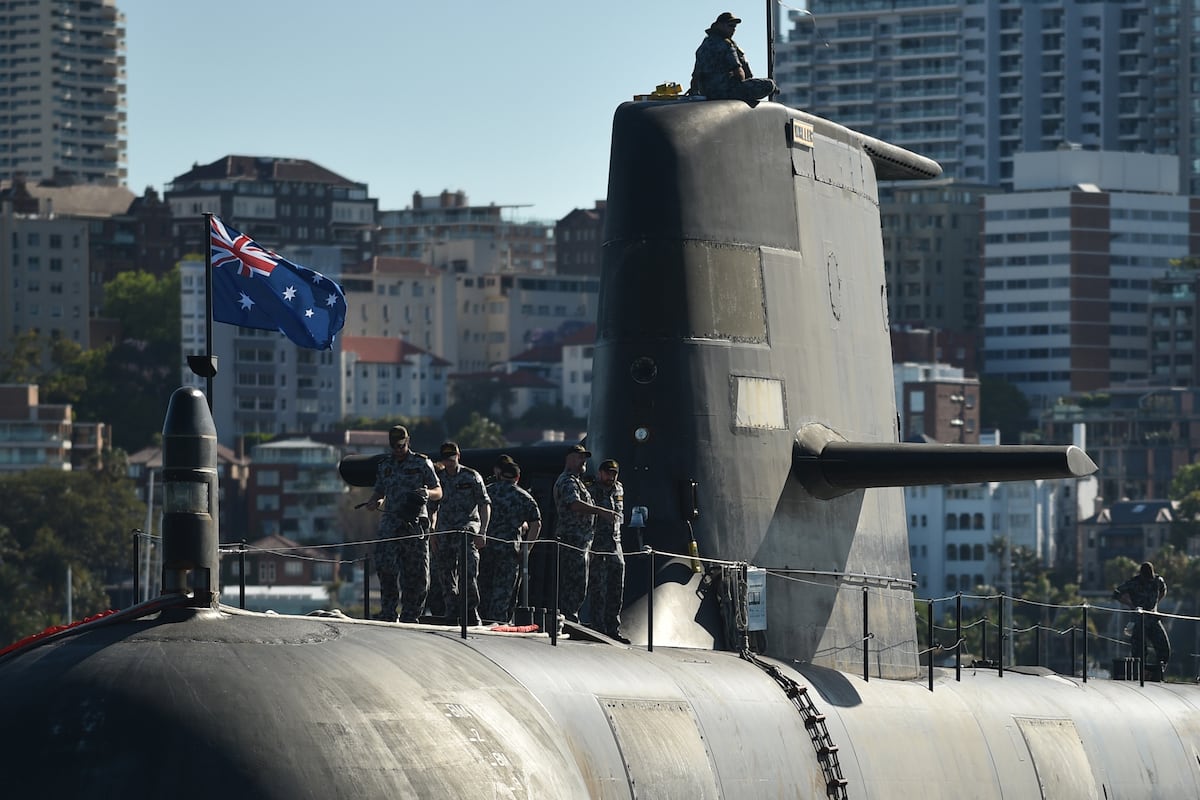
CHRISTCHURCH, New Zealand — The Australian government this month announced the beginning of a long-delayed life-extension program for six diesel-electric Collins-class submarines, an effort that government auditors immediately flagged as a high-risk affair.
The boat Farncomb, the submarine with the greatest mileage, is the first vessel to undergo the process at the government-owned ASC shipyard near Adelaide. Work starts in late May.
Replacement of the Collins fleet – introduced from 1996-2003 – had been formally proposed as long ago as 2009. However, successive governments dithered as they first considered French-designed boats — spectacularly dumped in 2021 — and then AUKUS nuclear-powered submarines.
Now budgeted at A$11 billion (nearly US$8 billion), the extension program became ever more critical as a bridging capability before Australia’s navy anticipates its first American Virginia-class submarines in the early 2030s and SSN-AUKUS boats in the 2040s.
The Australian National Audit Office (ANAO) issued a damning verdict on Department of Defence planning for the life-extension program. It noted that “substantial further expenditure has been incurred, delays have accumulated and capability risks have remained.”
Auditors concluded that Defence is not in a good position “to demonstrate that the project will achieve its intended capability outcomes or represent value for money.”
Defense officials claimed in a press release that the extension program “will reduce risk, enhance capability and maximize availability.” The statement proposed a “conditions-based sustainment approach” that restores base components and upgrades critical weapons and systems.
Work on Farncomb will start with a detailed engineering assessment, and subsequent work will depend on what is discovered.
This first effort, which may uncover hidden issues such as corrosion, will inform work to be performed on the remaining submarines. Priority will be given to the youngest boats.
Auditors determined that accumulated delays and a decade of planning forced a revised delivery strategy. Instead of redesigning and replacing key systems like engines and generators, the program will simply refurbish and maintain them, without substantially improving their combat capability.
As some issue experts expect delays in Australia fielding nuclear-powered submarines, and the future possibility of having few or no operational submarines whatsoever, Canberra insists there is no plan B for interim conventional submarines.
Meanwhile, new submarines may be cheaper than Australia’s proposed life-extension refit. For example, Japan will pay US$760 million for its newest Taigei-class submarine.
Asked about Australia’s submarine aspirations, Rear Adm. Stephen Hughes, Head of Navy Capability, told Defense News last November: “Are they high risk? Sure – schedule is demanding, technologies are demanding, workforce is demanding. I could list all the things that could go wrong, but one thing we’re really good at in Defence – despite maybe some other commentators’ views – is risk management.”
Still, ANAO auditors stated: “Ten years after the initial decision to establish the life-of-type-extension project, Defence was not well placed to demonstrate that the project will achieve its objective to maintain Collins-class capability and availability to 2048.”
Gordon Arthur is an Asia correspondent for Defense News. After a 20-year stint working in Hong Kong, he now resides in New Zealand. He has attended military exercises and defense exhibitions in about 20 countries around the Asia-Pacific region.
新西兰基督城——澳大利亚政府本月宣布启动一项拖延已久的柯林斯级柴电潜艇延寿计划,政府审计人员立即指出这是一项高风险举措。
航程最长的潜艇“法恩科姆”号是第一艘在位于阿德莱德附近的国有ASC造船厂进行改装的舰艇。改装工作将于5月下旬开始。
早在 2009 年,就有人正式提出要替换 1996 年至 2003 年间服役的柯林斯级潜艇。然而,历届政府都犹豫不决,先是考虑法国设计的潜艇(该项目于 2021 年被戏剧性地放弃),然后又考虑 AUKUS 核动力潜艇。
该扩建计划目前预算为 110 亿澳元(近 80 亿美元),作为澳大利亚海军在 2030 年代初接收首批美国弗吉尼亚级潜艇和在 2040 年代接收 SSN-AUKUS 潜艇之前的过渡能力,其重要性日益凸显。
澳大利亚国家审计署(ANAO)对国防部延寿计划的规划提出了严厉批评。审计署指出,“已产生大量额外支出,延误不断累积,能力风险依然存在。”
审计人员得出结论,国防部目前的情况并不乐观,“无法证明该项目将实现其预期的能力成果或体现物有所值”。
国防部官员在一份新闻稿中声称,这项延期计划“将降低风险、增强能力并最大限度地提高可用性”。声明提出了一种“基于条件的保障方法”,该方法旨在修复基础部件并升级关键武器和系统。
Farncomb项目将首先进行详细的工程评估,后续工作将取决于评估结果。
这项初步工作可能会发现诸如腐蚀等隐藏问题,并将为后续潜艇的检修工作提供依据。最年轻的潜艇将优先进行检修。
审计人员认定,由于累积的延误和长达十年的规划,项目不得不修改交付策略。该项目不再重新设计和更换发动机、发电机等关键系统,而是对其进行翻新和维护,而不会实质性地提升其作战能力。
一些问题专家预计澳大利亚部署核动力潜艇的进程将会延迟,未来甚至可能几乎没有或根本没有可运行的潜艇,但堪培拉方面坚称,没有针对过渡性常规潜艇的 B 计划。
与此同时,建造新型潜艇可能比澳大利亚提议的延寿改装方案更便宜。例如,日本为其最新型的大鲸级潜艇将支付7.6亿美元。
去年11月,当被问及澳大利亚的潜艇计划时,海军能力主管斯蒂芬·休斯少将告诉《防务新闻》:“这风险高吗?当然——工期紧迫,技术要求高,人力需求也高。我可以列举所有可能出错的地方,但国防部门真正擅长的一点——尽管其他一些评论员可能持不同意见——就是风险管理。”
不过,澳大利亚国家审计署的审计人员表示:“在最初决定启动该型舰艇寿命延长项目十年后,国防部仍未能充分证明该项目将实现其目标,即保持柯林斯级舰艇的能力和可用性至 2048 年。”
戈登·阿瑟是《防务新闻》的亚洲特派记者。在香港工作20年后,他现居新西兰。他曾到访亚太地区约20个国家,参加过军事演习和防务展览。