US forces disable Iranian-flagged tankers trying to cross blockade美军击沉试图穿越封锁线的伊朗籍油轮
This week, U.S. forces around the Strait of Hormuz have launched strikes against Iranian military facilities and disabled missiles launched by the IRGC.
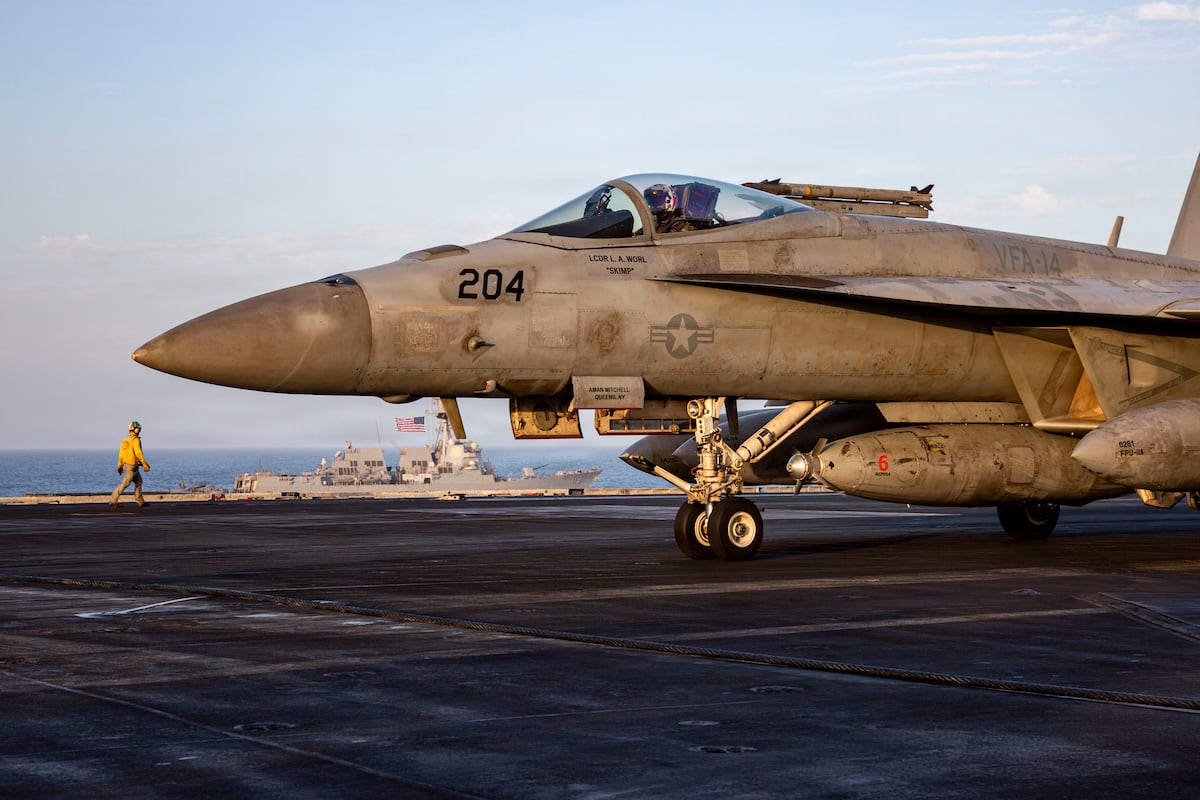
American forces fired on and disabled two Iranian-flagged unladen oil tankers on Friday after the ships attempted to cross a U.S. Navy blockade in the Strait of Hormuz.
A U.S. Navy F/A-18 Super Hornet from USS George H.W. Bush launched “precision munitions” at the smokestacks of M/T Sea Star III and M/T Sevda, disabling the vessels before they could reach an Iranian port on the Gulf of Oman, according to U.S. Central Command.
“U.S. forces in the Middle East remain committed to full enforcement of the blockade of vessels entering or leaving Iran,” said Adm. Brad Cooper, the commander of CENTCOM.
The U.S. military has turned away 50 commercial vessels operating in the strait since the U.S. Navy blockade began on April 12.
Friday’s confrontation capped a tumultuous week in the waterway.
On Monday, the U.S. destroyed six Iranian small boats , as well as cruise missiles and drones, that the Islamic Revolutionary Guard Corps launched against ships under U.S. escort through the strait. The escort was part of the U.S.’s short-lived Project Freedom, a military operation to escort commercial ships that has since been paused.
U.S. forces also intercepted the Iranian-flagged unladen oil tanker, M/T Hasna, in the Strait of Hormuz on Wednesday as it made its way toward an Iranian port.
A U.S. Navy F/A-18 Super Hornet from the USS Abraham Lincoln fired on the vessel after issuing several warnings, disabling the tanker.
And on Thursday, the U.S. conducted strikes against Iranian military facilities after Iran launched missiles, drones and small boats at three U.S. Navy vessels transiting the strait.
Despite continued military conflict around the Strait, President Donald Trump downplayed concerns about potential escalation, telling ABC News on Thursday that U.S. strikes against Iranian targets were just a “love tap” and that the four-week-old ceasefire was still in effect.
The U.S. and Iran remain in discussions over an agreement that would reportedly end the Iran war and shut down the country’s nuclear program.
Riley Ceder is a Navy reporter at Military Times, where he covers issues directly affecting service members and their families, as well as breaking news.
周五,两艘悬挂伊朗国旗的空载油轮试图穿越霍尔木兹海峡的美国海军封锁线,美军开火并将其击沉。
据美国中央司令部称,一架来自“乔治·H·W·布什”号航空母舰的美国海军F/A-18“超级大黄蜂”战斗机向“海星III”号和“塞夫达”号油轮的烟囱发射了“精确制导武器”,使这两艘船在抵达阿曼湾的伊朗港口之前失去行动能力。
美国中央司令部司令布拉德·库珀海军上将表示:“驻中东美军仍致力于全面执行对进出伊朗船只的封锁。”
自4月12日美国海军开始封锁海峡以来,美军已拒绝50艘在海峡内作业的商船通行。
周五的冲突为这条水道动荡的一周画上了句号。
周一,美国摧毁了伊朗伊斯兰革命卫队向途经霍尔木兹海峡的美国护航船只发射的六艘小型舰艇,以及巡航导弹和无人机。此次护航行动是美国短暂的“自由计划”的一部分,该计划旨在护送商船,但目前已暂停。
周三,美军还在霍尔木兹海峡拦截了悬挂伊朗国旗的空油轮“哈斯纳”号,当时该油轮正驶往伊朗港口。
美国海军“亚伯拉罕·林肯”号航空母舰上的一架F/A-18“超级大黄蜂”战斗机在发出多次警告后向该船开火,使其失去战斗力。
周四,伊朗向三艘途经霍尔木兹海峡的美国海军舰艇发射导弹、无人机和小艇后,美国对伊朗军事设施发动了袭击。
尽管海峡周边军事冲突持续不断,但唐纳德·特朗普总统淡化了对局势可能升级的担忧。他周四告诉美国广播公司新闻,美国对伊朗目标的打击只是“轻轻一碰”,而且已经持续了四周的停火协议仍然有效。
美国和伊朗仍在就一项据称将结束伊朗战争并关闭该国核计划的协议进行磋商。
Riley Ceder 是《军事时报》的海军记者,他负责报道直接影响军人及其家属的问题以及突发新闻。