New SGH emergency and national neuroscience building slashes stroke treatment times新加坡中央医院新建的急诊和国家神经科学大楼大幅缩短了中风治疗时间
New SGH emergency building cuts stroke treatment times with faster scans, angiography and co-located neuroscience care. Read more at straitstimes.com.
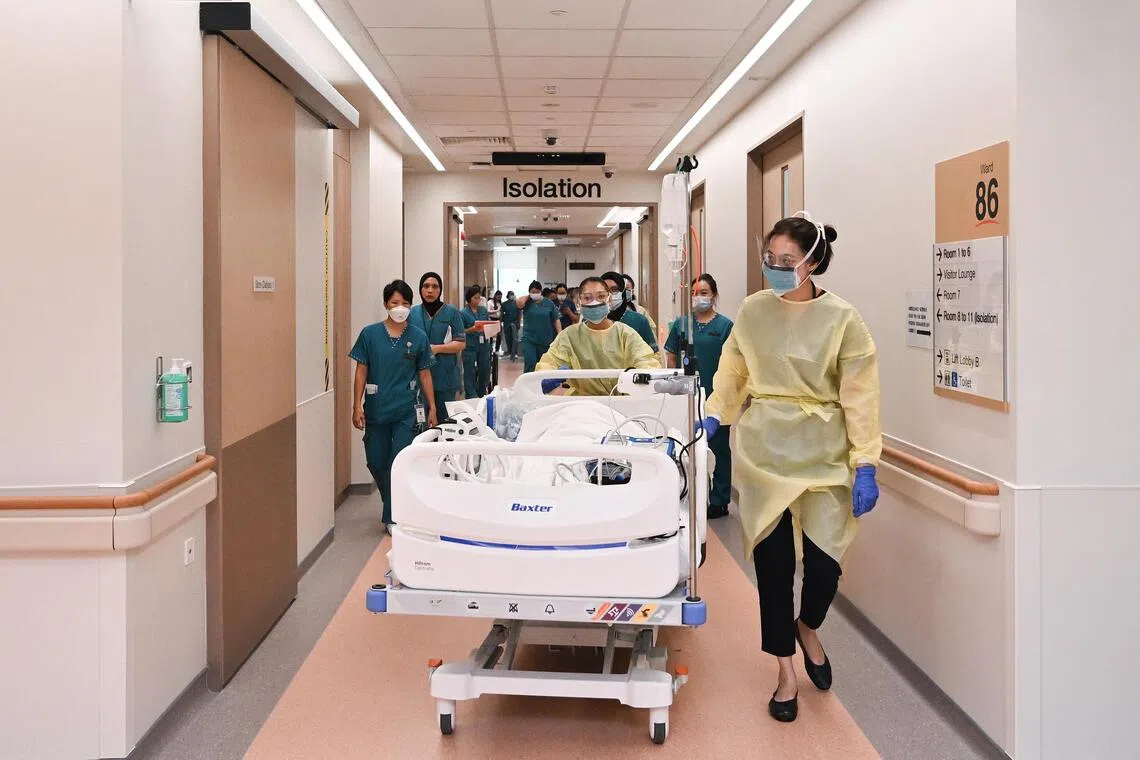
Patients suffering from acute strokes can now be assessed, scanned, and treated in as quickly as 82 minutes, down from 130 minutes, at the newly opened Singapore General Hospital (SGH) Emergency and National Neuroscience Institute (NNI) building, ST PHOTO: LIM YAOHUI)
Published Oct 30, 2026, 12:30 PM
Updated Oct 30, 2026, 12:30 PM
SGH’s new Emergency and NNI building cuts acute stroke treatment time from 130 minutes to 82 minutes. It co-locates care to speed diagnosis and EVT.
The 12-storey, 14,000 sq m facility is six times larger than before. It has 10 triage rooms, 53 critical care cubicles, 12 resuscitation rooms, and over 150 short-stay beds.
Health Minister Ong Ye Kung said time is brain, and AI now cuts scan time to six minutes. He also said longer waits can mean less serious cases, while alternative care has eased ED pressure.
SINGAPORE – Patients suffering from acute strokes can now be assessed, scanned, and treated in as little as 82 minutes, down from 130 minutes, at the newly opened Singapore General Hospital (SGH) Emergency and National Neuroscience Institute (NNI) building.
The 12-storey facility designed to manage heavy patient volumes and complex medical crises and eliminate potentially severe hospital transit delays.
Officially opened by Minister for Health Ong Ye Kung on Oct 30, the 14,000 sq m facility is six times larger than its previous space in Block 1. This is the latest new development in the ongoing transformation of the SGH campus in Outram. It is purpose-built to consolidate emergency assessment, acute medical care and advanced neuroscience intervention into one space.
Ong said the co-location with NNI is by design, to provide a faster response to stroke patients, as a blocked blood vessel needs to be cleared within the “golden hour”.
Locating Singapore’s first emergency department-based angiography suite at the ED allows patients to undergo a life-saving intervention – endovascular thrombectomy – to reopen blocked blood vessels in the brain within minutes of diagnosis, without having to be transferred to the SGH main blocks , as they did in the past.
When it comes to stroke treatment, time is brain – every minute a blood vessel remains blocked, millions of brain cells die. Longer transit times increase the risk of permanent brain damage, severe disability and poorer long-term survival rates.
“The ED continues to be the front line of a healthcare institution and the bridge between what’s happening inside the hospital and the outside environment. The ED is that bridge,” Ong said.
If bed occupancy shoots up in the hospital wards and admissions slow down, the bottleneck is immediately felt in the ED.
“So, by looking at the ED, we can immediately gauge the health status of the community and the hospital.”
There are 10 triage rooms in the new SGH emergency department (ED), up from four in the old Block 1 facility.
Beyond the ED which comprises 53 critical care area cubicles over two floors and 12 resuscitation rooms, the building also houses acute medical wards with over 150 short-stay beds, neuroscience specialist outpatient clinics, and advanced imaging, including MRI and interventional radiology.
One of the two critical care areas, with 29 cubicles, can be converted into a negative pressure area in case of a pandemic, said Dr Ivan Chua, the head and senior consultant, at the SGH’s department of Emergency Medicine.
Ong said that shortly after joining MOH, he learnt that the measure of whether an ED is running at full capacity is not whether the ambulance bays are filled, but whether the resuscitation rooms are filled.
On an average day, the SGH ED sees over 300 patients, and typically, about 15% of patients need immediate attention and are given priority, Ong said.
When people go up to him to tell him that they had waited a few hours at the ED, Ong tells them that it’s a good thing because it means that their conditions are not serious.
“I hope more people can appreciate that unique operational environment of (an) ED,” Ong said, as he sought the understanding of Singaporeans when longer waits are necessary.
With the new ED, spaces, workflows and teams have been brought together around the patient, said SGH CEO Tan Hiang Khoon.
Nevertheless, managing pressure also means recognising that not everyone who comes to the ED requires emergency care, Ong said.
With telehealth platforms and GPs providing alternative care, wait times over the last three years for 95% of serious but not life-threatening emergency cases at SGH have fallen from 217 minutes in 2023 to 141 minutes in 2025, he said.
As an example, the recent haze subsidy had helped to reduce ED visits, he added.
SGH/Singapore General Hospital
National Neuroscience Institute
在新加坡中央医院(SGH)新落成的急诊和国家神经科学研究所(NNI)大楼,急性中风患者现在可以在短短 82 分钟内完成评估、扫描和治疗,而此前需要 130 分钟。(海峡时报照片:林耀辉)
发布于2026年10月30日下午12:30
更新于2026年10月30日下午12:30
新加坡中央医院新建的急诊和神经外科综合大楼将急性中风治疗时间从130分钟缩短至82分钟。它将各项医疗服务集中于同一地点,以加快诊断和血管内治疗(EVT)。
这座12层、14000平方米的设施比以前大了六倍。它设有10间分诊室、53个重症监护病房、12间复苏室和150多张短期住院床位。
卫生部长王乙康表示,时间就是大脑,人工智能技术现在能将扫描时间缩短至六分钟。他还指出,等待时间延长可能意味着病情较轻,而其他治疗方式也缓解了急诊室的压力。
新加坡——在新加坡中央医院(SGH)新开放的急诊和国家神经科学研究所(NNI)大楼,急性中风患者现在可以在短短 82 分钟内完成评估、扫描和治疗,而之前需要 130 分钟。
这座 12 层高的设施旨在应对大量患者和复杂的医疗危机,并消除可能造成的严重医院转运延误。
该设施于10月30日由卫生部长王乙康正式启用,占地14,000平方米,是原先位于1号楼的设施的六倍。这是新加坡中央医院欧南院区持续改造的最新成果。该设施旨在将急诊评估、急性医疗护理和先进的神经科学介入治疗整合于同一空间。
Ong表示,与NNI合址是经过精心设计的,目的是为了更快地响应中风患者,因为阻塞的血管需要在“黄金一小时”内清除。
新加坡首个急诊科血管造影室设在急诊科,使患者能够在确诊后几分钟内接受挽救生命的介入治疗——血管内血栓切除术——以重新打开大脑中阻塞的血管,而无需像过去那样被转移到新加坡中央医院主楼。
对于中风治疗而言,时间就是大脑——血管每阻塞一分钟,就有数百万脑细胞死亡。血管阻塞时间越长,造成永久性脑损伤、严重残疾和长期生存率降低的风险就越高。
“急诊科仍然是医疗机构的前线,也是医院内部情况与外部环境之间的桥梁。急诊科就是这座桥梁,”翁说道。
如果医院病房的床位占用率飙升,而入院人数却在减少,那么急诊科就会立即感受到瓶颈。
“所以,通过观察急诊室的情况,我们可以立即了解社区和医院的健康状况。”
新的新加坡中央医院急诊科 (ED) 有 10 个分诊室,而旧的 1 号楼设施只有 4 个。
除了设有两层楼、53 个重症监护病房和 12 个复苏室的急诊科外,该建筑还设有拥有 150 多张短期住院床位的急性内科病房、神经科学专科门诊部以及包括 MRI 和介入放射学在内的先进影像科。
新加坡中央医院急诊医学科主任兼高级顾问蔡伊万医生表示,两个重症监护区中的一个(设有 29 个隔间)可以在发生疫情时改造成负压区。
Ong表示,加入卫生部后不久,他就了解到,衡量急诊室是否满负荷运转的标准,不是救护车停放处是否停满,而是复苏室是否停满。
Ong表示,新加坡中央医院急诊科平均每天接诊300多名患者,其中约15%的患者需要立即治疗,并会优先处理。
当有人告诉他自己在急诊室等了几个小时时,翁医生告诉他们这是件好事,因为这意味着他们的病情并不严重。
“我希望更多的人能够理解急诊室独特的运作环境,”翁先生说,他希望新加坡人能够理解在需要长时间等待的情况下会发生什么。
新加坡中央医院首席执行官陈香坤表示,随着新的急诊科的启用,空间、工作流程和团队都围绕着病人整合在一起。
然而,翁医生表示,管理压力也意味着要认识到,并非所有到急诊室就诊的人都需要紧急护理。
他表示,随着远程医疗平台和全科医生提供替代护理,过去三年里,新加坡中央医院 95% 的严重但不危及生命的急诊病例的等待时间已从 2023 年的 217 分钟下降到 2025 年的 141 分钟。
他举例说,最近的雾霾补贴帮助减少了急诊就诊次数。
新加坡中央医院
国家神经科学研究所