Proposal to import 500MW of renewable electricity from Laos to S’pore mooted有人提议从老挝向新加坡进口500兆瓦可再生电力
It was signed on the sidelines of the Singapore International Energy Week. Read more at straitstimes.com.
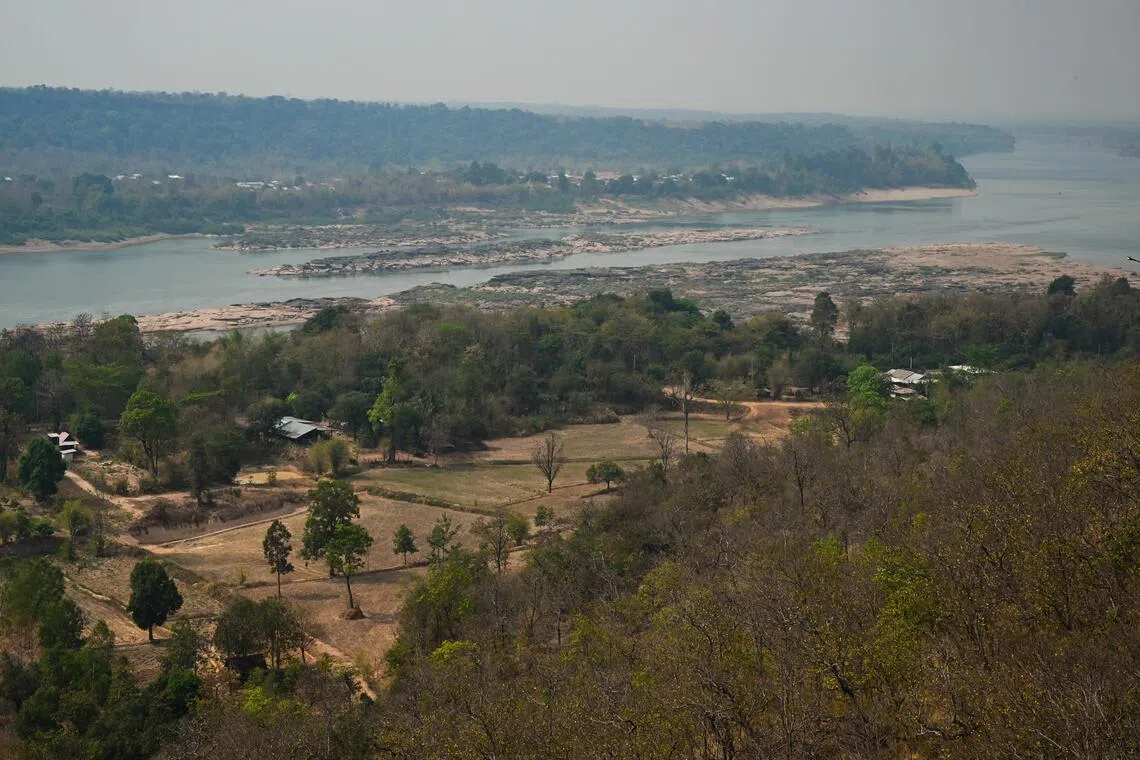
The Mekong River in Laos, where several hydropower projects are located.
ST PHOTO: LIM YAOHUI
Published Oct 30, 2026, 01:25 PM
Updated Oct 30, 2026, 01:26 PM
Singapore’s plan to beef up its energy security via electricity imports could be strengthened if a proposal to bring in up to 500 megawatts (MW) of renewable energy from Laos comes to fruition. This amount makes up slightly over 4 per cent of Singapore’s current generation capacity of 12 gigawatts.
The three parties -Tuas Power, Electricite Du Laos and Phongsupthavy Group - on Oct 30 signed an agreement to explore a long-term energy cooperation arrangement of between five and 15 years.
Supply will be gradually increased over three years, when approvals are granted.
SINGAPORE - Singapore’s plan to beef up its energy security via electricity imports could be strengthened if a proposal to bring in up to 500 megawatts (MW) of renewable energy from Laos comes to fruition.
This amount, which makes up slightly over 4 per cent of Singapore’s current generation capacity of 12 gigawatts (GW), will mainly come from hydropower dams in Laos, according to plans by Tuas Power, a Laotian conglomerate and its national grid operator.
But as hydropower is a resource that may not be available during the dry season, the electricity imported into Singapore could be supplemented by other renewable energy sources in Laos, including solar and wind, said chief operating officer of Tuas Power Michael Wong.
The three parties -Tuas Power , Electricite Du Laos and Phongsupthavy Group - on Oct 30 signed an agreement to explore a long-term energy cooperation arrangement of between five and 15 years.
It was inked on the sidelines of the Singapore International Energy Week at the Marina Bay Sands.
Wong said the three firms are securing approvals for the proposal.
In Singapore, before a company is granted an electricity import license from the Energy Market Authority (EMA), the Republic’s energy regulator, it has to undergo three stages.
The first stage entails the firm getting EMA’s “conditional approval”, which indicates that a project’s proposal is technically and commercially viable. The firm will then begin further surveys and feasibility studies.
If it can demonstrate its ability to meet the requirements of both the host country and Singapore, EMA will then award it a conditional license.
The third and last step is when EMA issues the importer licence.
Tuas Power said in a statement that Laotian hydropower plants are expected to ramp up from 100 MW of electricity in the first contract year, to 300MW in the second and 500MW thereafter.
Wong said the companies will be working to source for buyers of the imported electricity , approvals from authorities and the necessary certificates by 2027.
He said the company also plans to build up existing energy infrastructure, such as laying new cables, over the years as demand rises.
The power generation firm hopes to appeal to businesses looking to green their electricity supply, and potential customers could include data centres and semiconductor companies, several of which are part of Tuas Power’s existing customers.
Wong said: “Through this potential collaboration with Phongsupthavy Group and Electricite Du Lao s, Tuas Power can offer customers with immediate bundled renewable energy solutions – hydropower paired with certified environmental attributes.”
While the partnership had been in the works since 2023, some time was needed to ensure a stable volume of electricity, he added.
Signing of the memorandum of understanding between Tuas Power, Electricite Du Laos and Phongsupthavy Group to explore up to 500 MW of hydropower supply from Lao PDR at SIEW 2026. PHOTO: TUAS POWER
Signing of the memorandum of understanding between Tuas Power, Electricite Du Laos and Phongsupthavy Group to explore up to 500 MW of hydropower supply from Lao PDR at SIEW 2026.
Souksavart Sosouphanh, managing director of Electricite Du Laos, welcomed the opportunity to explore the collaboration between Tuas Power and Phongsupthavy Group , which is “a strategic developer of renewable and energy-mix power generation appointed by the Government of the Laos with the support of the Ministry of Industry and Commerce” .
He added: “Regional power trade in ASEAN has made good progress in recent years, and we believe deeper cooperation among likeminded partners can support a more integrated ASEAN Power Grid.
“We look forward to working together to examine how Laos ’ hydropower resource scan contribute to the region’s energy needs.”
Somlath Mek Akath, managing director of Phongsupthavy Group, said the electricity will flow from the conglomerate’s projects in northern and southern Laos, noting that the key obstacle for the partnership will be securing the bilateral contracts that authorise the cross border flow of electricity.
The group’s chairman Phongsavath Senaphuan, added: “We recognise that hydropower is a seasonal resource, and we will work towards a supply profile that is transparent and deliverable, should the arrangement proceed.”
When fully scaled up to 500MW, the electricity imported under this proposal is more than double of the 200MW of permitted capacity under an existing power integration project involving Laos, Thailand, Malaysia and Singapore.
Launched in 2022, the Laos-Thailand-Malaysia-Singapore Power Integration Project involves exporting hydropower from Laos to Singapore.
T hat effort has been touted as a precursor to the ASEAN Power Grid , a regional power grid that aims to bring socio-economic growth and greener electricity to member states that need it, such as Singapore.
The first phase of the project led to up to 100 MW arriving in the Republic via existing interconnectors. Keppel was the firm that had been granted the licence to import electricity under the project.
Its renewal in 2024, however, was momentarily snagged by disagreements over how the energy was to be transmitted through Thailand and Malaysia, before they were resolved in January 2026 .
Electricity imports are one pillar in Singapore’s straetgy to boost its energy security through a portfolio of energy sources. Conditional approvals have been granted to 13 projects to import 9.25GW of low-carbon electricity from Australia, Cambodia, Indonesia, Malaysia, and Vietnam.
Other energy sources Singapore is considering include geothermal and nuclear.
老挝境内的湄公河沿岸分布着多个水电项目。
ST 照片:林耀辉
发布于 2026 年 10 月 30 日下午 1:25
更新于2026年10月30日下午1:26
如果从老挝进口高达500兆瓦(MW)可再生能源的提议得以实现,新加坡通过电力进口加强能源安全的计划可能会得到加强。这一数字略高于新加坡目前12吉瓦发电容量的4%。
10月30日,Tuas Power、老挝电力公司和Phongsupthavy集团三方签署协议,探讨为期5至15年的长期能源合作安排。
供应量将在获得批准后的三年内逐步增加。
新加坡——如果从老挝进口高达 500 兆瓦 (MW) 可再生能源的提议得以实现,新加坡通过电力进口加强能源安全的计划可能会得到加强。
根据老挝企业集团 Tuas Power 及其国家电网运营商的计划,这部分电力将主要来自老挝的水力发电大坝,占新加坡目前 12 吉瓦 (GW) 发电能力的 4% 多一点。
但大士电力公司首席运营官黄先生表示,由于水力发电在旱季可能无法使用,新加坡进口的电力可以由老挝的其他可再生能源(包括太阳能和风能)补充。
10月30日,Tuas Power、老挝电力公司和Phongsupthavy集团三方签署协议,探讨为期5至15年的长期能源合作安排。
它是在新加坡滨海湾金沙酒店举行的新加坡国际能源周期间签署的。
黄先生表示,这三家公司正在为该提案争取审批。
在新加坡,一家公司要从新加坡能源市场管理局(EMA,该国的能源监管机构)获得电力进口许可证,必须经历三个阶段。
第一阶段是公司获得欧洲药品管理局(EMA)的“有条件批准”,这表明项目方案在技术和商业上都是可行的。之后,公司将开始进一步的调查和可行性研究。
如果该公司能够证明其有能力满足东道国和新加坡的要求,EMA 将授予其有条件许可证。
第三步也是最后一步,即EMA颁发进口许可证。
Tuas Power在一份声明中表示,老挝水电站的发电量预计将从合同第一年的100兆瓦逐步增加到第二年的300兆瓦,之后每年增加到500兆瓦。
黄先生表示,这些公司将努力在 2027 年前找到进口电力的买家,获得当局的批准和必要的证书。
他表示,随着需求的增长,该公司还计划在未来几年内扩建现有的能源基础设施,例如铺设新的电缆。
这家发电公司希望吸引那些寻求绿色电力供应的企业,潜在客户可能包括数据中心和半导体公司,其中一些公司是 Tuas Power 的现有客户。
黄先生表示:“通过与 Phongsupthavy 集团和老挝电力公司的潜在合作,大士电力可以为客户提供即时捆绑式可再生能源解决方案——水力发电与经认证的环境属性相结合。”
他补充说,虽然这项合作从 2023 年就开始筹备,但需要一些时间来确保稳定的电力供应量。
在2026年东南亚国际能源周(SIEW 2026)上,大士电力公司(Tuas Power)、老挝电力公司(Electricite Du Laos)和丰素塔维集团(Phongsupthavy Group)签署谅解备忘录,探讨从老挝人民民主共和国获取高达500兆瓦的水电供应。图片:大士电力公司
在2026年东南亚能源周(SIEW 2026)上,Tuas Power、老挝电力公司和Phongsupthavy集团签署谅解备忘录,探讨从老挝人民民主共和国获取高达500兆瓦的水电供应。
老挝电力公司总经理苏萨瓦·索苏潘表示,他很高兴有机会探讨大士电力公司与丰苏塔维集团之间的合作。丰苏塔维集团是“老挝政府在工贸部的支持下指定的可再生能源和混合能源发电战略开发商”。
他补充道:“近年来,东盟区域电力贸易取得了良好进展,我们相信志同道合的伙伴之间更深入的合作可以支持一个更加一体化的东盟电网。”
“我们期待共同探讨老挝的水力资源如何为该地区的能源需求做出贡献。”
Phongsupthavy集团总经理Somlath Mek Akath表示,电力将来自该集团在老挝北部和南部的项目,并指出该合作的关键障碍是获得授权跨境输电的双边合同。
该集团主席 Phongsavath Senaphuan 补充道:“我们认识到水力发电是一种季节性资源,如果这项协议得以实施,我们将努力实现透明且可交付的供电模式。”
如果按照该方案全面扩大到 500 兆瓦,进口电力将是现有老挝、泰国、马来西亚和新加坡电力一体化项目允许的 200 兆瓦容量的两倍多。
老挝-泰国-马来西亚-新加坡电力一体化项目于 2022 年启动,旨在将老挝的水力发电出口到新加坡。
这项努力被誉为东盟电网的先导,东盟电网是一个区域性电网,旨在为新加坡等需要的成员国带来社会经济增长和更环保的电力。
项目第一阶段通过现有互联线路向新加坡输送了高达100兆瓦的电力。吉宝集团是获得该项目电力进口许可证的公司。
然而,由于在如何通过泰国和马来西亚输送能源的问题上存在分歧,该协议在 2024 年的续签一度受阻,直到 2026 年 1 月才得到解决。
电力进口是新加坡通过多元化能源结构提升能源安全战略的重要支柱之一。目前,新加坡已初步批准13个项目,拟从澳大利亚、柬埔寨、印度尼西亚、马来西亚和越南进口9.25吉瓦的低碳电力。
新加坡正在考虑的其他能源来源包括地热能和核能。