EVs do not need special brake pads电动汽车不需要特殊的刹车片。
Are EV brake pads different from petrol cars? Find out how regenerative braking affects brake pad wear and maintenance. Read more at straitstimes.com.
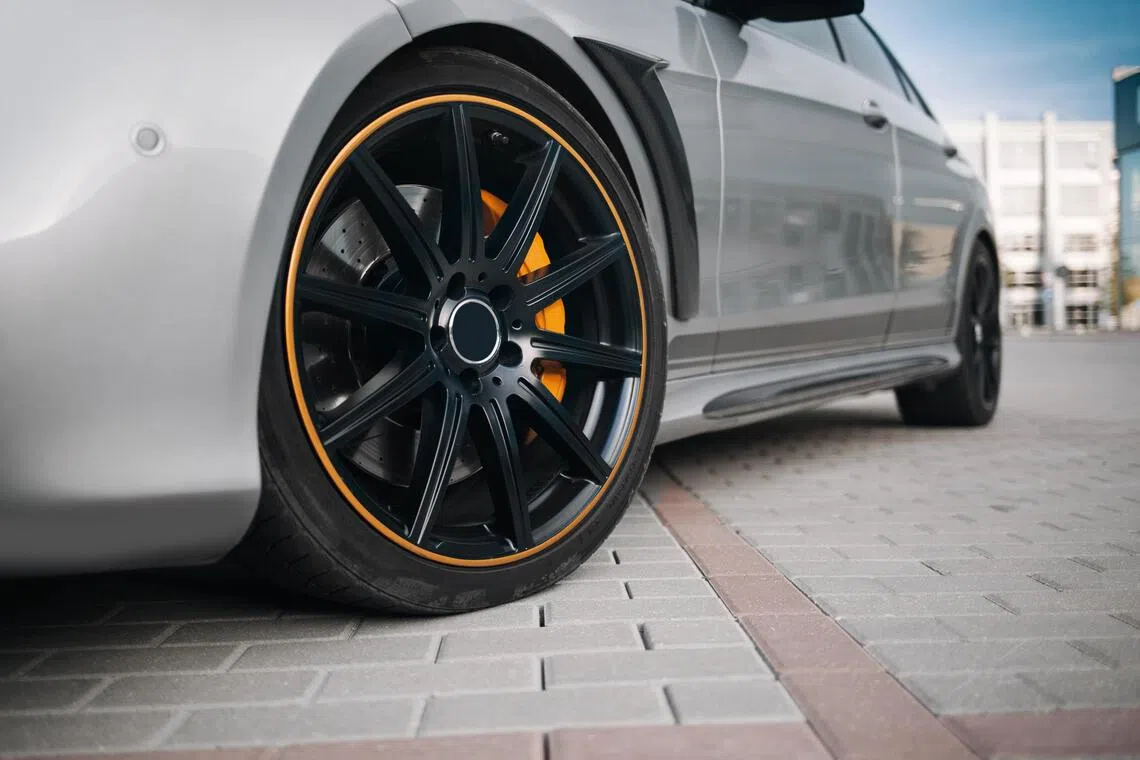
Electric vehicle brake pads may have a special composition to cope with the increased weight and different braking characteristics.
Amrit Mirchandani Changaroth
Published Oct 30, 2026, 02:46 PM
Updated Oct 30, 2026, 02:46 PM
Are electric vehicle brake pads any different from those of engine-powered cars?
Electric vehicles (EVs) generally do not require special brake pad or disc material. However, this has not stopped manufacturers from marketing special compositions for their equipment.
EVs slow down by regenerative braking, the use of traditional mechanical friction brakes or a mixture of both.
Although regenerative braking is sufficient for the average commute, there are several scenarios where the friction brakes are necessary, like when the EV is fully charged and cannot activate regenerative braking.
Regenerative braking produces a deceleration force of up to 0.5 G-force (g). This is when the EV’s motor is used as a generator to capture kinetic energy to feed the battery while slowing down the car.
Traditional road car brakes may produce up to 1.1g of deceleration. To bridge this gap from regenerative braking, mechanical friction brakes are still needed. In fact, at lower speeds, friction braking is often used to slow down the car, rather than regenerative braking.
EVs generally weigh more than non-electric cars. As such, there may be a need to create brake pad material which can cope with the higher weight. Some manufactures may increase the ceramic content in their brake pads to achieve higher performance levels. However, the differences are minute and therefore might not necessarily require a special formula.
Some brake pad manufacturers also market their pads as having galvanised backing plates that prevent rust, which can occur because the pads are more lightly used than in an engine-powered car.
Although this is true, this has no benefit whatsoever for the actual effectiveness of braking or the quality of the brake feel. The backing plate serves merely as a layer between the corrosive material and the brake piston. This plate will be subjected to environmental degradation in any type of vehicle.
Some EV manufacturers may require an extra service step in the vehicle’s maintenance. Kia and Hyundai, for example, have introduced a brake disc cleaning mode in their EVs.
Essentially, in this mode, regenerative braking is deactivated, so the friction brakes are used to slow down the vehicle.
Heat and friction are introduced to the surfaces of the brake pads and discs, and thus remove any rust or impurities that may have built up.
For cars without this feature, a few firm steps on the brake pedal while driving on a clear stretch of road will net the same effect.
Electric and hybrid vehicles
电动汽车刹车片可能采用特殊配方,以应对增加的重量和不同的制动特性。
阿姆里特·米尔昌达尼·昌加罗斯
发布于 2026 年 10 月 30 日下午 2:46
更新于2026年10月30日下午2:46
电动汽车的刹车片与燃油汽车的刹车片有什么区别?
电动汽车通常不需要特殊的刹车片或刹车盘材料。然而,这并没有阻止制造商销售为其产品专门配制的特殊材料。
电动汽车通过再生制动、使用传统机械摩擦制动器或两者结合的方式减速。
虽然再生制动足以满足一般的通勤需求,但在某些情况下,摩擦制动器是必要的,例如电动汽车充满电且无法启动再生制动时。
再生制动可产生高达 0.5 G 的减速度。此时,电动汽车的电机被用作发电机,在减速的同时捕获动能并为电池充电。
传统公路车辆的制动器可产生高达 1.1g 的减速度。为了弥补与再生制动之间的差距,仍然需要机械摩擦制动器。事实上,在低速行驶时,通常使用摩擦制动而非再生制动来减速。
电动汽车通常比非电动汽车更重。因此,可能需要研发能够承受更高重量的刹车片材料。一些制造商可能会提高刹车片中的陶瓷含量以提升性能。然而,这种差异微乎其微,因此可能并不需要特殊的配方。
一些刹车片制造商还宣传他们的刹车片带有镀锌背板,可以防止生锈,这是因为刹车片的使用频率比汽车上的刹车片要低。
虽然如此,但这对实际制动效果或制动脚感没有任何益处。背板的作用仅仅是作为腐蚀性材料和制动活塞之间的隔离层。在任何类型的车辆中,这块背板都会受到环境因素的影响而老化。
部分电动汽车制造商可能会要求在车辆保养中增加一个额外的服务步骤。例如,起亚和现代汽车已在其电动汽车中引入了刹车盘清洁模式。
本质上,在这种模式下,再生制动被停用,因此使用摩擦制动器来减慢车辆速度。
通过加热和摩擦作用于刹车片和刹车盘的表面,可以去除可能积聚的任何锈迹或杂质。
对于没有此功能的汽车,在空旷的道路上行驶时,用力踩几下刹车踏板也能达到同样的效果。
电动和混合动力汽车