‘It’s not just about the shakes’: Ninja Warrior Jimmy Choi on living with Parkinson’s disease“不仅仅是手抖”:忍者勇士吉米·崔谈帕金森病
The seven-time American Ninja Warrior is in Singapore to headline an exhibition that raises awareness of the disease. Read more at straitstimes.com.
新闻视频
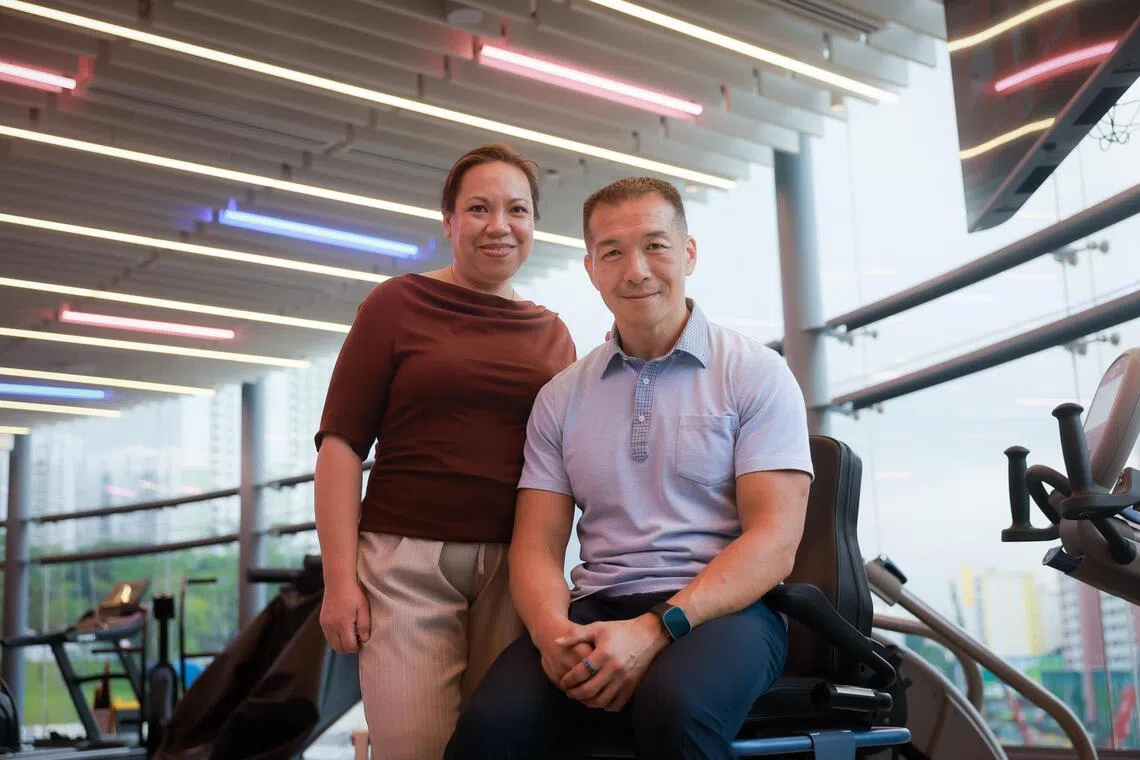
American Ninja Warrior Jimmy Choi and his wife Cherryl Choi at a Gym at AMK Hub on Oct 29. He was in Singapore to launch an interactive exhibition aimed at driving awareness of Parkinson's disease.
Published Oct 30, 2026, 06:10 PM
Updated Oct 30, 2026, 06:10 PM
SINGAPORE – Ask Parkinson’s disease (PD) advocate Jimmy Choi for a short video clip on his invisible symptoms and how he is preparing for a future with the neurodegenerative condition, and he gives it to you in a single take.
“They call me one-take Jimmy,” said Choi, a 51-year-old Taiwan-born American, who was diagnosed with young-onset Parkinson’s disease at age 27.
Choi, a social media advocate @jcfoxninja and motivational speaker , is a seven-time American Ninja Warrior competitor and an endurance athlete who has completed an ultra-marathon, multiple marathons and triathlons, and a 161km bike ride in under five hours.
But beyond the confident public image and rippling muscles is the reality of living with a progressive disease in a body that is changing with time, he told The Straits Times.
He and his wife Cherryl, 50, have arrived in Singapore to headline the Oct 31 launch of Warrior 24/7, an experiential exhibition designed to raise awareness of PD. Choi is also speaking at a fully subscribed symposium for about 320 people.
Organised by the Lien Foundation in collaboration with Parkinson Society Singapore (PSS) and other partners, the exhibition has six interactive stations that offer a glimpse of how someone with PD lives every day, for instance, with hands that will not hold steady, feet that freeze mid-step, handwriting that shrinks, and a voice that fades.
I t will be held at the Singapore Institute of Technology Punggol Campus from Oct 31 to Nov 4, before moving to City Square Mall from Nov 7 to 15.
Not just a ‘shaking’ disease
Parkinson’s disease is an incurable movement disorder of the nervous system that worsens over time. Many symptoms are caused by a loss of neurons.
The biggest misconception that people have about the disease is that it is all about the tremors, Choi told ST in an interview at AMK Hub .
“But 30% of people with Parkinson’s don’t even ever have tremors.
“I have tremors, but it doesn’t really bother me that much. The top three things that I wish I didn’t have with Parkinson’s are dystonia (involuntary, sustained or repetitive muscle contractions), rigidity, and bradykinesia (slowness of movement).”
Choi is always actively keeping the right side of the body upright. “I’m always pulled to one side. So, the best way to help fight against dystonia is strengthening the other side,” he said.
Besides the motor challenges, many of PD’s most significant challenges are not related to movement, including apathy, difficulties with speech and voice volume, as well as changes in facial expression.
Choi gets disrupted sleep every night, managing a total of just four hours because of PD symptoms.
“ Cramps, movements wake me up. I am always tired,” he said.
Yet, he seldom misses his 45-minute workout sessions. He is at the gym six times a week, often as early as 6am, working out at a target heart rate of 148, or 80% of his maximum heart rate.
On why he trains, he said: “Everything that I do in the gym has a purpose in my life with Parkinson’s.”
But his goals have evolved. “I’m not looking to always make improvements or gains. With a progressive disease, if I’m able to maintain (my current state), I’m actually winning.”
In Singapore, more than 10,000 people are estimated to be living with PD in 2026, up from more than 8,000 persons in 2019.
As awareness grows, more people with PD have been seeking help earlier, leading to a drop in the average age of diagnosis from 67.3 years in 2008 to around 63.5 years in 2024, said Tay Kay Yaw, a senior consultant at the National Neuroscience Institute.
“This is encouraging yet we can do more to understand the disease and seek better ways to keep it under control for longer,” he said.
Roughly 10% of the PD patients are below 50 years old and there is no single factor that leads to development of a young-onset PD.
“Among movement disorders specialists, we tend to pay particular attention to family history which may suggest some genetic susceptibility,” Tay said.
Adapting to a changing body
Choi plans his days around periods of good movement, which can be six to eight hours or sometimes, just two. ST PHOTO: GAVIN FOO
Choi plans his days around periods of good movement, which can be six to eight hours or sometimes, just two.
When people ask Choi where his disease is at, he would say that he is stage one – where a person has mild symptoms that generally do not interfere with daily activities -– when he is on his medications, and stage four – where symptoms are severely disabling – when he is off them and has a difficult time moving around.
PD progresses differently for each person, with symptoms appearing at varying speeds and intensity. Those with young-onset PD often experience slower symptom progression and fewer cognitive issues.
In between, he rests and takes naps.
He has shifted from high-impact endurance challenges towards preserving his joints and body for the long haul of living with the disease. His last marathon was in 2019; he has completed 16 marathons, more than 100 half-marathons and one 80.5km ultra-marathon.
“In the beginning, when I started my transformation, it was all about go go go… But I’m realising more and more that I need to rely on this body to work for much longer, so now it’s more about preservation,” Choi said.
“That’s one of the reasons why I needed to stop American Ninja Warrior because the training has a very high impact on my joints. If your muscles fail, you can fix that. When your joints fail, you’re done.”
His last Ninja Warrior race was filmed in 2024 and aired in 2025.
Research has consistently demonstrated that regular exercise can play a significant role in slowing motor decline in Parkinson’s disease, Tay said.
Tan Tock Seng Hospital’s (TTSH) senior principal physiotherapist Chloe Chung Lau Ha pointed out that a common misconception is that doing everyday activities such as walking the dog or grocery shopping provides enough exercise to manage PD.
“People living with PD benefit from structured exercise programmes that incorporate aerobic conditioning, strength training, balance exercises, and mobility training tailored to their individual needs,” she said.
With early multidisciplinary care, they and their families can adapt successfully, and many continue to maintain their independence and lead fulfilling lives for decades after diagnosis, she added.
Tay said that many people living with Parkinson’s disease may not be aware of the locally developed community rehabilitation programme KEEP (Kickstart Exercises and Empower Parkinson’s), which provides not just structured exercise, strength and fitness training, gait and balance rehabilitation, functional optimisation but also early detection of mood-related issues.
The programme helps reduce fall risk while enabling participants to maintain function, independence, and overall well-being. It is co-developed by the Lien Foundation, Parkinson Society Singapore, TTSH, and the National Neuroscience Institute (NNI).
The first eight years
Cherryl has learnt to support Choi with practical planning and logistics. She emphasises that caregivers should also ask themselves what they want because they often neglect themselves. ST PHOTO: GAVIN FOO
Cherryl has learnt to support Choi with practical planning and logistics. She emphasises that caregivers should also ask themselves what they want because they often neglect themselves.
As Choi and his wife Cherryl, a senior project manager at a non-profit hospital, reflected on the early years after his diagnosis, they said that keeping his symptoms private led to a communication breakdown.
“One of the biggest Parkinson’s non-motor symptoms is apathy. So for him, he wasn’t involved with the kids… It felt like he wasn’t sharing the time with us, like he’s just there. That was difficult,” said Cherryl.
Choi’s diagnosis had shocked him into silence, denial and defeat. By 2010, when he was 35, he walked with a cane.
Then he fell down the stairs while holding his son Mason, who was 10 months old.
Although both were not harmed, the fall became a catalyst for Jimmy to take back control, and begin his exercise regime.
“When I look back, I realised that I was self-isolating. I thought I was protecting my family from the burdens of Parkinson’s,” said Choi.
“But in reality, I was pushing more of it onto them because they didn’t know what was going on, and they had to figure it out themselves. They didn’t know where to look, and I wasn’t helping.”
Cherryl has learnt to support him with practical planning and logistics. She emphasises that caregivers should also ask themselves what they want because they often neglect themselves.
Son diagnosed with functional neurological disorder
In 2025, their son Mason, now 17, was diagnosed with functional neurological disorder, which stems from a problem with how the brain’s networks receive and send signals to the rest of the body.
Mason used to hit the gym with Choi, but his symptoms have progressed to the point where he has to use a wheelchair.
“I blame myself because the one person that I need to motivate the most I can’t, and it’s hard,” Choi said.
“But he’s getting there. I have to realise that it took me eight years to make that realisation. People need time. That’s why I say allow yourself to grieve (if you have been recently diagnosed with PD). So I’m allowing him more space to go through that process himself.”
Cherryl said it feels like they are rewinding the clock.
“But I have to stop and think. It took us eight years to accept where (Jimmy) was and I know that we can come out of it,” she said.
“What’s difficult for anyone who’s got a movement disorder is you keep thinking back to what you were doing before, but you need to look at what you have in front of you, meet your body where it’s at, and then push forward.”
For Choi, preparing for the future means making sure that his family is going to be okay, and living for today. The couple also have a 19-year-old daughter, Karina.
“We’re not guaranteed the future… I don’t know a year from now what my body is going to be like, and I can’t worry about that. What I can still do is things for my kids, be with my family, and I know I can do that today.”
Catch Jimmy Choi narrating the challenges of PD as his wife Cherryl tries out the stations at the Warrior 24/7 exhibition on Oct 31, from 11.30am to noon.
Joyce Teo is senior health correspondent at The Straits Times and the host of ST podcast series Health Check.
National Neuroscience Institute
美国忍者勇士吉米·崔和他的妻子切丽尔·崔于 10 月 29 日在 AMK Hub 的一家健身房。他当时在新加坡是为了启动一个旨在提高人们对帕金森病认识的互动展览。
发布于2026年10月30日下午6:10
更新于2026年10月30日下午6:10
新加坡——如果你向帕金森病 (PD) 倡导者 Jimmy Choi 询问一段关于他的隐形症状以及他如何为未来应对这种神经退行性疾病做准备的短视频,他会一气呵成地为你提供。
“他们都叫我‘一次过’吉米,”崔说道。这位51岁的台湾裔美国人在27岁时被诊断出患有早发性帕金森病。
崔(@jcfoxninja)是一位社交媒体倡导者、励志演说家,曾七次参加美国忍者勇士比赛,是一位耐力运动员,他完成了一次超级马拉松、多次马拉松和铁人三项比赛,并在五小时内完成了 161 公里的自行车骑行。
但他告诉《海峡时报》:“在自信的公众形象和健硕的肌肉背后,是与一种进行性疾病共存的现实,而这种疾病会随着时间的推移而改变你的身体。”
他和50岁的妻子Cherryl已抵达新加坡,出席10月31日举行的“战士24/7”体验式展览的开幕式,该展览旨在提高人们对帕金森病的认识。崔先生还将在一个约有320人参加的、座无虚席的研讨会上发表演讲。
本次展览由连氏基金会与新加坡帕金森协会 (PSS) 及其他合作伙伴共同举办,设有六个互动展位,让参观者得以一窥帕金森病患者的日常生活,例如双手无法保持稳定、双脚在行走过程中突然僵住、字迹逐渐变小、声音逐渐消失等等。
活动将于 10 月 31 日至 11 月 4 日在新加坡理工学院榜鹅校区举行,之后将于 11 月 7 日至 15 日移至城市广场购物中心举行。
不仅仅是“颤抖”的疾病
帕金森病是一种无法治愈的神经系统运动障碍疾病,病情会随着时间推移而恶化。许多症状是由神经元丢失引起的。
崔在AMK Hub接受《海峡时报》采访时表示,人们对这种疾病最大的误解是认为它只与震颤有关。
“但有 30% 的帕金森病患者甚至从未出现过震颤。
“我有震颤,但并不太困扰我。我最希望自己没有帕金森症带来的三种症状是肌张力障碍(不自主的、持续的或重复的肌肉收缩)、僵硬和运动迟缓。”
崔医生总是主动保持身体右侧直立。“我总是被拉向一边。所以,对抗肌张力障碍的最好方法就是加强另一侧的力量,”他说。
除了运动方面的挑战外,帕金森病的许多最重大挑战与运动无关,包括冷漠、言语和音量困难,以及面部表情的变化。
由于帕金森病症状,崔每晚睡眠都受到干扰,总共只能睡四个小时。
“抽筋和动静会把我吵醒。我总是感觉很累,”他说。
然而,他很少错过每周45分钟的锻炼。他每周去健身房六次,通常早上六点就到,目标心率达到148,也就是他最大心率的80%。
谈到他为什么训练,他说:“我在健身房做的每一件事都对我的帕金森症治疗有意义。”
但他的目标已经发生了变化。“我不再总是追求进步或提升。身患渐进性疾病,如果我能保持(目前的状态),实际上我就赢了。”
据估计,到 2026 年,新加坡将有超过 10,000 人患有帕金森病,而 2019 年这一数字为超过 8,000 人。
国家神经科学研究所高级顾问Tay Kay Yaw表示,随着人们对帕金森病的认识不断提高,越来越多的帕金森病患者开始更早地寻求帮助,导致平均诊断年龄从2008年的67.3岁下降到2024年的63.5岁左右。
“这令人鼓舞,但我们仍需做更多工作来了解这种疾病,并寻求更好的方法来更长时间地控制它,”他说。
大约 10% 的帕金森病患者年龄在 50 岁以下,目前还没有单一因素导致青年型帕金森病的发生。
“在运动障碍专家中,我们往往特别关注家族史,因为这可能表明存在某种遗传易感性,”Tay说。
适应身体的变化
崔的日程安排围绕着充足的运动时间展开,这些时间可能是六到八小时,有时也可能只有两小时。ST PHOTO:GAVIN FOO
崔的日程安排以良好的运动时间段为中心,这段时间可能是六到八个小时,有时也可能只有两个小时。
当人们问崔先生他的病情处于哪个阶段时,他会说,当他服用药物时,他处于第一阶段——症状轻微,通常不会影响日常生活;而当他停止服药时,他处于第四阶段——症状严重,行动不便。
帕金森病的进展因人而异,症状出现的速度和严重程度也各不相同。早发性帕金森病患者的症状进展通常较慢,认知问题也较少。
期间,他会休息和打盹。
他已从高强度耐力挑战转向保护关节和身体,以便长期与疾病共存。他最后一次参加马拉松是在2019年;他已完成16次马拉松、100多次半程马拉松和一次80.5公里超级马拉松。
“一开始,当我开始转型的时候,我一心只想快速前进……但我越来越意识到,我需要依靠这副身体更长时间地工作,所以现在更多的是关于保养,”崔说道。
“这就是我不得不退出《美国忍者勇士》的原因之一,因为训练对我的关节冲击非常大。如果肌肉出了问题,你可以修复;但如果关节出了问题,那就彻底完了。”
他最后一次参加忍者勇士比赛是在 2024 年拍摄的,并在 2025 年播出。
Tay表示,研究一直表明,规律运动可以显著减缓帕金森病患者的运动能力下降。
陈笃生医院 (TTSH) 高级首席理疗师 Chloe Chung Lau Ha 指出,一个常见的误解是,进行遛狗或购物等日常活动可以提供足够的运动来控制帕金森病。
“患有帕金森病的人可以从结构化的运动计划中受益,这些计划包括有氧运动、力量训练、平衡练习和根据他们的个人需求量身定制的活动能力训练,”她说。
她补充说,通过早期多学科护理,他们及其家人可以成功适应,许多人在确诊后数十年仍能保持独立并过上充实的生活。
Tay表示,许多患有帕金森病的人可能并不了解本地开发的社区康复计划KEEP(启动锻炼和增强帕金森病能力),该计划不仅提供结构化的运动、力量和体能训练、步态和平衡康复、功能优化,而且还能及早发现与情绪相关的问题。
该项目旨在帮助参与者降低跌倒风险,同时保持身体机能、独立性和整体健康。该项目由连氏基金会、新加坡帕金森病协会、陈笃生医院和国家神经科学研究所 (NNI) 联合开发。
前八年
Cherryl学会了如何通过实际的计划和后勤安排来支持Choi。她强调,照顾者也应该问问自己想要什么,因为他们常常忽略了自己的需求。ST PHOTO:GAVIN FOO
切丽尔学会了在实际规划和后勤安排方面为崔提供支持。她强调,照顾者也应该问问自己想要什么,因为他们常常忽略了自己的需求。
崔和他的妻子切丽(一家非营利医院的高级项目经理)在回顾他确诊后的最初几年时表示,对他的症状保密导致了沟通障碍。
“帕金森病最严重的非运动症状之一就是冷漠。所以他无法参与到孩子们的活动中……感觉他没有和我们一起度过时光,他只是在那里而已。这让我们很难过,”切丽尔说道。
崔的诊断结果让他震惊不已,他陷入了沉默、否认和绝望之中。到了2010年,35岁的他已经需要拄拐杖走路了。
然后,他抱着10个月大的儿子梅森从楼梯上摔了下来。
虽然两人都没有受伤,但这次摔倒却促使吉米重新掌控自己的生活,并开始了他的锻炼计划。
“现在回想起来,我意识到自己当时是在自我隔离。我以为我是在保护家人免受帕金森症的负担,”崔说道。
“但实际上,我把更多的问题推给了他们,因为他们不知道发生了什么,他们必须自己去解决。他们不知道该从哪里入手,而我却没有提供任何帮助。”
切丽尔学会了通过实际的计划和安排来支持他。她强调,照顾者也应该问问自己想要什么,因为他们常常忽略了自己的需求。
儿子被诊断患有功能性神经系统疾病
2025 年,他们的儿子 Mason(现年 17 岁)被诊断出患有功能性神经系统疾病,这种疾病源于大脑网络接收和发送信号到身体其他部位的方式出现问题。
梅森以前经常和崔一起去健身房,但他的病情已经发展到必须使用轮椅的地步。
“我责怪自己,因为我最需要激励的那个人我却做不到,这太难了,”崔说道。
“但他正在慢慢好起来。我必须意识到,我花了八年时间才明白这一点。人需要时间。所以我才说,(如果你最近被诊断出患有帕金森病)要允许自己悲伤。所以我给他更多的空间,让他自己经历这个过程。”
切丽尔说,感觉就像时光倒流一样。
“但我必须停下来好好想想。我们花了八年时间才接受(吉米)的处境,我知道我们能走出困境,”她说。
“对于任何患有运动障碍的人来说,困难之处在于你会不断回想以前在做什么,但你需要关注眼前的事情,顺应身体的现状,然后继续前进。”
对崔先生来说,为未来做准备意味着确保家人平安,并珍惜当下。他和妻子还有一个19岁的女儿,名叫卡琳娜。
“我们无法保证未来会怎样……我不知道一年后我的身体会是什么样子,我也不能为此担忧。但我仍然可以为我的孩子们做些事,陪伴我的家人,我知道我今天就能做到这些。”
10 月 31 日上午 11:30 至中午 12:00,在 Warrior 24/7 展览会上,Jimmy Choi 将为大家讲述 PD 的挑战,他的妻子 Cherryl 将亲自体验各个电台。
Joyce Teo 是《海峡时报》的高级健康记者,也是《海峡时报》播客系列节目“健康检查”的主持人。
国家神经科学研究所