Peacekeeping troop numbers fall to lowest in at least 25 years, SIPRI says斯德哥尔摩国际和平研究所称,维和部队人数降至至少25年来的最低水平
The U.S. took “significant action” in 2025 to withdraw from, defund or challenge various UN bodies, think tank analysts wrote in the report.
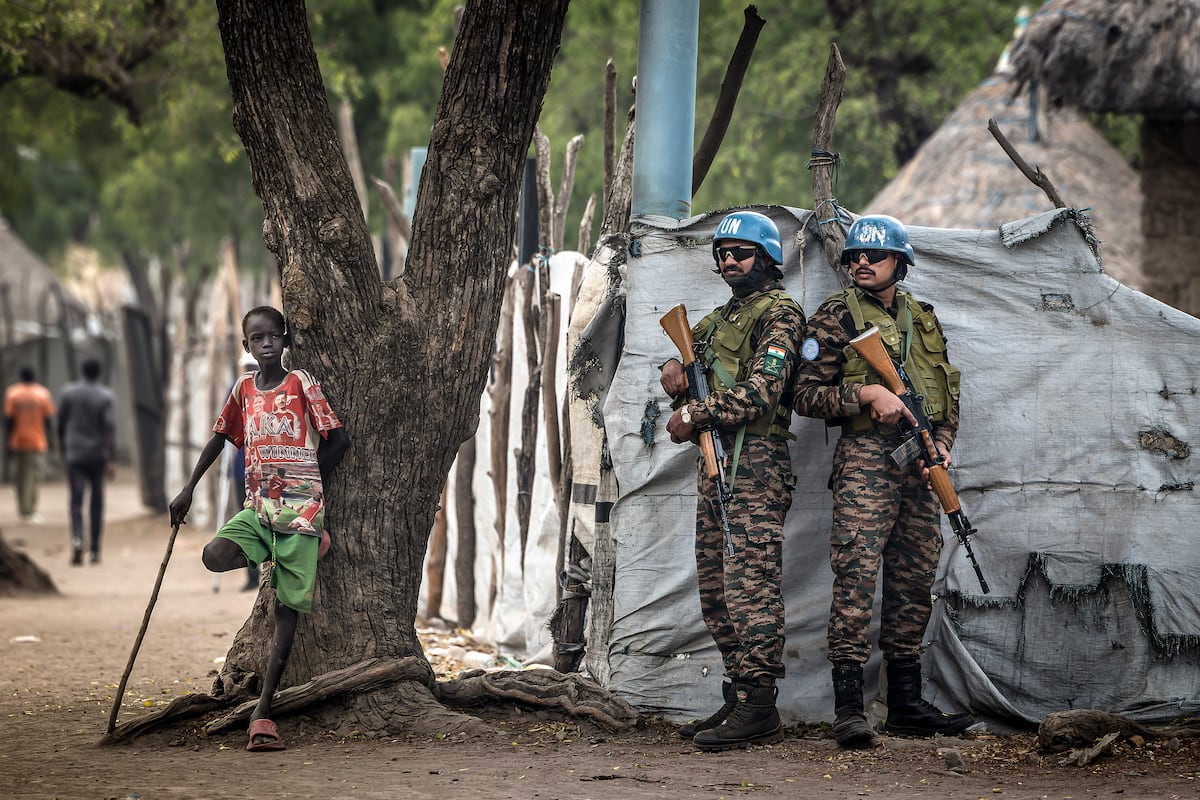
PARIS — The number of military personnel engaged in peacekeeping operations around the world fell to the lowest in at least a quarter century in 2025, and geopolitical tension and lack of funding are jeopardizing the viability of multilateral peacekeeping, according to research by the Stockholm International Peace Research Institute.
The number of international personnel deployed for peace operations fell to 78,633 at the end of December, down 17% from a year earlier, SIPRI said in a report published Monday. The number is down 49% from the end of 2016, the Swedish institute said.
Cuts in deployed personnel were mainly caused by a funding crisis in the United Nations due to delayed or unpaid contributions from major donors, according to SIPRI. That prompted an abrupt reduction on spending on peace operations, including by reducing personnel in several major operations, the researchers said.
“If things continue in this way, we could see a dramatic weakening of multilateral conflict management and the near-complete sidelining of institutions like the United Nations, due to a perfect storm of funding, political and geopolitical factors,” said Jaïr van der Lijn, director of the peace operations and conflict management program at SIPRI.
“The result is likely to be more conflicts, and these conflicts are likely to have even graver impacts on civilians as states abandon long-established norms.”
Multilateral conflict management and peace operations face “severe pressure,” according to SIPRI. Russia’s involvement in conflicts in Africa is hurting security governance there, the United States under President Donald Trump are undermining multilateralism, and China and Europe are either unwilling or unable to take on the task of sustaining the multilateral system, SIPRI said.
The U.S. took “significant action” in 2025 to withdraw from, defund or challenge various UN bodies, which included seeking to end UN peacekeeping operations including the UN Interim Force in Lebanon, or Unifil , the SIPRI report said.
SIPRI said the UN peacekeeping budget faced a shortfall of $2 billion at the start of July 2025, and the budget approved by the UN General Assembly for the 2025-2026 period was cut to $5.38 billion, the lowest in at least a decade.
While the United Nations was the main organizer of multinational peacekeeping operations in 2025, accounting for 18 operations and 67% of the deployed personnel, most peacekeeping efforts were led by regional organizations and alliances, accounting for 34 operations.
“Regional organizations lack key capabilities when it comes to successful, integrated peace-building, while they are also plagued by funding shortfalls and inability to reach agreement,” said Claudia Pfeifer Cruz, senior researcher in the peace operations and conflict management program. “As UN-led conflict management recedes, it is leaving a growing gap that alternative models are unable to fill.”
Sub-Saharan Africa hosted 70% of deployed peacekeeping personnel last year, with the Middle East and North Africa accounting for 15% and Europe for 12%, SIPRI said. The UN Multidimensional Integrated Stabilization Mission in the Central African Republic, or Minusca, and the UN Mission in South Sudan, or Unmiss, were the two biggest multilateral peace operations last year.
The 10 top contributors of both military and police personnel to multilateral peace operations were all countries in the Global South, according to the SIPRI data. The largest contributions of military personnel came mainly from sub Saharan Africa or South Asia, led by Uganda with 4,657 troops and followed by Nepal, Bangladesh and India, which each supplied more than 4,000 troops.
The funding shortfall, lower budget and disagreement over the decision to close Unifil by the end of December 2026 “indicate a progressively smaller role for the UN in conflict management,” SIPRI said. The institute noted the U.S. demanded the termination of Unifil despite “frequent violations” of a 2024 ceasefire agreement between Israel and Lebanon.
“Financial constraints clearly accelerated the personnel reductions but were not the only factor,” the institute wrote in its report. “As the debate over UNIFIL illustrates, geopolitical divisions and increasingly difficult negotiations in the Security Council have made it harder to sustain existing operations or build support for new ones.”
Rudy Ruitenberg is a Europe correspondent for Defense News. He started his career at Bloomberg News and has experience reporting on technology, commodity markets and politics.
巴黎——斯德哥尔摩国际和平研究所的研究表明,2025年全球参与维和行动的军事人员数量降至至少25年来的最低水平,地缘政治紧张局势和资金短缺正在危及多边维和行动的可行性。
斯德哥尔摩国际和平研究所(SIPRI)周一发布的一份报告显示,截至去年12月底,参与维和行动的国际人员数量降至78633人,比上年同期下降17%。该研究所还指出,这一数字比2016年底下降了49%。
据斯德哥尔摩国际和平研究所(SIPRI)称,联合国部署人员的削减主要是由于主要捐助方拖欠或未支付会费而导致的资金危机。研究人员表示,这促使联合国大幅削减维和行动开支,包括减少若干重大行动的人员。
“如果这种情况继续下去,由于资金、政治和地缘政治因素的完美风暴,我们可能会看到多边冲突管理急剧削弱,联合国等机构几乎完全被边缘化,”斯德哥尔摩国际和平研究所和平行动与冲突管理项目主任贾伊尔·范德林说。
“其结果很可能是冲突增多,而且随着各国放弃长期确立的规范,这些冲突可能会对平民造成更严重的影响。”
斯德哥尔摩国际和平研究所(SIPRI)指出,多边冲突管理和维和行动面临“严峻压力”。该研究所表示,俄罗斯介入非洲冲突正在损害当地的安全治理,美国总统唐纳德·特朗普领导下的美国正在破坏多边主义,而中国和欧洲要么不愿,要么无力承担维护多边体系的重任。
斯德哥尔摩国际和平研究所 (SIPRI) 的报告称,美国在 2025 年采取了“重大行动”,退出、停止资助或挑战各种联合国机构,其中包括寻求结束联合国维和行动,例如联合国驻黎巴嫩临时部队(联黎部队)。
斯德哥尔摩国际和平研究所表示,截至 2025 年 7 月初,联合国维和预算面临 20 亿美元的缺口,联合国大会批准的 2025-2026 年预算被削减至 53.8 亿美元,为至少十年来的最低水平。
尽管联合国是 2025 年多国维和行动的主要组织者,开展了 18 项行动,部署人员占 67%,但大多数维和行动由区域组织和联盟领导,共开展了 34 项行动。
“区域组织在成功开展一体化和平建设方面缺乏关键能力,同时还面临资金短缺和无法达成协议的困境,”和平行动与冲突管理项目高级研究员克劳迪娅·普费弗·克鲁兹表示。“随着联合国主导的冲突管理逐渐式微,由此产生的缺口日益扩大,而其他模式却无法填补。”
斯德哥尔摩国际和平研究所(SIPRI)表示,去年撒哈拉以南非洲地区部署的维和人员占总数的70%,中东和北非占15%,欧洲占12%。联合国中非共和国多层面综合稳定特派团(中非稳定团)和联合国南苏丹特派团(南苏丹特派团)是去年规模最大的两项多边维和行动。
根据斯德哥尔摩国际和平研究所(SIPRI)的数据,向多边维和行动派遣军事和警察人员最多的十个国家均为全球南方国家。军事人员派遣量最大的国家主要来自撒哈拉以南非洲和南亚,其中乌干达以4657名士兵位居榜首,其次是尼泊尔、孟加拉国和印度,这三个国家均派遣了4000多名士兵。
斯德哥尔摩国际和平研究所(SIPRI)表示,资金短缺、预算削减以及在2026年12月底关闭联合国驻黎巴嫩临时部队(联黎部队)的决定上存在分歧,“表明联合国在冲突管理中的作用日益减弱”。该研究所指出,尽管以色列和黎巴嫩之间于2024年达成的停火协议“屡遭违反”,美国仍要求终止联黎部队的行动。
该研究所的报告指出:“财政限制显然加速了人员裁减,但这并非唯一因素。正如围绕联合国驻黎巴嫩临时部队(联黎部队)的争论所表明的那样,地缘政治分歧和安理会日益艰难的谈判使得维持现有行动或争取对新行动的支持变得更加困难。”
鲁迪·鲁伊滕贝格是《防务新闻》的欧洲记者。他的职业生涯始于彭博新闻社,拥有报道科技、大宗商品市场和政治方面的经验。