Private-hire car loan curbs unlikely to bring down COE prices immediately: Motor dealers汽车经销商:私召车贷款限制不太可能立即降低拥车证价格
Private-hire car loan curbs are unlikely to lower COE prices immediately, motor dealers say, as demand stays strong in Singapore. Read more at straitstimes.com.
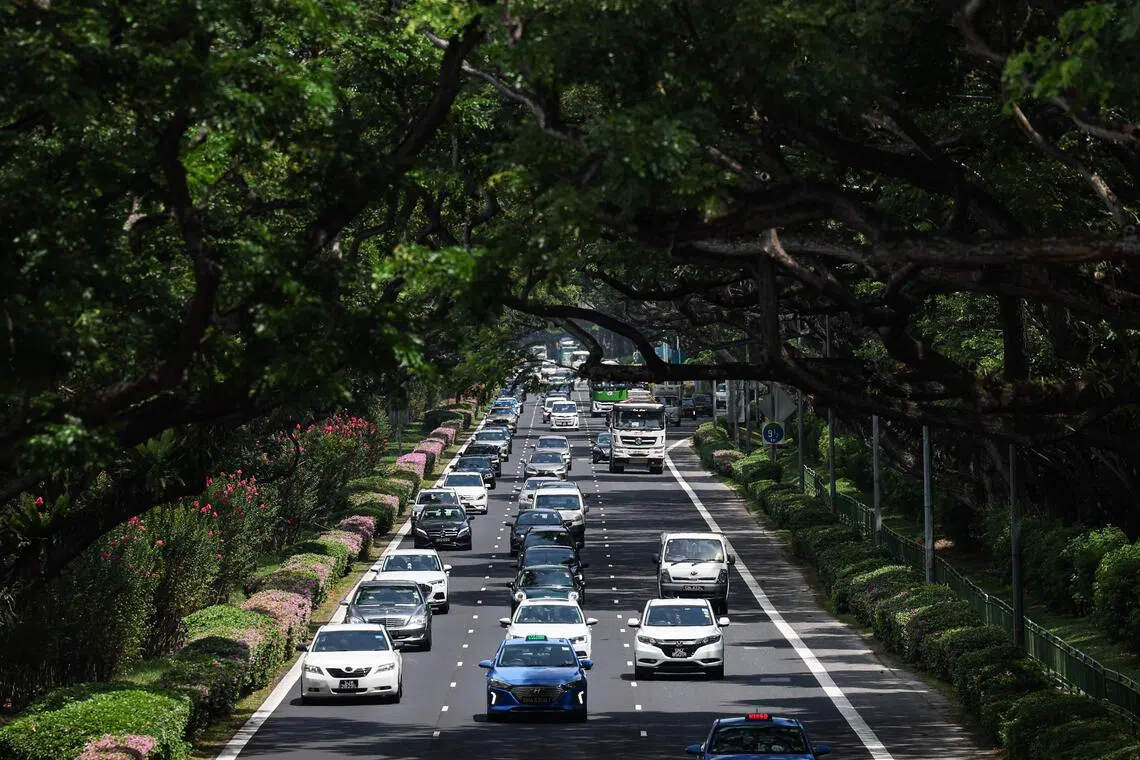
From Oct 30, loan restrictions on private cars also apply to individuals registering private-hire cars.
Published Oct 30, 2026, 09:50 PM
Updated Oct 30, 2026, 09:50 PM
Loan curbs for private-hire car buyers started on Oct 30, but dealers say COE prices are unlikely to fall before end-2026 because demand is still strong.
Buyers are rushing to register cars and EVs before Jan 1, 2027, when tax incentives change. Car Expo sales and a longer bidding gap may also lift COE demand.
Dealers say the rules may help later by limiting over-borrowing and shifting some buyers to used cars. Authorities want more financial prudence and less misuse of private-hire status.
SINGAPORE – Extending the financing curbs to individuals registering private-hire cars is not likely to bring down the price of certificates of entitlement (COE) before the end of 2026, said motor dealers.
This is because of the ongoing rush to register cars and electric vehicles before the expiry of current tax incentives from Jan 1, 2027.
From Oct 30, individuals taking a loan to buy private-hire cars are subjected to the same loan restrictions involving tenure and limit as those buying private cars.
The move has been seen by the industry as a way to lower demand for COEs, whose premiums have climbed to a record high of $133,009 for Category A in September. This category of certificates is needed to register mass-market cars.
With the extension of the curbs, some prospective buyers may not be able to fork out the 30% to 40% of the car price for the purchase of a new vehicle.
Before the change, it was possible for buyers to drive off in a new car without forking out a cent, as they can borrow the entire price of the car.
There was also no limit on the tenure of “private-hire car loans” given to individuals as such cars were considered for commercial use.
Industry insiders – including authorised distributors, parallel importers and finance companies, said that any impact the extension of loan curbs could have on COE demand in the immediate term would be countered by other factors.
These include the delivery of cars sold at the recent Car Expo event, a longer interval between the bidding exercises in November and December, and the ongoing rush to register cars before the current tax incentives are taken away from Jan 1, 2027.
The Car Expo was held on Oct 24 and 25. Organised by SPH Media, which publishes The Straits Times, the event typically increases total car sales for the weekend. This leads to higher demand for COEs at subsequent tender exercises in order to register the new cars sold.
Another factor that may see COE demand rising is the upcoming three-week interval between the second exercise in November and the first one in December. Being a week longer than the usual two-week gap, dealers then have time to collect more orders to secure COEs.
But the biggest underlying factor pushing the strong COE demand, according to the dealers, is the impending change to the tax rebate for electric vehicles (EVs) and corresponding hike in surcharges on non-EVs based on their emission levels.
Come Jan 1, 2027, the maximum rebate for an EV will be $10,000 lower than in 2026, while non-EVs will see a $7,500 increase in emission-based surcharge. Dealers have been urging buyers to commit to a new car in the recent months to beat the deadline.
At the latest COE tender exercise, the price of a certificate needed to register a mass-market car like a BYD Atto 3 ended at $132,004, from $102,009 at the beginning of 2026. Including the COE cost and applicable discounts, the electric sport utility vehicle is priced at $187,888.
To comply with the newly announced restrictions, the individual buyer has come up with a $56,366 down payment and service a seven-year loan.
Longer term impact on COE demand
The extension of loan curbs could eventually make a dent, or more, on COE demand, according to motor dealers.
There are two kinds of private-hire cars. One type is licensed to offer ride-hailing or limousine services, while the other is a rental car whose hirer cannot use the vehicle to ferry paying customers.
At the end of September, there were 98,621 private-hire cars in Singapore.
Out of this, 37,625 were rental cars, an 11.4% increase from the 33,765 at the end of 2025.
In a joint release on Oct 29, the Ministry of Transport, Monetary Authority of Singapore, Ministry of Energy, Trade and Industry and Ministry of Law said : “ A recent surge in individual-owned self-drive private-hire car registration of around 500 per month suggests that some may be doing so primarily to access more permissive financing terms”.
The Straits Times has asked the authorities for more details on the observed surge.
Corrine Chua, managing director for Volvo at Wearnes Automotive, said that 500 registrations is not an insignificant number, considering the current average monthly registration of around 4,500 cars.
While she does not expect the move will bring down COE prices in the immediate term, it may at least help to prevent premiums from rising further.
The authorities said that the extension of loan curbs is meant to encourage financial prudence among private-hire car drivers and to stop individuals from registering vehicles as private-hire cars for the financing flexibility option .
Vincent Tan, director of Tembusu Financial Services, a licensed private lender that offers automotive financing, said that now, some of such buyers may turn to used cars, which have a lower price tag than new ones, helping to relieve demand for COEs.
Private-hire car driver Ivan Seah, said that full-time drivers like himself, typically rent rather than own their vehicles. So the announced loan restrictions are more likely to impact part-time drivers who would opt for private-hire car loans to avoid forking out the 30% or 40% down payment.
From Oct 30, the purchase of a new car like the Toyota Alphard which Seah is renting, would require a down payment of over $170,000 and a monthly instalment of over $3,600 at current hire-purchase interest rates over seven years.
Leasing avoids the hefty down payment. Typically, leasing companies require a deposit of up to $2,000 or so and charge a daily rental of between $150 and $180 for a comparable car.
Ernest Tan, deputy chief executive of Vincar Group, which distributes EV brands GAC Aion and Proton e.Mas, said some car buyers have been stretching beyond their means, enabled by dealers eager for sales.
“(This) Government intervention is needed to stop things from getting worse,” he said.
Lee Nian Tjoe is senior transport correspondent at The Straits Times, where he also oversees the Motoring section.
Electric and hybrid vehicles
Ministry of Transport
自 10 月 30 日起,对私家车的贷款限制也适用于注册私人出租车的个人。
发布于2026年10月30日晚上9:50
更新于2026年10月30日晚上9:50
针对私召车买家的贷款限制于 10 月 30 日开始实施,但经销商表示,由于需求依然强劲,拥车证价格在 2026 年底之前不太可能下降。
购车者正争相在2027年1月1日税收优惠政策调整前注册汽车和电动汽车。车展的销售情况以及竞标间隔的延长也可能推高拥车证(COE)的需求。
经销商表示,这些规定或许有助于限制过度借贷,并将部分购车者引导至二手车市场。当局则希望借款人更加谨慎理财,减少滥用私营出租车身份的情况。
新加坡——汽车经销商表示,将融资限制扩大到注册私召车的个人不太可能在 2026 年底之前降低拥车证 (COE) 的价格。
这是因为人们都在争相在 2027 年 1 月 1 日现行税收优惠政策到期前注册汽车和电动汽车。
从 10 月 30 日起,贷款购买网约车的个人将受到与购买私家车相同的贷款限制,包括贷款期限和贷款额度。
业内人士认为,此举旨在降低拥车证(COE)的需求。拥车证A类保费在9月份飙升至创纪录的133,009美元。拥车证是大众市场车辆注册的必要证件。
随着路障的扩大,一些潜在买家可能无法支付购买新车时车价的 30% 到 40% 作为购车款。
在政策改变之前,买家可以不用花一分钱就开走一辆新车,因为他们可以借到车款。
此外,向个人提供的“私人租赁汽车贷款”的期限也没有限制,因为这类汽车被视为商业用途。
包括授权经销商、平行进口商和金融公司在内的业内人士表示,延长贷款限制可能在短期内对拥车证需求产生的任何影响,都会被其他因素抵消。
这些因素包括:在最近的汽车博览会上售出的汽车的交付;11 月和 12 月竞标活动之间更长的间隔;以及在目前的税收优惠政策于 2027 年 1 月 1 日取消之前,人们争相注册汽车。
新加坡汽车博览会于10月24日至25日举行。该活动由《海峡时报》的出版商新加坡报业控股(SPH Media)主办,通常会带动周末汽车总销量增长。这导致在随后的拥车证(COE)招标中,为了注册新售车辆,拥车证的需求量增加。
另一个可能推高拥车证需求的因素是,11月第二次拥车证发放活动与12月第一次发放活动之间将有三周的间隔。由于间隔时间通常为两周,经销商有更多时间收集订单以确保获得拥车证。
但经销商表示,推动拥车证需求强劲的最大潜在因素是电动汽车税收抵免即将发生变化,以及非电动汽车根据其排放水平相应增加附加费。
自2027年1月1日起,电动汽车的最高补贴将比2026年减少1万美元,而非电动汽车则需缴纳7500美元的排放附加费。近几个月来,经销商一直在敦促购车者尽快下单购买新车,以赶在截止日期前完成交易。
在最近一次拥车证招标中,比亚迪 Atto 3 等大众市场车型的拥车证价格最终定为 132,004 美元,而 2026 年初的价格为 102,009 美元。加上拥车证费用和适用的折扣,这款电动运动型多用途车的价格为 187,888 美元。
为了遵守新公布的限制,这位个人买家支付了 56,366 美元的首付,并偿还了七年的贷款。
对拥车证需求的长期影响
汽车经销商表示,延长贷款限制最终可能会对拥车证需求造成冲击,甚至更大程度的冲击。
私人租赁车辆有两种类型。一种是获得许可提供网约车或豪华轿车服务的车辆,另一种是租赁车辆,租车人不能使用该车辆接送付费乘客。
截至9月底,新加坡共有98621辆私召车。
其中,租赁车辆为 37,625 辆,比 2025 年底的 33,765 辆增加了 11.4%。
10月29日,新加坡交通部、金融管理局、能源、贸易和工业部以及律政部联合发布声明称:“近期个人拥有的自驾私家车注册量激增,每月约有500辆,这表明有些人这样做主要是为了获得更宽松的融资条件。”
《海峡时报》已向有关部门询问有关此次病例激增的更多细节。
Wearnes Automotive 旗下沃尔沃的总经理 Corrine Chua 表示,考虑到目前平均每月注册车辆约 4,500 辆,500 辆的注册量并非微不足道。
她虽然不认为此举会在短期内降低拥车证价格,但至少可能有助于防止保费进一步上涨。
当局表示,延长贷款限制是为了鼓励私召车司机谨慎理财,并阻止个人为了获得灵活的融资选择而将车辆注册为私召车。
淡马锡金融服务公司(一家提供汽车融资的持牌私人贷款机构)的董事 Vincent Tan 表示,现在,一些此类买家可能会转向价格低于新车的二手车,这有助于缓解拥车证的需求。
网约车司机伊万·西(Ivan Seah)表示,像他这样的全职司机通常都是租车而不是买车。因此,新公布的贷款限制措施更有可能影响到那些为了避免支付30%或40%首付而选择网约车贷款的兼职司机。
从 10 月 30 日起,购买一辆像 Seah 租来的丰田埃尔法这样的新车,需要支付超过 17 万美元的首付,并且按照目前的租赁购买利率,在七年内每月支付超过 3600 美元的分期付款。
租赁可以避免支付高额首付。通常情况下,租赁公司会要求支付约 2000 美元的押金,同类型车辆的日租金在 150 美元到 180 美元之间。
经销电动汽车品牌广汽集团和宝腾e.Mas的Vincar集团副首席执行官陈恩斯特表示,由于经销商急于销售,一些购车者已经超出了自己的经济能力。
他说:“政府必须介入,才能阻止事态进一步恶化。”
李念祖是《海峡时报》的高级交通记者,同时负责汽车版块。
电动和混合动力汽车
交通部