Recovery, resilience and returning from war in Ukraine乌克兰的战后恢复、韧性和回归
Soldiers have found ways to live their lives as productively as possible — and many still want to serve their country, even back at the front line.
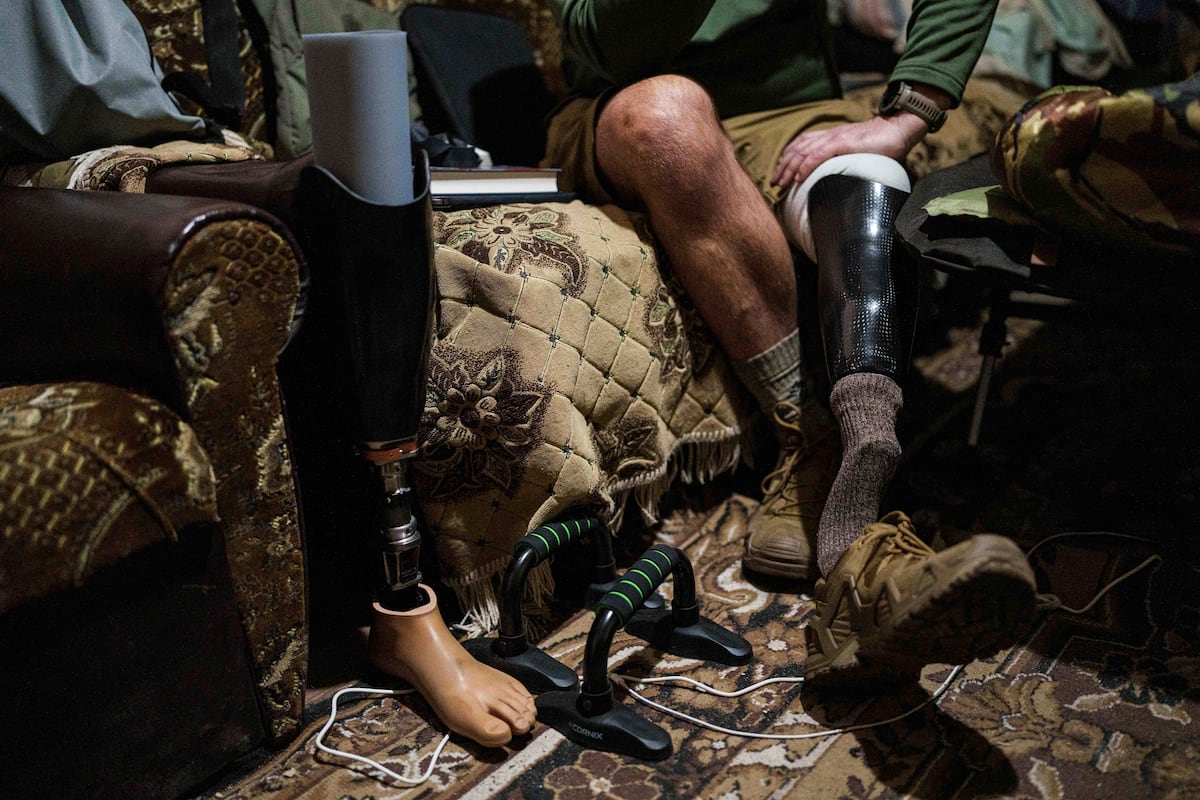
LVIV, Ukraine — “I’m not disabled, I’m upgraded.” These were words I remember vividly from one Ukrainian army veteran, Serhiy.
Like other Ukrainian soldiers, he identified himself by first name only for security reasons.
Serhiy had been lucky as far as injuries went. A mine had blown off his leg below the knee but he could comfortably jog and skipped about 20 reps with a jump rope, using his good leg.
He’d been far luckier, say, than a former engineer named Artem I met in Kyiv.
During Ukraine’s failed 2023 counteroffensive, a drone-dropped explosive had sheared him almost entirely in half. When I met him more than a year later in a rehabilitation center, he was walking on his arms, doing an assisted bench press, climbing ropes and said he could even comfortably drive a car.
It is as if Serhiy, Artem and others like them take the Green Knight from Monty Python’s admonition that “it is just a flesh wound” literally. They have found ways to live their lives as productively as possible — and many still want to serve their country, even back at the front line.
Serhii Pozniak, a sniper unit commander with the 27th national guard brigade, speaks to soldiers during training near Kyiv, Ukraine, Feb. 17, 2025. (Evgeniy Maloletka/AP)
“Ukraine is the best place in the world for prosthetics, they have the most advanced care and equipment,” said Eddy Scott, a British humanitarian volunteer who lost an arm and a leg evacuating civilians in eastern Ukraine.
In the eight months he has been recuperating at the Superhumans Center , a state-of-the-art facility in Lviv, Scott has seen how Ukrainian surgeons have stitched up the most seemingly hopeless cases.
“They have the most people to learn on,” he says with a shrug and a weary smile.
Ukraine has perhaps 25,000 amputees, most of them veterans, and many more who have suffered all kinds of combat wounds and must be reintegrated into society — at a time when the Russian invasion continues at full pace in Ukraine’s east, and major cities such as Kyiv are being regularly bombed.
On top of it all, there is the mental trauma inflicted upon so many soldiers, not just for those fighting, but for prisoners of war who endured horrific conditions in Russian captivity.
I spoke recently with Oleksii, a soldier who was taken prisoner after the siege of Mariupol in 2022 and endured just under two years in Russian captivity.
He, like many, speaks in euphemisms, noting, “the roof is leaking,” to describe how lives fall apart when they return to Ukrainian society .
Oleksii said that the worst part of his return was the survivor’s guilt.
Despite being back in Ukraine with his family — and a supportive community of veterans — he was tormented by the knowledge that many of his comrades in arms were suffering the same torture and deprivation he had been subjected to.
“I knew 18 people who died around me” of disease, torture and starvation, he said.
Many soldiers say the difficulties in civilian life stem from knowing few people who truly understand their struggles.
Seeing young men and women enjoying coffee at the country’s chic cafes or partying in bars and nightclubs can yield feelings that sacrifices have gone unappreciated.
“It is their turn,” is how one veteran summed up the attitude toward those who have not yet fought in the war.
Some veterans, meanwhile, like Serhiy, have begun looking around for units that admit amputees.
The idea is less crazy than it sounds — with the rise of drone warfare, an operator sitting motionless in a trench or a farmhouse basement can do more damage than the best special forces soldier.
Tom Mutch is a Ukraine-based journalist from New Zealand. He is the author of The Dogs of Mariupol , available now.
乌克兰利沃夫——“我不是残疾人,我是升级版。”我至今仍清晰地记得一位名叫谢尔盖的乌克兰退伍老兵说过的这句话。
和其他乌克兰士兵一样,出于安全考虑,他只透露了自己的名字。
谢尔盖的伤势算是比较幸运的。一枚地雷炸掉了他膝盖以下的小腿,但他仍然可以轻松地慢跑,还能用另一条好腿跳绳跳大约20次。
比如说,他比我在基辅遇到的一位名叫阿尔乔姆的前工程师幸运得多。
在乌克兰2023年反攻失败期间,一枚无人机投下的炸弹几乎将他炸成了两截。一年多后,我在康复中心见到他时,他已经能用双臂行走,还能做辅助卧推,攀爬绳索,甚至说他现在都能轻松开车了。
仿佛谢尔盖、阿尔乔姆以及其他像他们一样的人,真的把蒙提·派森喜剧中绿骑士那句“这只是皮外伤”奉为圭臬。他们找到了尽可能高效地生活的方法——而且许多人仍然渴望为国效力,即使重返前线。
2025年2月17日,乌克兰基辅附近,国民警卫队第27旅狙击部队指挥官谢尔盖·波兹尼亚克在训练期间向士兵们讲话。(Evgeniy Maloletka/AP)
“乌克兰是世界上假肢技术最好的地方,他们拥有最先进的护理和设备,”英国人道主义志愿者艾迪·斯科特说道。他在乌克兰东部撤离平民时失去了一条胳膊和一条腿。
在利沃夫最先进的医疗机构“超人中心”接受治疗的八个月里,斯科特亲眼目睹了乌克兰外科医生如何缝合看似最无望的病例。
“他们有最多的人可以学习,”他耸耸肩,露出疲惫的笑容说道。
乌克兰可能有 25,000 名截肢者,其中大多数是退伍军人,还有更多人遭受了各种战斗创伤,必须重新融入社会——与此同时,俄罗斯入侵乌克兰东部的行动仍在如火如荼地进行,基辅等主要城市经常遭到轰炸。
除此之外,还有给许多士兵造成的精神创伤,不仅是那些作战的士兵,还有那些在俄罗斯战俘营中遭受可怕待遇的战俘。
我最近和奥列克西谈过,他是一名士兵,在 2022 年马里乌波尔围城战后被俘,并在俄罗斯的囚禁中度过了近两年的时间。
他和许多人一样,喜欢用委婉的说法,比如用“屋顶漏水”来形容他们回到乌克兰社会后生活是如何分崩离析的。
奥列克西说,他回来后最难受的是幸存者的愧疚感。
尽管他回到了乌克兰,与家人团聚,并得到了退伍军人的支持,但他仍然饱受折磨,因为他知道许多战友正在遭受和他一样的酷刑和匮乏。
他说:“我身边有 18 个人死于疾病、酷刑和饥饿。”
许多士兵表示,退伍后在平民生活中遇到的困难源于身边很少有人真正理解他们的困境。
看到年轻男女在国家时尚的咖啡馆里享用咖啡,或在酒吧和夜总会里寻欢作乐,可能会让人觉得他们的牺牲没有得到应有的感激。
一位老兵这样总结了人们对那些尚未上过战场的人的态度:“现在轮到他们了。”
与此同时,像谢尔盖这样的一些退伍军人已经开始寻找愿意接收截肢者的部队。
这个想法听起来可能很疯狂,但实际上并非如此——随着无人机战争的兴起,一个静静坐在战壕或农舍地下室里的操作员,造成的破坏可能比最优秀的特种部队士兵还要大。
汤姆·穆奇是一位居住在乌克兰的新西兰记者。他是《马里乌波尔的狗》一书的作者,该书现已出版。