Heavy rain, then heat: Malaysia braces for monsoon floods, with Super El Nino drought to follow from late January暴雨过后,酷热难耐:马来西亚严阵以待,准备迎接季风带来的洪水,随后从1月下旬开始,超级厄尔尼诺现象将导致干旱。
KUALA LUMPUR, Nov 1 — Malaysia is expected to face two different weather challenges in the coming months, starting with heavy rain and flood risks throughout the Northeast...
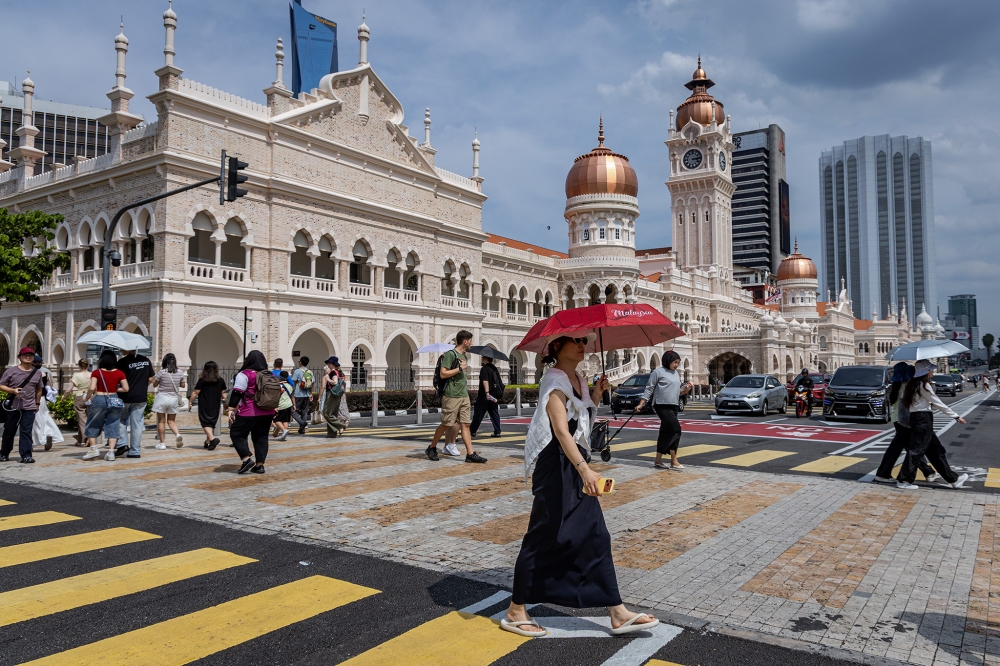
KUALA LUMPUR, Nov 1 — Malaysia is expected to face two different weather challenges in the coming months, starting with heavy rain and flood risks throughout the Northeast Monsoon (MTL), before potentially experiencing hotter and drier weather due to the Super El Nino phenomenon, which could increase the risk of drought, water shortages, and impact the agricultural sector.
The MTL, which began on October 27 and is expected to continue until March 2027, is forecast to bring between three and five episodes of continuous heavy rain, particularly from this November to January next year, thereby increasing the risk of flooding, especially in low-lying areas and near rivers.
The weather developments throughout the past week has also provided an early indication when heavy rain almost every afternoon in the capital city caused several flash floods, thus disrupting traffic flow and residents’ daily activities.
Flood incidents have also been reported in several states including Perak, Kedah and Negeri Sembilan, indicating weather risks that need to be monitored throughout this monsoon season.
However, both phenomena do not necessarily occur sequentially or have a uniform impact across the country; instead, rainfall distribution and temperature increases are expected to vary by region and seasonal changes.
Climatology expert Professor Emeritus Datuk Dr Azizan Abu Samah said the MTL in Peninsular Malaysia typically has two main phases, with heavy rain concentrated in the East Coast such as Kelantan, Terengganu, and the northern part of Kedah between November and December, before shifting south to Johor and Sarawak in January to February.
He said the movement of the monsoon trough and monsoon surge bringing strong winds are among the factors contributing to continuous rain and increasing the risk of flooding in the area.
However, the strong influence of the El Nino has the potential to reduce the intensity and duration of rainfall throughout the MTL, particularly in November and December, thereby possibly lowering the risk of major floods like those that occurred in 2021.
Azizan also expects the number of monsoon surges to potentially decrease from the usual seven to eight to around five to six episodes, in addition to reducing the risk of large waves, coastal erosion, and sea level rise due to storm surges in coastal areas facing the South China Sea.
However, Universiti Kebangsaan Malaysia (UKM) climatology and climate change expert Prof Emeritus Fredolin Tangang said that the reduction in average rainfall due to the El Nino does not mean Malaysia will be spared from floods because extreme weather events can still occur.
“Although on average the MTL weakens during a strong El Nino, this does not mean we will not face the flooding phenomena. It still needs to be monitored, we still need to be prepared,” he told Bernama.
Meanwhile, the Malaysian Meteorological Department (MetMalaysia) anticipates that the Super El Nino phenomenon could bring hotter and drier conditions next year, particularly between late January and March, with maximum temperatures potentially exceeding 41 degrees Celsius.
Fredolin said the risk of hot weather and heatwaves in Peninsular Malaysia is expected to be more pronounced around March to April, while drier conditions in northern Borneo, particularly northern Sarawak and Sabah, have the potential to increase the risk of forest and peatland fires until April or May 2027.
He said the rain brought by the MTL to southern Sumatra and Kalimantan is expected to help reduce the risk of forest and peatland fires that contributes to cross-border haze before drier conditions potentially shift to northern Borneo.
Meanwhile, Azizan said the prolonged hot and dry weather also increases the risk of local haze due to open burning, including the burning of rice straw in Kedah, although the impact is expected to be more limited compared to cross-border haze.
Beyond the haze, reduced rainfall can also impact the nation’s water resources — specifically the dams that supply water for domestic and agricultural use.
Azizan noted that the Timah Tasoh Dam in Perlis, as well as the Muda and Pedu dams in Kedah, are at risk of declining water levels should the dry conditions persist. This is particularly concerning given that the northern region of the Peninsula typically relies on rainfall during the monsoon transition period—roughly from April to May — to replenish its water reserves.
The risk of drought also places pressure on the agricultural sector, especially regarding off-season rice cultivation in the northern “rice bowl” areas of the Peninsula.
Fredolin added that a scarcity of water resources and a decline in agricultural yields could threaten food security and drive up food prices. Furthermore, it exposes the public to risks such as heatstroke and other health issues associated with hot weather.
He emphasised that advancements in climate science should be integrated into disaster management planning; since the El Niño phenomenon can be predicted months in advance, it provides relevant authorities with the opportunity to implement preparatory measures.
Consequently, in addition to preparing for flood risks during the MTL, Malaysia must leverage periods of rainfall to bolster water reserves and enhance the resilience of the agricultural sector, in anticipation of potentially hotter and drier weather brought on by El Niño. — Bernama
Tok Mat to lead Malaysia’s delegation to CHOGM 2026 in Antigua and Barbuda
DBKL urges responsible lift use after viral clip shows motorcycle inside PPR elevator (VIDEO)
New Chinese ambassador Yao Wen outlines four key priorities to deepen Malaysia-China ties
吉隆坡,11月1日讯——马来西亚预计在未来几个月将面临两种不同的天气挑战:首先是东北季风带来的强降雨和洪水风险;其次是受超级厄尔尼诺现象影响,可能会出现更热更干燥的天气,这可能会增加干旱、缺水的风险,并对农业部门造成影响。
这场从 10 月 27 日开始,预计将持续到 2027 年 3 月的 MTL 天气,预计将带来三到五次持续强降雨,特别是从今年 11 月到明年 1 月,从而增加洪水风险,尤其是在低洼地区和河流附近。
过去一周的天气变化也早有预兆,首都几乎每天下午都下大雨,导致多起突发洪水,扰乱了交通和居民的日常生活。
霹雳州、吉打州和森美兰州等多个州也报告了洪水事件,这表明整个季风季节都需要监测天气风险。
然而,这两种现象不一定会按顺序发生,也不会对全国产生统一的影响;相反,降雨分布和气温升高预计会因地区和季节变化而有所不同。
气候学专家拿督阿兹赞·阿布·萨马赫教授表示,马来西亚半岛的季风通常分为两个主要阶段,11 月至 12 月期间,强降雨集中在东海岸,如吉兰丹、登嘉楼和吉打北部地区,然后在 1 月至 2 月期间转移到南部的柔佛和砂拉越。
他表示,季风槽的移动和季风带来的强风是导致该地区持续降雨并增加洪涝风险的因素之一。
然而,厄尔尼诺现象的强烈影响有可能降低整个 MTL 地区的降雨强度和持续时间,尤其是在 11 月和 12 月,从而可能降低发生类似 2021 年那样的大洪水的风险。
阿齐赞还预计,季风风暴潮的次数可能会从通常的七到八次减少到五到六次左右,此外,南海沿岸地区风暴潮造成的巨浪、海岸侵蚀和海平面上升的风险也会降低。
然而,马来西亚国立大学(UKM)气候学和气候变化专家、荣誉教授弗雷多林·唐甘表示,厄尔尼诺现象导致平均降雨量减少并不意味着马来西亚就能免受洪水侵袭,因为极端天气事件仍然可能发生。
“虽然在强厄尔尼诺现象期间,平均而言,热带低气压会减弱,但这并不意味着我们不会面临洪水灾害。我们仍然需要密切监测,仍然需要做好准备,”他告诉马新社。
与此同时,马来西亚气象局(MetMalaysia)预计,超级厄尔尼诺现象可能会在明年带来更热更干燥的天气,尤其是在1月下旬至3月期间,最高气温可能会超过41摄氏度。
弗雷多林表示,预计马来西亚半岛在 3 月至 4 月期间高温天气和热浪的风险将更加明显,而婆罗洲北部,特别是沙捞越北部和沙巴的干燥天气,可能会增加森林和泥炭地火灾的风险,这种情况可能会持续到 2027 年 4 月或 5 月。
他表示,MTL给苏门答腊南部和加里曼丹带来的降雨有望降低森林和泥炭地火灾的风险,从而减少跨境雾霾,之后干燥的天气可能会转移到婆罗洲北部。
与此同时,阿兹赞表示,持续的高温干燥天气也会增加因露天焚烧(包括吉打州焚烧稻草)而导致局部雾霾的风险,尽管与跨境雾霾相比,其影响预计会更加有限。
除了雾霾之外,降雨量减少还会影响国家的水资源,特别是为家庭和农业用水供水的堤坝。
阿兹赞指出,如果干旱持续下去,玻璃市的蒂玛塔索水坝以及吉打州的慕达水坝和佩杜水坝都面临水位下降的风险。鉴于马来半岛北部地区通常依靠季风过渡期(大致从四月到五月)的降雨来补充水库,这种情况尤其令人担忧。
干旱风险也给农业部门带来了压力,特别是半岛北部“粮仓”地区的反季节水稻种植。
弗雷多林补充说,水资源短缺和农业产量下降可能会威胁粮食安全,并推高食品价格。此外,这还会使公众面临中暑和其他与高温天气相关的健康风险。
他强调,气候科学的进步应该纳入灾害管理规划;由于厄尔尼诺现象可以提前数月预测,这为有关部门实施准备措施提供了机会。
因此,除了做好应对中期降雨期间洪灾风险的准备外,马来西亚还必须利用降雨期来补充水资源储备,增强农业部门的抵御能力,以应对厄尔尼诺现象可能带来的更炎热、更干燥的天气。——马新社
托克·马特将率领马来西亚代表团参加2026年在安提瓜和巴布达举行的英联邦政府首脑会议。
吉隆坡市政局呼吁市民安全使用电梯,此前一段视频在网上疯传,视频显示一辆摩托车被带入人民组屋(PPR)电梯内(视频)
中国新任驻马大使姚文概述了深化马中关系的四个关键优先事项