New MOS Foo Cexiang wants to help workers switch sectors, find jobs more quickly for those who reskill新MOS Foo Cexiang希望帮助劳动者转换行业,并帮助那些重新掌握技能的人更快地找到工作。
Foo Cexiang says Singapore will help retrenched workers switch sectors and improve job matching for those who reskill. Read more at straitstimes.com.
新闻视频
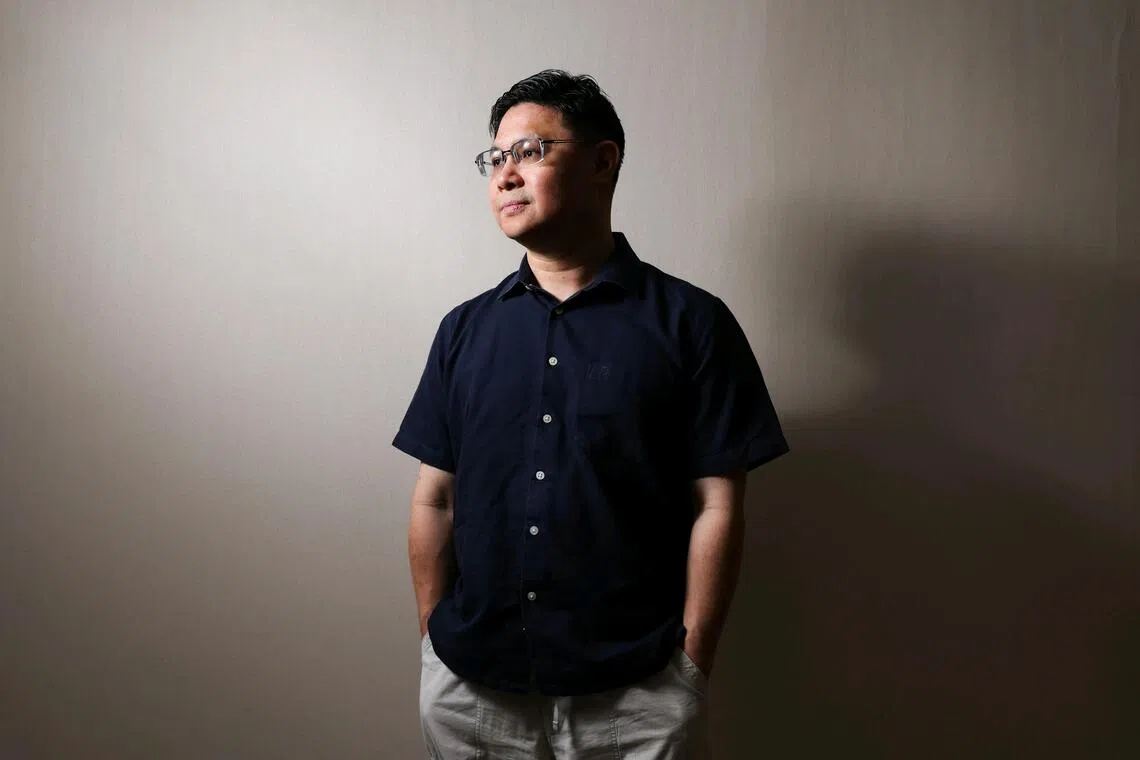
Minister of State for Manpower and for Energy, Trade and Industry Foo Cexiang calls for a “give and take” approach for a family-friendly workplace, but warns against hard-coding work flexibility into rules.
Published Nov 01, 2026, 12:00 PM
Updated Nov 01, 2026, 12:00 PM
Foo Cexiang wants to help retrenched workers move into new sectors and help reskilled jobseekers find better matches. He said the Government, firms and society must support career changes and give workers time to adapt.
MOM is studying “fractional work” and a new flexi-load programme for seniors. Foo said it could give workers more flexibility and let firms hire specialist skills without full-time jobs.
Foo warned that AI could weaken learning, relationships and trust at work, especially for young workers. MOM is helping graduates find jobs before the impact becomes sharper.
SINGAPORE – Retrenched workers who face challenges in switching fields and those who have reskilled but cannot find the right job fit are two groups that Minister of State for Manpower Foo Cexiang wants to help.
The first-term Tanjong Pagar GRC MP has seen such cases in his constituency and hopes to address them in his new role, which he assumed alongside his energy, trade and industry portfolio on Sept 1.
The Government aims to provide support for career conversions to new sectors, said Foo, 41. He noted that statistics suggest it is getting harder to return to the workforce, while the sectors that are hiring more are changing.
This means the likelihood of a person’s next job coming from a different sector is higher – which comes with challenges such as reduced pay and inertia of starting all over again in knowledge, relationships and more, he added.
“I think that is going to be a future that is not faced just by seniors, but by the workforce as a whole, whether you are young or you are at midpoint in your career,” he told The Straits Times in an interview at his office at the Ministry of Manpower (MOM) on Oct 26.
Acting Manpower Minister Jasmin Lau said in Parliament in Octo ber that re-entry outcomes have softened . In the second quarter of 2026, 54.9% of retrenched residents returned to employment within six months, down from 60.7% in the first quarter.
Foo said companies and the wider society will also have to get behind these workers. Firms that take on older workers who have no prior experience should give them the same time, space and understanding they would give a fresh graduate.
For those unable to land a job despite being open to other sectors and attending skills training, he said the MOM will “dive deeper” beyond the top line or average numbers with the Skills and Workforce Development Agency (SWDA) and Employment and Employability Institute (e2i).
They will examine whether common traits – such as age, preferred type of work or the kinds of companies applied to – explain why some job seekers stay stuck, and then design solutions for them.
But the Government cannot do this alone, Foo said. He has met residents who find new jobs, only to return a few months later saying they did not enjoy the work.
“So I think we have to work together and then develop better matching solutions.”
MOM is also studying “fractional work”, where a person takes on several projects that together make up a full portfolio, noted Foo.
The arrangement provides more autonomy and flexibility, and may suit experienced seniors who would rather focus on what they do best than cover the full range of duties of a single full-time job.
Firms stand to gain too – they can tap specialised expertise without taking on a full-time worker, and direct their manpower spending more precisely to where it is needed, he said.
A Tripartite Workgroup on Senior Employment, which includes MOM, recommended on Oct 26 a new flexi-load programme and a dedicated programme office.
Foo, whose political appointment was announced in July, said then that he would be driven by a “singular mission” of contributing towards creating more good jobs and careers for all Singaporeans.
He and Jalan Besar GRC MP Shawn Loh – both former civil servants – were the youngest additions to the Government in that Cabinet reshuffle. Loh will join as Minister of State for Health and Education in January 2027 .
ST will also interview other first-term MPs and office-holders with new appointments or promotions.
Creating more opportunities for Singaporeans
Foo told ST that his portfolios are centred on jobs and opportunities. At MOM, he looks at creating workplace fairness, strengthening the human resources sector as well as platform workers.
At the Ministry of Energy, Trade and Industry, he oversees trade in emerging areas such as Africa and Latin America, along with Europe, and also supports Deputy Prime Minister Gan Kim Yong in engaging the United States on tariffs.
Domestically, his focus is on consumer protection and fair competition, as well as working with the associations to create more jobs.
Over the next few months, he plans to meet small and medium-sized enterprises (SMEs) across sectors such as interior design, plumbing, landscaping, waterproofing, jewellery, food and beverage, and retail.
These sectors “maybe typically are not seen to have a certain government agency that is the champion or the so-called regulator, but are sectors that many Singaporeans work in”, he said.
They are diffused, with a fair share of reliance on foreign workers, while many local entrepreneurs are the ones at the helm, he noted.
These domestic-facing sectors face productivity challenges, alongside underlying issues like difficulty in hiring workers, as well as rental, fuel and energy costs, said Foo.
He aims to take the same approach here as with the job struggles – identify the underlying characteristics and develop targeted measures.
Asked about his working style, Foo said he is the same person as when he first joined the civil service.
“I chase not just the thing to be achieved, but how we achieve it, because that’s what makes for a sustainable, long-term team,” he said.
“If every time we achieve something that is difficult to do, but everyone around the room feels that wow, you know, we are in this together, then they will crave the next time, and the next time we can do even more difficult things.”
On making workplaces more family-friendly – a priority he had raised in previous interviews – Foo said his focus would be on flexibility.
Young parents value flexibility at work, beyond time off for a child’s doctor’s appointment or attending a graduation concert. It is also about how work is distributed within the organisation, he said.
“This is a very difficult conversation, because people who have no children will say it’s not fair that they have to cover for parents who take time off to care for their children,” he said.
He called for a “give and take” approach, noting that colleagues without children may have medical needs of their own, as well as ageing parents and other family members to look after.
But translating this give-and-take into policy will be difficult, as hard-coding such flexibility into rules risks turning it into a perceived right, said Foo.
Instead, the work required is to persuade and engage companies, including by identifying those that have strong human resource cultures and whose data reflects that workers who are more engaged are more productive.
Integrating AI use for companies and workers
On the impact of AI on jobs, Foo said what worries him the most is that the technology has changed the way people learn skills and build relationships.
He used the example of drafting meeting notes, which he said trains young civil servants to understand the interests behind what people say and the dynamics in the room. This also trains cognitive, interpersonal and intra-organisational abilities.
But if young officers use AI to record the minutes, the middle management will have a very low understanding of the organisation in 10 years’ time, he cautioned.
Foo also flagged the risk of potential job loss at the “bottom rung” of the career ladder, which will impact young graduates most acutely – a risk also recently highlighted by Prime Minister Lawrence Wong and President Tharman Shanmugaratnam.
PM Wong had said that new hires are often tasked with doing the routine work that AI will replace, but such work has some value and tacit learning. Firms must be careful not to automate this away, he added.
Foo said MOM is working with SWDA and industry associations to see how to provide graduates with greater assurance of employment when they enter the job market.
“It is something that we don’t have much time to develop,” he said. “We need to be able to put in place initiatives quite quickly, because looking at some of the other countries where it happens, the cliff can be quite sharp.”
Amid uncertainty about integrating AI in the workplace, MOM is also speaking to companies and developing guidelines, references and good models on AI use, said Foo.
His biggest question for companies and workers: “Does AI reduce trust between workers and employers, or does it increase trust?”
It can erode trust if decisions seem to come from an algorithm, but it can also build trust by enabling deeper analysis, he said.
“The day you are not able to communicate decisions that you make using AI, and you’re just relying on AI, then I think you’re finished,” he added.
Chin Soo Fang is senior correspondent at The Straits Times, covering a wide range of topics including community, politics, social issues, consumer, culture and heritage.
Ministry of Manpower
Ministry of Trade and Industry
Members of Parliament
Politics and government
人力部兼能源、贸易及工业部政务部长傅策祥呼吁采取“互惠互利”的方式打造家庭友好型工作场所,但他警告不要将工作灵活性硬性写入规章制度。
发布于2026年11月1日下午12:00
更新于2026年11月1日中午12:00
傅策祥希望帮助下岗工人进入新的行业,并帮助技能提升后的求职者找到更合适的工作。他表示,政府、企业和社会都必须支持职业转型,并给予员工适应的时间。
人力部正在研究“兼职工作”和一项针对老年人的弹性工作安排计划。Foo表示,这可以为员工提供更大的灵活性,并允许企业聘用无需全职岗位的专业技能人才。
Foo警告称,人工智能可能会削弱工作中的学习、人际关系和信任,尤其对年轻员工而言更是如此。人力部正在帮助毕业生在人工智能的影响更加显著之前找到工作。
新加坡——人力部政务部长傅采祥希望帮助两类群体:一是面临转行挑战的被裁员工,二是已经掌握新技能但找不到合适工作的员工。
这位丹戎巴葛集选区首任议员在其选区内目睹了此类事件,并希望在其新职位上解决这些问题。他于9月1日兼任能源、贸易和工业部长一职。
41岁的Foo表示,政府旨在为人们转行到新行业提供支持。他指出,统计数据显示,重返职场变得越来越难,而招聘人数较多的行业也在发生变化。
这意味着一个人下一份工作很可能来自不同的行业——但这会带来一些挑战,例如薪酬降低以及在知识、人际关系等方面需要重新开始的惰性,他补充道。
“我认为这不仅是老年人将面临的未来,也是整个劳动力的未来,无论你是年轻人还是处于职业生涯的中期,”他在10月26日于人力部办公室接受《海峡时报》采访时表示。
人力部代理部长刘嘉敏10月在国会表示,失业人员重返工作岗位的情况有所恶化。2026年第二季度,54.9%的失业居民在六个月内重返工作岗位,低于第一季度的60.7%。
Foo表示,企业和社会各界都必须支持这些员工。企业在聘用没有经验的年长员工时,应该给予他们与应届毕业生同等的时间、空间和理解。
他表示,对于那些尽管愿意尝试其他行业并参加技能培训却仍然找不到工作的人,人力部将与技能和劳动力发展局 (SWDA) 以及就业和就业能力研究所 (e2i) 一起“深入调查”,而不仅仅关注总体或平均数字。
他们将研究年龄、偏好的工作类型或申请的公司类型等共同特征是否能解释为什么一些求职者一直停滞不前,然后为他们设计解决方案。
但傅先生表示,政府无法独自完成这项工作。他遇到过一些居民,他们找到了新工作,但几个月后又回来抱怨说并不喜欢这份工作。
所以我认为我们必须共同努力,开发出更好的匹配方案。
Foo指出,人力部也在研究“部分工作”,即一个人承担多个项目,这些项目共同构成一个完整的作品集。
这种安排提供了更大的自主性和灵活性,可能适合经验丰富的老年人,他们宁愿专注于自己最擅长的事情,而不是承担一份全职工作的全部职责。
他还表示,企业也能从中受益——他们无需雇用全职员工即可利用专业知识,并将人力支出更精确地用于需要的地方。
10月26日,由人力部等组成的“老年人就业三方工作组”建议设立新的弹性工作计划和专门的计划办公室。
傅海燕于7月被宣布获得政治任命,他当时表示,他将秉持一个“独特的使命”,那就是为所有新加坡人创造更多良好的工作和职业机会。
他和惹兰勿刹集选区议员罗晓明(两人均为前公务员)是那次内阁改组中最年轻的新成员。罗晓明将于2027年1月就任卫生部兼教育部政务部长。
《海峡时报》还将采访其他第一任期议员和新上任或晋升的官员。
为新加坡人创造更多机会
Foo告诉《海峡时报》,他的工作重点是就业和机会。在人力部,他致力于创造公平的职场环境,加强人力资源部门建设,并关注平台工作者的权益。
在能源、贸易和工业部,他负责监督非洲、拉丁美洲以及欧洲等新兴地区的贸易,并协助副总理颜金勇与美国就关税问题进行谈判。
在国内,他关注的是消费者保护和公平竞争,以及与相关协会合作创造更多就业机会。
在接下来的几个月里,他计划与室内设计、管道工程、园林绿化、防水工程、珠宝、食品饮料和零售等行业的中小企业会面。
他说,这些行业“可能通常不会被认为有某个政府机构作为领头羊或所谓的监管机构,但却是许多新加坡人工作的行业”。
他指出,这些企业分布分散,相当一部分依赖外国工人,而许多本地企业家才是掌舵人。
Foo表示,这些面向国内市场的行业面临着生产力挑战,以及招聘工人困难、租金、燃料和能源成本等根本性问题。
他打算采取与应对工作困境相同的方法——找出根本原因并制定有针对性的措施。
当被问及他的工作方式时,Foo表示他和刚加入公务员队伍时一样。
“我追求的不仅是最终要达成的目标,还有我们如何达成目标,因为这才是打造可持续发展的长期团队的关键所在,”他说。
“如果我们每次完成一件困难的事情,而房间里的每个人都感到‘哇,你知道,我们在一起努力’,那么他们就会渴望下一次,而下一次我们就能做更困难的事情。”
关于如何让工作场所更加适合家庭——这是他在之前的采访中提出的优先事项——Foo表示,他的重点将是灵活性。
年轻的父母们重视工作中的灵活性,这不仅仅体现在请假带孩子去看医生或参加毕业音乐会上。他还表示,这还关乎工作在组织内部的分配方式。
他说:“这是一场非常艰难的对话,因为没有孩子的人会说,他们不得不替那些请假照顾孩子的父母顶班,这不公平。”
他呼吁采取“互惠互利”的方式,并指出没有孩子的同事可能也有自己的医疗需求,以及需要照顾年迈的父母和其他家庭成员。
Foo表示,将这种相互妥协转化为政策将很困难,因为将这种灵活性硬性规定为规则可能会使其变成一种理所当然的权利。
相反,需要做的工作是说服和吸引企业,包括找出那些拥有强大的人力资源文化,并且其数据表明员工敬业度越高,生产力就越高的企业。
将人工智能应用于企业和员工
关于人工智能对就业的影响,Foo表示,他最担心的是这项技术改变了人们学习技能和建立人际关系的方式。
他以撰写会议记录为例,指出这能训练年轻的公务员理解人们言语背后的动机以及会议的动态。这也有助于培养他们的认知能力、人际交往能力和组织内部沟通能力。
但他警告说,如果年轻警官使用人工智能来记录会议纪要,10 年后中层管理人员对组织的了解将会非常有限。
Foo 还指出,职业阶梯“底层”的职位存在潜在的失业风险,这将对年轻毕业生造成最严重的冲击——这一风险最近也得到了总理黄循财和总统尚达曼的强调。
黄循财总理曾表示,新员工通常被安排从事人工智能将要取代的日常工作,但这类工作具有一定的价值和隐性学习价值。他补充说,企业必须谨慎,不要让这些工作被自动化完全取代。
Foo表示,人力部正在与社会福利发展局和行业协会合作,探讨如何为毕业生进入就业市场提供更大的就业保障。
他说:“我们没有太多时间来制定这项计划。我们需要迅速落实各项举措,因为看看其他一些发生类似情况的国家,后果可能非常严重。”
Foo表示,由于人工智能在工作场所的应用仍存在不确定性,人力部也在与各公司沟通,并制定人工智能使用方面的指导方针、参考资料和良好模型。
他向企业和员工提出的最大问题是:“人工智能会降低员工和雇主之间的信任,还是会提高信任?”
他说,如果决策看起来像是来自算法,就会削弱信任;但它也可以通过进行更深入的分析来建立信任。
“如果有一天你无法与他人沟通你使用人工智能做出的决定,而只是依赖人工智能,那么我认为你就完了,”他补充道。
Chin Soo Fang 是《海峡时报》的资深记者,报道范围广泛,包括社区、政治、社会问题、消费者、文化和遗产等话题。
人力部
贸易和工业部
国会议员
政治与政府