Commentary: ‘Shameful’ racist comments after Nepal disaster should never become normal in Singapore评论:尼泊尔灾难后出现的“可耻的”种族主义言论在新加坡绝不应成为常态
Most Singaporeans reject the idea that race decides who belongs. But hateful views held by a minority become dangerous the moment the majority stops objecting to them, say Mathew Mathews, Teo Kay Key and Melvin Tay from the Institute of Policy Studies.
新闻视频
Most Singaporeans reject the idea that race decides who belongs. But hateful views held by a minority become dangerous the moment the majority stops objecting to them, say Mathew Mathews, Teo Kay Key and Melvin Tay from the Institute of Policy Studies.
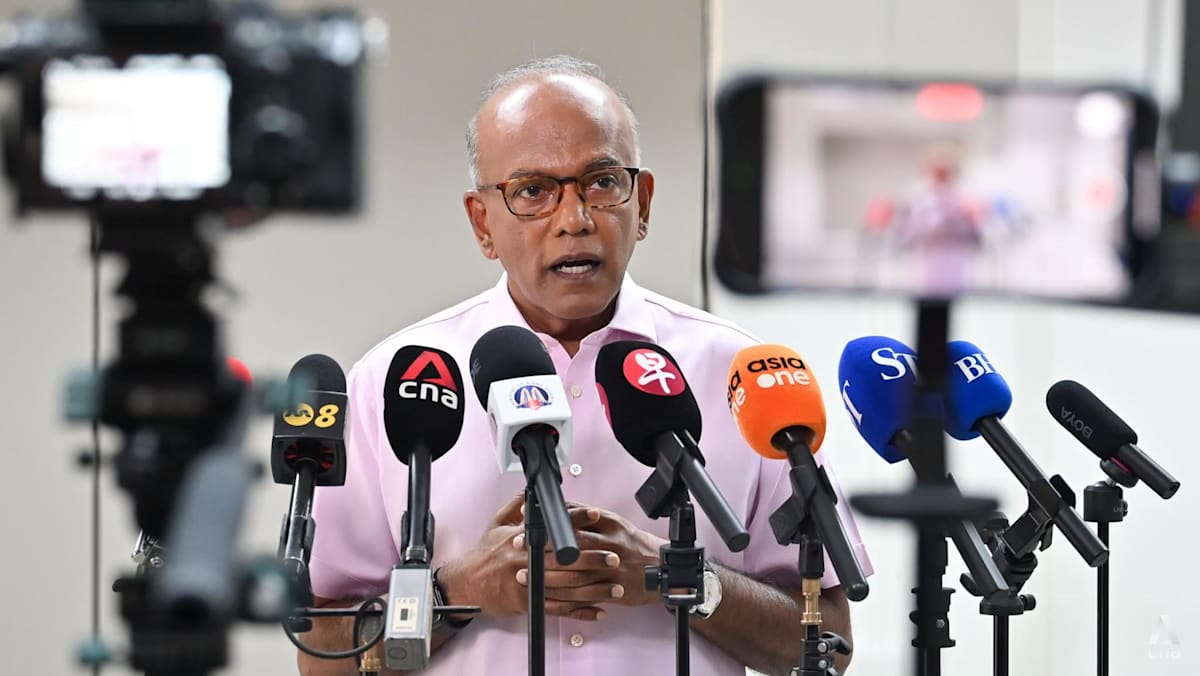
Senior Minister K Shanmugam speaking to the media at Social Space @ Chong Pang on Sep 5, 2026. (Photo: CNA/Alyssa Tan)
This audio is generated by an AI tool.
SINGAPORE: There can hardly be a worse time to ask whether someone is “really Singaporean”.
As families waited desperately for news of nine Singaporeans reported missing after the Nepal floods , some people online scrutinised their names and photographs and asked exactly that. Others questioned why Singapore should help them at all. Some said things far more callous.
Minister of State for Manpower and Culture, Community and Youth Dinesh Vasu Dash and Member of Parliament Alex Yam were among the first to call these comments out. Using someone’s name, race or appearance to question whether that person is truly Singaporean is racism, Mr Dinesh said. The nine “are our own”.
Senior Minister K Shanmugam went further. On Saturday (Sep 5), he called some of the comments “ shameful, nasty and totally unacceptable ”, and said the police were looking into them. But he also stressed that those responsible were a small group who should not be allowed to “poison the entire well” of community relations. His larger worry was that such language, left unchallenged, could become normalised and eventually shape public and political discourse.
CNA Games Guess Word Crack the word, one row at a time Buzzword Create words using the given letters Mini Sudoku Tiny puzzle, mighty brain teaser Mini Crossword Small grid, big challenge Word Search Spot as many words as you can Show More Show Less
Prime Minister Lawrence Wong , Senior Minister Lee Hsien Loong and other political officeholders have added their voices, urging Singaporeans to reject such hateful views rather than allow them to take root.
Both points matter. We should not mistake the most offensive voices on social media for the voice of Singapore. But neither should we dismiss what they say simply because they are a minority.
WHAT MOST SINGAPOREANS BELIEVE
Polling by the Institute of Policy Studies gives good reason to say that the racism on display during this disaster is not representative.
Across our years of studies of national identity, race relations, immigration and social cohesion, the pattern is consistent. Most Singaporeans accept multiracialism as a defining feature of the country, are comfortable living and working with people of other races, and do not conceive of “Singaporeanness” as the property of one ancestral group. Endorsing multiracialism does not mean respondents hold no prejudices or stereotypes. But the principle itself commands wide assent.
In the 2025 IPS-CNA Survey on National Identity, we asked an open-ended question: What does it mean to be Singaporean?
The most common theme was pride in, or a sense of belonging to, Singapore (24.5 per cent), followed closely by embracing multiculturalism or multiracialism (23.8 per cent). Being born and residing here came third, at 17.2 per cent.
Birthplace clearly matters to some Singaporeans, and understandably so: Schooling, shared experiences and family history produce deep attachment. But it was not the dominant definition. Left to describe their identity spontaneously, Singaporeans reached first for belonging and multiculturalism.
Our other surveys found that a large majority agreed Singapore could learn from the cultures brought here by people of different nationalities. In the 2024 IPS Survey of Race, Religion and Language nearly three-quarters said they liked meeting and getting to know new migrants. At the same time, many felt immigrants needed to do more to integrate.
In the Making Identity Count in Singapore study conducted in 2021, more than nine in 10 respondents regarded being multicultural and living peacefully with people of all races and nationalities as a positive aspect of Singaporean identity. Asked what newcomers needed to embrace in order to integrate, respondents ranked top on the list respect for the law, tolerance, multiracialism and equality.
These attitudes are not contradictory. Singaporeans can be open to diversity while expecting newcomers to make a genuine effort.
There are legitimate questions about the pace and scale of immigration, employment competition, housing and infrastructure, workplace fairness, integration and the effects of demographic change on national identity. Our research shows that some Singaporeans worry foreigners and new citizens might dilute that identity. Dismissing such concerns does nothing for social cohesion.
But there is a categorical difference between debating how immigration should be managed and questioning an individual’s citizenship because of his or her race. No one who looks Indian should have to answer for someone else’s dissatisfaction with immigration from India.
WHEN “SINGAPOREANNESS” BECOMES CONDITIONAL
What is most troubling about the comments on the missing Singaporeans is what they reveal: Citizenship can be formally conferred by the state yet socially withheld by fellow citizens.
The husband of one of the missing, Ms Shalinny Deavy Elan Sozan, felt compelled to point out that he and his wife are third-generation Singaporeans, that both have spent years in public service, and that she has also done grassroots work.
These facts decisively rebut the assumptions made about her. But they should never have been necessary.
The deeper problem was that a name and a photograph was deemed enough by some online to make those false assumptions at all. Some Singaporeans are presumed to belong. Others are periodically required to prove it.
We saw the same dynamic during the COVID-19 pandemic. As variants associated with India became a focus of anxiety in 2021, Singaporeans and residents of Indian background became targets of racial hostility, including a Singaporean Indian woman who was racially abused and attacked while exercising.
Very different people – an Indian citizen, a migrant worker, a foreign-born professional, a newly naturalised citizen and a Singaporean Indian whose family has been here for generations – are collapsed into a single racial category.
They are then taken to represent something else: immigration, job competition, a virus, or India itself.
Members of Singapore’s Ministry of Foreign Affairs crisis response team work in Kathmandu, Nepal, as efforts continue to locate nine Singaporeans missing after the devastating Aug 26 flood. (Photo: CNA/Jack Board)
Mr Shanmugam’s remarks suggest this tendency is very much alive. He cited not only the comments over the missing Singaporeans in Nepal but also racial attacks on Temasek chief executive Dilhan Pillay over Air India's reported effort to raise capital . The insinuation was that his ethnicity somehow determined where his loyalties lay.
Again, the individual disappears into the category. That is perhaps the most corrosive thing about racism: It denies people the right to be encountered as individuals.
THE MAJORITY MUST BE AUDIBLE
Our research should therefore offer some reassurance. The Singapore of the ugliest comments online is not the Singapore in our surveys.
But the comments section is not disconnected from Singapore either. It amplifies prejudices that remain latent in parts of society.
That is why the warning about normalisation matters. The danger is not in the number of people expressing these views today. It is what happens if everyone else grows accustomed to hearing them.
Social norms hold because people take cues about permissible conduct from one another. What begins as unacceptable can, through repetition and silence, become merely controversial, and then ordinary. No multiracial compact can be sustained by legislation alone. It is sustained when the majority makes its norms visible.
That does not require moral panic every time someone posts something offensive. It does require that political leaders, community organisations, institutions and ordinary Singaporeans – especially those who are not themselves the target – say plainly, and early, that this is not the society we accept.
There are simple ways of doing this in everyday life. When a racial generalisation is made in conversation, we should be ready to challenge it and not let silence be taken as agreement. We should be more careful about what we forward or amplify, especially when an individual incident is used to make claims about an entire racial or national group.
And we should be able to separate legitimate concerns about immigration from attacks on people simply because of how they look or where we imagine they come from. Just as importantly, when someone is targeted, others should not leave that person to carry the burden of responding alone.
Perhaps the real test of “Singaporeanness” in this episode is what the rest of us do when the boundaries of belonging are drawn more narrowly.
If this is not who we are, then we have to demonstrate it repeatedly.
Mathew Mathews is Principal Research Fellow and head of the Social Lab at the Institute of Policy Studies, National University of Singapore. Teo Kay Key is Senior Research Fellow and Melvin Tay is Research Fellow at the same institute.
Get our pick of top stories and thought-provoking articles in your inbox
Stay updated with notifications for breaking news and our best stories
Join our channel for the top reads for the day on your preferred chat app
大多数新加坡人并不认同种族决定归属感的观点。但政策研究所的马修·马修斯、张凯基和梅尔文·泰表示,一旦多数人不再反对,少数人持有的仇恨观点就会变得危险。
2026年9月5日,尚穆根高级部长在崇邦社交空间接受媒体采访。(图片:CNA/Alyssa Tan)
这段音频由人工智能工具生成。
新加坡:现在恐怕没有比这更糟糕的时机来询问某人是否“真的是新加坡人”了。
在尼泊尔洪灾后,九名新加坡公民失踪,家属焦急地等待着他们的消息。与此同时,一些网友在网上仔细查看他们的姓名和照片,并提出了同样的疑问。还有人质疑新加坡为什么要帮助他们。一些人甚至发表了更加冷酷无情的言论。
人力及文化、社区及青年部政务部长迪内什·瓦苏·达什和国会议员亚历克斯·严是首批公开谴责这些言论的人士之一。迪内什先生表示,以姓名、种族或外貌质疑某人是否真正是新加坡人是种族歧视。这九人“都是我们自己人”。
高级部长尚穆根的表态更为激烈。9月5日(周六),他称部分言论“可耻、恶劣且完全不可接受”,并表示警方正在调查此事。但他同时强调,肇事者只是一小撮人,不应允许他们“毒害整个社区关系”。他更担心的是,如果不加以制止,此类言论可能会被正常化,并最终影响公共和政治话语。
CNA游戏 猜词游戏 逐行破解单词 流行词游戏 用给定的字母组成单词 迷你数独 小小谜题,挑战你的大脑 迷你填字游戏 小方格,大挑战 单词搜索 尽可能多地找出单词 显示更多 显示更少
总理黄循财、国务资政李显龙和其他政治官员也纷纷发声,敦促新加坡人拒绝这种仇恨言论,而不是让其生根发芽。
这两点都很重要。我们不应将社交媒体上那些最具攻击性的言论误认为是新加坡的声音。但我们也不应仅仅因为他们是少数就忽视他们的观点。
大多数新加坡人的想法
政策研究所的民意调查结果有力地表明,此次灾难中表现出的种族主义现象并不具有代表性。
多年来,我们对国家认同、种族关系、移民和社会凝聚力的研究表明,大多数新加坡人认同多元种族主义是新加坡的显著特征,他们乐于与不同种族的人共同生活和工作,并且不认为“新加坡性”是某个特定族群的专属。认同多元种族主义并不意味着受访者完全没有偏见或刻板印象,但这一原则本身却得到了广泛的认可。
在 2025 年 IPS-CNA 国家认同调查中,我们提出了一个开放式问题:成为新加坡人意味着什么?
最常见的主题是对新加坡的自豪感或归属感(24.5%),其次是拥抱多元文化或多种族(23.8%)。出生并居住在新加坡位列第三,占比17.2%。
出生地对一些新加坡人来说显然很重要,这也不难理解:学校教育、共同经历和家族历史会让他们产生深厚的归属感。但这并非定义身份的主流观点。当被要求自发地描述自己的身份时,新加坡人首先想到的是归属感和多元文化主义。
我们其他的调查发现,绝大多数人认为新加坡可以借鉴不同国籍人士带来的文化。在2024年IPS种族、宗教和语言调查中,近四分之三的人表示他们喜欢结识新移民。与此同时,许多人认为移民需要为融入社会做出更多努力。
在2021年进行的“新加坡身份认同调查”中,超过九成的受访者认为多元文化以及与各族裔和国籍人士和平共处是新加坡身份认同的积极方面。当被问及新移民需要接受哪些价值观才能融入社会时,受访者将尊重法律、宽容、多种族主义和平等列为首要原则。
这些态度并不矛盾。新加坡人既可以对多元化持开放态度,也可以期望新来者做出真诚的努力。
关于移民的速度和规模、就业竞争、住房和基础设施、职场公平、融合以及人口变化对国家认同的影响,确实存在一些合理的问题。我们的研究表明,一些新加坡人担心外国人和新公民可能会削弱这种认同感。忽视这些担忧无助于社会凝聚力。
但讨论如何管理移民与因种族而质疑个人公民身份之间有着本质区别。任何长相像印度人的人都不应该为他人对印度移民的不满承担责任。
当“新加坡性”变成有条件的
关于失踪新加坡人的评论中最令人不安的是它们所揭示的内容:公民身份可以由国家正式授予,但公民同胞却可以在社会上拒绝给予公民身份。
其中一名失踪者莎琳妮·迪维·伊兰·索赞女士的丈夫不得不指出,他和妻子都是第三代新加坡人,两人都在公共服务领域工作多年,而且她还从事过基层工作。
这些事实有力地驳斥了人们对她的种种臆测。但这些事实原本本不应该发生。
更深层次的问题在于,一些网民仅凭姓名和照片就妄下断言。一些新加坡人被认定为该组织成员,而另一些人则被定期要求证明自己的身份。
我们在新冠肺炎疫情期间也看到了同样的动态。随着与印度相关的病毒变种在2021年成为人们焦虑的焦点,新加坡人和印度裔居民成为种族敌意的目标,其中包括一名在锻炼时遭到种族辱骂和袭击的新加坡印度裔女性。
截然不同的人群——印度公民、外籍劳工、外籍专业人士、新入籍公民以及世代居住在新加坡的印度裔——都被归入同一个种族类别。
然后它们就被用来代表其他事物:移民、就业竞争、病毒,或者印度本身。
新加坡外交部危机应对小组的成员在尼泊尔加德满都开展工作,继续搜寻在8月26日毁灭性洪灾中失踪的9名新加坡公民。(图片:CNA/Jack Board)
尚穆根先生的言论表明,这种倾向依然十分普遍。他不仅提到了针对在尼泊尔失踪的新加坡公民的评论,还提到了淡马锡首席执行官迪尔汉·皮莱因印度航空据称试图筹集资金而遭受的种族攻击。言下之意是,他的种族在某种程度上决定了他的忠诚所在。
再次,个体被归入某个类别。这或许是种族主义最具破坏性的一点:它剥夺了人们作为个体被对待的权利。
大多数人的声音必须能被听到
因此,我们的研究应该能给大家带来一些安慰。网络上充斥着最恶劣评论的新加坡,与我们调查中呈现的新加坡并不相同。
但评论区也并非与新加坡脱节。它放大了社会某些群体中仍然存在的潜在偏见。
这就是为什么关于“正常化”的警告如此重要。危险不在于今天有多少人表达这些观点,而在于如果其他人也逐渐习惯听到这些观点,将会发生什么。
社会规范之所以能够维系,是因为人们会从彼此的行为中获取可接受行为的线索。起初不可接受的行为,经过反复出现和沉默,最终可能仅仅变成有争议的,然后变得司空见惯。任何多种族契约都无法仅靠立法来维系。只有当多数群体公开其规范时,这种契约才能得以维系。
这并不意味着每次有人发布冒犯性内容就需要引发道德恐慌。而是要求政治领袖、社区组织、机构和普通新加坡民众——尤其是那些并非攻击目标的人——明确且尽早地表明:这不是我们能够接受的社会。
在日常生活中,有很多简单的方法可以做到这一点。当谈话中出现种族概括时,我们应该准备好质疑它,而不是让沉默被视为默认。我们应该更加谨慎地传播或放大信息,尤其是在有人利用个别事件来对整个种族或民族群体妄下断言的时候。
我们应该能够区分对移民问题的合理担忧和仅仅因为外貌或我们臆测的出身而对他人发起的攻击。同样重要的是,当有人成为攻击目标时,其他人不应该让受害者独自承担应对的重担。
或许,本事件中对“新加坡性”的真正考验在于,当归属感的界限被拉得更窄时,我们其他人会怎么做。
如果这不是我们真正的面貌,那么我们就必须反复证明这一点。
马修·马修斯是新加坡国立大学政策研究所首席研究员兼社会实验室主任。张凯基是该研究所高级研究员,梅尔文·泰是该研究所研究员。
订阅我们的邮件,即可获取精选热门新闻和引人深思的文章。
订阅通知,第一时间获取突发新闻和精彩报道。
加入我们的频道,即可在您常用的聊天应用上获取当日热门文章。