Why Malaysia should have national long-term care insurance and how it can be funded马来西亚为何应该建立国家长期护理保险以及如何筹集资金
KUALA LUMPUR, Nov 2 — If Malaysia introduces a new nationwide insurance to cover the cost of long-term care of older persons, who would be paying for it? The government via tax...
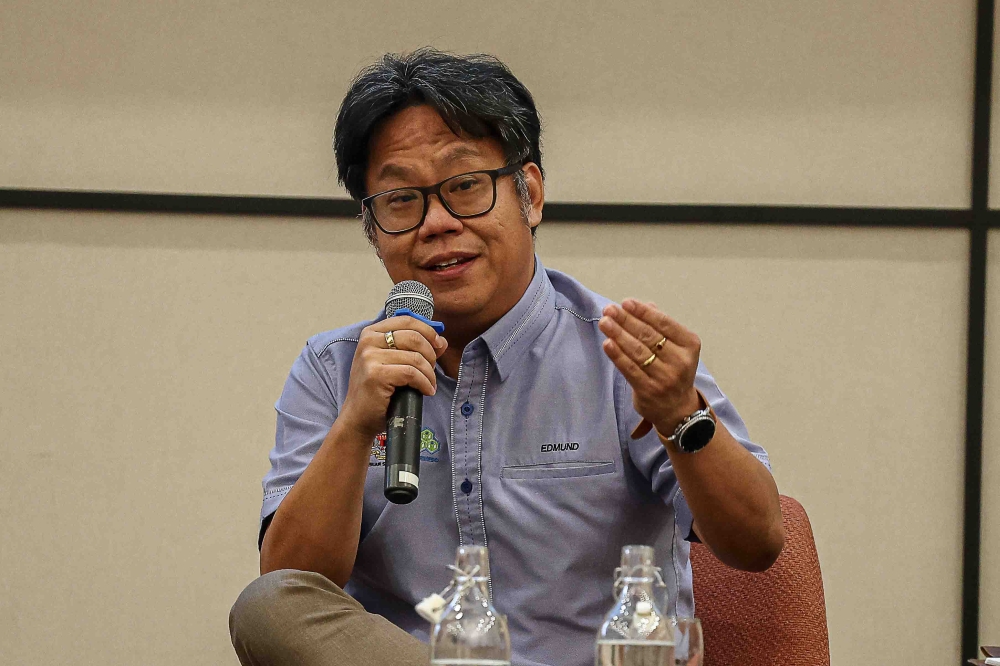
KUALA LUMPUR, Nov 2 — If Malaysia introduces a new nationwide insurance to cover the cost of long-term care of older persons, who would be paying for it?
The government via tax revenue? All Malaysians through a monthly contribution? Or a mix of both? Or some other method?
But wait, just what is long-term care insurance?
Unlike a medical card or medical insurance which covers hospital bills, long-term care insurance covers the care and support that a person — including older persons — needs outside of hospitals.
For example, if a person is unable to feed or dress himself/herself due to a stroke or other illnesses.
Social Security Organisation (Socso) Deputy CEO (Strategy and Corporate), Edmund Cheong Peck Huang said Socso or Perkeso already covers long-term care for Malaysian workers by giving them a lifelong monthly “invalidity pension” — but only if they become invalid before age 60.
“The irony of Perkeso being able to provide pension, being able to provide rehabilitation, medical benefits until the person dies is that you have to be sick or injured before 60. Then you would have proper long-term care protection.
“But the thing is that when we talk about long-term care, invalidity or sickness comes after 60. When it comes after 60, who protects you?” the social protection expert said recently at the National Long-Term Care Financing Dialogue 2026.
Cheong said this has led to a “moral hazard” where Malaysians lie and try to claim for this Socso monthly payout before they turn 60, even when they are actually not invalid.
“And to be honest, we are seeing trends of people applying for Perkeso’s invalidity pension at the ages of 55 to 60.
“Basically not because they are invalid, but basically they are trying their luck. Hoping for that lottery that Perkeso says that you are invalid and you get pension for life, you get rehabilitation for life,” he said, adding that the spouse and children would also continue to get a pension as this person’s dependants.
“People are lying so that they get protection. So, we need to have a much more sustainable model for it.”
‘Solidarity’: Paying for another Malaysian’s care now; getting paid when you become old in the future too
To introduce long-term care insurance for all Malaysians, Cheong proposed making it mandatory for every Malaysian to contribute to it.
“My one answer to it is one word — solidarity. Are we ready for solidarity? Because when we talk about long-term care insurance, it is a social insurance programme. When it is a social insurance programme, it is a mandatory contribution,” he said.
He pointed out that the monthly premium would be very affordable if it is a mandatory scheme involving all Malaysians, compared to a voluntary insurance scheme where the monthly premium would be very high as there would only be a small pool of contributors.
He cautioned Malaysians against being “individualistic” by viewing the contributions as “my savings”, noting that even the most prudent person would not be able to save enough for long-term care in their old age.
Cheong pointed out that everyone grows old, and that paying into this national insurance would eventually end up benefitting us when we need long-term care in the future.
“So that’s where you have to educate, today I’m paying for someone else’s grandfather, but one day, that some random Malaysian will be paying for me,” he said.
He added that a long-lasting organisation with a proper track record and proper infrastructure should be given the trust to run this national insurance scheme, as a person who has contributed for decades to the insurance can then hope to rely on it one day.
Cheong also indicated that long-term care insurance could be funded through existing social protection contributions, pointing out that the Employees Provident Fund (EPF) currently already allows EPF withdrawals via i-Lindung to buy life and critical illness insurance.
“But why can’t we just be brave enough and say, ‘Hey, let’s restructure it’,” he said, noting that social protection organisations such as Socso’s counterparts have also evolved over time to also cover employment injury and invalidity in line with changing needs and social risks.
One example that Cheong cited was Singapore’s national long-term care insurance CareShield Life, which is managed under the country’s Central Provident Fund (CPF) — the equivalent of Malaysia’s EPF.
Why long-term care insurance may fail in Malaysia if it’s not mandatory
Syarikat Takaful Malaysia Keluarga Berhad’s Group CEO Nor Azman Zainal, who has 30 years’ experience in the insurance and takaful sector, indicated that the real challenge was convincing Malaysians that they need retirement-related insurance products.
“From an insurance perspective, I can tell you, based on my observation and our own experience, long-term care is least on the minds of our customers,” he said at the same panel.
Nor Azman pointed to the insurance and takaful sector’s unsuccessful attempts in Malaysia to introduce insurance for Malaysians in their old age, which he said shows it would be tough to introduce new products.
This included life annuity products in the late 1990s and early 2000s that were designed to be funded through EPF, and another new retirement product about 10 to 15 years ago which also failed.
He said the problem with a voluntary long-term care insurance would be “nobody wants to pay for it”, and that it would only work in Malaysia if it is a mandatory nationwide scheme with the government’s involvement similar to that in Singapore or Japan.
“So I think that’s the way forward, but if you leave it entirely to the insurance sector or the takaful sector, we are going to fail once again,” he said.
He said another challenge in Malaysia is the lack of relevant data, which is required by actuaries for cost predictions when designing a long-term care insurance product.
“So I think, in short, it’s going to be tough, but it’s doable,” he said.
Government needs to fund long-term care in Malaysia too, advocates say
At the same panel, ProtectHealth Corporation’s Head of Healthcare (Sustainability and Assurance) Dr Muhammed Anis Abd Wahab agreed that there needs to be solidarity or shared risk in a single pool for long-term care.
While healthcare and long-term care should be a shared responsibility that also involves Malaysians, Dr Anis said the government has to “predominantly fund most” of those costs and advocated for an increase in government funding for these.
Fellow panellist and Malaysia Caregivers Association (Kendana) chairman Rashidi Yahaya stopped short of advocating for Socso to step up and handle a national long-term care scheme, but said it was capable of doing so.
Rashidi proposed a four-tier approach to financing long-term care in Malaysia, starting with prevention; having a social protection element that is tax-funded; a mandatory contributory fund with contributions from both employers and employees; and then a voluntary private top-up through insurance.
He indicated that Malaysians’ EPF funds could be tapped for long-term care: “We don’t have to go and tell the government tomorrow, ‘let’s start a new legislation, let’s start a new tax fund’, because the money is already there.”
In Singapore, Singaporeans must pay the premiums (typically using their CPF savings) for their mandatory long-term care insurance CareShield Life, but the government also gives premium subsidies for lower-income and middle-income households.
In Japan, funding for its mandatory national long-term care insurance is shared, with half being premiums paid by citizens and half being tax-funded.
The dialogue was part of the National Conference on Ageing 2026 (NCA 2026), which was organised by Universiti Putra Malaysia’s Malaysian Research Institute on Ageing (MyAgeing) together with Retirement Fund Inc (KWAP), the United Nations Population Fund (UNFPA) and Kendana.
Off the trail, into danger: Mount Kinabalu guides warn trespassers of the price rescuers pay
Online renewal for 10-year Malaysian passports starts tomorrow
Selangor schools open as usual tomorrow but parents may keep children home if concerned over haze, says state education dept
吉隆坡,11月2日讯——如果马来西亚推出一项新的全国性保险,以支付老年人的长期护理费用,那么谁来支付这笔费用呢?
政府通过税收收入筹集资金?所有马来西亚人每月缴纳一定费用?还是两者结合?或者采用其他方式?
等等,什么是长期护理保险?
与涵盖住院费用的医疗卡或医疗保险不同,长期护理保险涵盖个人(包括老年人)在医院外所需的护理和支持。
例如,如果一个人因中风或其他疾病而无法自己进食或穿衣。
社会保障机构(Socso)副首席执行官(战略与企业)Edmund Cheong Peck Huang表示,Socso或Perkeso已经通过向马来西亚工人提供终身每月“残疾抚恤金”来涵盖他们的长期护理——但前提是他们在60岁之前丧失劳动能力。
“Perkeso能够提供养老金、康复和医疗福利直至去世,这本身就具有讽刺意味,因为你必须在60岁之前生病或受伤。这样你才能获得适当的长期护理保障。”
“但问题是,当我们谈到长期护理时,残疾或疾病通常发生在 60 岁以后。60 岁以后,谁来保护你呢?”这位社会保障专家最近在 2026 年全国长期护理融资对话会上说道。
张先生表示,这导致了一种“道德风险”,即马来西亚人撒谎并试图在60岁之前申领社险月度赔付金,即使他们实际上并没有丧失劳动能力。
“坦白说,我们看到越来越多的人在 55 岁到 60 岁之间申请 Perkeso 的残疾抚恤金。
“基本上不是因为他们残疾,而是因为他们想碰碰运气。他们希望中了头彩,被社会福利机构认定为残疾人,从而获得终身养老金和终身康复服务,”他说道,并补充说,配偶和子女也将继续作为受抚养人领取养老金。
“人们为了获得保护而撒谎。因此,我们需要一个更可持续的模式。”
“团结互助”:现在为另一位马来西亚人的护理买单;将来自己年老时也能获得报酬。
为了向所有马来西亚人引入长期护理保险,张先生提议强制每个马来西亚人缴纳该保险。
“我的答案只有一个词——团结。我们准备好团结了吗?因为当我们谈到长期护理保险时,它就是一项社会保险计划。既然是社会保险计划,就意味着必须缴纳费用。”他说道。
他指出,如果这是一项所有马来西亚人都必须参加的强制性计划,那么每月保费将非常实惠;而自愿保险计划的每月保费则会非常高,因为只有一小部分人缴纳保费。
他告诫马来西亚人不要“个人主义”,不要把这些捐款视为“我的积蓄”,并指出即使是最谨慎的人也无法为晚年的长期护理攒够钱。
郑先生指出,每个人都会变老,缴纳国民保险最终会在我们将来需要长期护理时使我们受益。
“所以,这就是需要进行教育的地方。今天我是在为别人的祖父买单,但总有一天,某个素不相识的马来西亚人会为我买单,”他说。
他还补充说,应该将运营这项国家保险计划的重任交给一个拥有良好业绩记录和完善基础设施的长期存在的组织,因为一个几十年来一直缴纳保险金的人可以期待有一天能够依靠它。
张先生还表示,长期护理保险可以通过现有的社会保障缴款来筹集资金,并指出雇员公积金(EPF)目前已经允许通过i-Lindung提取EPF资金来购买人寿保险和重大疾病保险。
“但是为什么我们不能鼓起勇气说,‘嘿,让我们重组一下吧’呢?”他说道,并指出像社险机构这样的社会保障组织也随着时间的推移而发展,以适应不断变化的需求和社会风险,涵盖工伤和残疾。
张先生举的一个例子是新加坡的国家长期护理保险 CareShield Life,该保险由该国的中央公积金 (CPF) 管理——相当于马来西亚的 EPF。
如果马来西亚不强制推行长期护理保险,为何这项制度可能会失败?
马来西亚伊斯兰保险公司集团首席执行官诺尔·阿兹曼·扎伊纳尔在保险和伊斯兰保险领域拥有 30 年的经验,他表示,真正的挑战是说服马来西亚人相信他们需要与退休相关的保险产品。
“从保险的角度来看,根据我的观察和我们自身的经验,我可以告诉你,长期护理并不是我们客户最关心的问题,”他在同一小组讨论会上说道。
Nor Azman 指出,马来西亚的保险和伊斯兰保险业曾多次尝试为马来西亚老年人推出保险,但均以失败告终。他表示,这表明推出新产品将会非常困难。
这其中包括 20 世纪 90 年代末和 21 世纪初旨在通过公积金 (EPF) 提供资金的终身年金产品,以及大约 10 到 15 年前推出的另一种新的退休产品,该产品也失败了。
他表示,自愿长期护理保险的问题在于“没有人愿意为此付费”,而且只有在马来西亚实行类似新加坡或日本那样的、政府参与的强制性全国性计划,才能行得通。
“所以我认为这是前进的方向,但如果完全交给保险业或伊斯兰保险业,我们将会再次失败,”他说。
他表示,马来西亚面临的另一个挑战是缺乏相关数据,而精算师在设计长期护理保险产品时需要这些数据来进行成本预测。
“所以总而言之,我认为这将很艰难,但并非不可能,”他说。
倡导者表示,马来西亚政府也需要为长期护理提供资金。
在同一小组中,ProtectHealth Corporation 的医疗保健(可持续性和保障)主管 Muhammed Anis Abd Wahab 博士也认为,长期护理需要团结一致或风险共担。
阿尼斯医生表示,虽然医疗保健和长期护理应该是马来西亚人民的共同责任,但政府必须“承担大部分”这些费用,并呼吁增加政府对这些费用的拨款。
同组嘉宾、马来西亚护理人员协会(Kendana)主席拉希迪·亚哈亚(Rashidi Yahaya)虽然没有直接呼吁社险机构(Socso)承担起国家长期护理计划的责任,但他表示社险机构有能力做到这一点。
拉希迪提出了马来西亚长期护理融资的四级方案,首先是预防;其次是税收资助的社会保障;再次是雇主和雇员共同缴款的强制性缴款基金;最后是通过保险进行自愿的私人补充。
他表示,马来西亚人的公积金可以用于长期护理:“我们不必明天就去告诉政府,‘让我们开始一项新的立法,让我们开始一个新的税收基金’,因为钱已经在那里了。”
在新加坡,新加坡人必须缴纳强制性长期护理保险 CareShield Life 的保费(通常使用他们的公积金储蓄),但政府也会为低收入和中等收入家庭提供保费补贴。
在日本,强制性国家长期护理保险的资金由公民和税收共同承担,一半由公民缴纳保费,一半由税收资助。
此次对话是 2026 年全国老龄化大会 (NCA 2026) 的一部分,该大会由马来西亚博特拉大学马来西亚老龄化研究所 (MyAgeing) 与退休基金公司 (KWAP)、联合国人口基金 (UNFPA) 和 Kendana 共同组织。
偏离正道,步入险境:京那巴鲁山向导警告擅闯者,救援人员将付出沉重代价。
马来西亚十年期护照网上续签服务明日开始。
雪兰莪州教育部门表示,雪兰莪州学校明日照常开学,但家长若担心雾霾,可选择让孩子待在家中。