Bangkok preps for renewed war between Iran and the United States in coming weeks. Key meeting this week曼谷正为未来几周伊朗和美国之间可能再次爆发的战争做准备。本周将举行重要会议。
Thailand on war alert. US-Iran tensions threaten half its crude imports as oil tops $113. Prime Minister Anutin Charnvirakul orders energy and cyber preparations, while… Read More ›
新闻视频
November 2, 2026 at 12:59 pm
in Economy , Living , Media , Politics , Thailand
Thailand is bracing for fresh US strikes on Iran, with oil supplies threatened and fuel prices soaring. Prime Minister Anutin Charnvirakul has ordered emergency preparations as Washington weighs attacks after Tuesday’s American midterm elections. Meanwhile, Thai embassies are on alert, with military evacuations under consideration. Half of Thailand’s crude oil imports come from the Middle East, while Brent has topped $113 a barrel. Iranian attacks reportedly targeted 25 ships in October, threatening further disruption. Thailand’s strained Oil Fuel Fund faces another blow as officials scramble to secure alternative energy supplies. Cyber defences are also under review. An urgent National Security Council meeting is set for Wednesday, November 4. However, Bangkok insists food supplies are secure, despite uncertainty over current oil reserves and evacuation arrangements.
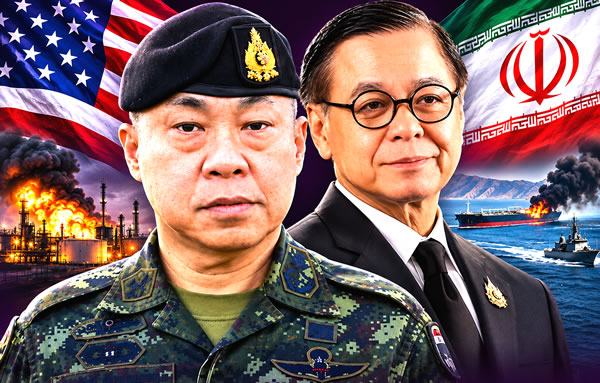
National Security Council Secretary-General General Chaipruak Doungprapat and Deputy Prime Minister and Minister of Foreign Affairs Sihasak Phuangketkeow prepare for US-Iran war, oil shocks and Thai evacuations. (Source: Royal Thai Army)
Thailand is preparing for renewed US military strikes against Iran, with oil supplies and prices posing the greatest immediate threat. Prime Minister Anutin Charnvirakul has ordered emergency preparations as tensions rise across the Middle East.
The Foreign Affairs and Defence ministries are also coordinating daily over possible evacuations of Thai nationals. Meanwhile, intelligence agencies are monitoring military deployments, and energy officials are reviewing alternative oil supplies.
Bangkok faces the prospect of higher fuel prices, disrupted shipping and further economic pressure. An urgent National Security Council meeting is scheduled for Wednesday, November 4. However, the government insists Thailand remains food secure and has urged the public not to panic.
Washington considers fresh Iran strikes as Thailand faces oil supply threats and rising economic pressure
The preparations follow reports that Washington is considering fresh military operations against Iran after the November 3 American midterm elections. US officials have reportedly warned regional allies to prepare for possible strikes and Iranian retaliation.
Notably, the warnings include potential attacks on oil installations and critical infrastructure across the Gulf. However, US President Donald Trump has not confirmed a decision to launch another operation. Diplomatic negotiations are continuing, although the military threat has prompted emergency planning across the region.
Thailand faces particular exposure because approximately half its crude oil imports originate in the Middle East. Consequently, another prolonged disruption could threaten fuel availability and push domestic prices higher.
Rising petroleum costs would also affect transport, agriculture, manufacturing and tourism. The government has already introduced emergency measures during earlier hostilities. In response, officials are reviewing those arrangements and examining whether additional protection is required.
National Security Council confirms emergency preparations ahead of urgent November 4 meeting
National Security Council Secretary-General General Chaipruak Doungprapat confirmed the latest preparations on Friday, October 30. He said Thai intelligence agencies were monitoring American and Iranian military deployments alongside diplomatic developments.
The objective is to assess the risk of renewed hostilities and their consequences for Thailand. Separately, government departments are reviewing energy security, economic disruption, evacuation arrangements and potential cyberattacks.
General Chaipruak said agencies had prepared contingency arrangements covering different levels of emergency. These include routine readiness measures and responses to more serious developments.
Nevertheless, he stressed that the preparations did not indicate an imminent crisis. The government wanted agencies ready to respond if the international situation deteriorated. He also acknowledged that renewed fighting would affect energy supplies and could have wider economic consequences.
The National Security Council will convene an urgent meeting on Wednesday, November 4. Government departments and academic specialists monitoring the Middle East are expected to participate. During the meeting, officials will assess Thailand’s exposure and examine further emergency measures.
Prime Minister orders wider emergency planning covering energy security, cyberattacks and Thai citizens
The review will cover essential supplies, energy availability and national infrastructure. General Chaipruak said Prime Minister Anutin Charnvirakul had instructed the council to identify areas requiring advance preparation.
Energy security is a central concern, but the government’s preparations extend beyond petroleum imports. On another front, the Ministry of Digital Economy and Society is preparing for potential cyberattacks.
The National Security Council is coordinating with relevant agencies to assess these threats. Existing emergency arrangements are also being reviewed against possible changes in the regional security situation. General Chaipruak said the government had already developed alternative energy supply plans following the earlier crisis.
Those arrangements may require further changes if another confrontation develops differently. The security chief said officials would examine possible responses rather than rely entirely on previous measures.
In parallel, the Foreign Affairs and Defence ministries are reviewing the safety of Thai nationals across the Middle East. Their daily coordination includes plans for military assistance if evacuations become necessary.
Foreign Minister confirms military evacuation plans as Thai embassies monitor threats across the Middle East
Deputy Prime Minister and Minister of Foreign Affairs Sihasak Phuangketkeow confirmed the evacuation preparations on October 30. He said the Foreign Affairs Ministry was working closely with the Royal Thai Armed Forces.
Both organisations have plans to relocate Thai citizens if regional security deteriorates. Significantly, General Chaipruak confirmed that discussions between the two ministries were taking place daily. The arrangements cover possible military involvement in moving citizens from threatened locations.
Thai diplomatic missions throughout the region have been instructed to monitor security developments and maintain contact with Thai communities. Particular attention is being paid to countries potentially exposed to Iranian retaliation.
These include Gulf states hosting important energy installations and strategic infrastructure. Such facilities could face attacks if American military operations trigger a wider confrontation. Foreign Minister Sihasak said Thailand had previous experience conducting evacuations during international conflicts.
That experience provides the basis for coordinating diplomatic and military assistance. However, Bangkok has not ordered a general evacuation under the latest preparations. Neither has the government confirmed the dispatch of military aircraft for a new operation.
For the moment, officials are maintaining readiness rather than instructing Thai nationals to leave. The Foreign Affairs Ministry is instead urging citizens to follow emergency guidance issued by their host governments.
Emergency food warnings spread across Gulf states as Thailand reviews evacuation routes and flight risks
Several foreign governments have advised residents to maintain sufficient food and drinking water for at least 72 hours. The warnings have increased concern about renewed military operations.
Accordingly, Thai embassies have been instructed to communicate relevant local announcements and emergency instructions. Sihasak said evacuations or relocations could become necessary if public safety deteriorated. The government has not disclosed how many Thai nationals might require assistance.
Nor has Bangkok identified specific evacuation routes, assembly locations or aircraft assignments. These details could become important if hostilities interrupt commercial aviation across the Gulf.
Thai citizens might then require assistance reaching safer areas before returning home. In addition, workers employed throughout the region could face interrupted employment and lost earnings. Their families in Thailand could consequently experience reduced remittances.
No country-by-country assessment of Thai nationals potentially affected has been released. Nevertheless, daily coordination between the Foreign Affairs and Defence ministries confirms that evacuation planning is active.
The government is also monitoring developments that could affect civilian transport and regional infrastructure. Any wider confrontation could complicate evacuation arrangements while increasing pressure on Thailand’s energy supplies.
Thailand’s dependence on Middle East crude oil leaves fuel prices and domestic supplies facing fresh threats
The petroleum threat is particularly serious because Thailand depends heavily on imported crude oil. Much of that supply originates in the Persian Gulf. Consequently, interruptions to production facilities or shipping routes could rapidly affect domestic fuel costs.
On April 6, Prime Minister Anutin Charnvirakul warned that approximately half of Thailand’s energy imports came from the Middle East. He said earlier fighting had already disrupted production, refining, storage and transportation.
Damage to energy infrastructure can also have consequences beyond the immediate fighting. Even after hostilities cease, damaged facilities may require time before normal operations resume. Thailand therefore faces exposure to both immediate supply interruptions and prolonged international price pressure.
Imported crude supports domestic refining and petroleum distribution. Higher purchase prices subsequently increase the cost of supplying petrol, diesel and other petroleum products.
The government has already taken steps to protect domestic fuel availability. In March, Thailand suspended petroleum exports during the earlier Middle East crisis. Officials also began pursuing alternative sources of crude oil.
Thailand reviews alternative energy sources as latest oil reserve figures remain undisclosed by government
These measures were intended to safeguard supplies while international markets faced disruption. As part of the response, agencies considered increasing natural gas production in the Gulf of Thailand. Greater use of coal-fired and hydroelectric generation was also examined.
Alternative energy arrangements could reduce dependence on disrupted imports. Their effectiveness, however, would depend on the duration and severity of another confrontation. Existing oil reserves are therefore an important part of Thailand’s emergency position.
On March 13, officials reported petroleum reserves equivalent to approximately 98 days of consumption. That figure described the country’s position during the earlier crisis. Sources cannot establish the quantity available on November 2.
The latest government announcements have not provided an updated reserve figure. Furthermore, officials have not confirmed new emergency crude oil purchases. The precise volume available to withstand another prolonged disruption therefore remains unclear.
Existing inventories would influence how long domestic supplies could be maintained. Alternative imports might provide additional protection, depending on international availability and shipping arrangements.
Oil prices surge above $113 as Strait of Hormuz shipping attacks threaten supplies across Asian markets
Oil prices are already under severe pressure. Market reports published on November 1 placed Brent crude above $113 per barrel. American crude was reported at approximately $104. These levels demonstrate the substantial cost of imported petroleum before any further military escalation.
Another interruption to Gulf production or transportation could drive costs higher. For Thailand, the consequences would extend from refineries and fuel distributors to businesses and consumers.
The Strait of Hormuz remains a critical vulnerability. The waterway carries petroleum shipments leaving the Persian Gulf for international markets. Disruption there can therefore affect energy importers throughout Asia.
Although shipping movements have recovered from earlier wartime lows, attacks on commercial vessels continue. Insurance premiums and freight charges have also increased. These additional costs raise the expense of transporting petroleum even when shipments continue.
The Washington Post reported on October 30 that Iran had attacked at least 25 ships during October. Two vessels were sunk during those incidents. The newspaper also reported seven seafarer deaths since intensified shipping protection operations began in August.
The attacks have maintained pressure on commercial shipping despite efforts to protect maritime traffic. Meanwhile, OPEC+ producers have maintained existing output levels rather than announcing a substantial production increase.
Thailand’s Oil Fuel Fund faces mounting pressure as higher crude prices threaten transport and agriculture
International buyers consequently remain exposed to further disruption if hostilities intensify. Thailand could face higher import costs without suffering a complete interruption to deliveries. Increased insurance premiums and shipping charges could compound the impact.
Any sustained disruption to Gulf oil facilities would add another source of pressure. The scale of the economic consequences would depend on the amount of production and transportation affected.
Thailand’s Oil Fuel Fund represents another major concern. In September, officials reported expenditure of approximately ฿770 million daily on fuel subsidies. The fund was already under substantial financial pressure.
Another sustained increase in international petroleum prices could therefore raise the cost of maintaining domestic fuel subsidies. Alternatively, higher prices could be passed through to motorists and businesses. No additional subsidy arrangements or fuel price controls have been confirmed in the latest announcements.
The consequences could extend across the economy. Diesel prices affect road haulage, public transport, agricultural machinery and the distribution of goods. Higher fuel costs could increase operating expenses for lorries, buses and logistics companies. As a result, businesses could face more expensive distribution and pressure on profit margins. Agriculture would also be exposed through fuel, fertiliser and transportation costs.
Rising energy costs threaten Thai manufacturing, electricity generation and international tourism
Manufacturers using petrochemicals, plastics and energy-intensive production processes could encounter higher expenses. Electricity generation represents another area of exposure. Any tightening of natural gas or liquefied natural gas supplies could increase generation costs. Similarly, higher energy prices could affect industrial operations and household expenditure. These pressures would arise even if Thailand remained outside the military confrontation.
Tourism could also face disruption. Airlines are exposed to higher aviation fuel costs and restrictions affecting routes across the Middle East. Flights linking Thailand with Europe through Gulf aviation hubs could be interrupted by security concerns.
Higher airfares could increase travel expenses and discourage long-haul visitors. In addition, disruption to international connections could complicate journeys involving Gulf carriers. The extent of these effects would depend on the scale and duration of hostilities.
A limited confrontation lasting several days could produce a sharp but temporary increase in oil prices. Existing inventories and alternative supply arrangements might cushion immediate disruption.
By contrast, prolonged attacks on energy installations and shipping routes could create sustained shortages. Crude oil and LNG availability could tighten while freight and insurance charges rise. Thailand could then face continuing pressure on fuel prices, electricity costs and industrial production.
US and Israel weigh further Iran strikes as Tehran threatens Gulf oil facilities and communications
A wider conflict involving Gulf countries would present additional difficulties. Commercial aviation restrictions could complicate the evacuation of Thai nationals.
At the same time, shipping disruptions could affect petroleum imports and increase the cost of essential supplies. Bangkok could therefore face simultaneous demands involving energy security and the safety of citizens overseas. These remain potential consequences rather than confirmed government forecasts.
The military threat follows reports that Washington and Israel have developed plans for further operations against Iran. According to an Associated Press report published on October 29, American officials privately warned regional allies about possible strikes.
The reported timetable placed potential operations after the November 3 American midterm elections. Notably, the warnings included possible Iranian retaliation against energy installations and other critical infrastructure. President Donald Trump had not made a final decision at the time of the report.
Iran has separately threatened retaliation against oil facilities and undersea communications cables if major American and Israeli attacks resume. Other infrastructure across Gulf countries could also become targets.
Such operations could disrupt telecommunications, transport and essential services alongside petroleum production. The consequences would therefore extend beyond oil markets and commercial shipping. Nevertheless, diplomatic contacts are continuing while military preparations remain under consideration.
Qatar mediates US-Iran talks as Prime Minister Anutin reassures Thais over food and energy security risks
Reports on November 1 indicated that Qatar was mediating indirect discussions involving the Strait of Hormuz and frozen Iranian assets. The talks concerned possible arrangements to reopen the waterway and release Iranian funds.
These diplomatic efforts are continuing alongside reports of possible military operations. No confirmed American attack date has been announced. The outcome remains uncertain as governments across the region prepare for further developments.
Against this background, Prime Minister Anutin Charnvirakul has sought to reassure the Thai public about essential supplies. Speaking on Friday, October 30, he said Thailand remained secure in food production and agricultural resources.
His comments followed reports that foreign governments were advising residents to stockpile emergency provisions. The Prime Minister urged Thais to remain vigilant without becoming alarmed. He said the country possessed sufficient agricultural production and raw materials to meet domestic needs.
The government is also preparing alternative energy arrangements to address possible international disruptions. Separately, General Chaipruak said the National Security Council would provide public information at an appropriate time.
He emphasised that emergency planning should not be interpreted as evidence of an impending domestic crisis. Government agencies were preparing for different levels of disruption rather than responding to a confirmed attack.
Important operational details nevertheless remain undisclosed. Thailand has not released its latest verified oil reserve position or confirmed new agreements with alternative petroleum suppliers. Nor has the government announced additional emergency funding for fuel subsidies.
Thailand awaits emergency security meeting as oil supply risks and evacuation questions remain unresolved
The Foreign Affairs Ministry has also withheld detailed evacuation timetables and country-by-country assessments of Thai nationals at risk. These matters could receive further attention during Wednesday’s National Security Council meeting.
Thailand’s exposure centres on imported energy, international shipping routes and global commodity prices. The country could face substantial economic consequences without becoming directly involved in military operations.
Earlier hostilities have already disrupted Gulf energy infrastructure and commercial shipping. Another confrontation could therefore increase fuel costs, raise business expenses and place additional pressure on the Thai economy. The government might also face demands to evacuate citizens from countries affected by military operations.
Bangkok has confirmed preparations covering energy security, evacuations and cyber defences. The Foreign Affairs and Defence ministries are maintaining daily coordination over possible emergency movements.
Intelligence agencies are monitoring American and Iranian military deployments, while officials review alternative energy supplies. The National Security Council will examine the country’s readiness on Wednesday, November 4. No new American military operation has been confirmed. However, Thailand is preparing for renewed Middle East hostilities, with its oil supplies, economy and citizens overseas potentially exposed.
USS Abraham Lincoln departs Thailand after a special visit. Captain gave thanks for the very warm welcome
US Navy’s Pattaya visit is plain sailing with strong spending breeze. Chonburi governor hails it a success
Ring of steel protects USS Abraham Lincoln as huge security operation police US sailors on shore leave
Cash is the name of game as the US Navy returns to its old Pattaya stomping ground in a 4 day city boost
The boys are back in town. US servicemen return to Pattaya, a town they helped create, for wartime R&R
Pattaya police operation targets street sex workers ahead of expected arrival of US sailors on Wednesday
US Navy Aircraft carrier group to descend on Pattaya after taking part in ‘Epic Fury’ and blockading Iran
PM Anutin denies a plan for an American drone base to be set up in Thailand despite military’s US visit
Visit by US Under Secretary of State emphasises American Thai military alliance amid tense trade talks
Bangkok firm rules out using its US military alliance as leverage in tense trade talks with Washington
Suphajee led high powered Thai team to Washington DC seeking to close a US trade deal and partnership
Joseph Anthony is an expat from Ireland who has lived in Thailand for the last decade. He has worked extensively in the media including editorial positions in Ireland and Thailand. He is focused on economic and business stories in Thailand as well as the expat lifestyle.
All posts by Joseph O' Connor
Cyber Police still quiz Facebook page operative who denies ownership over fake payment slip linked to PM October 29, 2026 Fake ฿7m ‘tea money’ slip sparks a
Burmese migrant workers, two couples murder construction site overseer over notice period pay dispute October 29, 2026 Payday turned deadly in Bangkok when four Burmese
Lovesick Ayutthaya man kidnapped four month old infant from mother. Let her fall into river in the dark October 28, 2026 Four-month-old baby found dead in the Chao Phraya
Fresh arrest warrant application to be made for ‘Godd Dam’ page boss on Thursday as police expand case October 28, 2026 Who runs Godd Dam? Thai cyber police seek another
Minister scrambles to offer 15 day visa on arrival to smaller markets with reports of losses to Vietnam October 28, 2026 Thailand’s visa shake-up backfires ahead of high
Restaurant YouTube reviewer is a fraudster with an arrest warrant. Police complaint filed in Nonthaburi October 27, 2026 A food influencer’s demand for prawns, drinks or
Israeli arrested on drug and sex charges threatens police and well known detective Inspector Jae October 27, 2026 A Bangkok sex-and-drugs raid nets Israeli Tomer
Knock on the door coming for 10k visa overstayers now in Thailand as police launch new crackdown October 26, 2026 Thailand launches a nationwide hunt for over 10,000
19 year old hothead lands in jail after punching female driver who honked her car horn at him in Bangkok October 26, 2026 Terrifying scenes in Bangkok as a motorcyclist, 19,
Thailand falls behind Southeast Asian peers in race to build more flight connections as tourism fades October 24, 2026 High-season alarm for Thailand as direct international
Israeli woman on Koh Phangan faces deportation after her visa was revoked. Rising diplomatic tensions October 24, 2026 Israeli woman, 33, faces visa cancellation on Koh
American YouTuber brutally attacked robbed and beaten outside a Pattaya bar by two ‘foreign’ assailants October 22, 2026 American YouTuber Chris Barnes exposes a grim Pattaya
Prime Minister Anutin pushes a hard line on narcotics suppression which will jail even more yaba users October 22, 2026 Thailand’s drug crisis sees Anutin act with new
Departures tax to be axed as Thailand’s hotel sector reels from a debt crisis linked with the Covid era October 22, 2026 Revolt puts Thailand’s ฿1,000 departure tax in
12 properties raided, 85 people charged after Pattaya police raids linked to the illegal foreign ownership crackdown October 21, 2026 Police target ฿800 million in Pattaya property
Controversy on two wheels rages in Pattaya as city’s mototaxi drivers switch to blue vests from orange October 21, 2026 Blue replaces orange for 5,281 Pattaya motorcycle taxi
Queen Suthida meets the Emperor and Empress of Japan on a visit promoting international women’s ice hockey October 21, 2026 Queen Suthida meets Japan’s Emperor Naruhito and
PM revokes citizenship of Jewish leader in Thailand amid police investigation into Chabad network nationwide October 29, 2026
Tourism chiefs furious as another Chinese abduction and a spat with the Embassy threaten bookings October 29, 2026
Bank of Thailand confirms a tale of two economies one booming, another struggling with decline October 28, 2026
French businessman wanted for VAT fraud arrested this Wednesday on Koh Samui after Interpol Notice October 28, 2026
Thailand’s GDP may get a bump up from the 3rd quarter after recent economic agency talks with PM Anutin October 28, 2026
Thousands of fake Thai citizens of Chinese origin identified in one case going back over two decades October 27, 2026
New police chief wants officers who show their faces to the public and issue warnings instead of fines October 27, 2026
Special Branch and cyber police move against the ‘Godd Dam’ Facebook page after PM ‘tea money’ fake October 26, 2026
Government spokesman’s rebuke to the World Health Organisation (WHO). Keep out of Thai internal affairs October 26, 2026
Mystery of Dutch TV star deepens as police confirm he left Thailand and lawyer claims he wants privacy October 25, 2026
Prime Minister in a spot as no confidence debate looks like it’s being stalled or postponed in parliament October 24, 2026
PM calls police chief and orders preparations to make sure Thailand is not subject to French like rioting October 22, 2026
Pledges on investment are up but Foreign Direct Investment for the first six months is down nearly 5% October 22, 2026
Frenchman arrested by Immigration. Officer spotted him on Interpol wanted list for drug trafficking October 22, 2026
Drunk woman stripped naked on a Pattaya public street Tuesday night hurling abuse. Arrested by police October 21, 2026
Former top Democrat Party aide and MP met DSI over Bhumjaithai MP’s husband’s links to online gambling October 21, 2026
Row over handling of two online gambling cases related to MPs. Questions of jurisdiction and fair play October 21, 2026
German family members injured in Phuket after app based taxi driver lost control of car looking at GPS October 20, 2026
Bhumjaithai MP and her husband answer questions of the elite DSI police over links to online gambling October 20, 2026
Hellish battle with UK Home Office for Brit seeking to bring Burmese fiancée and son home for Christmas October 20, 2026
7kg heroin in drink sachets bound for Australia found in a Samut Prakan premises after police tip off October 19, 2026
Much loved Robocop, a popular figure in Nonthaburi near Bangkok dies in a tragic road traffic accident October 19, 2026
© 2026 Thai Examiner. All rights reserved.
2026年11月2日下午12:59
经济、生活、媒体、政治、泰国
泰国正严阵以待,应对美国对伊朗的新一轮打击,石油供应受到威胁,燃油价格飙升。在周二美国中期选举后,华盛顿正在权衡是否发动袭击,泰国总理阿努廷·查恩维拉库尔已下令启动紧急准备。与此同时,泰国驻外使馆处于戒备状态,军事人员撤离也在考虑之中。泰国一半的原油进口来自中东,而布伦特原油价格已突破每桶113美元。据报道,伊朗在10月份袭击了25艘船只,这可能导致进一步的供应中断。泰国本已捉襟见肘的石油燃料基金面临又一次打击,官员们正努力寻找替代能源供应。网络防御也在接受审查。国家安全委员会将于11月4日(周三)召开紧急会议。然而,尽管目前的石油储备和撤离安排存在不确定性,曼谷方面仍坚称食品供应安全。
国家安全委员会秘书长猜普鲁·东帕帕和副总理兼外交部长西哈萨·普昂凯乔正在为美伊战争、石油危机和泰国人员撤离做准备。(来源:泰国皇家陆军)
泰国正为美国可能再次对伊朗发动军事打击做准备,石油供应和价格构成了最直接的威胁。随着中东地区紧张局势升级,泰国总理阿努廷·查恩维拉库尔已下令启动紧急准备工作。
外交部和国防部每天都在协调可能的泰国公民撤离事宜。与此同时,情报机构正在监控军事部署,能源官员正在评估替代石油供应方案。
曼谷面临燃油价格上涨、航运中断和进一步经济压力的风险。国家安全委员会紧急会议定于11月4日(周三)召开。然而,政府坚称泰国粮食安全依然有保障,并敦促公众不要恐慌。
泰国面临石油供应威胁和日益加剧的经济压力,华盛顿正考虑对伊朗发动新的打击。
此前有报道称,华盛顿正在考虑在11月3日美国中期选举后对伊朗发动新的军事行动。据报道,美国官员已警告地区盟友做好应对可能的打击和伊朗报复的准备。
值得注意的是,这些警告包括可能对海湾地区的石油设施和关键基础设施发动袭击。然而,美国总统唐纳德·特朗普尚未确认是否决定再次发动军事行动。尽管军事威胁已促使该地区启动应急预案,但外交谈判仍在继续。
泰国面临的风险尤为突出,因为其约一半的原油进口来自中东。因此,如果供应中断持续时间过长,可能会威胁燃料供应,并推高国内油价。
石油价格上涨也会影响交通运输、农业、制造业和旅游业。政府此前在冲突期间已采取过紧急措施。目前,官员们正在审查这些措施,并研究是否需要采取额外的保护措施。
国家安全委员会确认已为11月4日的紧急会议做好应急准备
国家安全委员会秘书长猜普鲁·东帕帕于10月30日星期五证实了最新的准备工作。他表示,泰国情报机构正在密切关注美国和伊朗的军事部署以及外交动态。
此举旨在评估再次爆发敌对行动的风险及其对泰国的影响。此外,政府部门正在审查能源安全、经济中断、疏散安排和潜在的网络攻击等问题。
柴普鲁克将军表示,各机构已制定了涵盖不同级别紧急情况的应急预案,包括常规的准备措施和应对更严重事态发展的响应措施。
然而,他强调,这些准备工作并不意味着危机迫在眉睫。政府希望各机构做好准备,以便在国际局势恶化时能够迅速应对。他还承认,战火重燃将影响能源供应,并可能产生更广泛的经济后果。
国家安全委员会将于11月4日(星期三)召开紧急会议。预计政府部门和负责监测中东局势的学术专家将参加会议。会议期间,官员们将评估泰国面临的风险,并研究进一步的紧急措施。
总理下令制定更广泛的应急计划,涵盖能源安全、网络攻击和泰国公民安全。
此次审查将涵盖基本物资供应、能源供应和国家基础设施。柴普鲁克将军表示,总理阿努廷·查恩维拉库尔已指示委员会确定需要提前准备的领域。
能源安全是政府关注的核心问题,但政府的准备工作远不止于石油进口。另一方面,数字经济和社会部正在为潜在的网络攻击做好准备。
国家安全委员会正与相关机构协调,评估这些威胁。现有的应急预案也在根据区域安全形势可能的变化进行审查。柴普鲁克将军表示,政府在之前的危机之后已经制定了替代能源供应计划。
如果再次发生冲突,这些安排可能需要进一步调整。安全部门负责人表示,官员们将研究可能的应对措施,而不是完全依赖之前的措施。
与此同时,外交部和国防部正在评估在中东地区泰国公民的安全状况。双方的日常协调工作包括制定在必要时提供军事援助的计划,以便进行撤离。
外交部长确认军事撤离计划,泰国驻外使馆密切关注中东各地的威胁。
泰国副总理兼外交部长西哈萨克·普昂克乔于10月30日证实了撤离准备工作。他表示,外交部正与泰国皇家武装部队密切合作。
这两个组织都制定了在地区安全局势恶化时转移泰国公民的计划。值得注意的是,猜普鲁克将军证实,这两个部门每天都在进行磋商。相关安排涵盖了军队可能参与将公民从受威胁地区转移的情况。
泰国已指示其驻该地区各外交机构密切关注安全局势发展,并与当地泰国侨民保持联系。尤其关注那些可能遭受伊朗报复的国家。
这些国家包括拥有重要能源设施和战略基础设施的海湾国家。如果美国的军事行动引发更大规模的冲突,这些设施可能会遭到袭击。泰国外交部长西哈萨克表示,泰国此前在国际冲突期间有过撤离行动的经验。
那次经历为协调外交和军事援助奠定了基础。然而,根据最新的准备工作,曼谷方面尚未下令进行全面撤离。政府也未确认是否已派遣军用飞机执行新的行动。
目前,官方并未要求泰国公民撤离,而是保持戒备状态。外交部敦促公民遵循所在国政府发布的紧急指导。
泰国重新评估撤离路线和航班风险,海湾国家发布紧急食品安全警告。
多个外国政府建议居民储备至少72小时所需的食物和饮用水。这些警告加剧了人们对军事行动重启的担忧。
因此,泰国已指示各使馆发布相关的当地公告和紧急指示。西哈萨克表示,如果公共安全恶化,可能需要进行疏散或转移。政府尚未透露有多少泰国公民可能需要援助。
曼谷方面也未公布具体的撤离路线、集合地点或飞机分配方案。如果海湾地区的敌对行动中断商业航空运输,这些细节可能至关重要。
泰国公民可能需要协助才能抵达安全地区,之后才能返回家园。此外,在该地区工作的工人可能面临失业和收入损失。他们在泰国的家人因此可能会收到更少的汇款。
目前尚未公布可能受影响的泰国公民的国别评估报告。不过,外交部和国防部之间的每日协调表明,撤侨计划正在积极推进中。
政府也在密切关注可能影响民用交通和区域基础设施的事态发展。任何更大规模的冲突都可能使疏散安排更加复杂,并加剧泰国能源供应的压力。
泰国对中东原油的依赖使燃油价格和国内供应面临新的威胁
石油威胁尤为严重,因为泰国严重依赖进口原油。而这些原油大多来自波斯湾。因此,生产设施或运输路线的中断都可能迅速影响国内燃料价格。
4月6日,泰国总理阿努廷·查恩维拉库尔警告说,泰国约一半的能源进口来自中东。他表示,此前的冲突已经扰乱了能源的生产、提炼、储存和运输。
能源基础设施的破坏不仅会直接影响战事,还会带来其他后果。即使敌对行动停止,受损设施也需要一段时间才能恢复正常运转。因此,泰国面临着能源供应立即中断和长期国际价格压力的双重风险。
进口原油支撑着国内炼油和石油分销。更高的采购价格随后会增加汽油、柴油和其他石油产品的供应成本。
政府已采取措施保障国内燃料供应。今年3月,泰国在中东危机期间暂停了石油出口。官员们也开始寻求原油的替代来源。
泰国政府尚未公布最新的石油储量数据,泰国正在评估替代能源。
这些措施旨在保障供应,以应对国际市场面临的动荡。作为应对措施的一部分,各机构考虑增加泰国湾的天然气产量,并研究了更多地利用燃煤和水力发电的可能性。
替代能源安排可以降低对中断进口的依赖。然而,其有效性取决于另一次冲突的持续时间和严重程度。因此,现有石油储备是泰国应急准备的重要组成部分。
3月13日,官方报告称石油储备相当于约98天的消费量。这一数字反映了该国在上次危机期间的状况。目前尚无法确定11月2日的石油储备量。
政府最新公告并未提供更新的储备数据。此外,官员们也没有确认新的紧急原油采购计划。因此,究竟有多少储备能够应对另一次长时间的供应中断,目前仍不清楚。
现有库存将影响国内供应能够维持的时间。替代进口或许能够提供额外的保障,但这取决于国际供应情况和运输安排。
霍尔木兹海峡航运袭击事件威胁亚洲市场供应,油价飙升至每桶113美元以上
油价已面临巨大压力。11月1日发布的市场报告显示,布伦特原油价格超过每桶113美元,美国原油价格约为每桶104美元。这些价格水平表明,在任何进一步的军事升级之前,进口石油的成本都非常高昂。
海湾地区生产或运输的再次中断可能导致成本上升。对泰国而言,其影响将波及炼油厂、燃料分销商、企业和消费者等各个方面。
霍尔木兹海峡仍然是一个至关重要的薄弱环节。这条水道承载着从波斯湾运往国际市场的石油运输。因此,该海峡的中断可能会影响整个亚洲的能源进口国。
尽管航运量已从战时的低谷恢复,但针对商船的袭击仍在继续。保险费和运费也随之上涨。即使石油运输仍在进行,这些额外成本也会增加石油运输的费用。
《华盛顿邮报》10月30日报道称,伊朗在10月份至少袭击了25艘船只,其中两艘被击沉。该报还报道称,自8月份加强海上保护行动以来,已有7名海员丧生。
尽管遭受袭击且各方努力保护海上交通,商业航运仍面临持续压力。与此同时,欧佩克+产油国维持现有产量水平,并未宣布大幅增产。
随着原油价格上涨威胁到交通运输和农业,泰国石油燃料基金面临越来越大的压力。
因此,如果冲突升级,国际买家仍将面临进一步的干扰。泰国可能面临更高的进口成本,但不会完全中断货物交付。保险费和运费的上涨可能会加剧这种影响。
墨西哥湾石油设施若持续中断,将带来另一重压力。经济后果的规模将取决于受影响的产量和运输量。
泰国的石油燃料基金是另一个令人担忧的主要问题。9月份,官方报告称,该基金每天用于燃油补贴的支出约为7.7亿泰铢。该基金此前已面临巨大的财政压力。
因此,国际石油价格若持续上涨,可能会增加维持国内燃油补贴的成本。或者,更高的价格可能会转嫁给车主和企业。最新公告中并未确认任何额外的补贴安排或燃油价格管制措施。
其影响可能波及整个经济领域。柴油价格上涨会影响公路运输、公共交通、农业机械和货物配送。更高的燃油成本可能会增加卡车、公共汽车和物流公司的运营成本。因此,企业可能面临更高的配送成本和利润率压力。农业也将受到燃油、化肥和运输成本上涨的影响。
能源成本上涨威胁泰国制造业、电力生产和国际旅游业。
使用石化产品、塑料和高能耗生产工艺的制造商可能会面临更高的成本。电力生产是另一个风险领域。天然气或液化天然气供应的任何紧张都可能导致发电成本上升。同样,能源价格上涨也可能影响工业运营和家庭支出。即使泰国不卷入军事冲突,这些压力依然存在。
旅游业也可能面临中断。航空公司将受到航空燃油成本上涨和中东航线管制的影响。连接泰国和欧洲、途经海湾地区航空枢纽的航班可能因安全问题而中断。
机票价格上涨可能会增加旅行成本,并阻碍长途旅行。此外,国际航线中断可能会使搭乘海湾地区航空公司航班的旅客出行变得复杂。这些影响的程度将取决于敌对行动的规模和持续时间。
持续数日的有限冲突可能导致油价出现短暂但急剧的上涨。现有库存和替代供应安排或许能够缓解短期内的供应中断。
相比之下,对能源设施和航运路线的长期袭击可能造成持续的短缺。原油和液化天然气的供应可能会趋紧,而运费和保险费则会上涨。届时,泰国可能面临燃料价格、电力成本和工业生产持续承压的局面。
美国和以色列正在考虑对伊朗发动进一步打击,此前德黑兰威胁要袭击海湾地区的石油设施和通信设施。
若海湾国家卷入更大规模的冲突,将带来更多困难。商业航空限制可能会使泰国公民的撤离更加复杂。
与此同时,航运中断可能影响石油进口,并推高必需品成本。因此,曼谷可能同时面临能源安全和海外公民安全方面的挑战。这些目前仍是潜在后果,而非政府已确认的预测。
此前有报道称,华盛顿和以色列已制定针对伊朗的进一步军事行动计划,随后便出现了军事威胁。据美联社10月29日报道,美国官员私下警告地区盟友,可能会发动袭击。
据报道,行动时间表显示,潜在的军事行动将在11月3日美国中期选举之后展开。值得注意的是,警告中提到伊朗可能对能源设施和其他关键基础设施进行报复。截至报道发布时,唐纳德·特朗普总统尚未做出最终决定。
伊朗已单独威胁,如果美国和以色列恢复大规模袭击,伊朗将对石油设施和海底通信电缆进行报复。海湾国家的其他基础设施也可能成为袭击目标。
此类行动可能会扰乱电信、交通运输和基本服务,以及石油生产。因此,其影响将远超石油市场和商业航运。尽管如此,外交接触仍在继续,军事准备仍在考虑之中。
卡塔尔斡旋美伊会谈,与此同时,泰国总理阿努廷向泰国民众保证粮食和能源安全风险。
11月1日的报道显示,卡塔尔正在斡旋涉及霍尔木兹海峡和伊朗被冻结资产的间接谈判。谈判内容包括重新开放该水道和解冻伊朗资金的可能安排。
与此同时,有关可能发生军事行动的报道也仍在继续。目前尚未公布美国发动袭击的具体日期。由于该地区各国政府都在为事态的进一步发展做准备,最终结果仍不明朗。
在此背景下,泰国总理阿努廷·查恩维拉库尔试图安抚泰国民众,让他们放心基本物资供应。他在10月30日(星期五)发表讲话时表示,泰国的粮食生产和农业资源仍然安全。
此前有报道称,一些外国政府建议本国居民储备应急物资。总理发表上述言论后,敦促泰国民众保持警惕,但不必惊慌。他表示,泰国拥有充足的农产品和原材料,足以满足国内需求。
政府也在制定替代能源方案,以应对可能出现的国际干扰。此外,柴普鲁克将军表示,国家安全委员会将在适当时候公布相关信息。
他强调,应急预案不应被解读为即将发生国内危机的证据。政府机构是在为不同程度的干扰做准备,而不是为了应对已确认的袭击。
然而,重要的运营细节仍未公开。泰国尚未公布其最新的已核实石油储备数据,也未确认与替代石油供应商达成的新协议。政府也未宣布为燃油补贴提供额外的紧急资金。
泰国正等待紧急安全会议,石油供应风险和人员疏散问题仍未解决。
外交部也未公布详细的撤侨时间表以及针对面临风险的泰国公民的逐国评估报告。这些问题可能会在周三的国家安全委员会会议上得到进一步讨论。
泰国面临的风险主要集中在能源进口、国际航运路线和全球大宗商品价格方面。即使不直接卷入军事行动,泰国也可能面临严重的经济后果。
此前的冲突已经扰乱了海湾地区的能源基础设施和商业航运。因此,再次发生冲突可能会推高燃料成本,增加企业支出,并给泰国经济带来更大压力。泰国政府还可能面临从受军事行动影响的国家撤离公民的要求。
曼谷方面已确认已做好能源安全、人员疏散和网络防御等方面的准备。外交部和国防部正就可能的紧急行动保持每日协调。
情报机构正在密切关注美国和伊朗的军事部署,同时官员们也在评估替代能源供应。国家安全委员会将于11月4日(周三)审查国家的战备情况。目前尚未证实美国将采取新的军事行动。然而,泰国正为中东地区可能再次爆发的冲突做准备,其石油供应、经济和海外公民都可能面临风险。
“亚伯拉罕·林肯”号航空母舰结束对泰国的特别访问后离开。舰长对泰国的热情接待表示感谢。
美国海军在芭堤雅的访问进展顺利,消费强劲。春武里府府尹称赞此次访问取得了成功。
“钢铁之环”严密保护着“亚伯拉罕·林肯”号航空母舰,大规模安全行动确保了美国水兵在岸上休假期间的安全。
现金交易是关键,美国海军重返其位于芭堤雅的老地盘,展开为期四天的城市扩张行动。
士兵们回来了。美国军人回到芭堤雅——这座他们曾参与建设的城市——进行战时休假。
芭堤雅警方在美军预计周三抵达前夕,针对街头性工作者展开行动。
美国海军航母战斗群在参与“史诗狂怒”演习并封锁伊朗后,将进驻芭堤雅。
尽管美国军方访问泰国,但泰国总理阿努廷否认了美国计划在泰国设立无人机基地的说法。
美国副国务卿访问泰国,凸显美泰军事联盟在紧张的贸易谈判中的重要性
曼谷一家公司排除了利用其与美国的军事联盟作为与华盛顿紧张贸易谈判的筹码的可能性。
苏帕吉率领泰国高级代表团前往华盛顿特区,寻求与美国达成贸易协议和伙伴关系。
约瑟夫·安东尼是一位来自爱尔兰的侨民,过去十年一直居住在泰国。他曾在爱尔兰和泰国的媒体行业担任过编辑职务,拥有丰富的媒体从业经验。他主要关注泰国的经济和商业新闻,以及侨民的生活方式。
约瑟夫·奥康纳的所有帖子
网络警察仍在讯问一名否认拥有与总理有关的伪造付款单的Facebook页面运营者(2026年10月29日)。一张伪造的700万泰铢“茶水钱”付款单引发了……
2026年10月29日,在曼谷,四名缅甸籍外籍劳工因工资纠纷,在发薪日当天杀害了一名建筑工地监工。两对夫妇因工资纠纷杀害了一名建筑工地监工。
相思成疾的阿瑜陀耶男子从母亲身边绑架了四个月大的婴儿,并将其在夜色中扔进河里。2026年10月28日,这名四个月大的婴儿被发现溺亡在湄南河中。
警方将于周四再次申请逮捕令,追捕“Godd Dam”页面的幕后主使,并扩大调查范围(2026年10月28日) 谁在操控“Godd Dam”?泰国网络警察正在寻找另一名嫌疑人
据报道,越南遭受损失,部长紧急提出向较小市场提供15天落地签证(2026年10月28日)。泰国签证改革在疫情高峰期前适得其反。
一名餐厅YouTube点评博主涉嫌诈骗,已被警方通缉。警方于2026年10月27日在暖武里府立案调查。该美食博主要求提供虾、饮料或其他食品。
2026年10月27日,一名以色列男子因涉嫌毒品和性犯罪被捕,他威胁警方和知名侦探杰伊警督。曼谷警方突袭毒品和性犯罪案件,逮捕了以色列人托默。
泰国警方发起新一轮打击行动,追捕1万名签证逾期滞留者(2026年10月26日) 泰国在全国范围内展开搜捕行动,追捕超过1万名签证逾期滞留者
2026年10月26日,曼谷一名19岁摩托车手因殴打鸣笛女司机而被捕入狱。事发时曼谷一片混乱,一名19岁的摩托车手……
随着旅游业的衰退,泰国在建设更多航线连接方面落后于东南亚其他国家(2026年10月24日) 泰国旅游旺季警报:直航国际航线减少
一名以色列女子在帕岸岛面临签证被吊销后被驱逐出境。外交紧张局势加剧 2026年10月24日 一名33岁的以色列女子在帕岸岛面临签证被取消的困境
2026年10月22日,美国YouTube博主克里斯·巴恩斯在芭堤雅一家酒吧外遭到两名“外国”袭击者残忍袭击、抢劫和殴打。巴恩斯揭露了芭堤雅的黑暗面。
泰国总理阿努廷对毒品问题采取强硬立场,这将导致更多冰毒使用者入狱 2026年10月22日 泰国毒品危机促使阿努廷采取新举措
泰国酒店业因新冠疫情引发的债务危机而遭受重创,离境税或将取消 2026年10月22日 民众抗议泰国1000泰铢的离境税
芭堤雅警方突击搜查12处房产,85人被控,此次行动与打击非法外资房产有关(2026年10月21日)。警方目标是芭堤雅价值8亿泰铢的房产。
芭堤雅两轮车争议:摩托出租车司机将背心颜色由橙色改为蓝色 2026年10月21日 芭堤雅5281辆摩托出租车司机将背心颜色由橙色改为蓝色
2026年10月21日,苏提达王后访问日本,旨在推广国际女子冰球运动,并会见了日本天皇和皇后。苏提达王后会见了日本天皇德仁。
泰国总理撤销一名犹太领袖的公民身份,此前警方正在全国范围内调查哈巴德运动网络(2026年10月29日)
旅游业负责人对又一起中国绑架事件以及与大使馆的争执感到愤怒,认为这威胁到预订量(2026年10月29日)
泰国央行证实了泰国经济呈现两极分化的局面:一个经济蓬勃发展,另一个经济则在衰退中挣扎。(2026年10月28日)
一名因涉嫌增值税欺诈而被通缉的法国商人于本周三在苏梅岛被捕,此前国际刑警组织于2026年10月28日发布了通缉令。
泰国经济机构近期与总理阿努廷举行会谈后,泰国第三季度GDP或将有所增长(2026年10月28日)
2026年10月27日,一项调查发现数千名冒充泰国公民的华裔人士,该案可追溯至二十多年前。
新任警察局长希望警员们公开露面,并以警告代替罚款。2026年10月27日
2026年10月26日,在总理“茶钱”造假事件曝光后,特别部门和网络警察对“Godd Dam”脸书页面采取行动
政府发言人驳斥世界卫生组织(世卫组织):不要干涉泰国内政 2026年10月26日
荷兰电视明星的神秘行踪愈发扑朔迷离,警方证实他已离开泰国,律师则声称他希望保持隐私。2026年10月25日
首相处境艰难,不信任投票辩论似乎将在议会陷入停滞或推迟(2026年10月24日)
总理召见警察局长,命令做好准备,确保泰国不会像法国那样在2026年10月22日发生骚乱。
投资承诺有所增加,但前六个月的外国直接投资下降了近5%(2026年10月22日)
一名法国男子因涉嫌贩毒被移民局逮捕。官员于2026年10月22日在国际刑警组织的通缉名单上发现了他的踪迹。
周二晚间,一名醉酒女子在芭堤雅街头被扒光衣服并辱骂他人。她于2026年10月21日被警方逮捕。
前民主党高级助手兼国会议员于2026年10月21日会见了泰国特别调查局,讨论泰自豪党议员的丈夫与网络赌博的关联。
围绕两起与议员有关的网络赌博案件处理方式的争议。管辖权和公平性问题 2026年10月21日
2026年10月20日,普吉岛发生一起车祸,一家德国人在乘坐网约车时因司机看GPS导航而失控受伤。
2026年10月20日,泰自豪党议员及其丈夫就网络赌博案接受泰国特警队(DSI)的质询。
一名英国男子试图将缅甸未婚妻和儿子带回家过圣诞节,却与英国内政部展开了一场艰苦卓绝的斗争(2026年10月20日)
2026年10月19日,警方根据线报在北榄府一处房屋内查获7公斤海洛因,这些海洛因藏在饮料袋中,原计划运往澳大利亚。
深受喜爱的“机械战警”(Robocop)是曼谷附近暖武里府的知名人物,于2026年10月19日因一场悲惨的交通事故去世。
© 2026 Thai Examiner。版权所有。