Heritage businesses attract new customers under NHB scheme, but challenges remain国家历史建筑委员会 (NHB) 的计划帮助文物企业吸引新客户,但仍面临挑战。
The National Heritage Board says it is looking to offer more tailored support as businesses deal with challenges such as attracting new customers and preserving traditional skills.
新闻视频
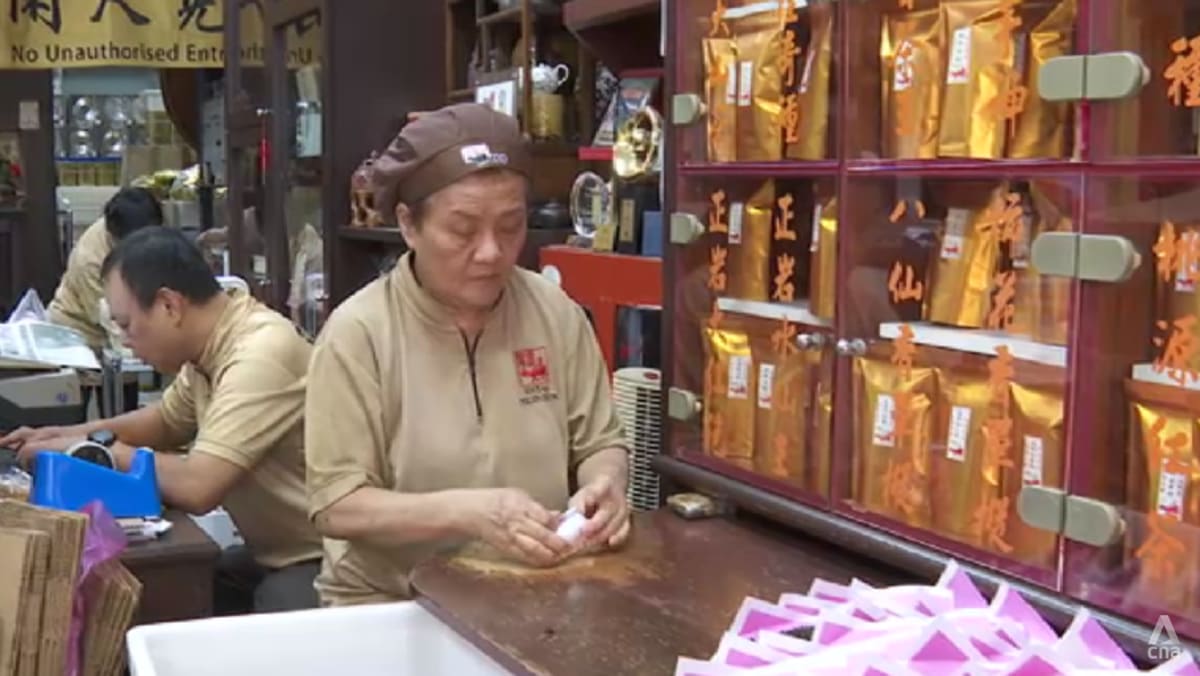
The National Heritage Board says it is looking to offer more tailored support as businesses deal with challenges such as attracting new customers and preserving traditional skills.
Pek Sin Choon has seen footfall increase by around 20 per cent since it was recognised under the National Heritage Board’s Heritage Business Scheme. (Image: CNA)
This audio is generated by an AI tool.
SINGAPORE: From traditional hot brews to carbonated tea and even gelato, century-old Chinese tea merchant Pek Sin Choon is exploring new ways to introduce its tea blends to younger customers.
Beyond experimenting with new products, the business is also drawing fresh interest, with customers discovering it through social media and artificial intelligence platforms such as ChatGPT and Gemini.
The company has seen footfall increase by around 20 per cent since it was recognised under the National Heritage Board’s (NHB) Heritage Business Scheme in October 2025.
Under the scheme, Pek Sin Choon has received social media marketing support and signed up for consultancy services to help showcase its heritage and reach new audiences.
“Beyond the footfall and all the sales, I think the key thing is that we are able to do a little bit more for the community, and this part of the Singapore story can be better shared not only to the community, but actually to the rest of the world,” said the firm's director Kenry Peh.
But while the scheme has helped businesses attract new customers, challenges such as succession planning and preserving traditional skills remain.
CNA Games Guess Word Crack the word, one row at a time Buzzword Create words using the given letters Mini Sudoku Tiny puzzle, mighty brain teaser Mini Crossword Small grid, big challenge Word Search Spot as many words as you can Show More Show Less
BALANCING TRADITION WITH MODERNISATION
Among the challenges Pek Sin Choon hopes to address is how to modernise its operations while preserving its heritage and retaining its ageing workforce.
“Being a 100-year-old business, we face a lot of challenges. When you touch a century-old recipe, you are touching legacy," said Mr Peh.
"Our worry has always been: How do we evolve without losing our soul?"
The company has also had to balance productivity improvements with retaining its older employees, some of whom are aged over 70.
It has opted for a smaller tea leaf proportioning device that can boost output by two to three times, rather than larger equipment that could potentially replace several workers.
“We choose to maintain the human factor side,” said Mr Peh, adding that he hopes the consultancy services can help the company navigate such trade-offs while preserving its identity.
Pek Sin Choon’s director Kenry Peh hopes to modernise its operations while preserving its heritage. (Image: CNA)
KEEPING FAMILY BUSINESSES UNITED
For traditional Malay eatery Rumah Makan Minang, preserving its heritage has required addressing challenges within the family itself.
Managing director Hazmi Zin said differing opinions among family members had made it difficult to agree on the direction of the business.
Unlike larger corporations where employees can leave or be replaced, disagreements within family businesses are harder to resolve, he said.
“For family, we can't terminate … we have to face it daily,” he said.
Rumah Makan Minang previously sought consultancy support through a separate NHB transformation grant, which helped family members improve communication and align their priorities.
"Sometimes, as a family, it is difficult for us to tell one another certain things. Having an independent third party helped us have those conversations in a more structured and objective way," he added.
Under the Heritage Business Scheme, the eatery has also received professional photography and marketing support to help attract younger customers.
Mr Hazmi estimated that sales increased by about 5 to 7 per cent after the company began using the new photographs in its marketing.
Overall, the business also saw sales grow by an estimated 10 to 15 per cent over the last two years, although Mr Hazmi said price increases to cope with inflation had also contributed to the growth.
He said being recognised as a heritage business had helped bring in new customers who discovered them through the scheme’s branding.
But beyond attracting customers, Mr Hazmi is concerned about ensuring the business survives.
He hopes to encourage the fourth generation of his family to take over the reins .
Rumah Makan Minang's managing director Hazmi Zin said being recognised as a heritage business had helped bring in new customers who discovered them through the scheme’s branding. (Image: CNA)
SHRINKING POOL OF SKILLED ARTISANS
Indian fashion retailer Stylemart faces a different challenge, with the pool of skilled artisans in India it relies on, including weavers, shrinking by roughly half since the COVID-19 pandemic.
“These crafts are not something that you go into a university or institute and you come out with a certificate. These are crafts that are passed from one generation to another,” said Stylemart’s creative and managing director Kavita Thulasidas.
Ms Thulasidas said some weavers have left the field to become auto-rickshaw drivers, while the younger generations are increasingly pursuing employment in call centres or digital-related fields which are less labour-intensive.
She has been travelling to rural villages in India and working directly with artisans to help sustain their livelihoods.
“It's really important that businesses like ours, the heritage businesses, come under a different category of businesses, and we're given a little bit more assistance in finding the right skill sets that we can bring into Singapore,” she said.
At the same time, Stylemart is looking to tap the Heritage Business Scheme’s consultancy and design support to modernise its retail experience and attract younger shoppers.
The company has already benefited from digital marketing and storytelling initiatives, which have helped attract new customers, including those from other ethnicities interested in cross-cultural dressing and heritage fashion wear.
Moving forward, she hopes the scheme will adopt a more consultative approach, with support tailored to the unique needs of each business.
Stylemart’s creative and managing director Kavita Thulasidas says the pool of skilled artisans she relies on is shrinking. (Image: CNA)
MORE TARGETED SUPPORT IN THE PIPELINE
Challenges involving specialised manpower and traditional skills will not be directly addressed under the Heritage Business Scheme, said NHB.
Instead, an interagency task force, involving agencies including the Urban Redevelopment Authority and the Ministry of Manpower, is looking into these challenges.
“A lot of the skill sets learned through the heritage craft don't take a day or two. These masters took years to master their craft,” said NHB’s director of heritage policy and research Georgina Koh.
“We are also looking at ways of how we can attract Singaporeans to be interested in learning (a) craft, so that we widen the pool of people who can potentially take on the businesses.”
NHB said 23 of the 42 businesses recognised have signed up for consultancy support under the Heritage Business Scheme since its launch.
NHB’s director of heritage policy and research Georgina Koh speaking to CNA. (Image: CNA)
The board said it has engaged consultants who have reached out to the businesses and are arranging interviews to better understand their needs and identify possible solutions.
“Over the next stage, through the course of speaking with the businesses over the last year, as well as through the consulting service, we will be reviewing and figuring out how we can continue to refine the scheme so that it will be even more useful for the businesses,” said Ms Koh.
NHB is also planning a walking trail to encourage members of the public to visit heritage businesses and learn more about their histories.
It hopes to bring more businesses into the scheme in the first half of 2027.
Get our pick of top stories and thought-provoking articles in your inbox
Stay updated with notifications for breaking news and our best stories
Join our channel for the top reads for the day on your preferred chat app
国家文物局表示,他们正寻求提供更有针对性的支持,以帮助企业应对诸如吸引新客户和保护传统技艺等挑战。
自白新春被纳入国家文物局的文物企业计划以来,客流量增加了约20%。(图片:CNA)
这段音频由人工智能工具生成。
新加坡:从传统的热茶到碳酸茶,甚至是冰淇淋,拥有百年历史的中国茶叶商白新春正在探索新的途径,向年轻顾客介绍其混合茶。
除了尝试新产品之外,该企业也吸引了新的关注,客户通过社交媒体和人工智能平台(如 ChatGPT 和 Gemini)发现了它。
自 2025 年 10 月获得国家文物局 (NHB) 文物企业计划的认可以来,该公司客流量增加了约 20%。
根据该计划,白新春获得了社交媒体营销支持,并签约了咨询服务,以帮助展示其文化遗产并接触新的受众。
“除了客流量和销售额之外,我认为关键在于我们能够为社区做更多的事情,新加坡的这一部分故事不仅可以更好地与社区分享,而且实际上也可以与世界其他地方分享,”该公司董事 Kenry Peh 说。
虽然该计划帮助企业吸引了新客户,但继任计划和保留传统技能等挑战仍然存在。
CNA游戏 猜词游戏 逐行破解单词 流行词游戏 用给定的字母组成单词 迷你数独 小小谜题,挑战你的大脑 迷你填字游戏 小方格,大挑战 单词搜索 尽可能多地找出单词 显示更多 显示更少
平衡传统与现代化
Pek Sin Choon希望解决的挑战之一是如何在保留其传统和留住老龄化员工的同时实现运营现代化。
“作为一家百年老店,我们面临着很多挑战。当你触及一个百年老配方时,你触及的就是一份传承,”白先生说道。
我们一直担心的是:我们如何在进化的同时不失去灵魂?
该公司还必须在提高生产效率和留住年长员工(其中一些人已超过 70 岁)之间取得平衡。
它选择使用较小的茶叶比例分配装置,可以将产量提高两到三倍,而不是使用可能会取代几名工人的大型设备。
“我们选择保留人的因素,”白先生说,并补充说,他希望咨询服务能够帮助公司在保持自身特色的同时,应对这些权衡取舍。
白新春餐厅的董事白建国希望在保留其传统特色的同时,实现运营现代化。(图片:中央社)
维护家族企业的团结
对于传统的马来餐馆 Rumah Makan Minang 来说,保护其传统需要解决家族内部的挑战。
总经理哈兹米·津表示,家族成员之间意见不一,导致难以就公司的发展方向达成一致。
他表示,与员工可以离职或被替换的大公司不同,家族企业内部的分歧更难解决。
“对于家庭来说,我们不能终止……我们必须每天面对它,”他说。
米南家庭餐厅此前曾通过国家遗产局 (NHB) 的一项转型补助金寻求咨询支持,这帮助家庭成员改善了沟通并调整了他们的优先事项。
“有时候,作为家人,我们很难彼此坦诚相待。有了独立的第三方,我们就能以更有条理、更客观的方式进行这些对话,”他补充道。
根据遗产企业计划,这家餐馆还获得了专业的摄影和营销支持,以帮助吸引年轻顾客。
哈兹米先生估计,自从公司开始在营销中使用新照片后,销售额增长了约 5% 至 7%。
总体而言,过去两年该企业的销售额估计增长了 10% 至 15%,不过哈兹米先生表示,为应对通货膨胀而提价也促进了增长。
他表示,被认定为传统企业有助于吸引新客户,这些客户通过该计划的品牌推广发现了他们。
但除了吸引顾客之外,哈兹米先生还担心如何确保企业能够生存下去。
他希望鼓励家族第四代接管家族企业。
米南美食之家(Rumah Makan Minang)的总经理哈兹米·津表示,被认定为传统企业有助于吸引新顾客,这些顾客通过该计划的品牌推广发现了他们。(图片:CNA)
熟练工匠数量日益减少
印度时尚零售商 Stylemart 面临着不同的挑战,自 COVID-19 疫情爆发以来,其所依赖的印度熟练工匠(包括织工)的数量减少了近一半。
Stylemart的创意总监兼总经理卡维塔·图拉西达斯表示:“这些手工艺不是你进大学或学院就能拿到证书的。这些手工艺是代代相传的。”
图拉西达斯女士表示,一些织工已经离开这个行业,转而成为三轮车司机,而年轻一代则越来越多地选择在呼叫中心或数字相关领域就业,这些领域的劳动密集程度较低。
她曾前往印度农村,直接与工匠们合作,帮助他们维持生计。
她说:“像我们这样的传统企业,被归入不同的企业类别,这一点非常重要。这样我们才能获得更多帮助,找到合适的技能人才,以便引进新加坡。”
与此同时,Stylemart 正在寻求利用 Heritage Business Scheme 的咨询和设计支持,以实现零售体验的现代化,并吸引年轻的购物者。
该公司已经从数字营销和故事讲述举措中受益,这些举措帮助吸引了新客户,其中包括对跨文化着装和传统时尚服装感兴趣的其他族裔客户。
展望未来,她希望该计划能够采取更具协商性的方式,根据每个企业的独特需求提供量身定制的支持。
Stylemart的创意总监兼总经理卡维塔·图拉西达斯表示,她所依赖的熟练工匠数量正在减少。(图片:CNA)
更多针对性支持正在筹备中
国家文物局表示,涉及专业人力和传统技能的挑战不会在文物产业计划下得到直接解决。
目前,一个由市区重建局和人力部等机构组成的跨部门工作组正在研究这些挑战。
“许多通过传统工艺学习到的技能并非一两天就能掌握的。这些大师们花费了数年时间才精通他们的技艺,”新加坡国家文物局文化遗产政策与研究主任乔治娜·科赫说道。
“我们也在研究如何吸引新加坡人对学习手工艺感兴趣,以便扩大潜在经营者的群体。”
NHB表示,在获得认可的42家企业中,有23家自“遗产企业计划”启动以来已注册接受该计划的咨询支持。
新加坡国家文物局文物政策与研究主任许嘉欣接受亚洲新闻台采访。(图片:亚洲新闻台)
董事会表示,他们已聘请顾问与相关企业联系,并安排面谈,以便更好地了解他们的需求并找出可能的解决方案。
“在接下来的阶段,我们将通过过去一年与企业的沟通以及咨询服务,审查并找出如何继续完善该计划,使其对企业更有用,”许女士说。
NHB 还计划修建一条步行路线,鼓励公众参观历史悠久的企业,了解更多关于它们的历史。
该计划希望在 2027 年上半年吸引更多企业加入。
订阅我们的邮件,即可获取精选热点新闻和引人深思的文章。
订阅通知,第一时间获取突发新闻和精彩报道。
加入我们的频道,即可在您常用的聊天应用上获取当日热门文章。